The Hidden Anatomy Behind Jowls, Hollowing, and Why the Face Ages the Way It Does
For decades, facial aging was explained in remarkably simplistic terms.
Patients were told their skin was “sagging.” Wrinkles were blamed primarily on gravity and collagen loss. Facelift surgery itself often focused heavily on tightening loose skin under the assumption that aging occurred largely at the surface.
Modern facial anatomy has radically changed that understanding.

Key Takeaways
- Facial aging involves changes in fat areas, ligaments, bone, and skin.
- Some of the facial fat compartments might lose volume, but others seem to drop downward or become more noticeable and prominent.
- As all that happens, you can see hollowing, flatter cheeks, deeper folds, and jowls, depending on the person.
- Dr. Naderi focuses on bringing back facial structure and balance instead of just tightening the skin.
- Natural facial rejuvenation should keep each patient’s natural movement, harmony, and identity.
Facial Fat Compartments Matter
Today, one of the most important concepts in aesthetic facial plastic surgery is the role of facial fat compartments, highly specialized structural fat pads beneath the skin that influence youthful facial shape, contour, light reflection, and balance.
These compartments do not age uniformly.
Some shrink. Others descend. Certain areas lose support while others become heavier. The result is not simply “loose skin,” but a complex three-dimensional transformation of facial architecture itself.
At The Naderi Center, Dr. Shervin Naderi believes understanding facial fat compartments is essential to understanding why the face ages, and why sophisticated facial rejuvenation must go far beyond simply tightening the skin.
With more than 20 years devoted exclusively to aesthetic facial plastic surgery, Dr. Naderi emphasizes that modern facial rejuvenation increasingly revolves around restoring anatomical balance rather than merely creating tension.
“One of the biggest advances in facial aging science has been recognizing that the face does not age as a single sheet,” says Dr. Naderi. “Different fat compartments age independently. Some deflate, some descend, and some become more prominent over time. Understanding those relationships is fundamental to natural facial rejuvenation.”
Why Modern Facial Rejuvenation Treats Structure
This anatomical evolution has transformed how expert facial plastic surgeons approach deep plane facelifts, fat grafting, filler placement, midface rejuvenation, neck contouring, and overall facial harmony.
Perhaps more importantly, it explains why so many older facelift techniques looked unnatural.
They treated the surface.
Modern facial rejuvenation increasingly treats structure.
The Face Is Not Filled With One Uniform Layer of Fat
One of the most surprising discoveries in facial aging research is that facial fat is not distributed evenly beneath the skin.
Instead, the face contains multiple distinct fat compartments separated by retaining ligaments and fascial boundaries. Each compartment has unique structural behavior, blood supply, density, and aging characteristics.
These compartments function almost like individual pillows arranged strategically throughout the face.
In youth, they create cheek projection, soft transitions, jawline definition, periorbital support, and the smooth convexity associated with youthful anatomy.
Each Fat Compartment Ages Differently
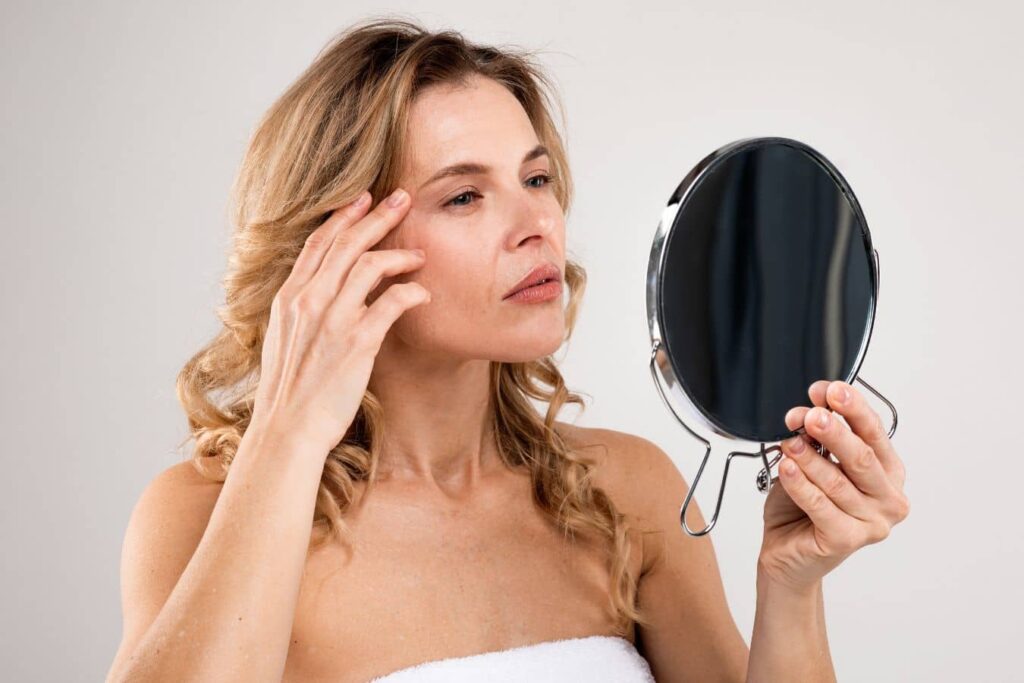
Over time, however, these compartments begin changing independently from one another.
Some lose volume. Others descend downward under gravitational and ligamentous changes. Certain compartments thin dramatically while adjacent areas retain fullness or even become heavier.
The result is not simply “aging skin.”
It is architectural imbalance.
“Facial aging is fundamentally a structural process,” explains Dr. Naderi. “When fat compartments shift position or lose support, the entire geometry of the face changes.”
Why the Face Can Look Hollow and Heavy
This concept is one reason the face can simultaneously appear hollow in some areas while heavy in others.
Patients often describe this paradox intuitively:
“My cheeks look flatter, but my lower face looks heavier.”
Anatomically, both observations are frequently true.
Why the Midface Changes First
One of the earliest regions where fat compartment aging becomes visible is the midface.
In youthful anatomy, the upper cheek contains robust fat compartments that create smooth projection beneath the eyes and soft transition into the lower eyelid. This fullness contributes enormously to what people subconsciously associate with youth, vitality, and attractiveness.
As aging progresses, several things begin occurring simultaneously.
Deep medial cheek fat descends gradually downward. Retaining ligaments weaken. Volume diminishes in specific upper facial compartments while tissue shifts toward the nasolabial region and lower face.
The cheeks flatten.
The lower face becomes visually heavier.
Why Nasolabial Folds Become Deeper
Nasolabial folds deepen not simply because skin creases, but because descended tissue begins folding differently over deeper anatomical structures.
“One of the biggest misconceptions is that nasolabial folds are just wrinkles,” says Dr. Naderi. “In many patients, they are actually the visible consequence of midface descent and changing fat compartment relationships.”
This is one reason sophisticated facelift surgery increasingly focuses on restoring midface support rather than simply tightening the jawline.
Why Jowls Form
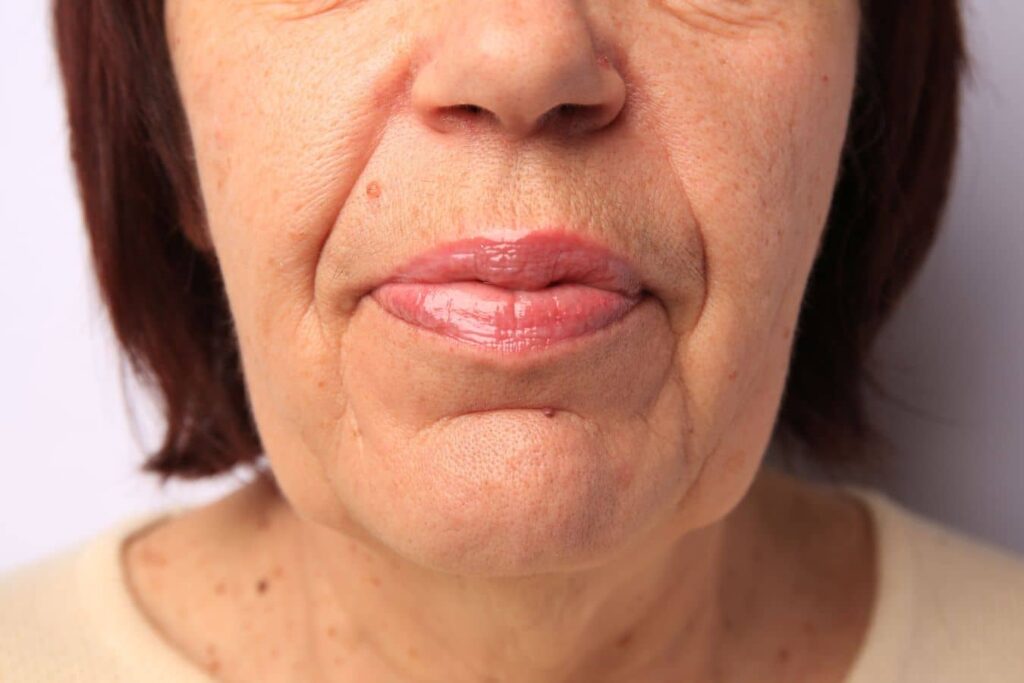
Few facial aging changes frustrate patients more than jowls.
Patients often describe looking in the mirror and noticing that the once-clean transition between the cheek and jawline has gradually disappeared. The lower face begins looking heavier, softer, and less defined even in otherwise healthy individuals.
The Structural Causes of Jowls
Scientifically, jowls form because of a combination of structural events occurring together.
As retaining ligaments weaken, descending cheek fat migrates downward toward the jawline. Simultaneously, volume loss occurs around the prejowl region, creating a contrast between fullness and hollowing that exaggerates lower facial heaviness.
Skin elasticity also diminishes over time, allowing these deeper anatomical shifts to become increasingly visible externally.
“Jowls are not simply loose skin,” explains Dr. Naderi. “They are the visible manifestation of changing relationships between fat compartments, ligament support, skin quality, and structural descent.”
This distinction matters enormously because simply tightening skin without restoring deeper support often fails to create truly natural jawline rejuvenation.

Look More Like You Feel
Personalized facial rejuvenation can help restore harmony between your appearance and how you feel inside. Consult with Dr. Naderi in Reston, VA and Chevy Chase, MD
The Aging Around the Eyes Is Also Structural
Patients often focus on the eyes when discussing facial aging, but the anatomical changes occurring around the eyes are far more complex than wrinkles alone.
In youth, the transition between the lower eyelid and cheek is smooth and continuous. As upper cheek fat compartments descend and periorbital support changes, this transition becomes increasingly hollow or sharply defined.
The tear trough deepens.
The lower eyelids may appear longer or more fatigued.
Why the Eyes Can Look Hollow and Puffy
Meanwhile, orbital fat itself can protrude forward as retaining structures weaken, creating puffiness beneath the eyes even as surrounding areas hollow simultaneously.
This combination of hollowing and protrusion is one reason the eyes often appear tired with age even in healthy individuals.
“The periorbital region is extraordinarily delicate anatomically,” says Dr. Naderi. “Small changes in volume distribution around the eyes can dramatically affect how rested or youthful someone appears.”
Modern lower eyelid surgery and fat repositioning techniques increasingly reflect this structural understanding.
Why Overfilling the Face Often Looks Unnatural

The discovery of facial fat compartments also transformed how experts think about filler.
For years, many practitioners approached fillers as though facial aging simply required “adding volume back.” But volume alone is not the entire issue.
Facial aging involves selective deflation, descent, and redistribution.
If filler is placed indiscriminately into already descended tissue, the result can become progressively unnatural over time.
The face widens.
Contours blur.
The cheeks lose elegant transition.
Instead of recreating youthful structure, excessive filler can create visual heaviness.
“One of the biggest problems in modern aesthetics is confusing volume replacement with anatomical restoration,” explains Dr. Naderi. “More volume does not always create more youth.”
This phenomenon is one reason many patients seeking deep plane facelift surgery today are simultaneously dissolving years of excessive filler.
Bone Loss Also Changes Facial Fat Behavior
One of the lesser-known aspects of facial aging is skeletal remodeling.
As patients age, portions of the facial skeleton gradually lose projection and support. The orbital rims widen. The maxilla retrudes subtly. Chin support changes. These skeletal shifts alter how overlying fat compartments sit and behave.
In many ways, the fat compartments are only part of a larger architectural system.
When bone support diminishes beneath them, soft tissue descent becomes even more visible.
“The face ages from the inside outward,” says Dr. Naderi. “Bone, ligaments, fat compartments, skin, and muscle all interact together. That is why sophisticated facial rejuvenation requires understanding the entire structural framework.”
This deeper anatomical understanding is one reason modern facial rejuvenation increasingly combines deep plane facelift techniques, fat grafting, neck contouring, eyelid surgery, and skin resurfacing rather than relying on isolated procedures alone.
Why Deep Plane Facelifts Address Fat Compartment Aging More Naturally
The growing popularity of deep plane facelift surgery is closely tied to modern understanding of facial fat compartment anatomy.
Traditional facelifts often relied heavily on tightening superficial tissue layers. While this could improve skin laxity temporarily, it did not comprehensively restore the deeper anatomical relationships altered by aging.
Deep plane techniques work differently.
By mobilizing and repositioning deeper facial structures more naturally, deep plane facelifts often restore continuity between the cheeks, jawline, and neck in a way that more closely reflects youthful anatomy.
This is one reason deep plane facelifts frequently appear softer and less “operated on.”
“Natural rejuvenation comes from restoring anatomical balance,” explains Dr. Naderi. “When deeper structures are repositioned properly, the face retains natural movement and harmony.”
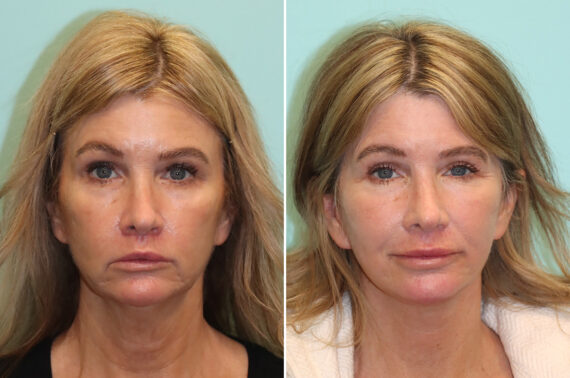
Facelift Before and After
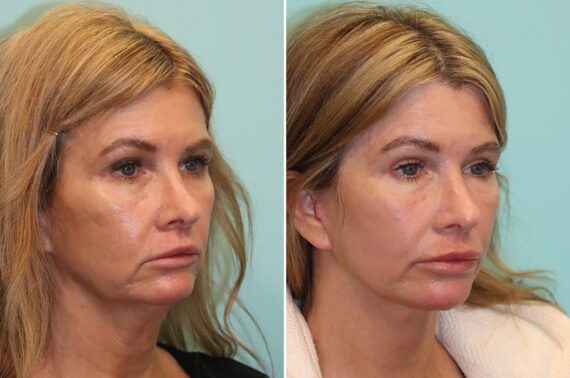
Facial Rejuvenation Must Be Individualized
Importantly, however, surgery alone is not always the answer.
Some patients primarily need volume restoration. Others require lifting. Many benefit from a combination approach tailored specifically to their anatomy and aging pattern.
The Psychology of Facial Aging
One reason facial aging affects patients so deeply is because the human brain is extraordinarily sensitive to facial structure.
Small changes in cheek projection, jawline contour, eye support, or lower face heaviness can dramatically alter how vitality, energy, and emotion are perceived — both by others and by patients themselves.
Many patients describe feeling younger internally than the face reflected externally.
“Patients are often not trying to look different,” says Dr. Naderi. “They are trying to restore congruence between how they feel internally and what they see in the mirror.”
Understanding facial fat compartments helps explain why aging can feel so emotionally complex.
The face is not merely wrinkling.
Its architecture is changing.
Why Modern Facial Rejuvenation Is Increasingly Anatomical
Perhaps the biggest shift occurring in facial plastic surgery today is the movement away from superficial correction and toward structural restoration.
Modern facial rejuvenation increasingly focuses on restoring support, preserving natural movement, respecting facial identity, and understanding how individual anatomical layers age differently over time.
This evolution has fundamentally changed facelift surgery, fat grafting, eyelid surgery, filler philosophy, and even non-surgical rejuvenation.
For Dr. Naderi, the goal is never simply to tighten or volumize the face.
It is to restore harmony.
“The most sophisticated facial rejuvenation should look almost invisible,” he explains. “Patients should simply look rested, healthy, and naturally youthful — never altered.”
Understanding Facial Aging Requires Understanding Structure
The modern understanding of facial aging is far more sophisticated than simply blaming wrinkles or loose skin.
The face ages as a dynamic structural system involving fat compartments, ligaments, bone support, skin quality, and tissue relationships evolving together over decades.
At The Naderi Center, Dr. Shervin Naderi combines more than 20 years of specialized aesthetic facial plastic surgery experience with advanced anatomical techniques designed to restore youthful structure while preserving natural beauty, movement, and identity.
For patients exploring facial rejuvenation, understanding how facial fat compartments change with age is often the first step toward understanding why the face ages, and why sophisticated rejuvenation must go far deeper than the skin itself.
Schedule your consultation with facial plastic surgery experts here.
Frequently Asked Questions About Facial Fat Compartments and Aging
About Dr. Naderi
Dr. Shervin Naderi, MD, FACS, is a double board-certified facial plastic and reconstructive surgeon and the founder of The Naderi Center. With more than 25 years of experience focused on aesthetic facial surgery, he has performed thousands of procedures, taught facial plastic surgery, and contributed to medical publications on facial rejuvenation and surgical techniques.