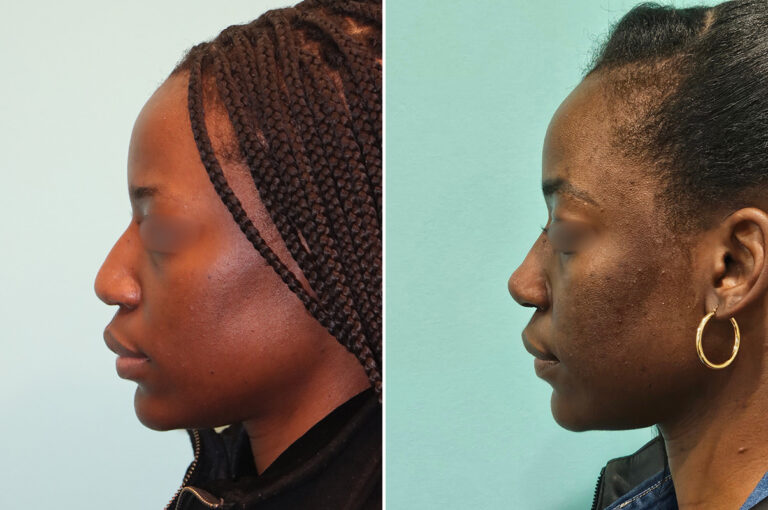
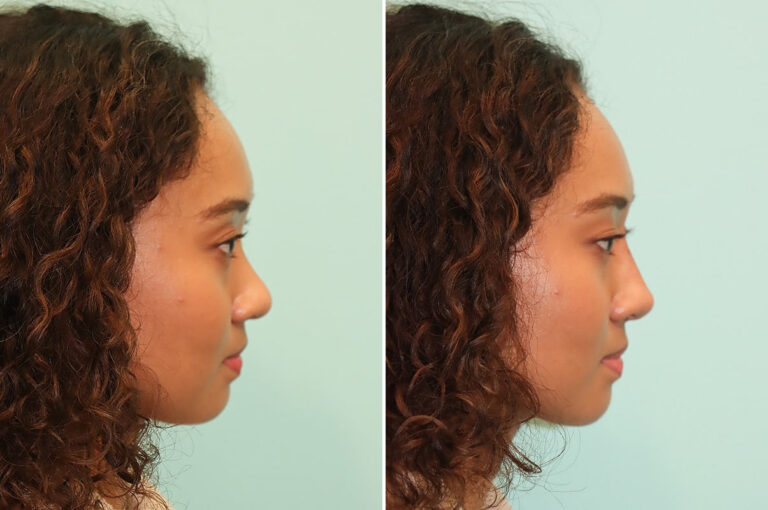
African American Rhinoplasty in the Washington DC Area
Reston, VA and Chevy Chase, MD
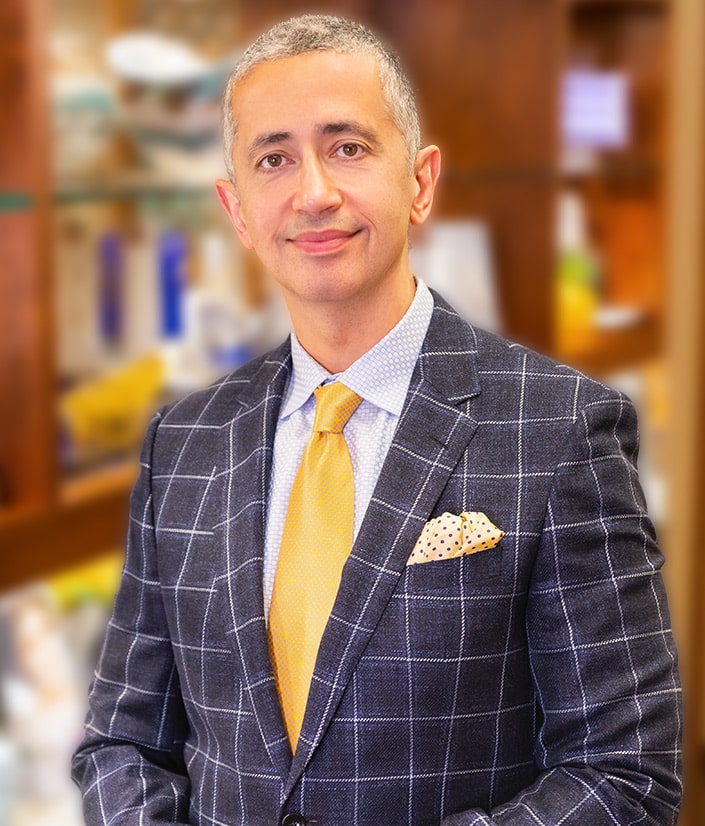
African American rhinoplasty at The Naderi Center is performed by Dr. Shervin Naderi, a double board-certified facial plastic surgeon with more than 20 years of experience and a strong surgical focus on rhinoplasty. Patients come to him from Washington DC, Northern Virginia and Maryland, and many travel from across the country and abroad. His goal is a nose that is more defined and in better balance with your face, and still unmistakably yours.
Dr. Naderi performs a high volume of ethnic rhinoplasty, including many patients of African, Caribbean and Afro-Latin heritage, and many patients come to him to correct a rhinoplasty done elsewhere. Thicker skin and softer cartilage call for a different plan than a textbook nose, and that experience is what patients travel to him for.
20+ yearsStrong surgical focus on rhinoplasty
4 yearsNewsweek America’s Best Plastic Surgeons for Rhinoplasty, 2023 to 2026
Trained for form and function
Board certified in facial plastic and reconstructive surgery and in otolaryngology–head and neck surgery, which covers the nose and airway. He is a Fellow of the American College of Surgeons.
A teacher of other surgeons
He has written textbook chapters on rhinoplasty and served as an oral board examiner for the American Board of Facial Plastic and Reconstructive Surgery.
Recognized locally and nationally
Selected year after year as a Washingtonian Top Doctor, and named to Newsweek’s list of America’s Best Plastic Surgeons for rhinoplasty four years running.
What patients can expect
Dr. Naderi does the computer imaging himself, so what you see on the screen is surgically realistic.
A plan built for your nose, based on your anatomy, your goals and your face, never a standard shape.
Honest advice. He will tell you when surgery is not in your best interest.
He performs both open and closed rhinoplasty and chooses the approach for each nose. He does not routinely pack the nose after surgery.
“My patients are thoughtful and very clear about what they don’t want. They want improvement, not erasure. My job is to refine what makes you, you.”
Dr. Shervin Naderi
His Approach
Refine Your Nose, Never Erase It
The most common thing patients tell Dr. Naderi at a first visit is what they do not want: a nose that looks operated on, a nose borrowed from someone else’s face, or a result that changes who they are. Many have seen overdone results from surgeons who used the same plan for every nose.
Every nose is unique, and there is no cookie-cutter nose at The Naderi Center. Each plan is based on your anatomy, your goals and desires, and your stature. For most patients that means a better defined tip, a straighter or more balanced bridge, and nostrils in proportion with the rest of the face, while the character of the nose stays your own.
Some patients do want a more noticeable change. That is a conversation to have openly at your consultation, which is one reason Dr. Naderi shows you his plan with computer imaging before surgery.
At a Glance
What Is African American Rhinoplasty?
African American rhinoplasty is nose surgery planned for the anatomy many patients of African descent share, such as thicker skin, softer tip cartilage and a wider nostril base. The aim is usually more definition and better proportion rather than a smaller nose for its own sake.
It can refine the tip, raise or straighten the bridge, narrow the nostrils and improve breathing in the same operation. Dr. Naderi performs it under general anesthesia at Prince William Surgery Center, where he is medical director.
Most change in the first year; thicker skin keeps refining for 3 to 5 years
Cost
$18,000 to $27,000 surgeon’s fee, plus anesthesia and facility
Your Anatomy
What Makes This Rhinoplasty Different
There is no single “African nose.” Noses vary widely among patients of African, Caribbean and Afro-Latin heritage, and Dr. Naderi plans for the features you actually have. These are the ones he sees most often.
Thicker skin
Thick skin hides small changes and takes longer to shrink down. Removing tissue alone rarely shows, so definition comes from building support underneath.
A soft, under-projected tip
Softer tip cartilage often needs strengthening so the tip can stand out with definition and hold its shape over time.
A low or wide bridge
A lower bridge can be raised and a wide bridge narrowed, so the nose looks balanced from the front and in profile.
A wide nostril base
When the nostrils are wide or flare, alar base reduction brings them into proportion with the tip and the rest of the face.
Breathing
A deviated septum or narrow airway can be treated in the same operation, so the nose works as well as it looks.
A previous rhinoplasty
Over-narrowed nostrils, a pinched tip or a collapsed bridge from earlier surgery need rebuilding, covered under revision rhinoplasty below.
Techniques
How Dr. Naderi Shapes the Nose
For noses with thicker skin, the most important work is adding strength and projection where the nose needs it, rather than simply taking tissue away.
Structural grafting. Cartilage grafts support and project the tip and shape the bridge. Dr. Naderi uses the patient’s own septal cartilage when there is enough. When more is needed he uses rib cartilage, either the patient’s own or donor rib cartilage from a national tissue bank.
No ear cartilage. “I don’t like using ear cartilage. It’s weak and curved, and it doesn’t provide the strength necessary for thick-skinned noses.” – Dr. Naderi
Tip refinement. The tip is shaped and supported so its definition shows through thicker skin.
Bridge work. The bridge can be raised with cartilage, narrowed by repositioning the nasal bones, or smoothed if there is a hump.
Nostril narrowing with hidden incisions. For alar base reduction, Dr. Naderi places the small incisions inside the base of the nose rather than on the outside of the nostrils, where scars are harder to hide.
Breathing. A deviated septum is corrected in the same operation with septoplasty when needed.
Not every nose is a good candidate for surgery. When skin is very thick and the tissue cannot support the change a patient hopes for, Dr. Naderi will say so, and sometimes a non-surgical rhinoplasty is the better choice.
Recovery
Healing with Thicker Skin
The first weeks of recovery are the same as any rhinoplasty. What differs is the long tail: thicker skin holds swelling longer, so the nose keeps refining well after it looks good to everyone else.
The first week
A small cast stays on for 5 to 10 days. Plan on a week off work or school.
One month
Most bruising is gone and you can return to exercise. Many patients are already enjoying their new nose at 1 to 3 months.
12 to 18 months
With thicker skin, this is when the nose looks close to final as the swelling, especially at the tip, settles.
3 to 5 years
The skin keeps shrinking down over the new framework, and definition continues to improve subtly.
To help thicker skin settle, Dr. Naderi encourages taping the nose after the cast comes off. For some patients with very thick or oily skin, he may start low-dose isotretinoin (Accutane) a few months before surgery. See our rhinoplasty pre-op and post-op instructions.
In Our Patients’ Words
★★★★★4.9 on Google from 1,100+ reviews
01 / 03
“His mastery of the different types of noses specific to all races is what made me comfortable and confident in him.”
“His mastery of the different types of noses specific to all races is what made me comfortable and confident in him as my surgeon for rhinoplasty… A few subtle tweaks that resulted in the overall enhancement of my face.”
★★★★★B.B.Google review
“People would never guess I had a nose job, unless I told them I did.”
“Not only did Dr. Naderi understand, and achieve the look I so desperately wanted, he made sure the overall result appeared as natural as possible. People would never guess I had a nose job, unless I told them I did.”
★★★★★P.F.Google review
“He took the time to evaluate my face and was honest.”
“He took the time to evaluate my face and was honest about the fact that there was a huge chance the rhinoplasty I wanted would not look natural on me. Instead, he suggested that I try a non-surgical procedure. I love the results!”
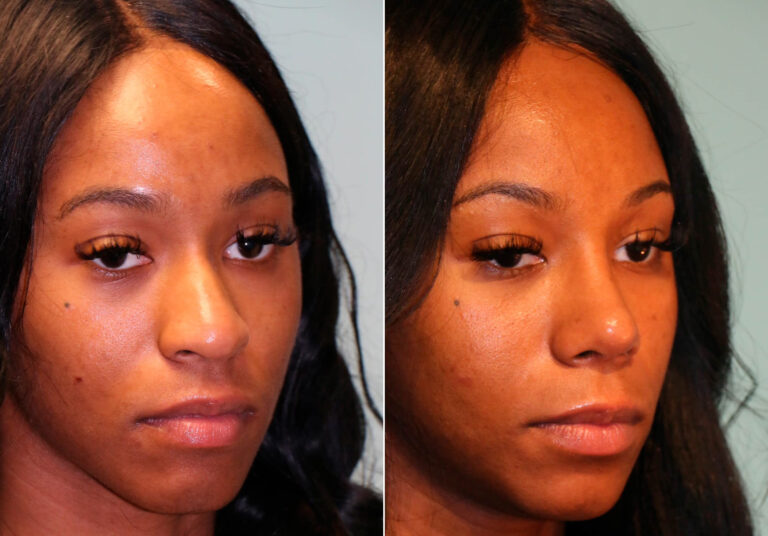
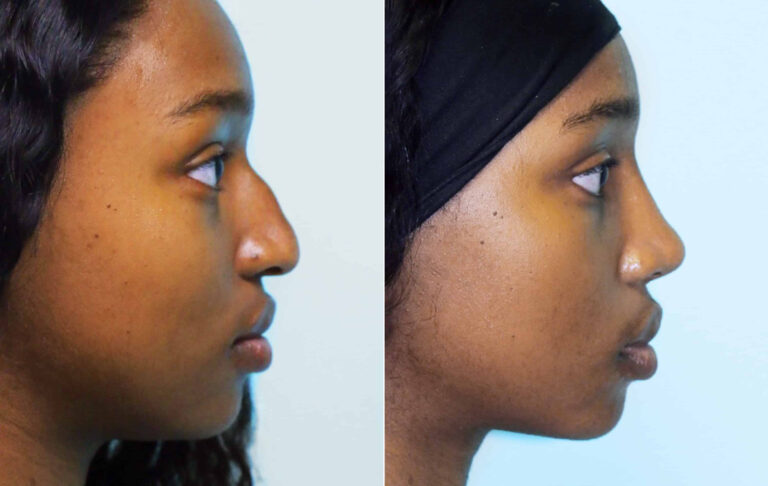
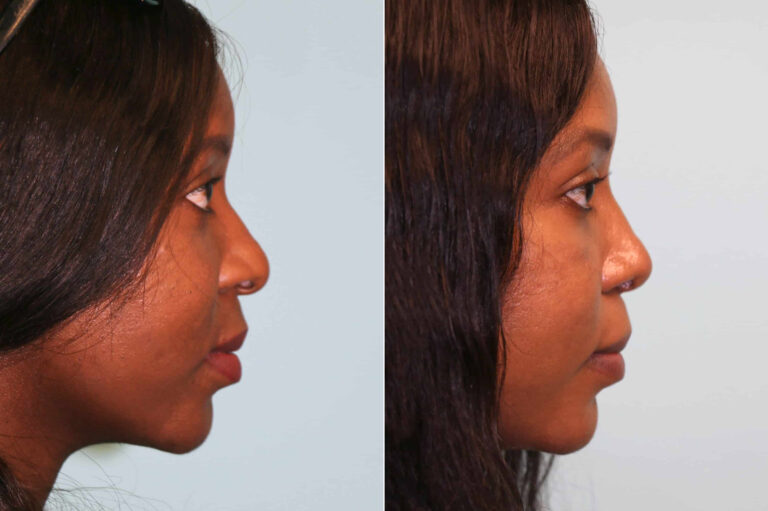
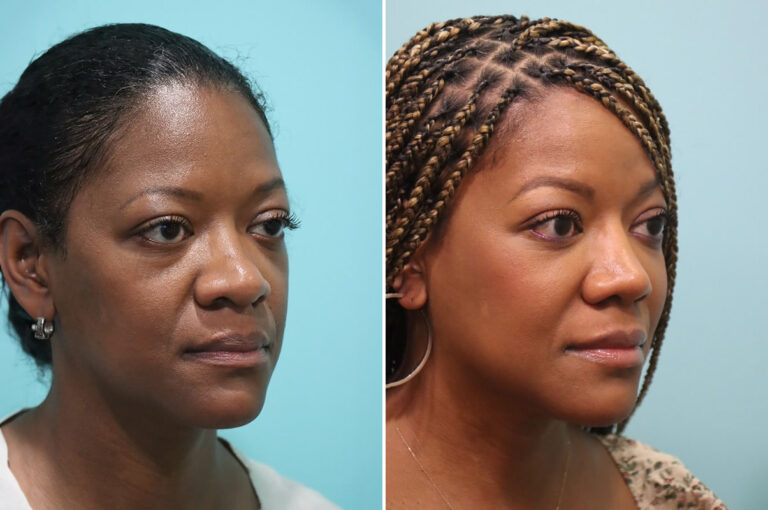
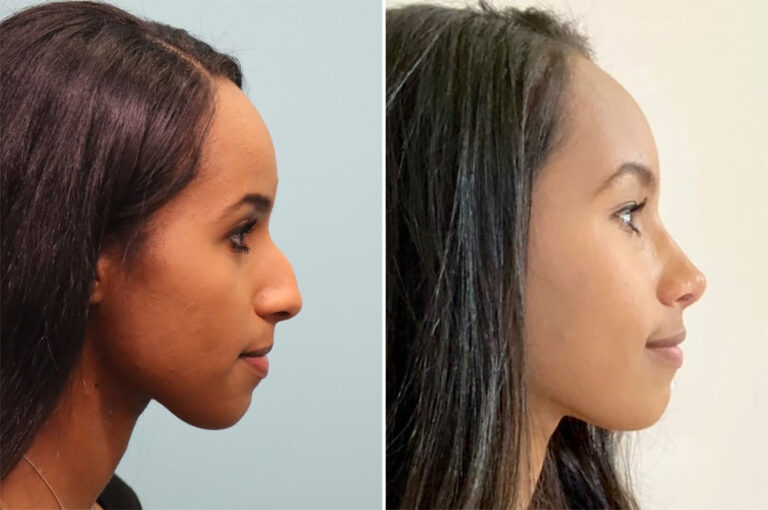
Rhinoplasty patients of Dr. Naderi, before and after surgery. Tap a video to play it.
Men and Women
Different Goals, the Same Care
For women
Women most often ask for a more defined tip and narrower nostrils, with a gentle lift but without an over-rotated, upturned tip.
For men
Men usually want a straighter profile and a stronger, refined tip that keeps a masculine look. Changes are often subtle, and the nose should never look feminized.
Revision Rhinoplasty
When an Earlier Surgery Needs Correcting
Many patients come to Dr. Naderi after a rhinoplasty elsewhere left them with over-narrowed nostrils, a pinched or drooping tip, a collapsed or scooped bridge, breathing problems, or a nose that no longer looks like it belongs to their face.
Revision is more complex than a first rhinoplasty. Patients wait one year after their last nose surgery, revisions are usually done open, and Dr. Naderi rebuilds support with the patient’s own septal or rib cartilage, never ear cartilage. Revision rhinoplasty starts at $45,000.
Revision after surgery elsewhere: Dr. Naderi restored tip support and projection, refined the bridge and improved breathing. Four years after surgery.
Non-Surgical Option
Is a Liquid Rhinoplasty Right for You?
For some patients, especially those with a low or flat bridge, a non-surgical rhinoplasty with filler is a better choice than surgery. Dr. Naderi raises the bridge and can give the tip a small lift in a visit of a few minutes, with no anesthesia and little downtime.
Filler cannot narrow the nostrils, reduce a wide tip or take the place of surgery for every nose, and Dr. Naderi will tell you honestly which one fits your goals. Some patients combine regular liquid rhinoplasty with a short surgery to narrow the nostrils or nasal bones. A first treatment is $2,500, and a maintenance treatment within 6 to 8 months is $1,200.
Liquid rhinoplasty by Dr. Naderi: filler along the bridge for a smoother line from the forehead, and a small lift at the tip.
Cost
What African American Rhinoplasty Costs
African American rhinoplasty with Dr. Naderi costs $18,000 to $27,000. That is his surgeon’s fee; anesthesia and surgical facility fees are separate, and your exact price depends on what your nose needs.
Rhinoplasty
$18,000 to $27,000
Revision rhinoplasty
From $45,000
Non-surgical rhinoplasty
$2,500
Consultation, rhinoplasty
$250
Consultation, revision rhinoplasty
$500
The consultation fee is applied to your surgery when you schedule within three months. Financing through Cherry is available for qualifying patients. Medical insurance does not pay for cosmetic rhinoplasty, but it may cover part of the surgery when there is a medical need, such as a breathing problem.
Many of Dr. Naderi’s rhinoplasty patients fly in from across the United States, the Caribbean, Europe and Africa. Our team plans the trip with you so you make as few visits as possible.
Dr. Naderi sees rhinoplasty patients in Reston, Virginia, close to McLean, Great Falls, Vienna, Arlington and Alexandria, and in Chevy Chase, Maryland, close to Bethesda, Potomac and Northwest Washington DC.
Yes. Dr. Naderi refines the features you have rather than replacing them, so most patients look like a more balanced version of themselves. If you want a more noticeable change, he will discuss it openly and show you his plan with computer imaging first.
Who performs African American rhinoplasty at The Naderi Center?
Dr. Shervin Naderi, a double board-certified facial plastic surgeon with more than 20 years of experience and a strong surgical focus on rhinoplasty. He does your computer imaging and your surgery himself.
How much does African American rhinoplasty cost?
Rhinoplasty with Dr. Naderi is $18,000 to $27,000 for the surgeon’s fee, with anesthesia and surgical facility fees separate. Revision rhinoplasty starts at $45,000, and a non-surgical rhinoplasty is $2,500. Cherry financing is available for qualifying patients.
How long does swelling last with thick skin?
Most patients enjoy their new nose within 1 to 3 months. With thicker skin, the nose looks close to final at 12 to 18 months, and subtle refinement continues for 3 to 5 years as the skin shrinks down.
Can my nostrils be narrowed without visible scars?
In most cases, yes. For alar base reduction Dr. Naderi places the small incisions inside the base of the nose instead of on the outside of the nostrils, where scars are harder to hide.
Do you use ear cartilage for grafts?
No. Ear cartilage is weak and curved and does not give a thick-skinned nose enough support. Dr. Naderi uses your own septal cartilage when there is enough, or rib cartilage, your own or donor rib, when more is needed.
Is non-surgical rhinoplasty a good alternative?
For a low or flat bridge, often yes. Filler can raise the bridge and lift the tip slightly in a few minutes, but it cannot narrow the nostrils or reduce a wide tip. Dr. Naderi will tell you which option fits your goals.
Can you fix a rhinoplasty done somewhere else?
Often, yes, though not every nose is a candidate. Patients wait one year after their last nose surgery, and Dr. Naderi usually performs revisions open, rebuilding support with septal or rib cartilage.
I live out of town. How long should I stay?
Plan to arrive one to two days before surgery and stay about a week, so Dr. Naderi can remove your cast before you travel home. Your first consultation can be virtual.
How much time off will I need?
Plan on a week off work or school. The cast stays on for 5 to 10 days, and you can return to exercise after one month.
Medically reviewed by Dr. Shervin Naderi, MD, FACS, double board-certified facial plastic surgeon. October 2026.
Begin with a Conversation
Bring us your questions and the photos of what you like and what you don’t. Meet Dr. Naderi in Reston, in Chevy Chase, or virtually from wherever you live.