PRP for Hair Loss in the Washington DC Area: Reston, VA and Chevy Chase, MD
PRP hair injections at The Naderi Center are performed by board-certified dermatologist Dr. Alexandra Snodgrass at our offices in Reston, Virginia and Chevy Chase, Maryland, serving Washington DC, Northern Virginia and Maryland.
Platelet-rich plasma (PRP) is made from a small sample of your own blood and injected into thinning areas of the scalp. It is used to strengthen weak follicles and improve hair density in men and women with early to moderate thinning.

Physician-Performed Injections
Treatment by a Board-Certified Dermatologist
100,000+ Procedures Performed
4.9★ from 1,100+ Google Reviews














Who Performs PRP Hair Injections?
Every PRP hair treatment at The Naderi Center is performed by a physician. The right diagnosis comes first, because not every kind of hair loss responds to PRP.

Dr. Alexandra Snodgrass
Board-Certified Dermatologist
Dr. Snodgrass performs PRP for hair loss at The Naderi Center, along with PRF, Sculptra, filler and Botox. She completed her dermatology residency at the University of Florida and is a diplomate of the American Board of Dermatology. She sees patients in Reston and Chevy Chase.
Meet Dr. Snodgrass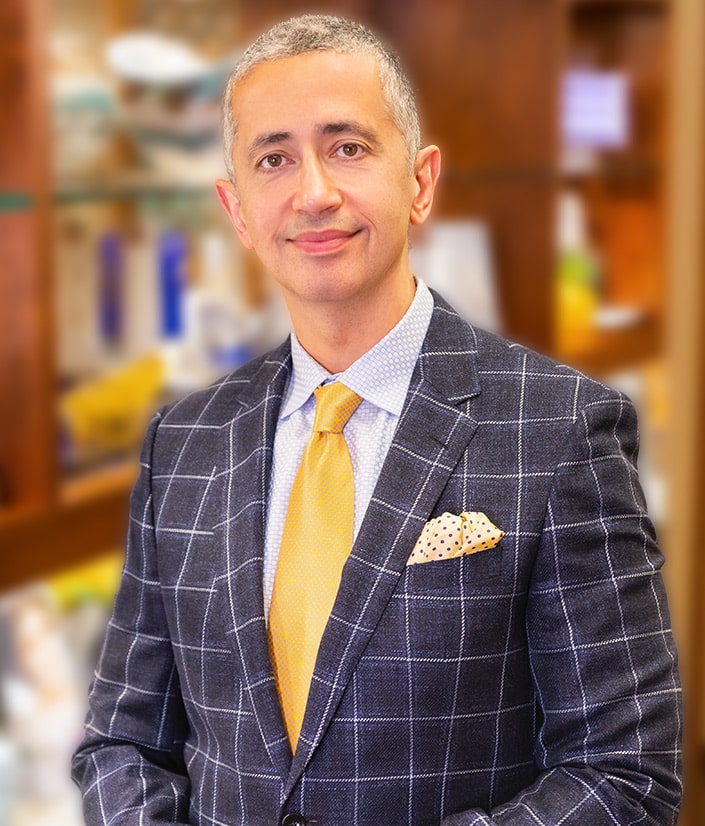
Dr. Shervin Naderi, MD, FACS
Double Board-Certified Facial Plastic Surgeon
Dr. Naderi medically reviewed this page. A former national clinical trainer for Allergan and Medicis, he has been named to Newsweek’s list of America’s Best Plastic Surgeons four years running. He founded The Naderi Center to bring facial plastic surgery and cosmetic dermatology together under one roof.
Meet Dr. NaderiWhat PRP Can Do for Thinning Hair
PRP uses the growth factors in your own blood to support the hair follicles you still have. It works best when thinning is caught early.
Uses Your Own Blood
PRP is prepared from a small sample of your own blood, so there is nothing synthetic and no allergy to the PRP itself.
Thicker, Stronger Hair
Growth factors in PRP support weakened follicles, with the goal of fuller, thicker hair over a series of sessions.
No Downtime
Most people go back to work the same day. The scalp may be tender and a little red for a few days.

What Is PRP for Hair Loss?
Platelet-rich plasma is the part of your blood that carries a concentrated amount of platelets. Platelets release growth factors that the body uses to repair tissue, and PRP has been used for years in orthopedics, wound healing and skin treatments.
For hair loss, a small amount of blood is drawn, spun in a centrifuge to separate the platelet-rich plasma, and injected into the thinning areas of the scalp. The goal is to wake up miniaturized follicles, lengthen the growth phase of the hair and improve thickness. Because it comes from your own blood, there is no risk of an allergic reaction to the PRP itself.
What Types of Hair Loss Does PRP Treat?
PRP works best on thinning hair, where follicles are weakened but still present.
Female pattern hair loss. A widening part and thinning across the top of the head.
Male pattern hair loss. Thinning at the crown and early recession at the temples.
Overall thinning. Hair that feels finer and less full than it used to.
Shedding after stress, illness or weight loss. Including the shedding some patients notice on weight loss medications, once the cause has been addressed.
Thinning after childbirth or with hormonal change. Once your physician has reviewed the cause.
PRP does not grow hair where follicles are gone, such as smooth, shiny bald areas, and it does not treat scarring hair loss.
PRP, PRF or Supplements: How Do They Compare?
PRP and PRF both come from your own blood. PRP is spun quickly into a liquid rich in platelets, while PRF is spun more slowly and holds its platelets in a fibrin network. Both can be used on the scalp, and for hair loss we tend to choose PRP.
How the options fit together
- PRP injections. Our first choice for thinning hair, performed by Dr. Snodgrass in a series of 4 to 6 sessions.
- PRF. Also made from your blood and sometimes used on the scalp. Dr. Snodgrass will tell you if it suits you better. See PRF injections.
- Supplements and serums. Nutrafol and scalp serums support hair growth from home and pair well with PRP.
- Minoxidil and prescription treatments. These can continue alongside PRP. Keep using them until the day of treatment.
Who Is a Good Candidate for PRP Hair Treatment?
PRP is a good fit if you have:
- Early to moderate thinning, in men or women
- A widening part or a thinner crown
- Hair that has become finer or sheds more than it used to
- Good general health, with no bleeding disorder
- The patience for a series of sessions and gradual results
We will suggest something else when:
- An area is completely bald and smooth. PRP cannot regrow hair where follicles are gone.
- Shedding is caused by a medical problem such as a thyroid or iron issue. That cause should be treated first.
- You want help between sessions. Nutrafol and a scalp serum can support your results at home.
- You are pregnant or breastfeeding. We wait until afterward.
We will bring the experience.
What Happens During a PRP Hair Treatment?
PRP for hair is an in-office treatment. Most patients need 4 to 6 sessions, typically done a month apart.
Consultation
Dr. Snodgrass examines your scalp, reviews your history and confirms PRP fits the type of hair loss you have.
The Blood Draw
A small amount of your blood is drawn and spun in a centrifuge to separate the platelet-rich plasma.
The Injections
The PRP is injected with a fine needle into the thinning areas of your scalp. You can go back to your day afterward.
When Will You See Results From PRP?

- Right after: the scalp may feel tight, tender or tingly, and you may see a little redness.
- The first few days: any tenderness, swelling or small bruises fade.
- Monthly sessions: each treatment builds on the last over your series of 4 to 6.
- About 3 months: many patients notice less shedding and hair that feels thicker.
- About 6 months: fuller hair and better density become easier to see.
Results vary from person to person. PRP strengthens existing follicles; it does not replace a hair transplant where hair is gone.
What Does the Research Say About PRP for Hair Loss?
PRP for pattern hair loss has been tested in controlled studies that compared a PRP-treated side of the scalp with a placebo side.
A randomized, placebo-controlled trial
In a trial published in Stem Cells Translational Medicine, patients with pattern hair loss had three PRP treatments a month apart on one side of the scalp and placebo on the other. The PRP side showed a measurable increase in hair count and hair density compared with the placebo side.
Gentile P, et al. The effect of platelet-rich plasma in hair regrowth: a randomized placebo-controlled trial. Stem Cells Transl Med. 2015;4(11):1317-1323. Read the study.
A half-head study in men and women
A study in Dermatologic Surgery treated 25 men and women monthly for three sessions, with PRP on one half of the scalp and saline on the other. At six months, hair density and the number of thick, terminal hairs were significantly higher on the PRP side.
Alves R, Grimalt R. Randomized placebo-controlled, double-blind, half-head study to assess the efficacy of platelet-rich plasma on the treatment of androgenetic alopecia. Dermatol Surg. 2016;42(4):491-497.
Our view: the evidence supports PRP as a helpful treatment for early to moderate thinning, with modest, gradual gains. We set expectations honestly and recommend a full series for the best chance of results.
PRP for Hair Loss Videos
See what a PRP hair treatment looks like at The Naderi Center.
Short video
What Do PRP Injections Do for Hair?
How PRP supports thinning hair, in under a minute.
Watch with transcriptTreatment video
PRP Injections for Hair Loss and Thinning
A look at the treatment itself, from start to finish.
More hair treatment videosWhat Our Patients Say About Dr. Snodgrass
★★★★★4.9 on Google from 1,100+ reviews
01 / 06
“I trusted her judgment and I’ve never been happier.”
“Dr. Snodgrass is amazing! I came in for tear trough fillers and Botox. She explained to me that my under eyes actually had a combination of issues and that traditional tear trough filler would not be suitable. Instead she suggested mid face filler… I trusted her judgment and oh my gosh….I’ve never been happier.”
★★★★★S.L.Google review
“If you want a great injector try her.”
“I love Dr. Snodgrass! … she is very knowledgeable! After a bad experience of Botox I wanted to go to a professional… I feel like this business cares more about the patient than the money and that’s a must when making tweaks to your face. If you want a great injector try her you won’t be disappointed!”
★★★★★J.S.Google review
“She explained everything in detail.”
“I was booked with Dr. Snodgrass and she was wonderful! She explained everything in detail before the procedure and answered all my questions throughly. Dr. Snodgrass never tried to upsale me and only commented on things I asked about… I absolutely love my results and will definitely recommend this practice to anyone!”
★★★★★V.Google review
“I’ve been in the best hands possible.”
“I’ve only been treated here a few times but it’s enough to know that I’ve been in the best hands possible. Dr. Snodgrass is an incredibly knowledgeable and honest dermatologist and I’m grateful to have found her. Thank you!”
★★★★★S.W.Google review
“Quick, painless, and I love my results.”
“Dr. Snodgrass was fantastic. Everyone on staff here was friendly and welcoming. My injections were quick, painless, and I didn’t have any bruising at all! I love my results.”
★★★★★B.K.Google review
“Phenomenal at what she does.”
“Dr. Snodgrass is an angel! She is kind, compassionate and is phenomenal at what she does. I recommend her highly.”
★★★★★J.T.Google review
How Much Does PRP for Hair Loss Cost in the Washington DC Area?

Financing. The Naderi Center offers financing through Cherry. See financing options.
Insurance. Insurance does not cover PRP for hair loss.
PRP for hair loss at The Naderi Center costs $1,000 per session. Book a package of 3 or more sessions and save 10%.
Most patients need 4 to 6 sessions, typically a month apart. With the package savings, a series of 4 to 6 sessions is $3,600 to $5,400.
| PRP hair treatment, per session | $1,000 |
|---|---|
| Package of 3 or more sessions | Save 10% |
| Typical series, 4 to 6 sessions, with package | $3,600 to $5,400 |
Your plan is set at your consultation. Prices are subject to change.
Included in your price
- Your blood draw and PRP preparation
- Your treatment by Dr. Snodgrass, a board-certified dermatologist
- Aftercare instructions and follow-up

Patient Financing
Pay Over Time with Cherry
Monthly payment plans for surgery and treatments, including 0% APR options for qualifying patients. Checking whether you qualify won’t affect your credit score.
How to Prepare for PRP Hair Injections
- For 2 weeks before, avoid anything that thins the blood or prolongs bleeding: aspirin, ibuprofen, naproxen, fish oil and similar supplements. If a doctor prescribed a blood thinner, do not stop it without that doctor’s approval.
- Keep using your hair loss treatments, including minoxidil (Rogaine), up until the day of treatment.
- Color or highlight your hair at least 7 days before your appointment.
- Wash your hair the day of your treatment and skip gels, sprays and other hair products.
- Eat and drink before you come in. Being well fed and hydrated makes the blood draw easier and helps you avoid feeling lightheaded.
- Tell us every medication and supplement you take, so nothing interferes with your treatment.
- Book your next session before you leave, so your series stays on schedule.
What Is Recovery Like After PRP Hair Injections?
Most people go back to work and their normal routine the same day. The scalp may be tender, red or a little swollen for 2 to 5 days.
| When | What to expect |
|---|---|
| First 8 hours | Do not touch, rub or press the treated area. Skip hair products for at least 6 hours. |
| The next day | You may wash your hair. Use a pH-balanced shampoo for the first 3 days. |
| First 48 hours | Avoid heavy exercise, strong sun, saunas, steam rooms, hot tubs and swimming pools. |
| First 3 days | Hold off on minoxidil, hair color and straightening treatments, and avoid alcohol, caffeine and nicotine. |
| First week | Drink plenty of water. For discomfort, use Tylenol, not aspirin, ibuprofen or naproxen. Skip ice, since some inflammation is part of how PRP works; a cool compress is fine for swelling. |
| About a month later | Your next PRP session, which builds on the first. |
Full details are in our PRP for hair loss instructions. Call us right away for signs of infection: drainage, increasing warmth, a fever of 101.5 or higher, or severe pain.
Is PRP for Hair Safe? Risks and Who Should Wait
Risks. PRP uses your own blood, so allergic reactions to it are not a concern. The most common side effects are tenderness, redness, swelling, itching and small bruises on the scalp for a few days. Some patients feel lightheaded during the blood draw or injections. Infection is rare.
Call us right away for drainage that looks like pus, increasing warmth around the treated area, a fever of 101.5 or higher, or severe pain that over-the-counter pain relievers do not help.
Who should wait or choose another treatment:
- Pregnancy or breastfeeding
- A bleeding disorder or platelet problem
- A weakened immune system from illness or medication, or current chemotherapy
- Skin cancer on the scalp
- Current or recent Accutane
- An active infection on the scalp
Not sure? Dr. Snodgrass will review your health history at your consultation.
PRP for Hair Loss in Reston, VA and Chevy Chase, MD
Dr. Snodgrass performs PRP hair injections at both offices of The Naderi Center. Patients come from Washington DC, from Northern Virginia, including McLean, Great Falls, Vienna, Tysons, Arlington and Alexandria, and from Maryland, including Bethesda, Potomac and Chevy Chase.
Maryland
5454 Wisconsin Ave,
Suite 1655
Chevy Chase, MD 20815
(301) 222-2020
Monday to Thursday, 9 AM to 5 PM
Friday, 9 AM to 4 PM
Get directions
Virginia
1850 Town Center Parkway,
Pavilion II, Suite 551
Reston, VA 20190
(703) 481-0002
Monday to Thursday, 9 AM to 5 PM
Friday, 9 AM to 4 PM
Get directions
PRP for Hair Loss FAQs
What is PRP for hair loss?
PRP, or platelet-rich plasma, is made from a small sample of your own blood. It is injected into thinning areas of the scalp, where its growth factors support weakened hair follicles. At The Naderi Center, PRP hair injections are performed by board-certified dermatologist Dr. Alexandra Snodgrass.
Who performs PRP hair treatment at The Naderi Center?
Board-certified dermatologist Dr. Alexandra Snodgrass performs PRP for hair loss at our offices in Reston, Virginia and Chevy Chase, Maryland.
Does PRP really work for hair loss?
For early to moderate thinning, controlled studies have shown gains in hair count and density on the PRP-treated side of the scalp compared with placebo. Results vary, and the gains are gradual, which is why we recommend a full series.
How many PRP sessions will I need for hair loss?
Most patients need 4 to 6 sessions, typically done a month apart. Dr. Snodgrass sets your plan at your consultation.
How much does PRP for hair loss cost?
PRP for hair loss at The Naderi Center costs $1,000 per session. Book a package of 3 or more sessions and save 10%, so a series of 4 to 6 sessions is $3,600 to $5,400. Financing is available through Cherry.
When will I see results from PRP?
Many patients notice less shedding and thicker-feeling hair at about 3 months, with fuller hair easier to see at about 6 months. Results build over your series of sessions.
Do PRP hair injections hurt?
Most patients feel pressure and a stinging sensation during the injections, and the scalp can feel tender or tight for a few days. We do not use numbing for PRP hair treatments.
Is there downtime after PRP for hair?
Most people go back to work the same day. The scalp may be tender, red or slightly swollen for 2 to 5 days, and you should avoid heavy exercise, saunas and swimming pools for 48 hours.
When can I wash my hair after PRP?
You may wash your hair the day after your treatment. Use a pH-balanced shampoo for the first 3 days, and wait at least 6 hours before using any hair products.
Can I keep using minoxidil with PRP?
Yes. Keep using minoxidil and other hair loss treatments up until the day of your PRP session, then wait 3 days after treatment before restarting minoxidil.
Does PRP work for women?
Yes. PRP is used for female pattern hair loss, such as a widening part and thinning across the top of the head, as well as for male pattern hair loss.
What is the difference between PRP and PRF for hair?
Both come from your own blood. PRP is spun into a liquid rich in platelets, while PRF is spun more slowly and holds its platelets in a fibrin network. Both can be used on the scalp, and for hair loss we tend to choose PRP.
Can PRP regrow hair on a bald spot?
No. PRP strengthens follicles that are thinning but still present. It cannot grow hair where follicles are gone, such as smooth, shiny bald areas.
Can PRP help hair shedding from weight loss medications?
It can help once the cause of the shedding has been addressed. Dr. Snodgrass will review your history, medications and weight loss to decide whether PRP fits.
Is PRP for hair loss safe?
Because PRP comes from your own blood, allergic reactions to it are not a concern. Common side effects are tenderness, redness, swelling and small bruises for a few days. Infection is rare. PRP is not recommended during pregnancy or for people with bleeding disorders.
Can PRP be combined with supplements like Nutrafol?
Yes. Many patients pair PRP with Nutrafol or a scalp serum to support hair growth between sessions.
Do you have before and after photos of PRP for hair loss?
We do not show PRP hair before and after photos on this page. Dr. Snodgrass will examine your scalp at your consultation and talk you through what to expect.
Where can I get PRP for hair loss near me?
Dr. Snodgrass performs PRP hair injections at our offices at 1850 Town Center Parkway, Pavilion II, Suite 551, Reston, VA 20190 and 5454 Wisconsin Avenue, Suite 1655, Chevy Chase, MD 20815. Patients come from Washington DC, McLean, Great Falls, Vienna, Arlington, Alexandria, Bethesda and Potomac.
Medically reviewed by Shervin Naderi, MD, FACS. Dr. Naderi is a double board-certified facial plastic surgeon. Last reviewed .