Dermal Fillers in the Washington DC Area:
Reston, VA and Chevy Chase, MD
Dermal filler injections at The Naderi Center are performed only by physicians: Dr. Shervin Naderi, a double board-certified facial plastic surgeon, and Dr. Alexandra Snodgrass, a board-certified dermatologist. Patients from Washington DC, Northern Virginia and Maryland visit our Reston and Chevy Chase offices to smooth lines, restore lost volume and refine facial contours, with natural-looking results that are never overdone.

Over 100,000 Botox® & Filler Treatments
Physician-Only Care
4.9-Star Rating / 1,100+ Reviews




What Dermal Fillers Can Do
Dermal fillers restore the volume the face loses with age and refine features such as the lips, cheeks, chin and jawline, without surgery. At The Naderi Center every filler treatment is performed by a physician, using hyaluronic acid fillers from the Juvéderm®, Restylane® and RHA® collections.
Restore Lost Volume
Fillers replace volume in the cheeks, temples and under the eyes, and soften folds such as the nasolabial folds and marionette lines.
Results the Same Day
Hyaluronic acid fillers work immediately. Swelling settles in about two weeks, and results typically last 6 to 18 months depending on the filler and the area treated.
Reversible and Natural
Hyaluronic acid fillers can be adjusted or dissolved. Our physicians add volume gradually, so the result looks like you and never overfilled.




Physician-Only Dermal Filler Injections at The Naderi Center
At The Naderi Center, dermal fillers are injected only by physicians. You will not be treated by a nurse injector, physician assistant or aesthetician. Fillers are placed close to important blood vessels and nerves, so a detailed knowledge of facial anatomy matters for both safety and results. Our practice has performed more than 100,000 Botox® and filler treatments.
In 2017, Dr. Shervin Naderi was named a “Top 25 Injector” in the RealSelf Most Loved Injector Awards, chosen from 2,000 nominees by the RealSelf patient community. He was one of only four winners in the Southeast region of the United States. Patients regularly fly and drive to The Naderi Center from all over the country for his style of Botox® and filler injections.
Dr. Shervin Naderi — Nationally Recognized Facial Plastic Surgeon & Injectable Expert
Dr. Shervin Naderi is a double board-certified facial plastic surgeon with more than 25 years of experience focused on the face. Over the course of his career, he has performed tens of thousands of injectable treatments while also developing an extensive surgical practice in rhinoplasty and facial rejuvenation.
Dr. Naderi previously served as a clinical instructor for Allergan and Medicis, teaching physicians and other medical professionals advanced techniques for dermal fillers, Botox® and Dysport®. Doctors from all over the world refer to his instructional videos on YouTube to refine their own filler injection techniques. He has also served as a board examiner for the American Board of Facial Plastic and Reconstructive Surgery, helping evaluate other surgeons seeking certification in the specialty.
His expertise has earned repeated recognition from both patients and his peers. Dr. Naderi has been selected year after year as a Washingtonian Top Doctor, recognized as an Arlington Magazine Top Doctor, and named by Newsweek among America’s Top Plastic Surgeons. He was also selected as one of RealSelf’s Top 25 Most Loved Injectors in the United States, based on patient nominations.
What distinguishes his approach to fillers is the combination of surgical knowledge of facial anatomy, decades of injection experience, and a deliberately conservative aesthetic philosophy. He chooses the filler, the depth and the amount for each area based on the patient’s facial structure, age and goals, with the objective of restoring volume and contour without ever looking overfilled.
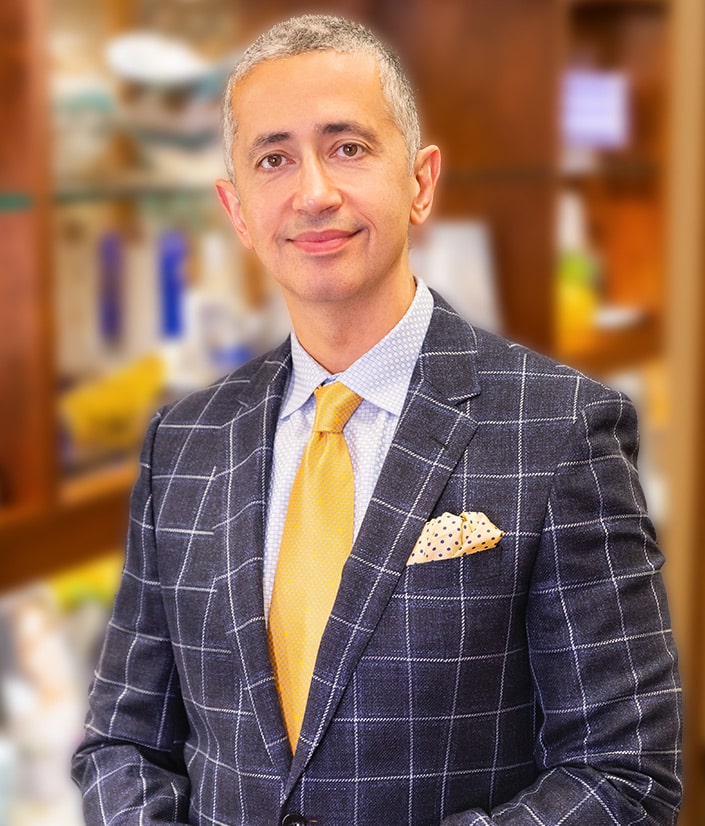
Dr. Alexandra Snodgrass — Board-Certified Dermatologist & Aesthetic Injector
Dr. Alexandra Snodgrass is a board-certified dermatologist with a special focus on aesthetic dermatology, facial rejuvenation, dermal fillers, Botox®, lasers, and skin health. Her background allows her to evaluate not only facial volume and movement, but also the quality, texture, and aging of the skin itself. She trained with Dr. Shervin Naderi prior to joining The Naderi Center.
Dr. Snodgrass completed her medical training and dermatology residency at the University of Florida, where she trained in medical, surgical, and cosmetic dermatology. She is a Diplomate of the American Board of Dermatology and a member of leading professional organizations including the American Academy of Dermatology and the American Society for Dermatologic Surgery. She has also authored scientific articles and textbook chapters and has presented at national medical meetings.
At The Naderi Center, Dr. Snodgrass has treated thousands of patients with dermal fillers and Botox® and has developed extensive experience in nonsurgical facial rejuvenation. Rather than following a standardized injection pattern, she individualizes every filler treatment based on the patient’s anatomy, volume loss, skin quality, age, and aesthetic goals. The objective is not an overfilled appearance, but to restore volume while preserving natural expression and facial balance.
Her expertise in fillers, Botox®, lasers, medical-grade skincare, and cosmetic dermatology also allows her to recognize when filler alone is appropriate, and when another treatment, or no additional treatment at all, may produce a better result.

Specialization Matters! SM
To schedule a dermal filler consultation with one of our physicians, call our Chevy Chase, Maryland office at 301-222-2020 or our Reston, Virginia office at 703-481-0002, or book online. For out-of-town patients we offer a virtual consultation prior to your visit.
What Are Dermal Fillers?
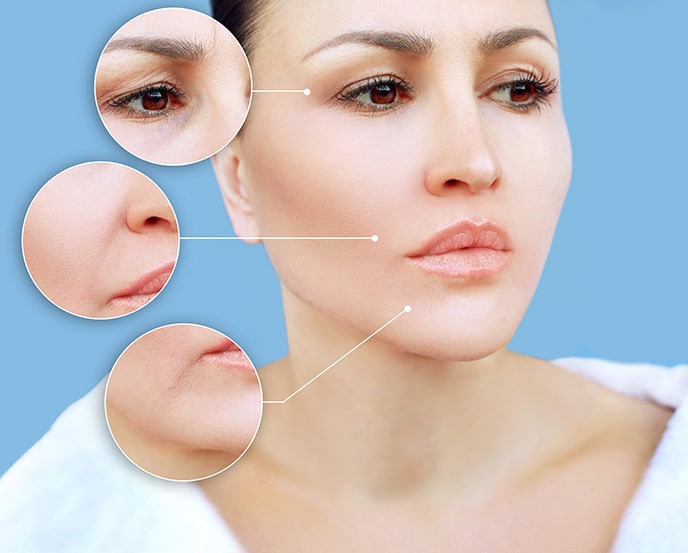
Dermal fillers are soft, injectable gels placed beneath the skin to restore lost volume, smooth wrinkles and folds, and shape features such as the lips, cheeks, chin, jawline and nose. Treatment is done in the office with no surgery, and results are visible right away. The injections typically take 10 to 20 minutes, after 20 to 30 minutes of numbing cream.
Most fillers used today are made of hyaluronic acid, a substance that occurs naturally in the skin. Hyaluronic acid fillers add volume by holding water, last roughly 6 to 18 months, and can be dissolved if needed. Other products, such as Sculptra®, work differently: they stimulate your own collagen, so results build gradually over several months and can last for years.
Fillers are not the same as Botox®. Botox relaxes the muscles that cause expression lines, while fillers replace lost volume, and many patients benefit from both. How well a filler works depends on the skill of the injector, which is why every filler treatment at The Naderi Center is performed by a physician: Dr. Shervin Naderi or Dr. Alexandra Snodgrass.
What Results Can You Expect from Dermal Fillers?
Results are visible immediately and look their best about two weeks later, once swelling has settled. Depending on the areas treated, you can expect:
- Softer lines and folds, including the nasolabial folds, marionette lines and lip lines
- Fuller, more lifted cheeks and less hollow temples
- Fuller, better-defined lips
- Less shadowing and hollowness under the eyes
- A smoother, straighter nasal profile without surgery
- A stronger chin and a more defined jawline
- Better overall facial symmetry
- Smoother depressed scars, including acne scars
Results from hyaluronic acid fillers typically last 6 to 18 months.
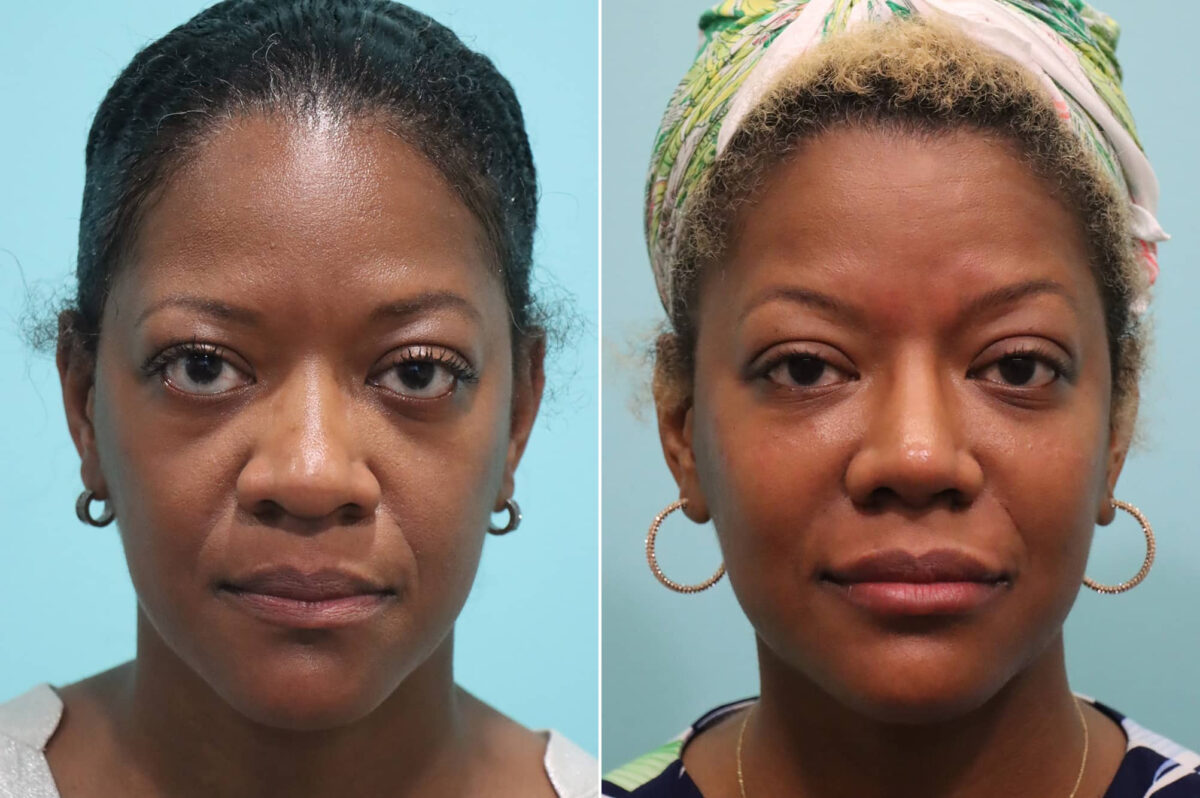
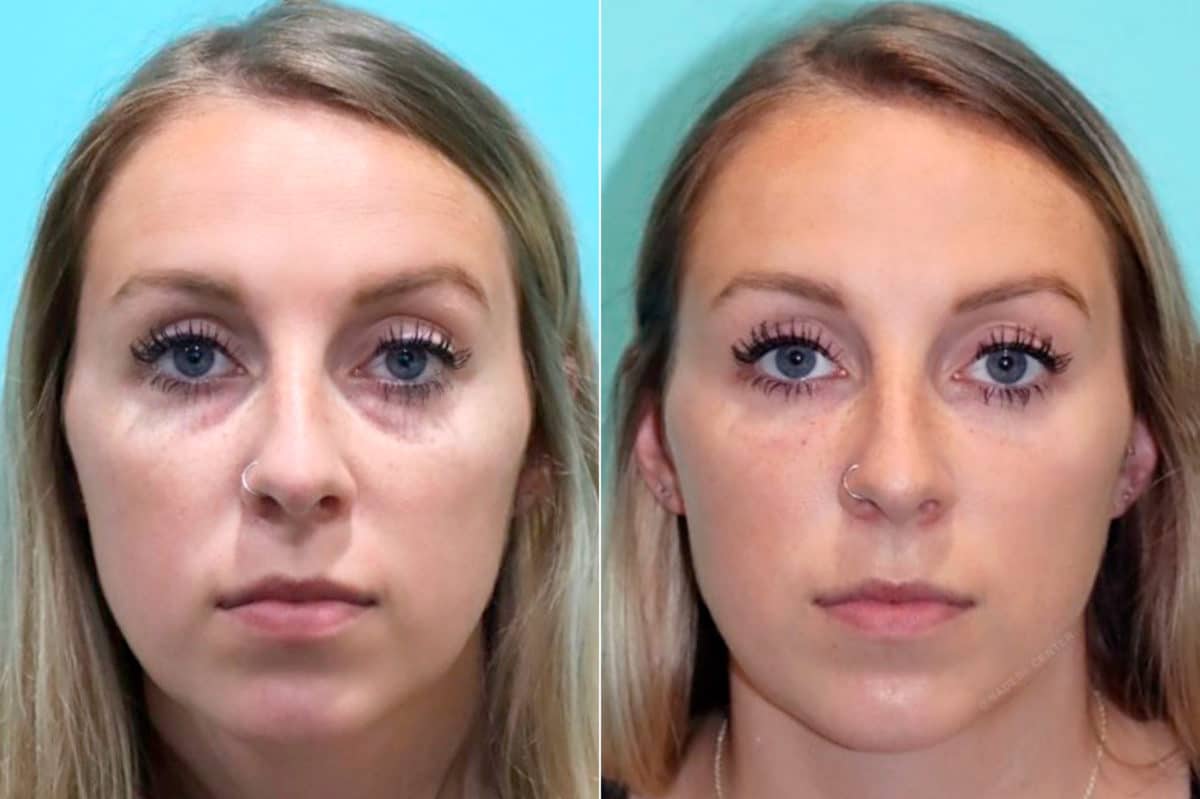
Dermal Filler Before and After Photos
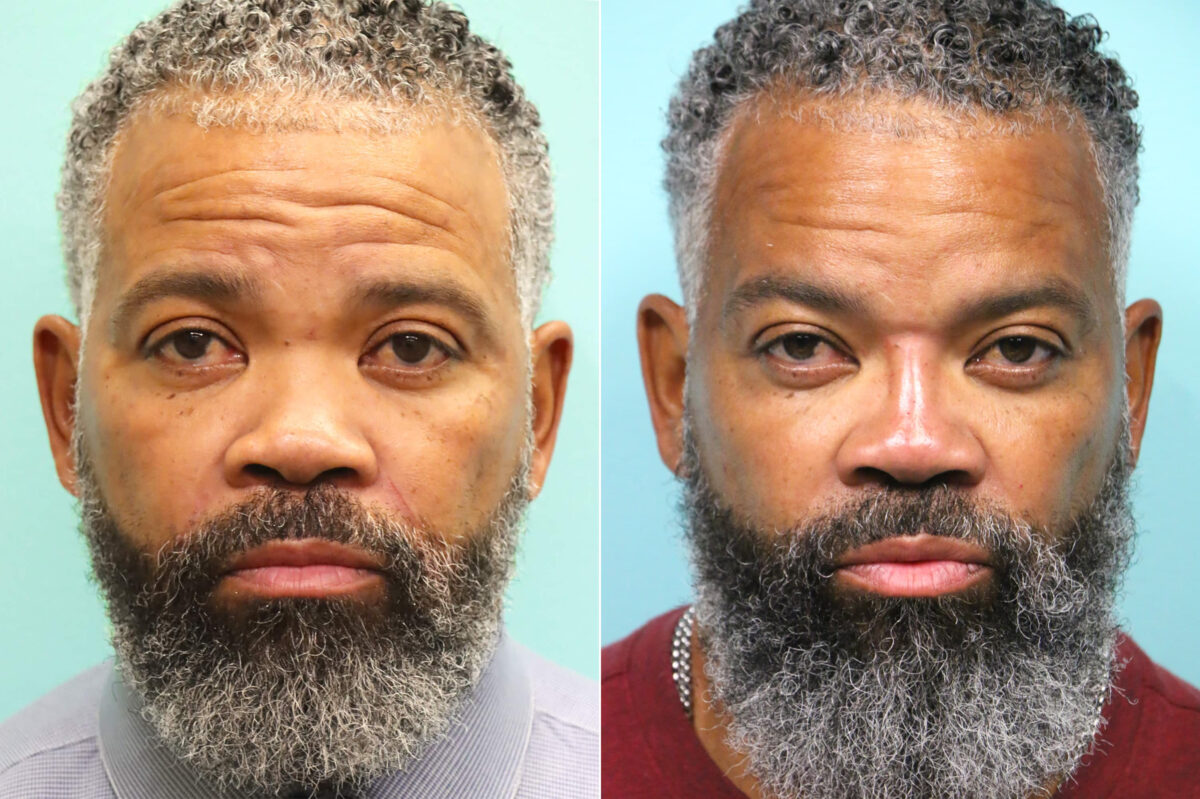
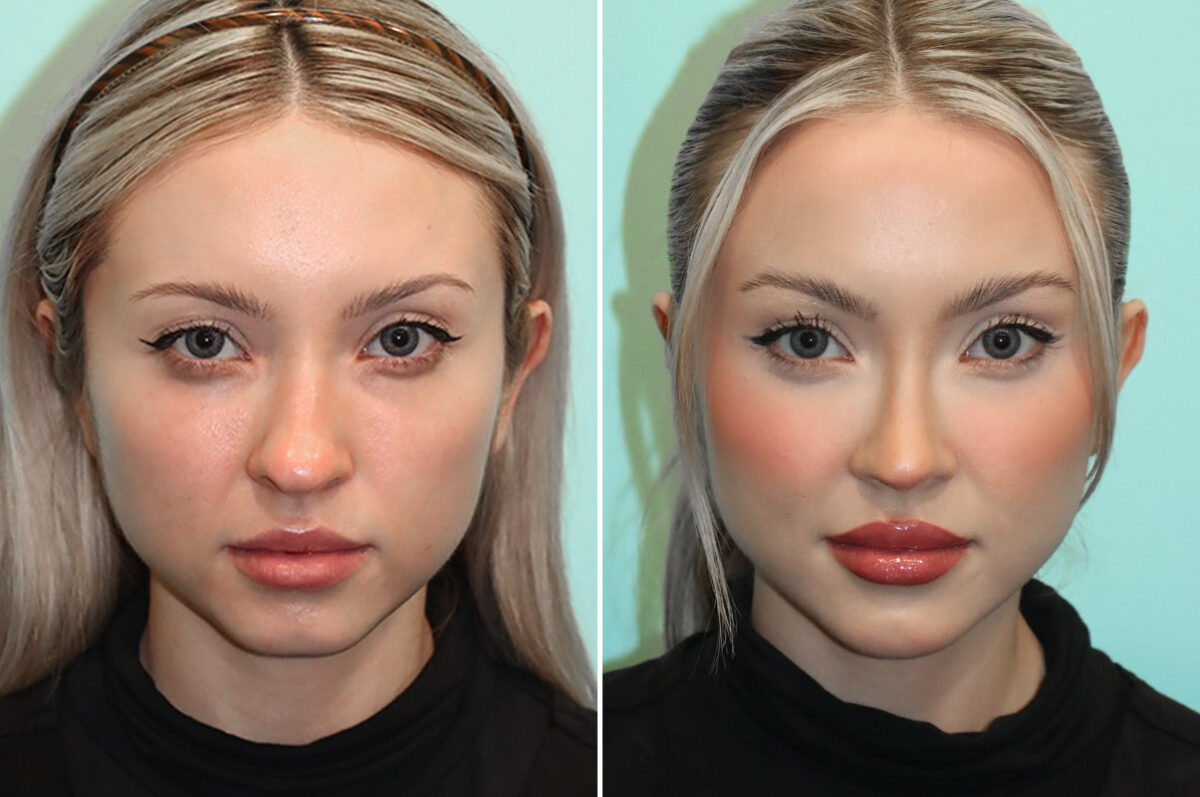
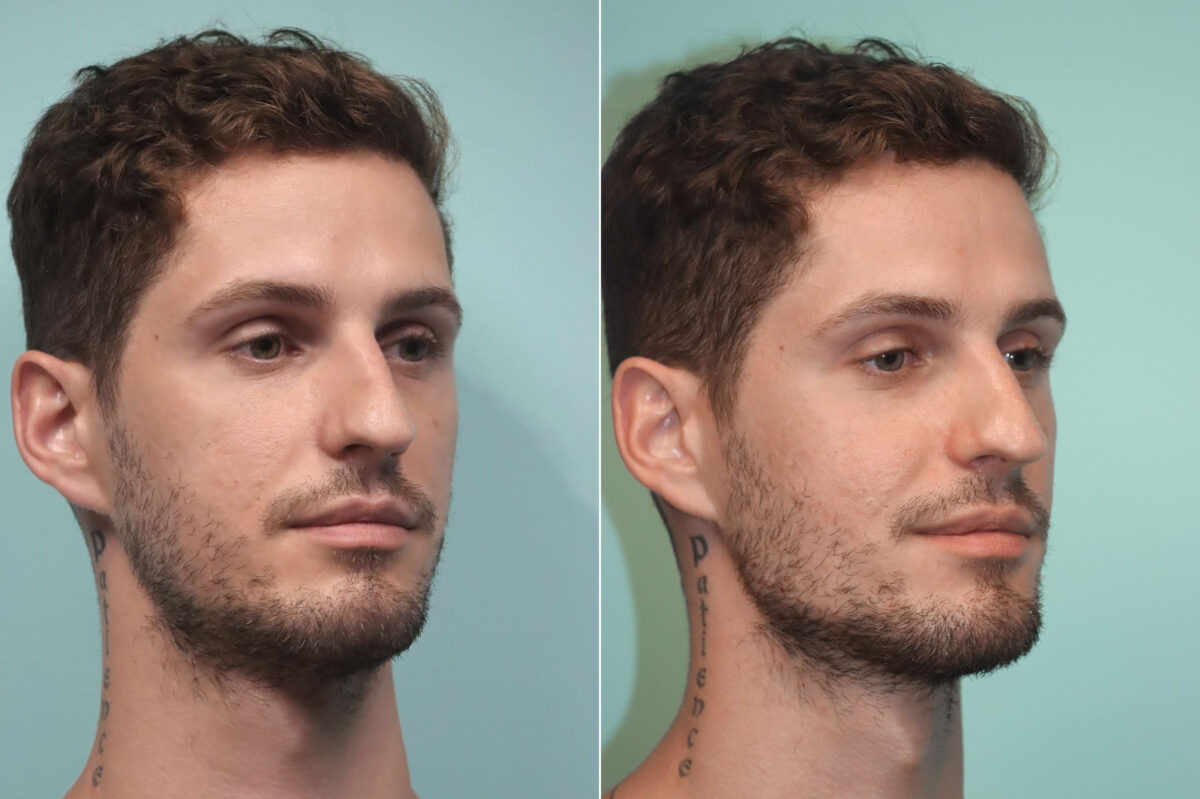
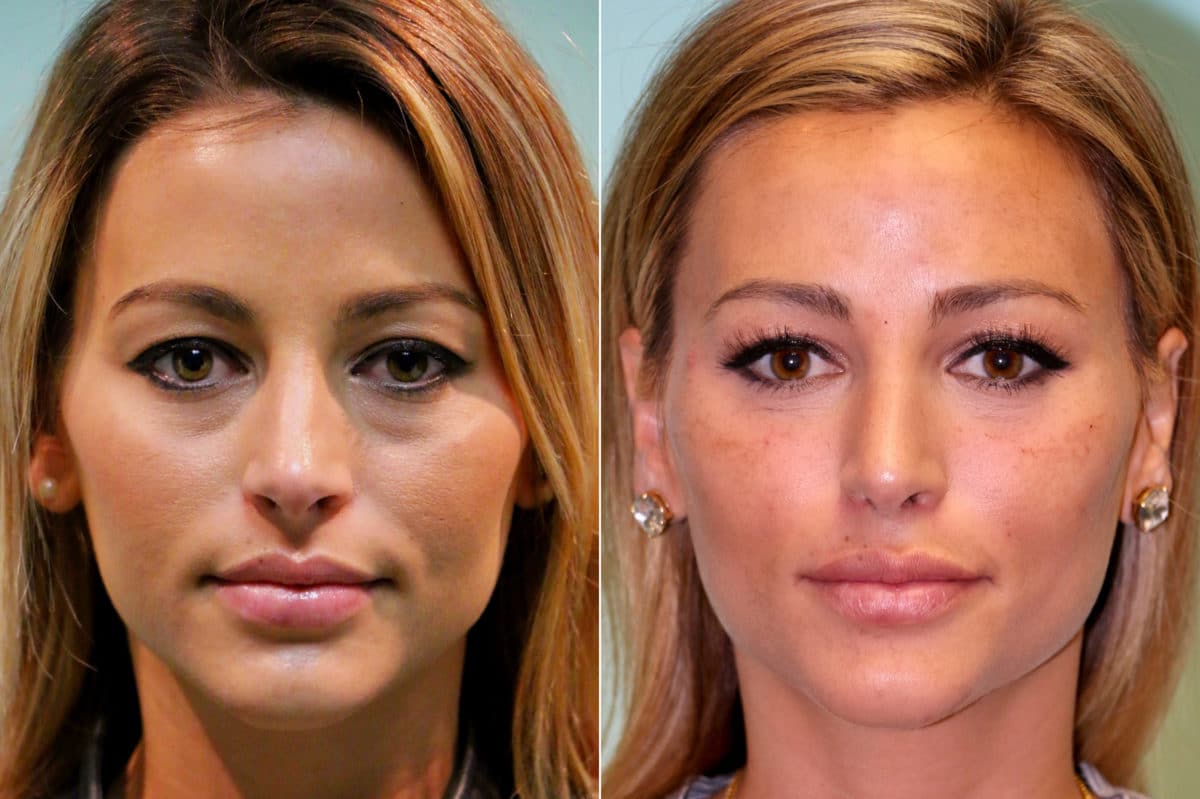
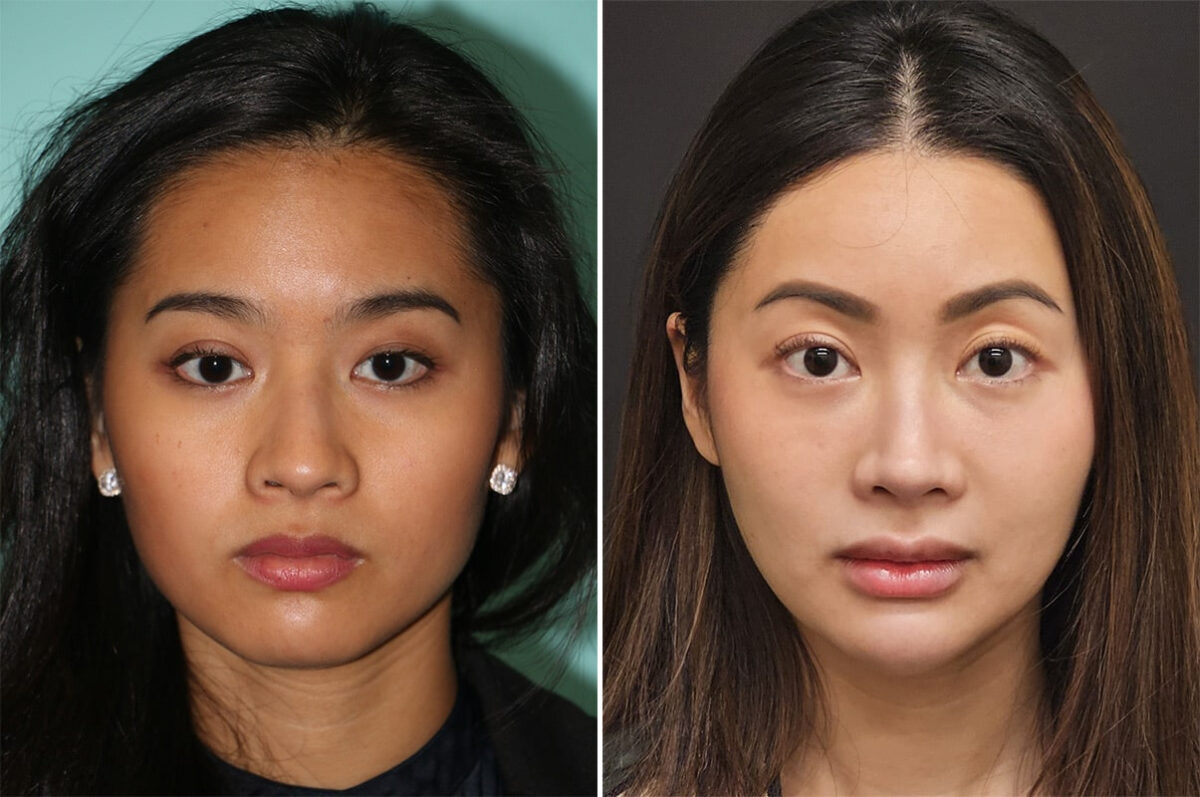
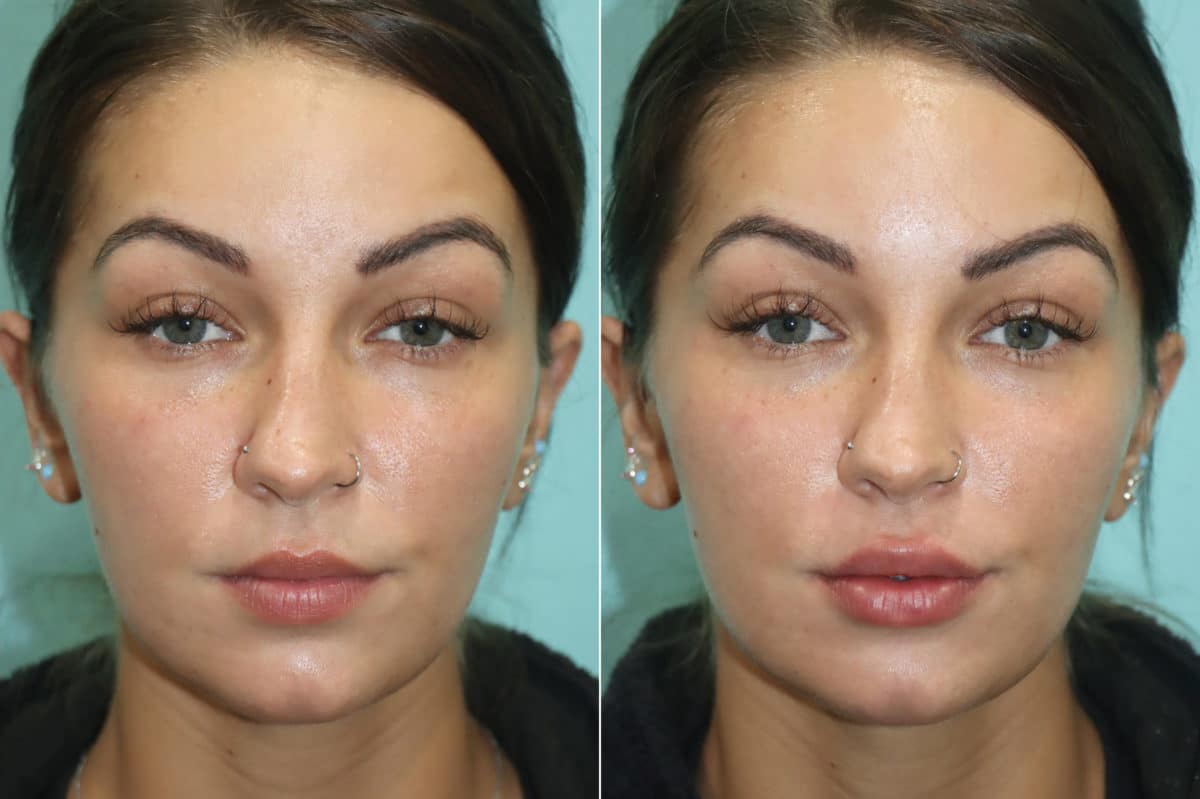
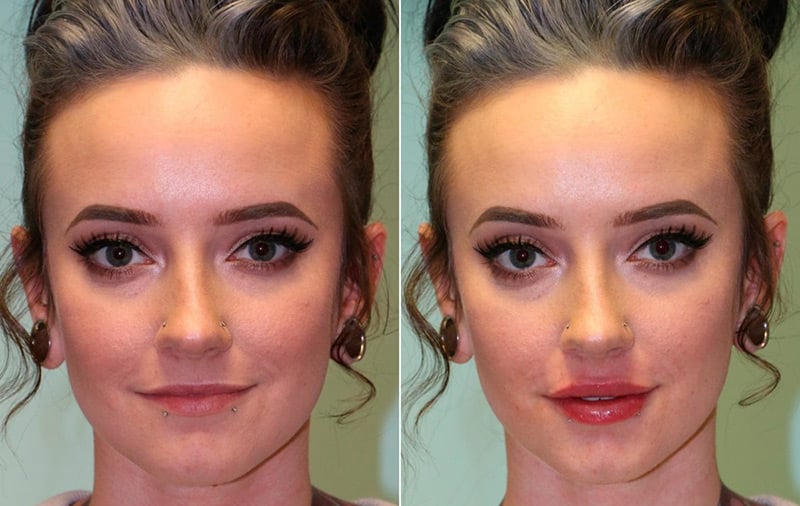
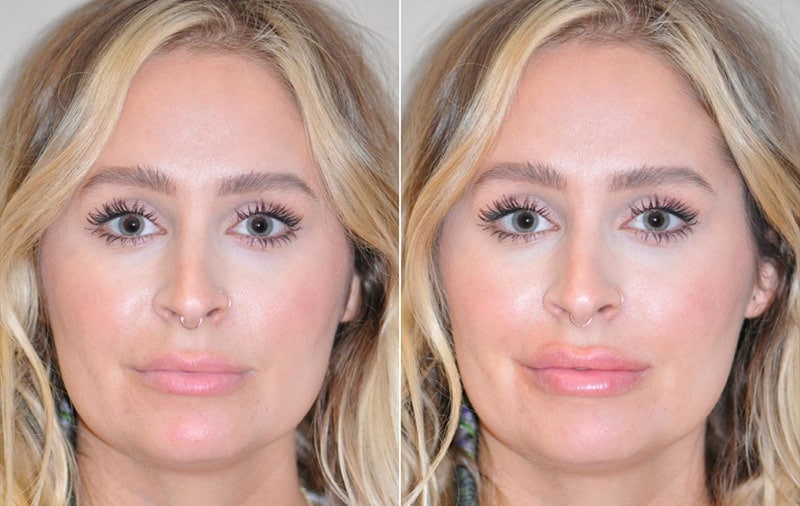
Dermal Filler Before and After Videos
Dermal Filler Patient Reviews




Who Is a Good Candidate for Dermal Fillers?
You may be a good candidate for dermal fillers if you want to improve one or more of the following without surgery:
- Lines and folds such as laugh lines, nasolabial folds, marionette lines or smoker’s lines
- Thin lips, or lips that have lost volume
- Volume loss in the cheeks, temples or under the eyes
- The shape of the nose, chin, jawline or cheekbones
- Depressed facial scars or acne scars
- Volume loss in the hands
Fillers are not the answer to every concern. Lines caused by muscle movement respond better to Botox®, very fine surface lines to laser resurfacing or a chemical peel, and significant sagging to surgery such as a facelift. At your consultation, your physician will tell you honestly which treatment will help.
How Much Do Dermal Fillers Cost in the Washington DC Area?
| Treatment | Price at The Naderi Center |
|---|---|
| Hyaluronic acid fillers (RHA®, Juvéderm®, Restylane®) | $600 to $900 per syringe |
| Sculptra® | $1,000 per vial |
| Under-eye (tear trough) filler | $1,500 per syringe |
| Non-surgical rhinoplasty | $2,500 initial treatment |
| Consultation | $250, applied to treatment performed the same day |
Every injection is performed by a physician. The number of syringes depends on the area treated and the degree of correction, and your physician will give you an exact quote at your consultation. Prices are subject to change.
Types of Dermal Fillers: Juvéderm, Restylane and RHA
Dermal fillers are made from several different materials. Today the most widely used are hyaluronic acid (“HA”) fillers, which have largely replaced the collagen fillers of the 1980s and 1990s. At The Naderi Center, our physicians use three families of hyaluronic acid fillers, the Juvéderm®, Restylane® and RHA® collections, as well as Sculptra®. Always ask the name of your dermal filler and make sure that it is an FDA approved product.
Hyaluronic Acid (HA) Fillers
Hyaluronic acid (HA) fillers are the most widely used dermal fillers. Hyaluronic acid occurs naturally in the skin, so these fillers feel soft and natural and usually do not require allergy testing.
The products differ in thickness and in how tightly the gel is cross-linked. A firmer filler supports the cheeks, chin or jawline, while a softer one suits the lips or fine lines, which is why your physician chooses a specific filler for each area.
Hyaluronic acid fillers last roughly 6 to 18 months, depending on the product and the area treated. They can be dissolved with an enzyme called hyaluronidase if a result needs to be adjusted or reversed. Each syringe holds 0.5 mL or 1 mL and contains lidocaine, a numbing medication that makes the injection more comfortable.
The Juvéderm® Collection
The Juvéderm® Collection is made by Allergan Aesthetics. Its fillers range from soft gels for the lips and fine lines to firmer gels that restore volume in the cheeks and chin.

| Juvéderm® filler | Commonly used for | Can last |
|---|---|---|
| Volbella® XC | Subtle lip fullness, lipstick lines, under-eye hollows | Up to 12 months |
| Ultra XC | Lip fullness | Up to 12 months |
| Ultra Plus XC | Deeper folds such as nasolabial folds | Up to 12 months |
| Vollure® XC | Moderate to severe wrinkles and folds | Up to 18 months |
| Voluma® XC | Cheek volume and chin augmentation | Up to 24 months |
Your physician selects the filler for each area at your consultation. Learn more about Juvéderm® fillers.
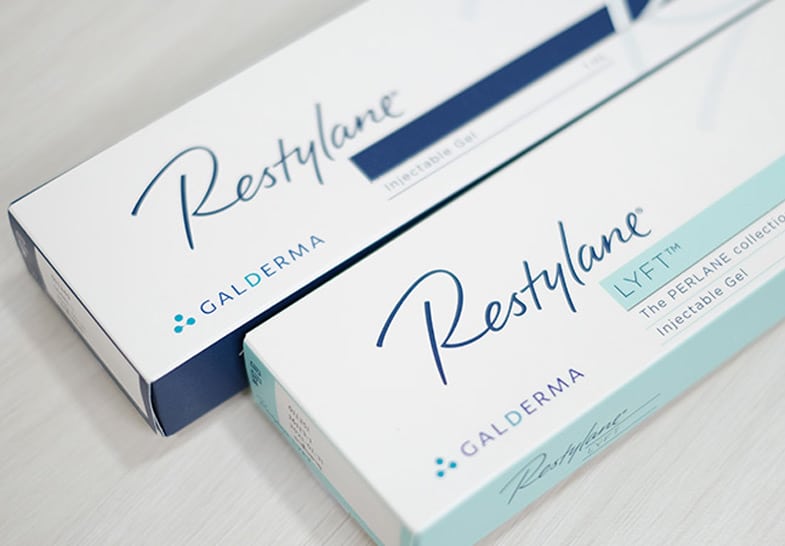
The Restylane® Collection
The Restylane® Collection is made by Galderma. It includes fillers for the lips, for lines around the mouth, and for lifting the cheeks and midface.
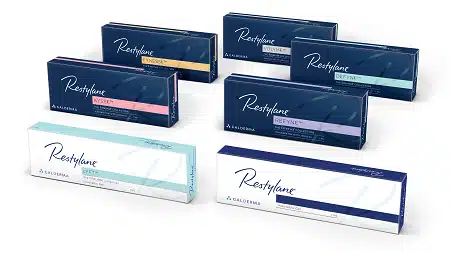
| Restylane® filler | Commonly used for | Can last |
|---|---|---|
| Restylane®-L | Wrinkles, folds and lip fullness | 6 to 12 months |
| Restylane Kysse™ | Lip fullness and lip lines | Up to 12 months |
| Restylane Refyne™ | Mild to moderate laugh lines | Up to 12 months |
| Restylane Defyne™ | Deeper laugh lines and chin | Up to 12 months |
| Restylane Lyft™ | Cheek and midface volume | Up to 12 months |
Your physician selects the filler for each area at your consultation. Learn more about Restylane® fillers.
The RHA® Collection
The RHA® Collection is made by Revance. RHA stands for resilient hyaluronic acid. These fillers are designed for the parts of the face that move, so results look natural both at rest and with expression.
| RHA® filler | Commonly used for | Can last |
|---|---|---|
| RHA® 2 | Natural lip plumping, mild wrinkles and fine lines | Up to 15 months |
| RHA® 3 | Deeper wrinkles around the nasolabial folds, lip corners and jowls | Up to 15 months |
| RHA® 4 | Volume for deep wrinkles and folds in the cheeks or jowls | Up to 15 months |
| RHA Redensity® | Fine lines around the mouth (lipstick lines) | Up to 12 months |
Your physician selects the filler for each area at your consultation. Learn more about RHA® fillers.
Other Non-Hyaluronic Acid Fillers
Radiesse (Calcium Hydroxylapatite)
Calcium hydroxylapatite is a substance that is naturally found in bones. Calcium hydroxylapatite fillers consist of tiny calcium particles suspended in a smooth white gel. CaHA fillers are thicker in consistency, and usually a larger caliber needle is used to inject them. They usually last longer than hyaluronic acid fillers; most patients can go 12 months without needing a repeat injection. Currently the only CaHA filler approved by the FDA is Radiesse®.
At The Naderi Center, Radiesse® is not a filler we prefer. Unlike hyaluronic acid fillers, it is not reversible: it cannot be dissolved if you are unhappy with the result. It can also leave calcifications that make any future facial surgery you may want more complicated, and we find its texture too stiff for the face.
“As a facial plastic surgeon, I judge a filler by what it will mean for the patient years from now. It should feel soft and natural, and it should never stand in the way of a facelift or other facial surgery they may choose later. That is why I prefer hyaluronic acid fillers, which can be adjusted or dissolved.”
Dr. Shervin Naderi
Sculptra (Poly-L-lactic Acid)
Sculptra® is made of poly-L-lactic acid, a synthetic material that has been used in medicine for years, for example in dissolvable sutures. Unlike hyaluronic acid fillers, Sculptra does not simply fill. It stimulates the skin’s own collagen-producing cells (fibroblasts) to rebuild volume gradually.
Because collagen takes time to form, Sculptra is usually given in a series of sessions, and the full result appears over several months. The results last longer than those of hyaluronic acid fillers, with touch-ups typically needed only every few years. Sculptra cannot be dissolved once injected. It is currently the only FDA-approved poly-L-lactic acid filler, and at The Naderi Center it costs $1,000 per vial.
Fat Grafting (Fat Transfer) by Dr. Shervin Naderi
Fat grafting, also called fat transfer or autologous fat injection, uses your own fat as the filler. Dr. Shervin Naderi has extensive experience with facial fat grafting and routinely performs it either as a stand-alone procedure or in combination with other facial cosmetic surgery.
Dr. Naderi removes a small amount of fat from an area such as the abdomen, hips or thighs with gentle liposuction, purifies it, and then injects it where the face has lost volume. Careful, gentle technique at each step matters, because it affects how much of the transferred fat survives.
Unlike hyaluronic acid fillers, fat is a more permanent option. Typically, about 50 percent of the transferred fat survives and lasts indefinitely, and fat placed in the face tends to survive better than fat placed in areas with less blood supply. It is a good choice for patients who do not want to, or cannot, return for repeat filler injections every 6 to 18 months.
How Dermal Fillers Restore Volume Lost with Age
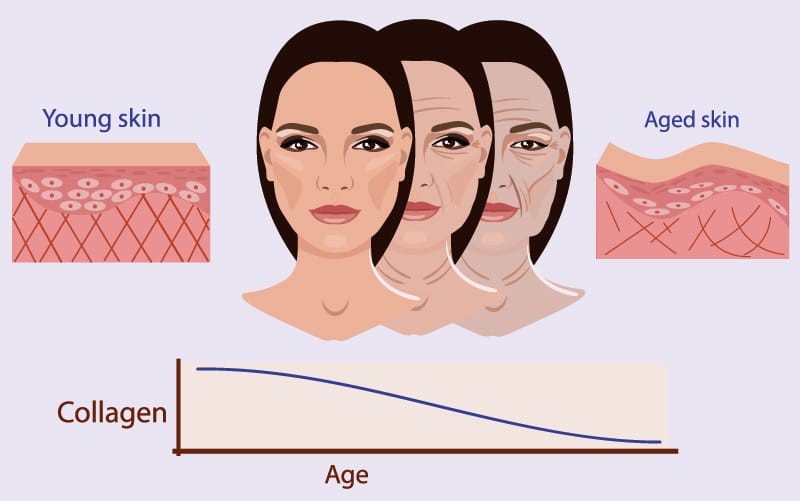
As we age, the face loses volume in its fat, muscle and bone, and the skin makes less collagen. Gravity pulls the deflated tissue downward, which creates sagging, hollows and folds. Dermal fillers treat the cause by replacing lost volume, not by pulling the skin tighter.
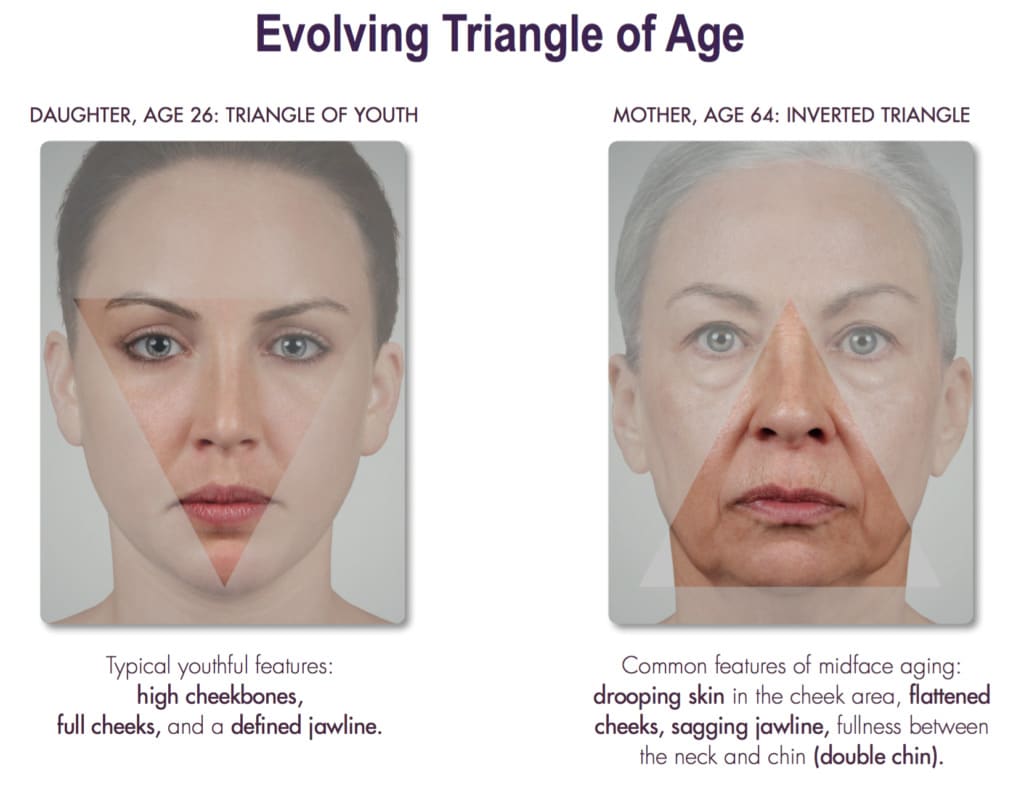
The Triangle of Youth
A youthful face is shaped like an upside-down triangle: full cheeks at the top, narrowing to a defined chin. With age the triangle inverts as the cheeks flatten and the lower face becomes heavier. Restoring volume to the cheeks, chin and jawline with dermal fillers, fat grafting or facial implants rebuilds that shape, often without surgery.
Dermal Fillers for Men
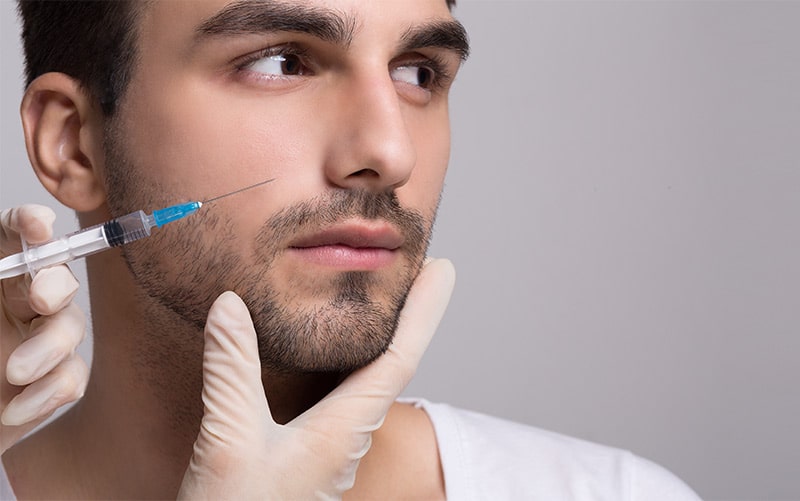
Men most often ask for a stronger jawline and chin, correction of under-eye hollows, and softening of deep nasolabial folds. Male faces have thicker skin, flatter cheeks and a more angular jaw, so filler is placed differently than in women to keep the result masculine. Dr. Naderi and Dr. Snodgrass tailor every treatment so you look rested and defined, not “done.”
Dermal Filler Areas: Lips, Cheeks, Under-Eyes, Jawline
Dermal fillers can treat most areas of the face, and a few beyond it. The filler and the technique differ for each area, so your physician recommends a plan after examining your face. These are the areas we treat most often.
Filler for Forehead Lines
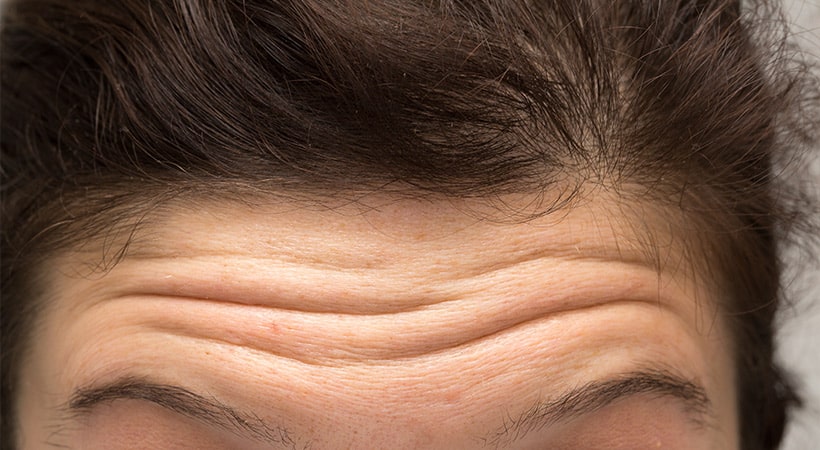
Deep horizontal forehead lines form when heavy brows and upper eyelids make you raise your eyebrows, often without noticing, to keep the eyes open. Treating them usually takes Botox® to relax the muscle and a small amount of filler to soften the lines that remain at rest.

Filler for Frown Lines (the “Elevens”)
Frown lines between the eyebrows come from frowning, squinting, or even sleeping on one side of the face. Botox® is the main treatment because it relaxes the corrugator muscles that create them. In more advanced cases, filler is added to improve lines that are visible at rest. This is one of the most complex areas of the face to inject safely, and it should only be treated by physicians with detailed knowledge of the anatomy.
Temple Filler
Temples can hollow with age, giving the upper face a pinched look. In some people who otherwise look youthful, it is the only sign of facial aging. Filler or fat grafting restores the volume and brings back width to the upper face.
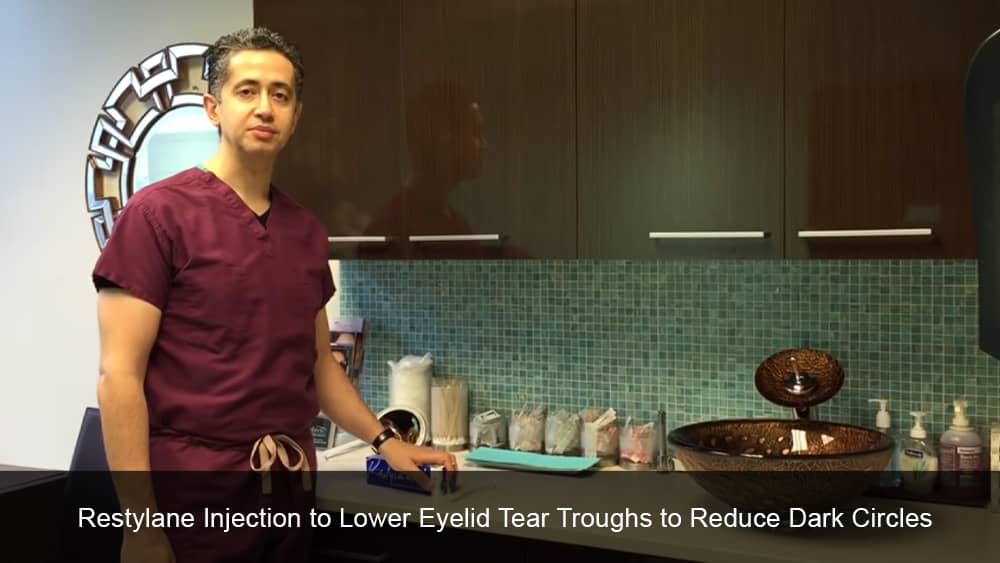
Under-Eye Filler (Tear Troughs)
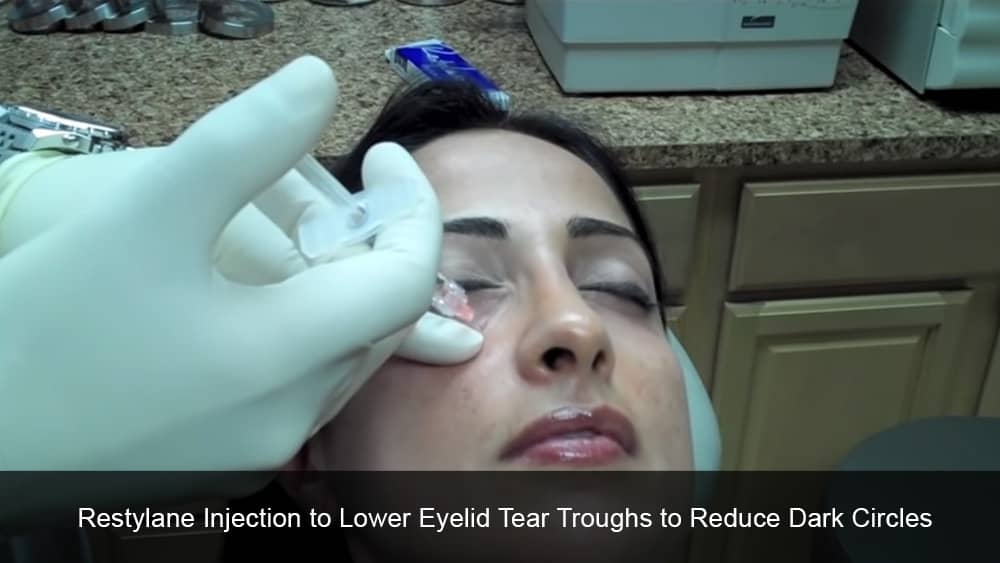
The tear trough is the groove under the eye. When it hollows, it casts a dark shadow on the lower eyelid, so you look tired even when you are well rested. Filler smooths the hollow. At The Naderi Center under-eye filler costs $1,500 per syringe, and most patients need one to two syringes. The best candidates are younger patients with thicker skin and mild to moderate hollowness. If you have true under-eye bags, a lower blepharoplasty is the better solution, and we will tell you so rather than have you spend money on filler that will not help.
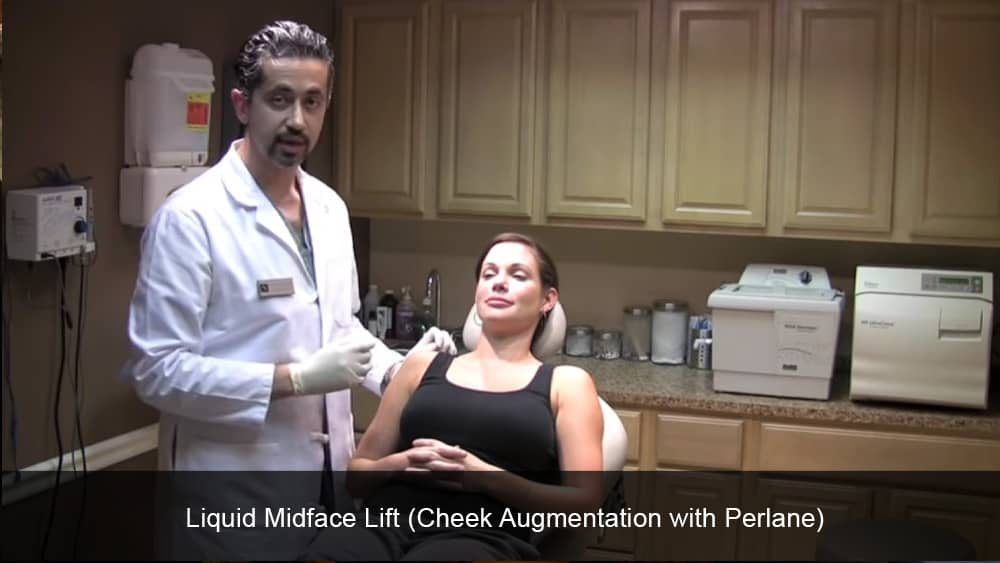
Cheek Filler
Cheek filler serves two purposes. In younger patients it adds contour to the cheekbones. In patients who have lost fat and collagen with age, it restores volume to the midface, which also lifts and softens the nasolabial folds.
Nose Filler (Non-Surgical Rhinoplasty)
Filler placed just under the skin of the nose, known as a non-surgical rhinoplasty, can smooth a hump, raise the bridge, refine the tip and make the nose look straighter and slimmer. Results last about 6 to 12 months, and an initial treatment at The Naderi Center is $2,500. It is not right for everyone: filler adds volume, so it cannot make a large nose smaller. Some patients choose it because they are not ready for surgery, or to preview a change before committing to rhinoplasty.
Nasolabial Fold Filler (Laugh Lines)
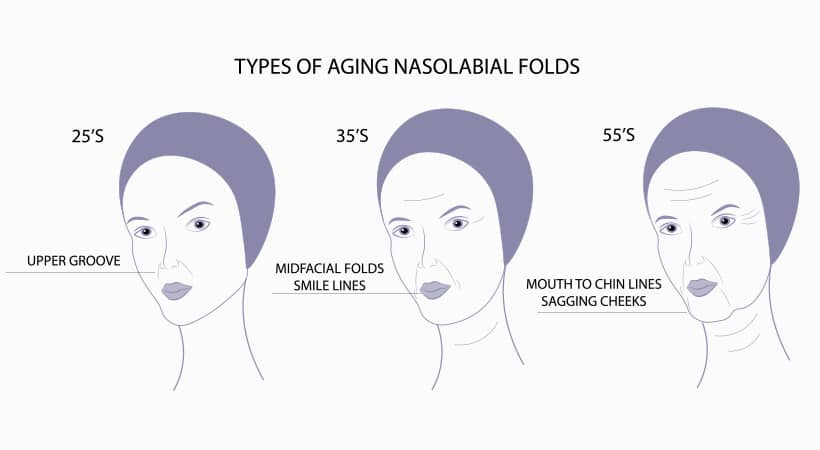
Nasolabial folds run from the nose to the corners of the mouth. Nearly everyone has them, and they deepen as the cheeks lose fat and collagen. Filling the folds directly is not always the best answer, because overfilling this area pushes the face forward and looks unnatural. Our physicians often treat the cheeks instead, which lifts the folds and softens them naturally.
Marionette Line Filler
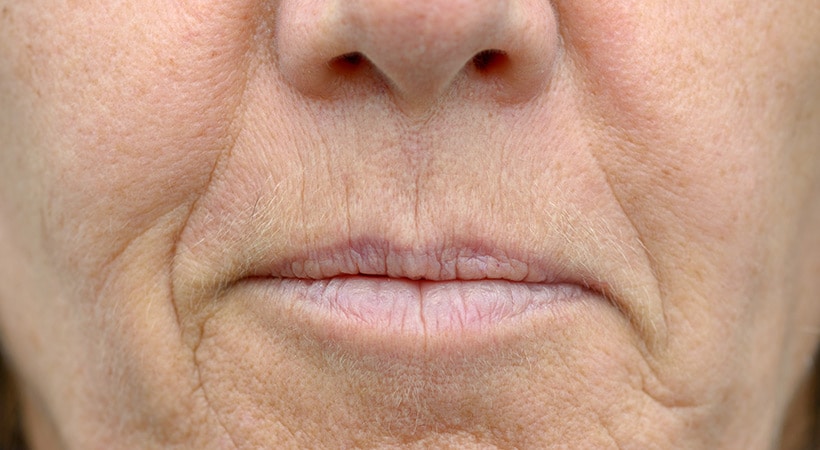
Marionette lines run from the corners of the mouth down toward the chin and can make a person look sad or stern when they are not. They form as gravity and loss of elasticity pull the lower face downward, and heredity plays a large part. Filler significantly softens them.
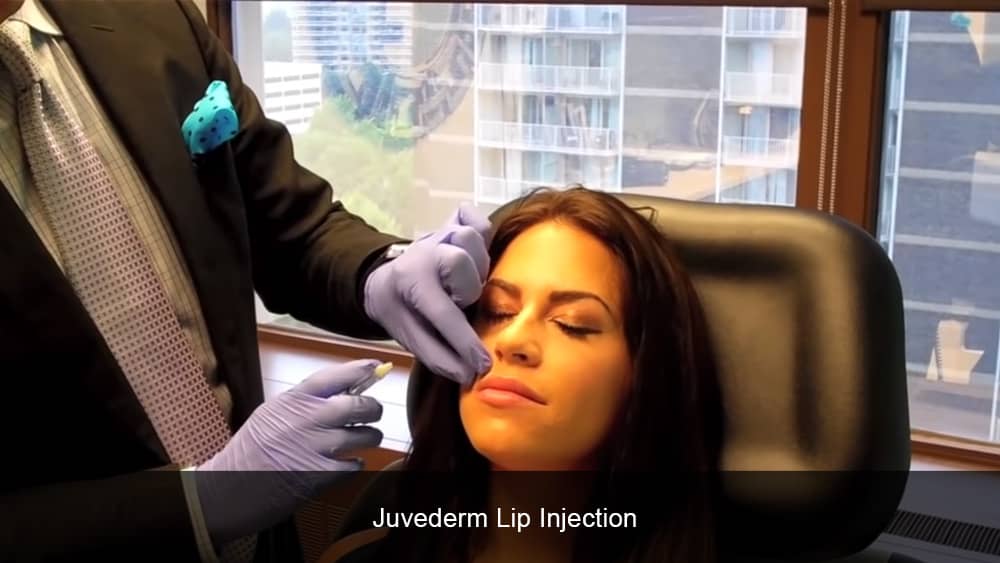
Lip Filler
Lip filler adds volume, refines the shape of the lips, corrects asymmetry and smooths lip lines. As a guide to proportion, the upper lip should have about two-thirds the volume of the lower lip. Results can be subtle or full, but the best ones fit the face. Our physicians build the lips gradually and conservatively, which avoids the overdone “duck lip” look.
Jawline Filler and Jowls
Filler along the jawline sharpens its definition in both women and men, and can give men a stronger, more square jaw. With age, loss of bone and collagen blurs the jawline and jowls form. Filler placed in the hollow in front of the jowl (the pre-jowl sulcus) blends the jowl into the chin and makes it less noticeable.
Chin Filler
Chin filler smooths chin wrinkles and adds projection to a recessed chin. Because the chin shapes the whole lower face, a small change improves overall balance: a short chin makes the face look rounder, a stronger chin more oval. In men, a more angular chin reads as more masculine. It is a good option for patients who want a stronger chin and jawline without a surgical chin implant.
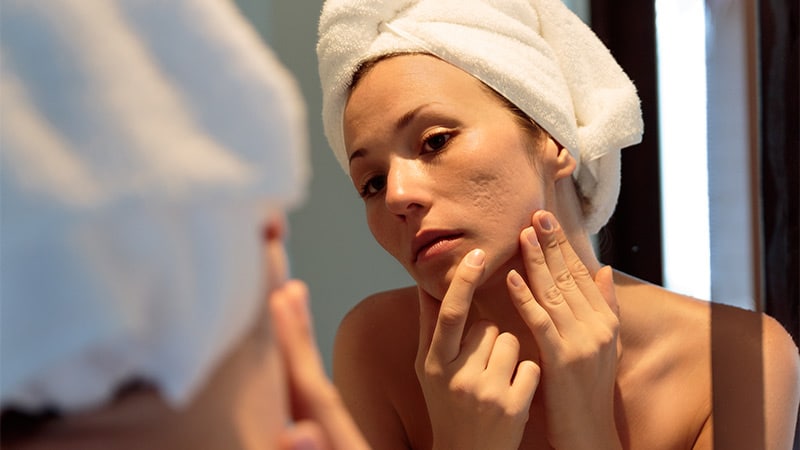
Filler for Acne Scars
Depressed acne scars can be lifted with small amounts of filler, which smooths the overall texture of the skin.
Watch a chin filler treatment
Earlobe Filler
Earlobes lose collagen and deflate with age, which makes them sag and crease. A small amount of filler plumps the earlobe and can make stretched earring holes less noticeable.
Hand and Body Filler
Fillers are also used beyond the face: on the backs of the hands, the balls of the feet, the female genital area, depressions left by previous liposuction or scars, and for buttock enhancement.
Dermal Filler Injection Techniques: Needle vs. Cannula
How a filler is injected matters as much as which filler is used, both for a natural result and for safety. Even in experienced hands, filler can enter a blood vessel and block it, which is called a vascular occlusion. If that is not recognized and treated quickly, the skin supplied by that vessel can be damaged. This is the main reason fillers should be injected by a physician who knows facial anatomy in detail and can recognize and treat a complication quickly. At The Naderi Center, every filler injection is performed by a board-certified facial plastic surgeon or dermatologist.
Our physicians choose among several injection techniques, depending on the area and the filler:
| INJECTION TECHNIQUE | DESCRIPTION |
|---|---|
| Fern pattern | Very small amounts of filler placed in a leaf-shaped pattern to soften dynamic facial lines. |
| Linear threading | The needle is inserted along the fold, and filler is placed in a line as the needle is slowly withdrawn. |
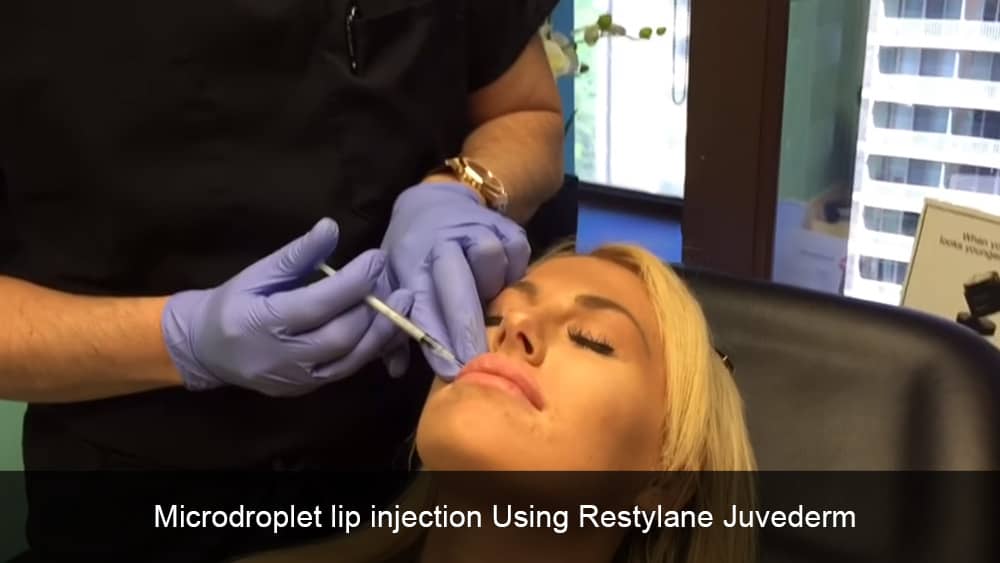
| Serial puncture (microdroplet) | Tiny droplets of filler placed at injection points very close together. |
| Fanning | Like linear threading, but the needle changes direction just before leaving the skin, placing several lines from one entry point. |
| Cross-hatching | A series of parallel lines of filler crossed by a second, perpendicular series. |
| Depot | Small deposits of filler placed one after another in the treatment area. |
| Cone or tower | The needle goes straight down to the bone, and filler is placed in a pyramid shape, with more near the bone than near the skin. |
Cannula vs. Sharp Needle for Filler Injections
A cannula is a thin tube with a rounded, blunt tip. Because the tip is not sharp, it is less likely to pierce small blood vessels, and it lets the injector place filler over a wider area through fewer entry points. The benefits of a cannula include:
- Less bruising and bleeding
- Less discomfort, because there are fewer needle sticks
- A lower risk of vascular occlusion
- Less swelling and downtime
A sharp needle is the better tool when a very small, precisely placed amount of filler is needed: filling acne scars or fine lines, touch-ups, and small details such as the cupid’s bow of the upper lip. A sharp needle with a micro-droplet technique gives the most precise placement of filler, and it is the method our physicians prefer at The Naderi Center.
How to Prepare for Dermal Fillers
Good preparation reduces bruising and swelling and makes your filler treatment safer. The most important step is to avoid foods, supplements and medications that thin the blood for two weeks before your appointment. Your physician injector, Dr. Naderi or Dr. Snodgrass, will review your medical history and medications with you at your consultation.
Two Weeks Before Your Dermal Filler Appointment
Follow Our Dietary Restrictions
For two weeks before treatment, avoid nuts, seeds, fish, fish oil, and anything else that prolongs bleeding. These increase your risk of bruising.
Take Arnica Supplements
Start Arnica montana one week before your appointment to help limit bruising. It is available at Whole Foods, GNC, CVS and at The Naderi Center.
Stop Certain Medications and Supplements
Avoid aspirin, ibuprofen and other NSAIDs, vitamin E and herbal supplements for two weeks. Never stop a prescribed blood thinner or any life-saving medication without approval from the physician who prescribed it.
Prevent Cold Sores
If you get cold sores, tell us before lip or mouth-area filler. Your physician will prescribe an antiviral medication to start before treatment.
The Day of Your Dermal Filler Appointment
Eat and Drink Before Your Treatment
Have a meal and stay hydrated. This helps prevent feeling lightheaded or faint during injections.
Minimize Makeup and Lotions
Arrive with a clean face if possible. We cleanse the skin thoroughly before injecting to lower the risk of infection.
Arrive 30 Minutes Early for Numbing
Topical numbing cream takes 20 to 30 minutes to work. Arriving early makes your injections far more comfortable.
Book Your Next Appointment
Because all injections are performed by our physicians, their schedules fill three to four months ahead. Reserve your next visit before you leave.
Dermal Filler Recovery and Aftercare
Most patients return to work and normal activities the same day as their filler injections. Mild swelling, tenderness and bruising are normal and usually settle within a few days, though bruising can last up to two weeks. If numbing cream was used, the area stays numb for one to two hours. Following our post-procedure instructions shortens your recovery.
Ice the Area
Apply crushed ice or a small bag of frozen peas gently, 20 minutes on and 20 minutes off, for the first 48 hours. Do not use heavy ice packs.
Avoid Strenuous Exercise for 48 Hours
Exercise raises blood flow to the face and can increase swelling and bruising. Walking is fine.
Do Not Massage or Rub the Area
Unless your physician tells you otherwise, do not massage or press on the treated area. Wash your face gently and avoid facials and scrubbing for one week.
Cover Bruises with Makeup
You can apply makeup or concealer the same day.
Avoid Glasses After Nose Filler
After non-surgical rhinoplasty, glasses and swim goggles can press on the filler. Bring them to your appointment so your physician can advise you.
Take Arnica
Arnica supplements help bruises fade faster.
Eat Pineapple
Pineapple contains bromelain, a natural anti-inflammatory that may help reduce swelling.
Wait Two Weeks to Judge Your Result
Swelling, bruising and minor asymmetry are normal at first. Your final result is visible at about two weeks.
Take Tylenol for Soreness
Acetaminophen (Tylenol) is usually enough. Avoid ibuprofen, Motrin and other NSAIDs, which make bruising and swelling worse.
When to call us: Contact The Naderi Center right away if you have severe or worsening pain, skin that turns white, gray or blotchy, or any change in vision. These are rare but need immediate attention from your physician.
Are Dermal Fillers Safe? Risks and Side Effects
Dermal fillers are very safe when injected by an experienced physician, but every injection carries some risk. Most side effects are mild, expected, and resolve on their own within two weeks. At The Naderi Center, all filler injections are performed by Dr. Naderi or Dr. Snodgrass, who have detailed knowledge of facial anatomy and are trained to recognize and treat complications immediately.
Bruising
Bruises usually last one to two weeks, and a heavy bruise can take up to four weeks. They can appear several days after treatment. The lips and tear troughs bruise most easily because they have more blood vessels.
Swelling
Swelling takes about two weeks to settle and is often uneven from side to side. Icing and sleeping with your head elevated help. Avoid exercise for 48 hours and do not massage the area.
Asymmetry
Early asymmetry is usually swelling, so wait two weeks before judging. Patients also tend to notice natural asymmetries they have always had once they begin studying their face closely.
Lumps and Bumps
Filler feels firmer than your own tissue at first. This usually improves within two weeks as swelling resolves. Do not massage the area unless your physician tells you to.
Subtle Results
One syringe holds about one-fifth of a teaspoon. Our physicians are conservative and prefer to build volume gradually, so you may want more filler once swelling subsides. Results from a first treatment tend to fade faster; with repeat treatments they last longer as collagen builds around the filler.
Dry Lips
Lips feel drier after injections. Keep them moisturized with Vaseline or Aquaphor and ice for no more than 20 minutes at a time.
Rare but Serious Complications
- Vascular occlusion: filler entering or compressing a blood vessel, which can injure the skin (necrosis) and, very rarely, cause vision loss
- Allergic or hypersensitivity reaction
- Infection or sterile abscess
- Cold sore (herpes simplex) outbreak
- Acne breakout
Hyaluronic acid fillers can be dissolved with hyaluronidase, which our physicians keep on hand in both offices to treat a vascular occlusion right away.
Call our office immediately if you have severe or increasing pain, skin that turns white, gray or blotchy, or any change in vision after filler injections.
For an independent overview of filler safety, see the U.S. Food and Drug Administration’s guide to dermal fillers.
How Long Do Dermal Fillers Last?
Hyaluronic acid fillers typically last 6 to 18 months, depending on the product, the area treated and how much filler is placed.
What Affects How Long Dermal Fillers Last?
- Treatment area. Filler breaks down faster in areas that move constantly, such as the lips, and lasts longer in areas that move little, such as the under-eye tear troughs and the nose.
- The filler used. Firmer, more cross-linked fillers placed deep for structure generally outlast softer fillers placed near the surface.
- Your metabolism and lifestyle. Some patients simply break filler down faster than others.
- Whether you reached full correction. This is the factor patients most often overlook.
Why “Full Correction” Matters
Full correction means using the amount of filler the problem actually requires. Deep nasolabial folds, for example, may need two to three syringes of RHA® 3 for the best result. A patient who chooses one syringe will look improved right after treatment while the area is swollen, then feel the filler “disappeared” a few days later once the swelling settles. The filler is still there, and can remain for a year or more. There was simply not enough of it to fully correct the fold.
At The Naderi Center, your physician will tell you at your consultation how many syringes full correction requires, so you know what result to expect before you are treated.
How Often Do Dermal Fillers Need to Be Repeated?
Most patients repeat hyaluronic acid filler every 6 to 18 months to maintain their result. Returning for a touch-up before the filler has fully worn off usually takes less product than starting over.
What Affects How Often Fillers Are Repeated
- Filler type. Firmer, more cross-linked fillers last longer than softer ones.
- Volume previously injected. Areas brought to full correction hold their result longer than areas that were under-treated.
- Area of the face injected. Lips move constantly and need treatment most often. Cheeks, chin, jawline and tear troughs move less and hold filler longer.
| Treatment area | Typical repeat interval |
|---|---|
| Lips | 6 to 9 months |
| Nasolabial folds and marionette lines | 9 to 15 months |
| Cheeks, chin and jawline | 12 to 18 months |
| Under-eye tear troughs | 12 to 18 months |
| Non-surgical rhinoplasty | 6 to 12 months |
How long a filler lasts depends on its hyaluronic acid concentration and how tightly it is cross-linked. Your physician will choose between RHA®, Juvéderm and Restylane based on the area and the result you want, and will tell you when to plan your next visit.
Physician Filler Injectors Serving Washington DC, Virginia and Maryland
The Naderi Center has two offices in the Washington, DC metropolitan area (the DMV). At both, every dermal filler injection is performed by a physician, never by a nurse injector or physician assistant.
Reston, Virginia. Our Northern Virginia office is at 1850 Town Center Parkway, Pavillion II, Suite 551, Reston, VA 20190. It is convenient for patients from Herndon, Great Falls, Vienna, Tysons, McLean, Sterling, Ashburn and Fairfax. Call 703-481-0002.
Chevy Chase, Maryland. Our Maryland office is at 5454 Wisconsin Avenue, Suite 1655, Chevy Chase, MD 20815, in Friendship Heights. It is close to Bethesda, Potomac, Rockville, Silver Spring and Northwest Washington, DC. Call 301-222-2020.
You can also book a filler consultation online.
Medically reviewed by Dr. Shervin Naderi, double board-certified facial plastic surgeon. Last updated October 2026.
Dermal Fillers FAQs
Who performs filler injections at The Naderi Center?
Every dermal filler injection at The Naderi Center is performed by a physician: Dr. Shervin Naderi, a double board-certified facial plastic surgeon, or Dr. Alexandra Snodgrass, a board-certified dermatologist. We do not use nurse injectors, physician assistants or aestheticians for filler injections.
How much do dermal fillers cost in the Washington DC area?
At The Naderi Center, hyaluronic acid fillers such as RHA®, Juvéderm® and Restylane® cost $600 to $900 per syringe. Sculptra® is $1,000 per vial, and under-eye (tear trough) filler is $1,500 per syringe. A consultation is $250, which is applied to your treatment when it is performed the same day. See our full injectable price list.
How much do two syringes of filler cost?
Two syringes of hyaluronic acid filler cost $1,200 to $1,800 at The Naderi Center, based on our price of $600 to $900 per syringe. Deeper folds, such as the nasolabial folds, may need two to three syringes for full correction, while smaller areas may need one syringe or less.
Which dermal fillers do you use?
We use FDA-approved hyaluronic acid fillers from the Juvéderm®, Restylane® and RHA® collections, as well as Sculptra®. Each product differs in thickness and flexibility, so your physician chooses the filler for each area at your consultation.
How long do dermal fillers last?
Most hyaluronic acid fillers last about 6 to 18 months, and some last up to two years. For example, Restylane Kysse™ can last up to 12 months in the lips, RHA® 2, RHA® 3 and RHA® 4 up to 15 months, Juvéderm Vollure® up to 18 months, and Juvéderm Voluma® up to 24 months in the cheeks. Fillers last a shorter time in mobile areas such as the lips and longer in less mobile areas such as the tear troughs or the nose. Results also tend to last longer when the area is fully corrected and with repeat treatments.
How many syringes of filler will I need?
It depends on the area and how much volume has been lost. One syringe holds about one-fifth of a teaspoon. Deep nasolabial folds may need two to three syringes for full correction, while most tear trough patients need one to two syringes. Our physicians are conservative and prefer to add volume gradually rather than over-inject.
Do filler injections hurt?
Most patients tolerate filler injections well. We apply numbing cream for 20 to 30 minutes before treatment, and today’s hyaluronic acid fillers contain lidocaine, a numbing medication that helps minimize discomfort during the injection. Some soreness afterwards is normal, and most patients find that Tylenol is enough to relieve it.
How long is the recovery after dermal fillers?
Some swelling, pinpoint bleeding and bruising are normal after filler injections. Bruising usually lasts one to two weeks, and initial swelling takes about two weeks to settle. We recommend icing, avoiding strenuous exercise for 48 hours, and waiting two weeks before judging your final result. See our filler aftercare instructions.
Can dermal fillers be dissolved?
Yes. Hyaluronic acid fillers such as RHA®, Juvéderm® and Restylane® can be dissolved with an injectable enzyme called hyaluronidase. At The Naderi Center, dissolving treatment starts at $500. We also see patients who are unhappy with filler placed elsewhere; learn more about reversing botched fillers. Fillers that are not made of hyaluronic acid, such as Sculptra® and Radiesse®, cannot be dissolved this way.
Am I too old for dermal fillers?
There is no upper age limit for dermal fillers. What matters is your anatomy and what you want to improve. Fillers restore lost volume and soften lines, but they cannot remove loose skin. When sagging of the face and neck is the main concern, a surgical procedure such as a facelift may be the better option, and your physician will tell you honestly which treatment will help most.
What are the limitations of dermal fillers?
Fillers simply “fill” or add volume. If addition of volume fixes the problem then fillers are the answer. But in some cases “dynamic wrinkles,” or wrinkles that get worse with expression or movement, need to be treated with Botox or Dysport. The wrinkles that are already present at rest known as “static wrinkles” can be improved with RHA, Restylane or Juvéderm fillers as long as the wrinkles or lines are not extremely superficial.
Lines or wrinkles that are extremely superficial need additional procedures such as CO2 laser chemical peels or dermabrasion. Addition of fillers to very superficial lines may create a lump in the area. Also some lines may not be present at rest but show up with expression. Addition of fillers to these lines in order to improve their appearance during expressions or movement may result in lumps appearing at rest.
How can dermal fillers be used for men?
More men are coming in for facial cosmetic procedures than ever before. The key in treating men is thorough understanding of the facial anatomy so that fillers are added to the proper locations to maintain a masculine and natural appearance. While feminization procedures are possible especially for transgender patients, the vast majority of men want to maintain a natural masculine appearance.
For example, while Juvederm Ultra Plus or Restylane Lyft is added to women to create sexy high cheekbones, in men, the same fillers are added in a different location of the cheeks to create youthful volume and not a high feminine cheekbone. For men, the biggest obstacle is bruising and the inability to cover the bruises the way women would with makeup. But despite this, men typically bruise less and recover faster due to their thicker skin.
How do I know if I need Botox or Fillers?
Dermal fillers are often used in older patients to smooth out wrinkles or lines. For example, use of Botox to the forehead at a younger age can prevent lines from forming. But if a person has not been using Botox and shows up to a plastic surgeon in her 60’s, she may have developed deep wrinkles in that area from years of scowling or frowning. Botox will still be needed to relax the muscles responsible for the wrinkles but additionally dermal fillers like Restylane or Juvederm may also be needed to plump up and smooth out the deep wrinkles.
What should I avoid before a filler appointment?
For two weeks before your appointment, avoid nuts, seeds, fish, fish oil, NSAIDs such as ibuprofen, and supplements that prolong bleeding. This significantly reduces bruising and swelling. Come with minimal makeup and arrive 30 minutes early for numbing cream. See our filler pre-treatment instructions.
Where can I get dermal fillers near Washington DC?
The Naderi Center has two offices in the Washington DC area. Our Reston, Virginia office is at 1850 Town Center Parkway, Pavillion II, Suite 551, and our Chevy Chase, Maryland office is at 5454 Wisconsin Avenue, Suite 1655, in Friendship Heights on the DC line. Patients come to us from Washington DC, Bethesda, Potomac, McLean, Tysons, Great Falls and across Northern Virginia and Maryland. For out-of-town patients we offer virtual consultations before your visit.