The aesthetic world is experiencing a significant transformation. For more than ten years, cosmetic trends maintained their focus on three specific features, which included visibly augmented cheeks, exaggerated lips, and over-projected facial contours. Patients today, however, choose a different path. The modern standard of beauty is no longer obvious enhancement — it is refinement that cannot be detected.
This shift is not subtle. Patients across all age groups are actively requesting natural outcomes, dissolving excessive filler, and seeking providers known for restraint rather than volume. The goal is no longer to look “done.” The goal is to look rested, balanced, and structurally youthful without anyone knowing why.

The New Standard of Aesthetic Beauty
- Facial harmony prioritizes balance and proportion over isolated feature changes.
- Treating the face as an interconnected whole leads to results that look natural rather than “done.”
- Profile, eyes and skin quality assessment contribute more significantly to determining facial balance than other facial features.
- Aesthetic outcomes maintain their natural attractiveness throughout time because harmony-based planning techniques create successful results.
- The Naderi Center uses this treatment philosophy to develop customized facial aesthetic solutions for its patients.
How Social Media Influenced the Overfilled Era
The overfilled era was fueled largely by social media visibility. High-contrast lighting, filters, and camera distortion rewarded exaggerated facial volume. What looked dramatic on screen often looked unnatural in real life. Over time, patients began noticing that highly filled faces did not age gracefully — and in many cases, they distorted facial proportions.
A More Educated and Aware Patient
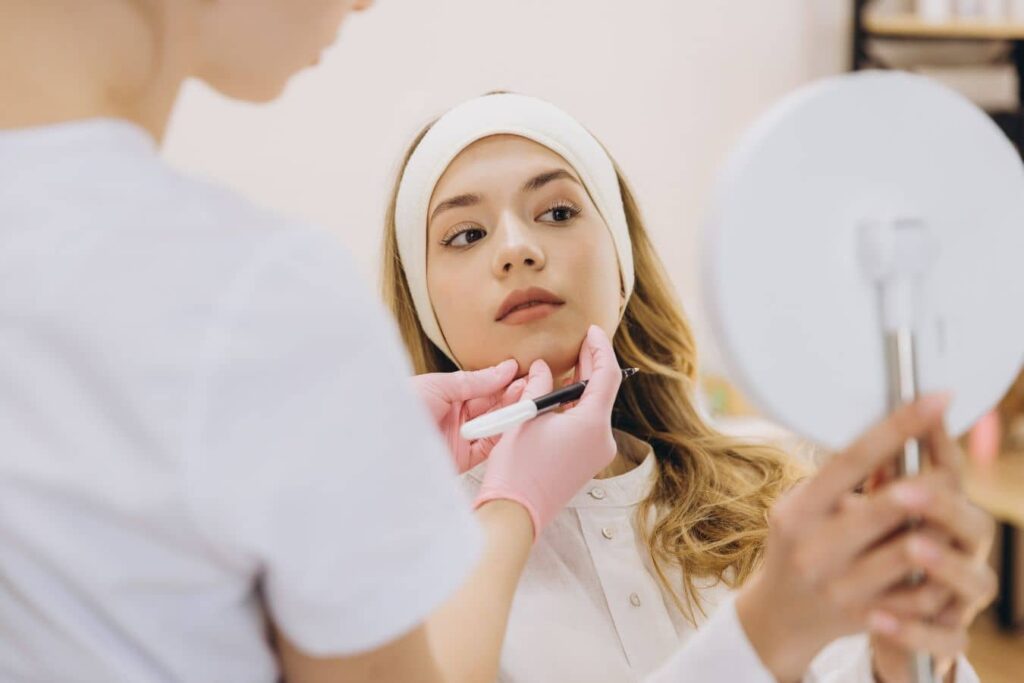
As public awareness increased, so did aesthetic literacy. Patients began researching facial anatomy, long-term filler behavior, and complication risks. They also began recognizing the difference between enhancement and structural imbalance. This growing sophistication is driving demand for what experts call undetectable aesthetics.
What Undetectable Aesthetics Really Means
Undetectable aesthetics focuses on harmony, not volume. It emphasizes facial balance, tissue support, and proportional restoration. Instead of changing how someone looks, the objective is to restore how they are naturally structured — often reversing early aging before it becomes obvious.
Overfilled vs Undetectable Aesthetic Outcomes
The difference between these approaches is visible immediately. Overfilled faces often appear tight, rounded, or disproportionate. Undetectable aesthetics preserves natural facial movement, maintains anatomical relationships, and supports long-term aging rather than masking it.
Importantly, this shift is not a rejection of injectables. Fillers remain powerful tools when used properly. The change lies in how they are applied — with precision, restraint, and deep anatomical understanding rather than volume-driven goals.
Why Facial Anatomy Matters
Facial anatomy is extraordinarily complex. Beneath the skin lie layered fat compartments, muscles of expression, ligaments, blood vessels, and structural support zones that vary significantly from person to person. Injecting safely and effectively requires understanding how all of these components interact dynamically over time.
Expertise That Defines Undetectable Aesthetics at The Naderi Center
The current situation demands the application of both experience and surgical training expertise. The Naderi Center for Plastic Surgery and Dermatology’s founder, Dr. Shervin Naderi, leads the effort to achieve improved surgical results that remain completely hidden from detection.
The Training Behind Dr. Naderi’s Precision
His expertise is built on a depth of training that extends far beyond basic injection certification. The journey began with a four-year undergraduate degree, followed by a two-year master’s degree focused on advanced scientific study. This academic foundation was then followed by the rigor of medical school education.
After medical school came five years of intensive surgical residency training in ear, nose, and throat surgery — a specialty that requires mastery of complex head and neck anatomy. This was followed by a one-year advanced fellowship dedicated specifically to facial aesthetic surgery.
The pathway requires more than ten years of structured medical and surgical education. The training process has brought him twenty years of medical practice experience, which has helped develop better judgment skills along with improved abilities to handle complications and aesthetic choices. The requirements for this preparation method differ from the standards established for short-course certification.

Consult with a Facial Aesthetics Specialist
Meet with our injectables specialist for a personalized, anatomy-driven treatment plan. Appointments available in Reston, VA and Chevy Chase, MD
The Gap Between Experts and Short-Course Injectors
In contrast, many injectors enter the field through brief workshops — sometimes lasting only a few hours or a single weekend — often sponsored by manufacturers of injectable products. These courses introduce technique but cannot replicate years of anatomical immersion, surgical training, or complication management experience.
The rapid expansion of injectable treatments has also led to the rise of inexperienced trainers. Because manufacturers benefit from widespread product use, there is strong financial motivation to train as many providers as possible. Greater distribution increases sales, but it does not guarantee clinical mastery.
This creates a knowledge gap for the public. Many patients assume that all injectors have equivalent training. In reality, training pathways vary dramatically. Few patients realize that serious complications — though uncommon — can occur when injections are performed incorrectly.
Understanding the Real Risks of Injectables
Certain risks include:
- Vascular occlusion
- Tissue loss,
- Nerve injury
- Asymmetry
- Chronic swelling
- Vision loss in rare cases
Given an advanced anatomical knowledge and technique, the majority of such situations can be prevented by careful and careful injection technique.
Why Experience Changes Dermal Fillers Outcomes
Even in the hands of highly skilled providers, complications can occur. The difference lies in recognition and response. Experienced facial plastic surgeons are trained to identify early warning signs immediately and intervene using established medical protocols.
The situation requires three essential components, which include reverse agents, vascular procedures and advanced medical equipment. A seasoned specialist has knowledge about safe injection methods while also understanding how to safeguard patients during unexpected incidents.
In contrast, less experienced providers may not recognize subtle early symptoms. Delayed recognition can allow complications to progress, sometimes resulting in permanent damage. Experience does not eliminate risk — but it dramatically reduces harm through rapid intervention.
A Philosophy Built on Structure, Not Volume
The philosophy behind undetectable aesthetics reflects this deeper level of understanding. Rather than adding volume indiscriminately, structural support is restored where it has been lost. Tissue relationships are respected. Facial balance is preserved.
Long-term thinking is central to this approach. Faces change over time due to bone remodeling, fat redistribution, and ligament laxity. Treating these changes strategically — rather than reactively — produces results that age naturally and remain stable.
Restraint is not minimalism for its own sake. It is precision guided by anatomy. Sometimes the most sophisticated treatment is the decision not to inject at all. Thoughtful correction often produces better outcomes than aggressive augmentation.
Correcting the Effects of Overfilling
This philosophy has also led to a growing number of patients seeking correction of prior overfilling.
What is often described as “filler migration” is typically not true movement of filler through the face, but rather the visual effect of excessive volume spreading within tissue planes or being placed in areas that cannot structurally support it.
Reducing excess volume and restoring proper proportions frequently returns the face to a more natural appearance.
Choosing the Right Provider for Natural Enhancements
Provider selection now focuses on expert knowledge instead of service costs and service delivery ease. Patients increasingly request information about doctors’ educational backgrounds, their surgical experience and their history of handling medical problems, which were once only discussed in rare situations ten years ago.
The Future of Aesthetics: Subtle, Structural, Undetectable
The future of facial aesthetics is moving toward refinement, structural preservation, and individualized planning. Volume alone is no longer the marker of rejuvenation. Balance, proportion, and longevity define modern results.
Undetectable aesthetics represents an evolution in both patient expectations and professional standards. The industry has reached maturity because educational methods, anatomical accuracy and permanent results now function as key standards for evaluation.
As public awareness continues to grow, the distinction between cosmetic enhancement and facial engineering becomes clearer. The most reliable experts in their field understand facial structure as a living structure that requires preservation instead of treating it as an area that needs to be filled.
The era of overfilled faces is fading. In its place is a more intelligent, refined, and medically grounded approach — one that values subtlety, safety, and structural harmony above all else.
Schedule a Consultation at The Naderi Center
The Naderi Center for Plastic Surgery and Dermatology provides personalized patient consultations with Dr. Shervin Naderi, who develops treatment plans through his expertise in advanced anatomical knowledge and precise facial balance assessment.
Click here to schedule an appointment in our Chevy Chase or Reston offices.