The Rise of Preventative Facial Rejuvenation — and Why Patients in Their 40s Are Thinking About Aging Differently
For decades, facelifts occupied a very specific place in cosmetic surgery. They were viewed as procedures reserved for patients in their 60s or 70s, something pursued only after significant jowling, neck laxity, and visible facial aging had already developed.
That perception has changed dramatically.
Today, some of the fastest-growing facelift patients are not in their 70s. They are in their 40s.
Increasingly, patients are seeking facial rejuvenation earlier, while signs of aging are still subtle and before profound tissue descent occurs. Rather than waiting to look “old,” many patients now view facial rejuvenation as part of a long-term strategy for aging gracefully and naturally.
At The Naderi Center, Dr. Shervin Naderi has seen a noticeable rise in patients seeking sophisticated facial rejuvenation in their late 30s and 40s, particularly with advanced techniques such as the deep plane facelift.

Key Takeaways
- Facial aging tends to start under the skin first, before any obvious drooping gets really severe
- Some people in their 40s might do well with facial rejuvenation a bit earlier than usual.
- A deep plane facelift works by repositioning deeper facial tissues, instead of mostly depending on skin tension alone
- Fillers can bring back lost volume, but they generally cannot lift facial structures that have already descended.
- The best option really depends on a person’s anatomy, their specific aging pattern, and their goals.
Why Patients Are Considering Facelifts Earlier
According to Dr. Naderi, the shift reflects both evolving aesthetic standards and a far more advanced understanding of how facial aging truly occurs.
“Most patients think aging begins when wrinkles appear,” says Dr. Naderi. “In reality, the deeper structural changes start much earlier. By the time jowls become obvious externally, the underlying facial support system has often been evolving for years.”
Modern Patients Understand Facial Aging Better
The modern facelift patient is also fundamentally different from previous generations. Today’s patients are highly informed. They research anatomy, surgical techniques, long-term outcomes, and recovery extensively before ever scheduling a consultation. Many understand that youthful facial appearance is not simply about skin quality, but about the structural architecture beneath the skin itself.
This deeper awareness has fueled the rise of what many now describe as the “preventative facelift.”
Facial Aging Begins Beneath the Surface
One of the biggest misconceptions surrounding facial aging is that it is primarily a skin problem. Patients often focus first on wrinkles, texture changes, or surface laxity. Yet the earliest stages of aging occur much deeper within the face.
Structural Changes Start Early
As patients move through their 30s and 40s, several structural changes begin unfolding simultaneously:
- The retaining ligaments that support youthful facial contours gradually weaken.
- Deep facial fat compartments begin descending downward under the effects of gravity and time.
- Collagen production slows, skin elasticity decreases, and subtle volume shifts alter the balance of the midface and jawline.
What patients often describe as “early jowls” is actually the visible manifestation of these deeper anatomical changes.
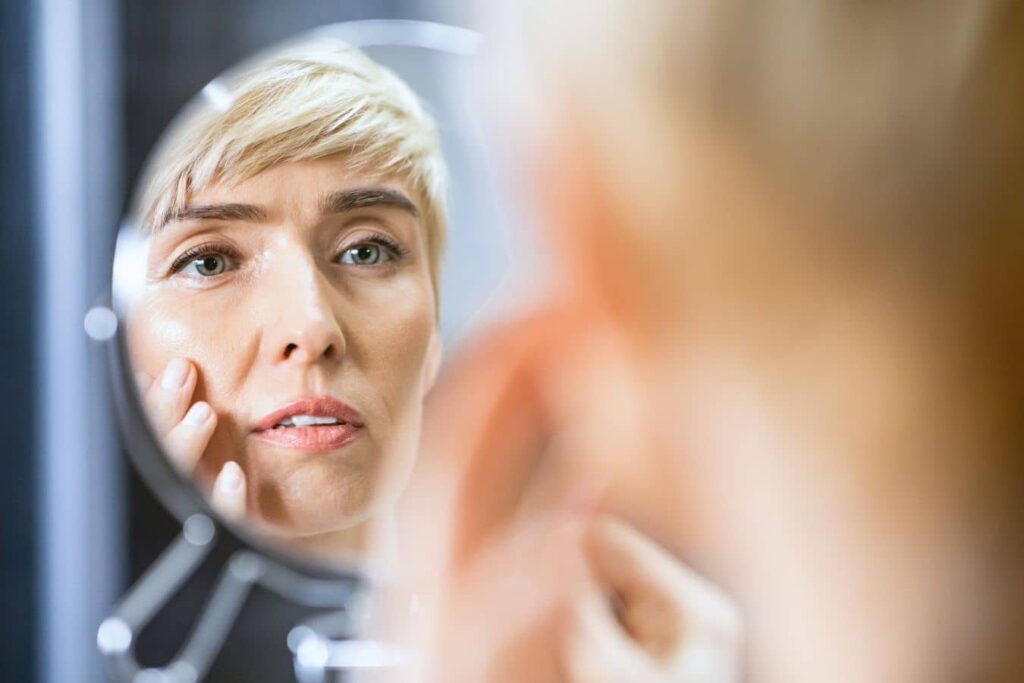
How Deeper Aging Changes the Face
The jawline softens. The lower face appears slightly heavier. The neck loses some of its youthful definition. Nasolabial folds deepen not because skin suddenly wrinkles, but because descended facial tissues begin folding differently over time.
“The face ages as a structural system,” explains Dr. Naderi. “When patients understand that, they begin to realize why simply tightening skin or endlessly adding filler often fails to create truly natural rejuvenation.”
This understanding is one of the primary reasons younger patients are pursuing surgery earlier than previous generations ever considered.
The Shift Away From Waiting Until Aging Becomes Severe
Historically, many patients delayed facelift surgery for as long as possible. There was often a belief that surgery should only be considered once aging became dramatic enough to “justify” it.
Modern facial rejuvenation philosophy has evolved considerably.
Today, many surgeons believe earlier intervention can often produce softer, more elegant, and more natural outcomes because the tissues themselves remain healthier and more elastic.
Patients in their 40s frequently still possess excellent skin quality, stronger collagen support, and less advanced facial descent. This allows rejuvenation to appear remarkably seamless because the surgeon is restoring early changes rather than attempting to reverse decades of severe tissue collapse.
“One of the advantages of performing facial rejuvenation earlier is that the correction can remain incredibly refined,” says Dr. Naderi. “You are preserving youthful structure rather than trying to recreate it after it has been extensively lost.”
A Preventative Approach to Facial Aging
In many ways, this mirrors trends seen throughout medicine. Preventative approaches have become increasingly valued across nearly every field of healthcare, and aesthetic medicine is no exception.
Rather than reacting to advanced aging, patients are becoming proactive about maintaining facial harmony before more severe changes occur.
Why Modern Facelifts Look So Different Than Older Facelifts
The growing acceptance of facelift surgery among younger patients is also closely tied to how dramatically facelift techniques themselves have evolved.
For many years, facelifts carried a stigma associated with overly tight results, distorted expressions, and the classic “pulled” appearance patients feared. Traditional techniques often focused heavily on tightening skin rather than repositioning the deeper structures responsible for youthful facial shape.
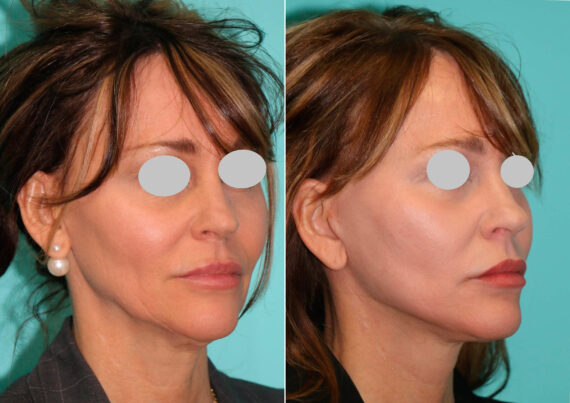
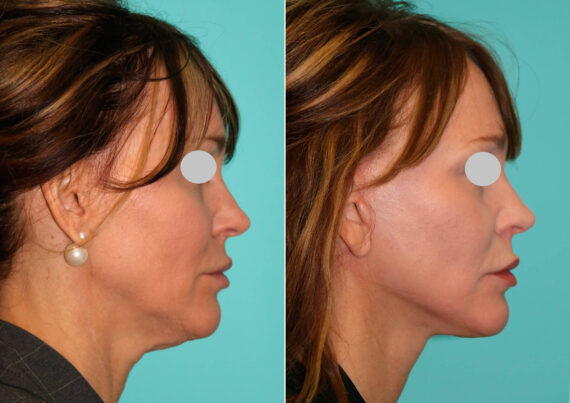
How Deep Plane Facelifts Work
Modern deep plane facelift techniques approach aging very differently.
Instead of relying primarily on skin tension, the deep plane facelift addresses the deeper anatomical layers of the face, releasing and repositioning descended facial tissues more naturally and in a more complete way. Since the lift happens at a deeper structural level, the outcomes often show up softer, looking more youthful, and kind of more anatomically harmonious.
“The goal should never be to make someone look operated on,” explains Dr. Naderi. “The best facelift results preserve facial identity completely. Patients should still look entirely like themselves — simply healthier, more rested, and younger.”
This emphasis on natural outcomes has fundamentally changed patient perception surrounding facial surgery.
Many younger patients today are not seeking dramatic transformation. They are seeking preservation.

Start Your Personalized Consultation
Meet with Dr. Naderi to explore a facial rejuvenation plan designed around your anatomy and goals.
Mini Facelift vs Deep Plane Facelift: What Patients Often Misunderstand
One of the most common questions younger patients ask is whether they should pursue a mini facelift or a deep plane facelift.
The distinction is important because the procedures address aging very differently.
What a Mini Facelift Can Address
A mini facelift is generally designed to improve mild lower face aging through more limited dissection and shorter incisions. In carefully selected patients with minimal laxity, mini facelifts can offer subtle improvement with shorter recovery.
However, many mini facelift techniques primarily address superficial tissue layers without comprehensively repositioning the deeper structures responsible for facial descent.
This is one reason some mini facelift results age more quickly.
“The skin should never carry the burden of the lift,” says Dr. Naderi. “When deeper structures are not adequately repositioned, the improvement can be more temporary and sometimes less natural over time.”
How a Deep Plane Facelift Differs
The deep plane facelift, by contrast, works beneath the superficial layers to mobilize and elevate the deeper facial support system itself. This often allows for more sophisticated improvement of the jawline, cheeks, nasolabial folds, and neck while avoiding excessive tension on the skin.
For younger patients seeking longevity and highly natural outcomes, this distinction becomes increasingly important.
The End of the “Overfilled” Era
Another major factor driving earlier facelift surgery is growing dissatisfaction with excessive filler use.
Over the last decade, many patients attempted to postpone surgery indefinitely through repeated injectables, threads and non-surgical skin tightening procedures. While these treatments can play an important role in facial rejuvenation, they do not fundamentally reposition descended tissues.
As facial aging progresses, patients often discover that continually adding filler can eventually create heaviness rather than youthfulness.
The once-popular “liquid facelift” has, in some cases, produced an overly full or distorted appearance that patients increasingly wish to avoid.
“There comes a point where volume is no longer the issue,” explains Dr. Naderi. “The problem becomes descent. Adding more filler to descended tissue can sometimes make the face appear heavier rather than younger.”
As a result, many sophisticated patients now view surgical rejuvenation not as an extreme measure, but as a more elegant and anatomically intelligent long-term solution.
Social Media, Zoom, and the Psychology of Modern Aging
Technology has also changed how patients perceive themselves.
Previous generations rarely saw their own faces throughout the day. Today’s patients routinely encounter themselves through Zoom meetings, FaceTime calls, social media videos, selfies, and high-definition photography.
This constant exposure has heightened awareness of subtle facial changes earlier than ever before.
Patients notice aging signs years before previous generations might have recognized them, including:
- Mild jawline softening
- Neck heaviness
- Asymmetry
- Lower face descent

At the same time, aesthetic surgery itself has been more normalized and way less secretive. Patients now talk openly about deep plane facelifts, recovery experiences and even surgical techniques in a manner that was far less common even just a decade ago.
This cultural shift has dramatically changed the psychology surrounding facial rejuvenation.
Why Waiting Too Long Can Sometimes Produce Less Natural Results
One of the more surprising realities of facial rejuvenation is that waiting longer does not always produce better outcomes.
Advanced Aging Requires Greater Correction
As aging becomes more advanced, changes are noticeable:
- Facial tissues descend more extensively
- Skin redundancy increases
- Structural support weakens significantly.
Correcting these changes often requires more aggressive repositioning and larger overall correction.
Earlier Intervention Can Look More Seamless
Earlier intervention, by contrast, may allow for subtler refinement that integrates more seamlessly with the patient’s natural anatomy.
“Patients are often surprised to learn that younger facelift patients frequently achieve some of the most elegant results,” says Dr. Naderi. “The tissues still retain elasticity and support, which allows rejuvenation to look extraordinarily natural.”
Surgery Is Not Necessary for Everyone
This does not mean everyone in their 40s needs surgery. Many patients do exceptionally well with non-surgical treatments for years. But for appropriately selected patients experiencing early structural descent, surgery may ultimately provide more refined and longer-lasting rejuvenation than repeated temporary treatments.
A More Sophisticated Philosophy of Aging

Perhaps the biggest shift occurring in facial rejuvenation today is philosophical.
Modern patients are no longer simply asking how to look younger. They are asking how to age well.
The goal is not dramatic transformation. It is continuity. Preservation. Structural harmony.
The best modern facelift results rarely look obvious because they are designed not to change identity, but to restore anatomy that has gradually shifted over time.
This is particularly true with advanced deep plane facelift techniques performed thoughtfully and conservatively.
“Beautiful facial rejuvenation should never erase character or individuality,” says Dr. Naderi. “It should simply restore balance and youthful structure in a way that feels completely authentic to the patient.”
The Future of Facial Rejuvenation Is Earlier, More Natural, and More Individualized
The modern facelift is no longer about waiting until aging becomes severe.
Increasingly, patients are realizing that earlier, anatomically advanced intervention might allow for more elegant, natural and graceful long-term aging. Instead of chasing quick fixes through endless non-surgical treatments, many are now selecting structural rejuvenation that is meant to preserve facial harmony for years to come.
At The Naderi Center, Dr. Shervin Naderi focuses on advanced facial rejuvenation methods, shaped for each patient’s anatomy, aging pattern, and what they want aesthetically. If you’re thinking about a facelift in your 40s or maybe a preventive facelift, or want to compare a mini facelift vs deep plane facelift, then a personalized consultation can clarify which more refined option fits best, so the results look natural and stay with you for a long time.
Frequently Asked Questions About Facelifts in Your 40s
About Dr. Shervin Naderi
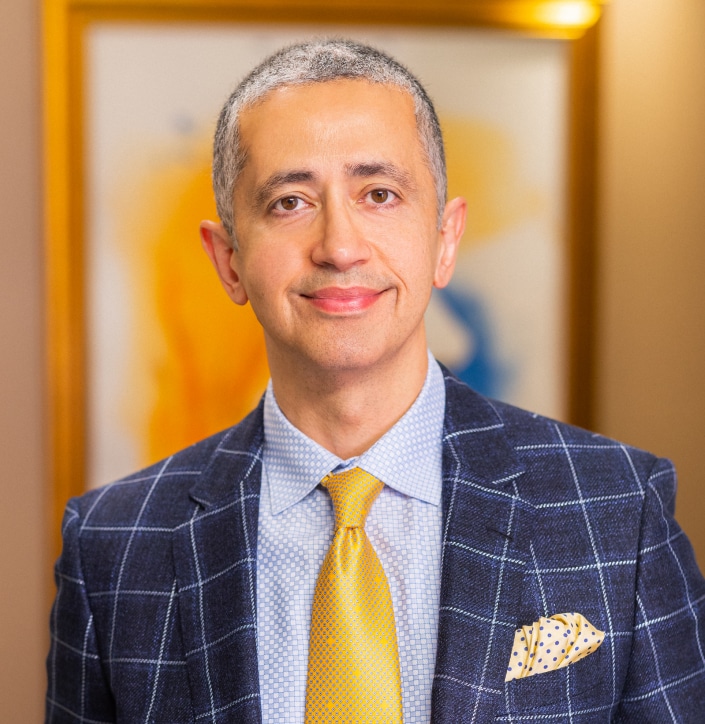
Dr. Shervin Naderi, MD, FACS, is a double board-certified facial plastic and reconstructive surgeon and the founder of The Naderi Center. He is certified by the American Board of Facial Plastic and Reconstructive Surgery and the American Board of Otolaryngology, is a Fellow of the American College of Surgeons, and completed an accredited fellowship in facial plastic and reconstructive surgery. With more than 25 years of experience, he has treated over 50,000 patients and performed thousands of aesthetic and reconstructive facial procedures.
Written by: The Naderi Center Team
Medically reviewed by: Dr. Shervin Naderi
Last reviewed: July 24th, 2026