If you search online for terms like “mini facelift,” “weekend facelift,” “ponytail facelift,” or “scarless facelift,” you will find endless advertisements promising dramatic facial rejuvenation with tiny incisions, minimal downtime, and “natural” results. The marketing is powerful because it appeals to a universal desire: patients want to look younger without undergoing a major surgical procedure.

The Truth About Mini Facelifts
- Cosmetic facial procedures are getting more and more common among younger patients.
- Social media and video calls are changing how patients picture facial aging.
- A lot of patients in their 30s and 40s are deciding to start treatment earlier, sooner than they used to.
- Dr. Shervin Naderi notes that younger patients are often interested in natural results and long-term facial balance, more so than anything dramatic.
- Patients are also putting a higher value on specialized facial expertise and results that actually last.
Why Mini Facelifts Can Be Misleading
But according to Dr. Shervin Naderi at The Naderi Center, the biggest problem with mini facelifts is simple: they usually do not work well enough to justify facial surgery at all.
“A mini facelift often places patients in the worst possible middle ground,” says Dr. Shervin Naderi. “The procedure is invasive enough to create scars, swelling, cost, and recovery — but frequently does not provide enough correction or longevity to truly justify undergoing surgery.”
Facial Aging Is Deeper Than Skin
That statement surprises many patients because mini facelifts are heavily marketed as modern alternatives to traditional facelift surgeries. In reality, many mini facelift procedures are limited skin-tightening operations that fail to address the deeper anatomical structures responsible for facial aging.
Facial aging does not occur only in the skin. The cheeks descend. Fat pads shift downward. Ligaments weaken. The jawline loses definition. The platysma muscles in the neck separate over time. A true facial rejuvenation procedure must address these deeper structures if results are going to look meaningful and last.
The biggest lie about mini facelifts is the suggestion that they are simply a smaller, easier version of a deep plane facelift. They are not. In many cases, mini facelifts provide only modest improvement that fades relatively quickly because the foundational anatomy was never comprehensively corrected.

Why Skin Tightening Alone Is Not Enough
Patients often become interested in mini facelifts because they are trying to avoid looking “overdone.” Ironically, limited skin-tightening procedures can sometimes create less natural results than properly performed deep plane facelifts. When skin alone is pulled backward without repositioning deeper tissues, faces can appear tight, unnatural, or prematurely operated on.
“The face should be lifted structurally, not stretched,” explains Dr. Shervin Naderi. “When deeper tissues are ignored, the result is often temporary tightness instead of authentic rejuvenation.”
The Neck Is Often Undercorrected
One of the most frustrating issues with mini facelifts is the neck. Patients frequently believe their neck aging will improve significantly, only to discover that fullness, laxity, or platysmal banding returns relatively quickly after surgery. This happens because limited procedures often fail to comprehensively address the deeper neck anatomy.
Terms like “weekend facelift” further complicate patient expectations. Significant facial aging cannot realistically be corrected over a weekend. Healing, swelling, and tissue remodeling all require time, regardless of how aggressively procedures are marketed online.
When Nonsurgical Treatments May Be Better
At The Naderi Center, Dr. Shervin Naderi believes many patients are better served avoiding mini facelifts altogether. Instead, patients with early aging often achieve more balanced and appropriate improvement through high-quality nonsurgical treatments while waiting until they are truly ready for a comprehensive facelift.
“In many patients with mild to moderate aging, I would rather perform excellent nonsurgical treatments than a compromised surgical procedure,” says Dr. Shervin Naderi. “Mini facelifts often do not go far enough surgically to create the level of change patients are actually hoping for.”
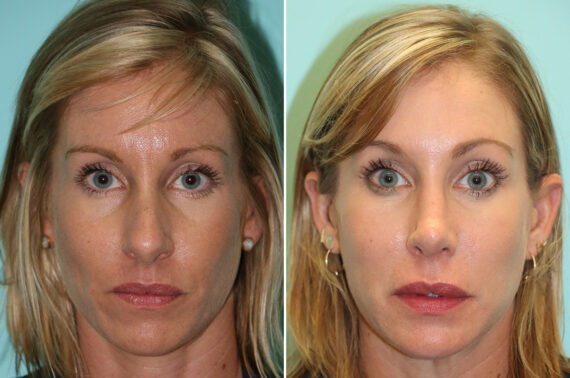
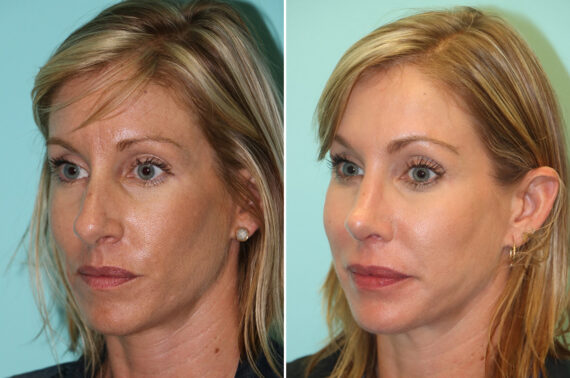
This is where treatments like Morpheus8, strategically placed fillers, skin tightening technologies, and regenerative treatments can play an important role. While nonsurgical treatments cannot replace a facelift, they can meaningfully delay the need for surgery in appropriately selected patients.
Morpheus8 Treatment Before and After
A Better Strategy For Early Aging
Patients in their thirties, forties, and early fifties with mild laxity often benefit from combining skin quality improvement with volume restoration rather than pursuing limited surgical tightening. Improving collagen production, facial support, and skin texture may create a fresher overall appearance without prematurely entering the world of surgical facelifting.
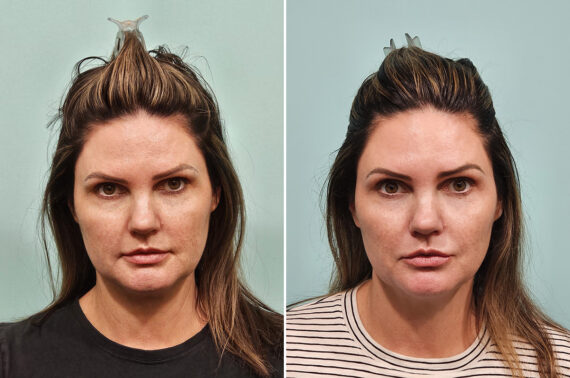
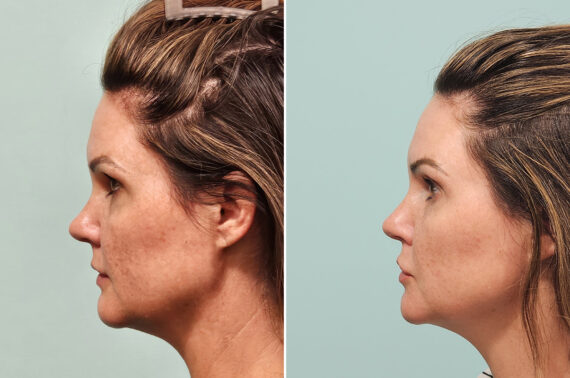
Fillers, if they are done conservatively and with a kind of artistic sense, can bring back some structural support that time slowly removes. Energy-based treatments may also help the skin with overall quality, plus mild laxity. Alongside that, medical-grade skincare can improve tone, texture, and even pigmentation. Put all of these together, and they can help keep a more youthful look for longer, until someone is prepared for a definitive surgical procedure.
“A great facelift should ideally be performed once and performed correctly,” says Dr. Shervin Naderi. “Many patients who undergo mini facelifts end up needing revision surgery or a larger procedure far sooner than they expected.”
UltraClear Treatment Before and After

Get Honest Guidance Before Surgery
Find out whether your aging concerns require nonsurgical support, deeper structural correction, or a comprehensive facelift plan.
The Problem With Trendy Facelift Terms
The popularity of the “ponytail facelift” and “scarless facelift” reflects a broader trend in aesthetic medicine: the desire for maximum improvement with minimum commitment. Unfortunately, anatomy does not always cooperate with marketing.
There is no truly scarless facelift. Any legitimate facelift requires incisions. Ethical surgeons work carefully to hide scars around the ears and hairline, but the concept of a completely scarless surgical facelift is medically inaccurate.
Similarly, the term “mini facelift” itself has no standardized definition. One surgeon’s mini facelift may be completely different from another’s. Some involve minimal skin tightening. Others include limited SMAS work. Patients often assume these procedures are interchangeable when they are not.
Why Timing Matters
At The Naderi Center, consultations focus heavily on educating patients about timing. Many patients are simply not ideal facelift candidates yet. Others would benefit more from waiting and eventually undergoing a comprehensive deep plane facelift rather than piecing together smaller procedures with inconsistent longevity.
One of the advantages of delaying surgery until the timing is appropriate is that the surgical correction can be more transformative and more durable. Rather than repeatedly chasing subtle improvements, patients can undergo a thoughtfully planned procedure that addresses the full spectrum of aging comprehensively.
“A properly performed facelift should restore the jawline, improve the neck, elevate descended tissues, and maintain natural facial identity,” explains Dr. Shervin Naderi.“That level of rejuvenation usually cannot be achieved through a limited mini facelift.”

Mini Facelift Results May Not Last
Patients are often shocked to learn that some mini facelift results may last only a few years before noticeable relaxation returns. By contrast, comprehensive structural facelifts generally provide much longer-lasting improvement because the deeper support system of the face has actually been repositioned.
Another issue is cost efficiency. Patients sometimes pursue mini facelifts believing they are saving money. However, when limited procedures are followed by additional surgery, fillers, revisions, or corrective procedures, the cumulative cost may ultimately exceed that of simply undergoing the correct procedure initially.
Nonsurgical Treatments Have Limits Too
None of this means nonsurgical treatments are perfect substitutes for surgery. They are not. Fillers cannot remove significant jowling. Morpheus8 cannot recreate the results of a true deep plane facelift. But for younger patients with early aging, nonsurgical treatments may still represent a better value proposition than limited surgical tightening.
The goal should never be to chase trends. It should be to create a long-term strategy for aging well. Sometimes that means waiting. Sometimes it means using conservative nonsurgical treatments strategically for several years before proceeding with surgery.
Choosing The Right Treatment At The Right Time
At The Naderi Center, patients are encouraged to think about facial rejuvenation as a continuum rather than a race. Good aesthetic medicine is not about doing surgery as early as possible. It is about choosing the right intervention at the right time.
“The best cosmetic outcomes happen when patients avoid shortcuts,” says Dr. Shervin Naderi. “Mini facelifts are often marketed as shortcuts to facial rejuvenation, but shortcuts rarely create the best long-term aesthetic result.”
Why Mini Facelifts Fall In The Middle
Ultimately, the biggest lie about mini facelifts is not merely that they are “smaller” facelifts. It is the idea that they represent an ideal middle ground between nonsurgical treatments and a comprehensive facelift. In many patients, they accomplish neither particularly well.
For patients with mild aging, conservative nonsurgical treatments may be smarter. For patients with advanced aging, a properly performed comprehensive facelift is often more effective. The mini facelift often ends up in this kind of awkward middle ground: it’s invasive enough to feel like a real surgery, but still limited enough that a lot of patients feel underwhelmed.
To figure out which facial rejuvenation choice fits you best, book a consultation with Dr. Shervin Naderi at The Naderi Center in Chevy Chase, MD and Reston, VA.