A weak or recessed chin can subtly disrupt facial harmony, creating the effect that the nose seems larger, as well as the jawline shows less definition. Chin augmentation provides an effective method for restoring facial balance, which improves profile appearance, though people find it difficult to decide between a chin implant and genioplasty. Dr. Shervin Naderi, a double board-certified facial plastic surgeon, states that proper approach selection leads to natural, permanent results that enhance overall facial appearance.
Understanding Your Chin Augmentation Surgery Options
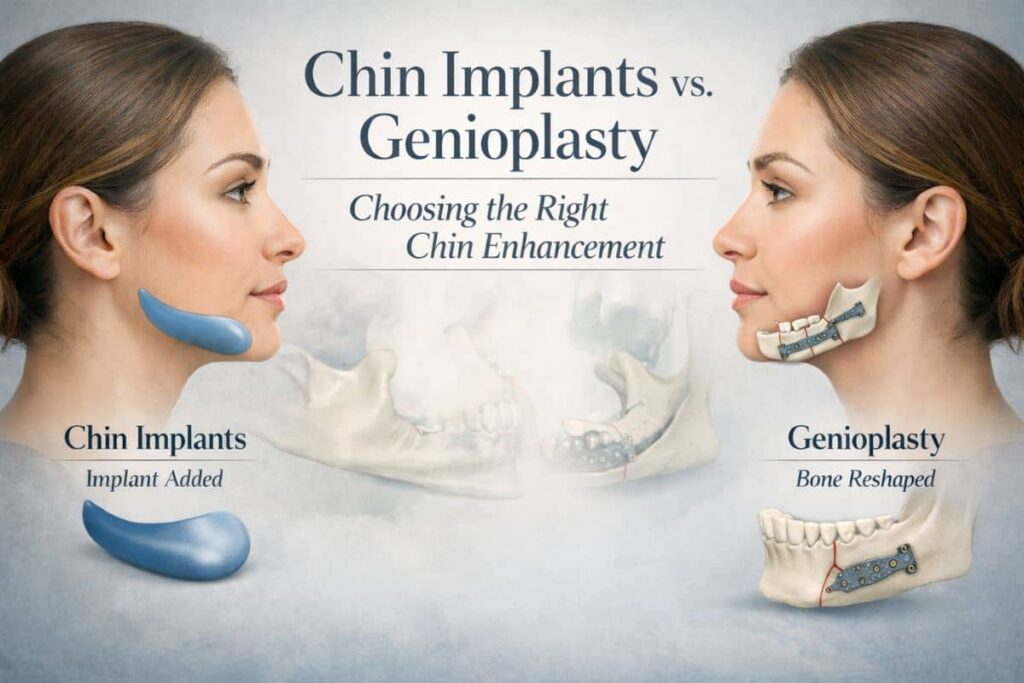
- Chin implants and genioplasty are two distinct surgical procedures, allowing facial improvements like enhanced chin projection, facial symmetry and balanced facial features.
- Chin implants add volume through a medical-grade implant which works best for patients who have mild to moderate chin retrusion and maintain normal jaw alignment.
- Genioplasty uses the patient’s chin bone to create new facial shapes to treat major structural defects and facial alignment problems.
- The right choice depends on your anatomical features, aesthetic objectives and your need for either structural correction or cosmetic enhancement.
- The Naderi Center consultation enables Dr. Shervin Naderi to assess your facial structure and determine the best method for enhancing your profile.
Why Chin Enhancement Matters for Facial Balance
Chin enhancement has become one of the most powerful yet understated ways to improve overall facial harmony. A well-proportioned chin can dramatically influence how the nose, jawline, and neck appearance depends on their relationship to each other. The entire face appears more refined through chin balance, even when no other features are altered.
Two Surgical Approaches to Chin Augmentation
Many patients are surprised to learn that there are two very different surgical approaches to chin augmentation: chin implants and genioplasty. The two procedures provide improved chin projection and symmetry but they use different methods to achieve their respective outcomes, and differ in the type of correction they are best suited for.
According to facial plastic surgeon Dr. Shervin Naderi, chin surgery should never be treated as a one-size-fits-all procedure. “The chin plays a foundational role in facial balance. Choosing the wrong technique can throw off the entire profile,” he explains.
Understanding chin implant and genioplasty differences will help to achieve better aesthetic results and create lasting satisfaction with their appearance. The best option depends on a patient’s facial anatomy, bite alignment, skin thickness, and overall facial structure.
What Is a Chin Implant?
A chin implant is a cosmetic procedure designed to enhance the projection or shape of the chin using a solid medical-grade implant, most commonly made of silicone. The implant is carefully selected to complement the patient’s natural jawline and facial proportions.
The procedure itself is relatively straightforward in experienced hands. A small incision is made either inside the mouth or discreetly beneath the chin. A pocket is then created for the implant, allowing it to rest securely against the bone in a way that looks and feels natural.
One of the most important aspects of chin implant surgery is proper sizing and placement. “A well-designed chin implant should never announce itself,” says Dr. Naderi. “If people can tell you’ve had a chin implant, something wasn’t done correctly.”
Chin implant surgery is typically performed on an outpatient basis. Most patients are able to return to work and social activities within one to two weeks, with swelling gradually improving as the implant settles into position.
Benefits of Chin Implants
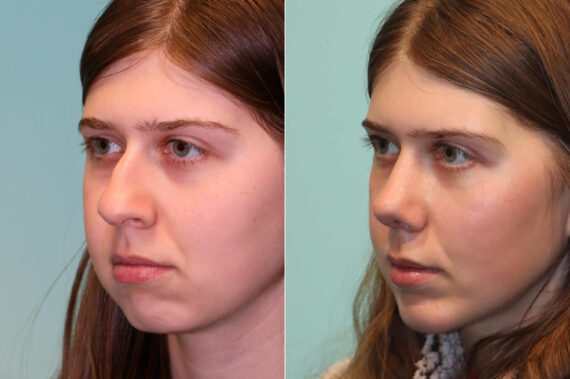
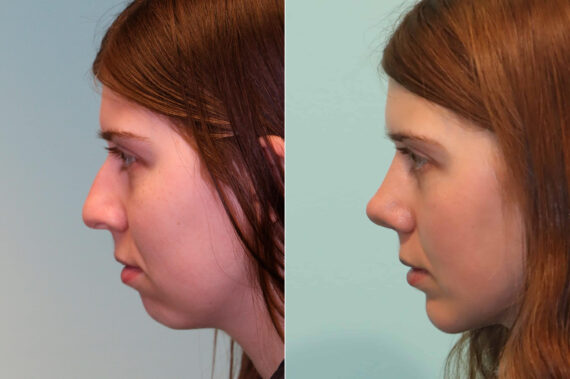
For the right candidate, chin implants can significantly improve facial balance. Increasing chin projection often makes the nose appear smaller and the neck more defined without directly altering either area.
Another advantage of chin implants is predictability. The design of implants has various shapes and sizes, allowing surgeons to achieve accurate results through facial analysis and imaging techniques.
Scarring is minimal, as incisions are small and strategically hidden. When performed properly, visible scars are uncommon.
Patients who desire a bigger change with lesser invasiveness and a relatively shorter recovery period will find chin implants attractive.
Who Is a Good Candidate for Chin Implants?
Ideal candidates for chin implants typically have a weak or recessed chin but otherwise normal jaw alignment. In these cases, the underlying bone is structurally sound and simply lacks forward projection.
Patients with mild facial asymmetry may also benefit from implants, as subtle differences in contour can often be corrected without altering the chin bone itself.
Good oral health and healthy soft tissue are important considerations, as they reduce the risk of infection and support smooth healing after surgery.

Find Out Which Chin Enhancement Option Is Right for You
Meet with Dr. Shervin Naderi for a personalized evaluation and expert guidance based on your unique facial structure.
What Is Genioplasty?
Genioplasty is a more advanced surgical option that reshapes or repositions the patient’s own chin bone. Rather than adding material, the surgeon modifies the bone itself to achieve improved balance and symmetry.
The most common technique is sliding genioplasty, in which the chin bone is carefully cut and repositioned forward, backward, or vertically. The bone is then secured with small titanium plates and screws to hold it firmly in place as it heals.
“Genioplasty gives us complete control over chin shape, height, and symmetry,” Dr. Naderi explains. “It’s the most powerful tool we have for complex chin and jawline issues.”
Benefits of Genioplasty
One of the greatest advantages of genioplasty is the level of customization it allows. Because the surgeon is working with the patient’s own bone, changes can be made in multiple dimensions to address both aesthetic and structural concerns.

Genioplasty can also correct functional issues, including certain bite problems or chin positions that affect speech or oral competence.
Another major benefit is permanence. When performed properly, the genioplasty procedure delivers lifelong structural correction without the need for implants.
Who Is a Good Candidate for Genioplasty?
Genioplasty becomes the recommended treatment solution for patients who experience severe chin retrusion, facial asymmetry and vertical imbalance which can be related to jaw alignment or bite function problems.
More intricate facial or jaw surgery may also require genioplasty as part of a comprehensive treatment.
Can Chin Implants and Genioplasty Be Combined?
In select cases, chin implants and genioplasty can be combined to fine tune results. This approach may involve repositioning the chin bone while using a small implant to refine contour.
“Combination approaches are rare but incredibly effective when used thoughtfully,” says Dr. Naderi. “The key is restraint and precision.”
Making the Right Choice with an Expert Surgeon
Choosing between a chin implant and genioplasty requires careful analysis and expert judgment. “The best chin surgery is the one that looks inevitable like you were born that way,” Dr. Naderi emphasizes.
Dr. Shervin Naderi uses his comprehensive knowledge of facial balance and profile enhancement to perform chin augmentation as he understands how the chin interacts with the nose and jawline and the complete facial structure. The first step to achieving a natural result that improves facial harmony without appearing excessive requires a comprehensive consultation.
If you want details about your options and an evaluation tailored to you, book a consultation at The Naderi Center. You will find out how precise chin enhancement reshapes your profile, plus improves facial balance.