One of the first questions patients ask when considering facelift surgery is:
“How long will my facelift last?”
It’s a reasonable question. A facelift is an investment in yourself, and naturally, you want to know how long you can expect to enjoy your results.
The answer is more nuanced than a simple number of years.
A facelift does not stop aging. Your skin keeps changing over time. Collagen will still drop as the years pass. Gravity will still pull on the tissues in your face. That said, if the procedure is done well, it can give you a fresh start. You can begin the next stage of aging from a younger look.
Patients often worry that after several years they will “lose” their facelift. In reality, that is not how facial aging works.
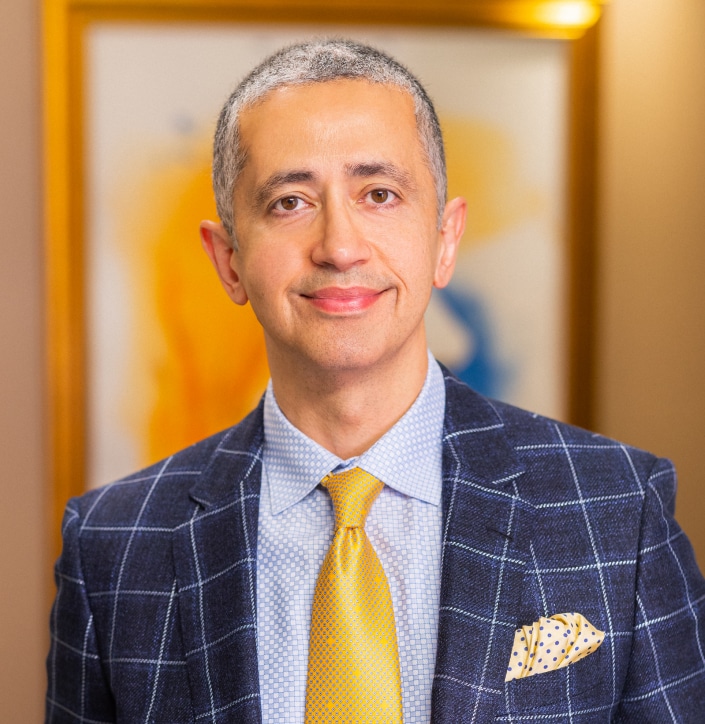
Dr. Shervin Naderi says this is not a small, one-time fix just to alter a person’s appearance. He is a facial plastic surgeon, and he holds double board certification. For more than 20 years, he has done cosmetic work on the face. In his view, the goal is to restore facial shape and bring back a fresher, younger look. He also aims for results that stay natural as years pass.
“A facelift doesn’t pause time, but it resets the clock. Patients continue to age, just as they would naturally, but they are aging from a younger, more refreshed version of themselves. Even ten or fifteen years later, most patients still look younger than if they had never undergone surgery.”
Dr. Naderi has earned the Washingtonian Top Doctor title more than once. Newsweek has also mentioned his work in facelift surgery and rhinoplasty.
He serves patients in Reston and nearby towns. This includes McLean, Great Falls, Arlington, Alexandria, Bethesda, Chevy Chase, Potomac, and Rockville. He also treats people across the wider Washington, DC area.
His practice is dedicated exclusively to aesthetic facial plastic surgery. This allows him to follow patients for years after surgery and observe how beautifully natural facelift results mature over time.
Key Takeaways
- Choosing a facelift surgeon matters as much as the procedure itself.
- You should look for board certification, a solid history in facial surgery and photos that show results that look natural.
- During your visit, ask specific things about how the work is done, how safety is handled, what recovery is like, and what happens if a problem occurs.
- Dr. Shervin Naderi creates a plan made for your own needs. The goal is to help your face keep its natural identity.
- A good consultation helps you see if the surgeon fits what you want. You can compare their experience, their philosophy, and the plan they recommend.
A Facelift Doesn’t Expire
One of the biggest misconceptions about facelift surgery is that it “wears off.”
Unlike injectable fillers or neuromodulators that gradually dissolve over months, facelift surgery physically repositions descended facial tissues.
Those tissues do not suddenly fall back to where they were before surgery. Instead, they continue to age naturally.
Imagine two identical twins in their mid-fifties. One undergoes a beautifully performed deep plane facelift, while the other does not.
Ten years later, both twins have aged ten years, but the twin who had surgery will generally continue to appear younger because the deeper facial structures were restored to a more youthful position.
This is one of the reasons facelift surgery remains the gold standard for treating significant facial laxity.
Facelift Before & After
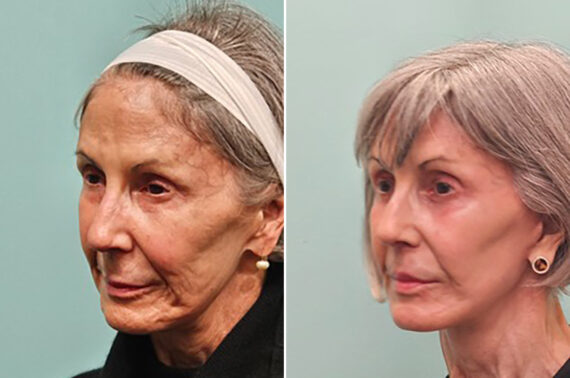
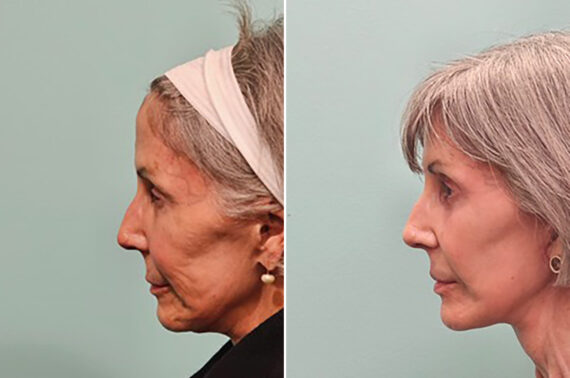
*Results vary from patient to patient
How Long Does a Deep Plane Facelift Last?
Although every patient ages differently, many patients enjoy meaningful improvement for 10 to 15 years or longer after a well-executed facelift.
Several factors influence longevity, including:
- Genetics
- Skin quality
- Sun exposure
- Smoking history
- Weight fluctuations
- Overall health
- Daily skincare habits
- Surgical technique
A deep plane facelift targets the deeper supporting structures of the face. It is not mainly about pulling the skin tighter. When it is done for the right person, the outcome can last and still look natural. This is because the method focuses on the level where aging develops.
As Dr. Naderi explains:
“The goal is never to make someone look twenty-five forever. The goal is to create a result that continues to age gracefully. When facial proportions remain balanced, patients often continue looking refreshed many years after surgery.”
What Happens to Your Face Five, Ten, or Fifteen Years Later?
This is another common concern.
Many patients wonder whether they will eventually look worse because they had surgery. The answer is no. Your face simply continues its natural aging process.
Most patients continue to enjoy:
- Better jawline definition than they would have otherwise
- Less neck laxity
- Improved cheek support
- A younger overall facial appearance
In fact, many long-term facelift patients report that friends assume they simply “age well.” That is often the hallmark of an excellent facelift. The surgery should never define your appearance. Instead, it should become nearly impossible for others to recognize that surgery was performed at all.
Why Some Facelifts Last Longer Than Others
Not every facelift ages the same way. Several factors influence how long results remain noticeable.
Surgical Expertise
The surgeon’s understanding of facial anatomy is key. A facelift is more than just pulling skin tight. The work also needs to bring back support under the skin, while still letting the face move and show normal expressions.
Dr. Naderi has spent more than 20 years in facial plastic surgery. For him, the goal is facial balance, not temporary tight skin.
Many patients come from Northern Virginia, Maryland, and Washington, DC. Others travel from across the United States too. They do this for his focused work in facial rejuvenation.
Skin Quality
Healthy skin ages better. Patients with good collagen, consistent skincare, and sun protection often maintain youthful results longer.
Lifestyle Choices
Healthy habits can significantly influence long-term facial aging. Some factors accelerate visible aging:
- Smoking
- Excessive sun exposure
- Chronic stress
- Poor nutrition
- Repeated weight fluctuations
While surgery restores facial structure, lifestyle choices influence how gracefully that result matures.

Choose Expertise for Lasting Results
Consult with Dr. Naderi and learn how surgical technique, facial anatomy, and individualized planning can influence your results.
How to Maintain Your Facelift Results
A benefit of today’s facial rejuvenation is that surgical care and non-surgical options can work side by side.
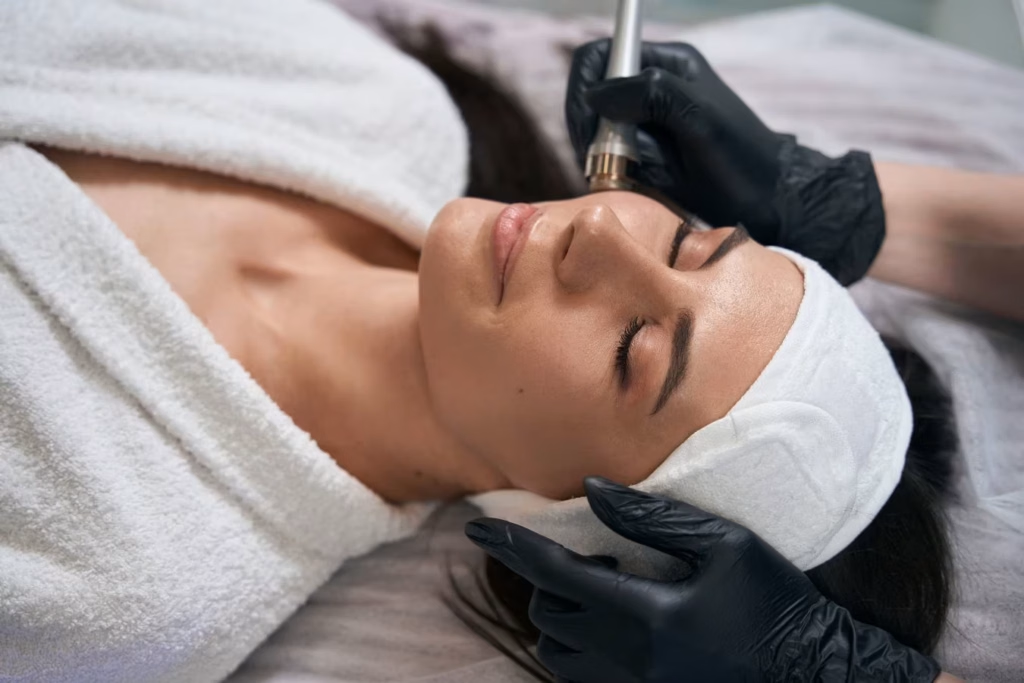
After deeper structures have been treated with a facelift, smaller follow-up treatments can help keep the skin looking good and support the overall look.
Depending on your individual needs, your long-term maintenance plan may include:
- Medical-grade skincare
- Daily broad-spectrum sunscreen
- Periodic laser resurfacing to improve texture and sun damage
- Conservative neuromodulator treatments for expression lines
- Occasional volume restoration when appropriate
- Healthy nutrition and hydration
- Avoiding nicotine products
- Maintaining a stable weight
Dr. Naderi believes maintenance should always be individualized.
“A facelift creates the foundation. Healthy skin, good habits, and appropriate maintenance help preserve that foundation for many years.”
Will You Ever Need Another Facelift?
Some patients eventually choose a secondary facelift later in life. Others never feel the need.
There is no predetermined timeline.
Whether another procedure becomes appropriate depends on:
- Your genetics
- How your face continues to age
- Your aesthetic goals
- Your overall health
Many patients remain happy with their appearance for well over a decade after surgery.
If additional rejuvenation is desired years later, it is often less extensive than if surgery had never been performed.

The Emotional Value of Long-Lasting Results
While patients often ask about years and timelines, many describe the greatest benefit differently.
They talk about:
- Feeling confident in photographs again
- Looking as energetic as they feel
- No longer avoiding mirrors or video calls
- Feeling that their appearance once again reflects their vitality
These benefits often extend well beyond the physical changes.
Facial rejuvenation is ultimately about confidence, not perfection.
Why Experience Matters When Investing in Long-Term Results
When patients choose facelift surgery, they are investing not only in the procedure itself but also in the years that follow.
So it matters a lot who you pick. Choose a surgeon who has real training with facial structures, understands how the face changes over time, and uses modern rejuvenation methods.
Dr. Naderi’s Approach to Lasting Facial Rejuvenation
Dr. Shervin Naderi is a board-certified facial plastic surgeon. He has spent over 20 years focused only on cosmetic facial surgery. Dr. Naderi has built his reputation on creating natural, individualized results that continue to age gracefully.
He has been named a Washingtonian Top Doctor more than once, as well as received national attention from Newsweek. These honors point to a practice built around strong facial rejuvenation work.
“The greatest compliment I receive isn’t that someone looks younger. It’s when patients tell me they feel like themselves again—only refreshed. That’s the goal of every facelift.”
A good facelift is not just about looking young. For many people, it is about feeling like themselves again. It can help you keep your look and feel more at ease. When it is done well, the results can last for years.
Book a one-on-one visit with Dr. Shervin Naderi. Talk through facelift options and choose what fits you best. Then you can start your plan for a refreshed face with results that last.
About Dr. Shervin Naderi
As the founder of The Naderi Center for Plastic Surgery and Dermatology, Dr. Shervin Naderi combines advanced surgical training with a personalized, patient-centered approach. His contributions to the field include medical publications, surgical education, and serving as an examiner for the American Board of Facial Plastic and Reconstructive Surgery. He emphasizes honest guidance, meticulous surgical planning, and realistic expectations to help patients make confident, informed decisions about facial rejuvenation.