Deciding on a facelift is personal, and it is rarely only about tighter skin or a cleaner jawline. Most patients want to look less tired, to have a face that matches how energetic they still feel, and to age in a way that looks natural rather than done. Yet one of the most important decisions a patient will make has little to do with the procedure itself and everything to do with choosing the right facelift surgeon.
Considering a facelift? Learn about our deep plane facelift in the Washington, DC area.
There is no shortage of facelift content online. Social media is full of dramatic before-and-after photos, “snatched” jawlines, trendy surgical terms and heavily edited recovery videos. Some of it is educational, but much of it creates confusion and unrealistic expectations. Choosing a facelift surgeon should never be based solely on popularity, trends, or viral marketing.

According to Dr. Shervin Naderi of The Naderi Center, “The best facelift results are not the ones that look operated on. The best results are the ones where people simply look rested, healthy, elegant, and naturally rejuvenated.”
Key Takeaways
- Picking the right facelift surgeon comes down to experience, specialization, safety and surgical judgment, not a famous name.
- The “best” facelift approach is usually not one size fits all; it should match your anatomy and aging patterns, plus your personal goals and preferences.
- For the results to feel natural, they should support facial expression, keep balance in place, and keep your individual identity, not erase it.
- Dr. Shervin Naderi stresses thoughtful planning, setting realistic expectations and natural facial rejuvenation.
- A detailed consultation can also clarify what you can choose from, so you can weigh the options and move forward with a more informed, not rushed, decision about surgery.
- Key Takeaways
- Specialization in facial plastic surgery
- Choosing the right facelift technique
- Why facelift experience matters
- How to evaluate facelift results
- Revision facelift experience
- Board certification and fellowship training
- Looking beyond social media popularity
- What a thoughtful consultation looks like
- Questions to Ask at Your Facelift Consultation
- Red Flags When Choosing a Facelift Surgeon
- Facelift safety and surgical facilities
- The role of the neck in facial rejuvenation
- Skin quality and complementary treatments
- What to know about facelift scars
- Individualized facelift results
- Facelift recovery and patient preparation
- Realistic expectations and ethical care
- Making the final decision
- Frequently Asked Questions About Choosing a Facelift Surgeon
- About Dr. Shervin Naderi
Specialization in facial plastic surgery
One of the first things patients should consider is specialization. Facial plastic surgery is fundamentally different from procedures performed on the body. The face has complex anatomy and delicate nerve branches, and small decisions show because the face is the first thing people notice. A surgeon who operates mainly on the face develops a sharper sense of how faces age, how they balance and how they move.
Choosing the right facelift technique
Patients researching facelift surgery frequently encounter terms such as deep plane facelift, SMAS facelift, mini facelift, and neck lift. While these techniques are important, experienced surgeons understand that no single surgical method is universally superior for every patient. The best surgeons customize their approach based on anatomy, skin quality, facial structure, aging patterns, and long-term goals rather than forcing every patient into the same technique.
Why facelift experience matters
This is where experience counts. A seasoned facelift surgeon has performed many operations and has also seen how those results change over years and decades. Long-term follow-up matters. A surgeon with years of experience understands:
- How tissues age
- How scars mature
- How swelling resolves
- How to create results that continue to look natural over time
Patients often underestimate judgment. Technical skill is essential, but judgment is what separates a good result from a great one: knowing how much to lift, where to reposition tissue, when to add volume and when to hold back.
How to evaluate facelift results
A common mistake is judging a surgeon only by the most dramatic before-and-after photos. The best facelift results are often subtle. Signs that a facelift may have been overdone:
- Overly tight skin
- Distorted facial expressions
- Unnatural neck tension
- Exaggerated cheeks
Natural facial rejuvenation should preserve individuality and expression.
“When evaluating facelift before-and-after photos, patients should pay close attention to the eyes, mouth, hairline, and neck,” says Dr. Naderi. “A technically successful facelift should not change who you are. It should simply restore a fresher version of yourself.”
Facelift Before & After
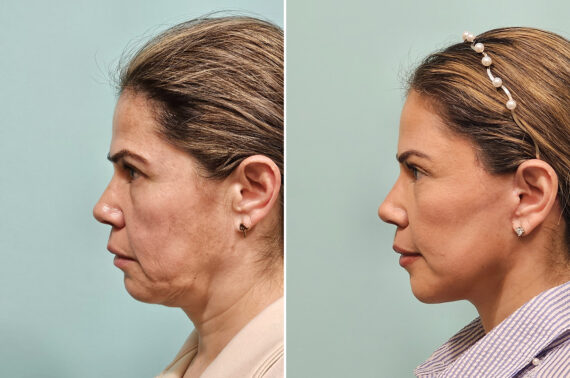
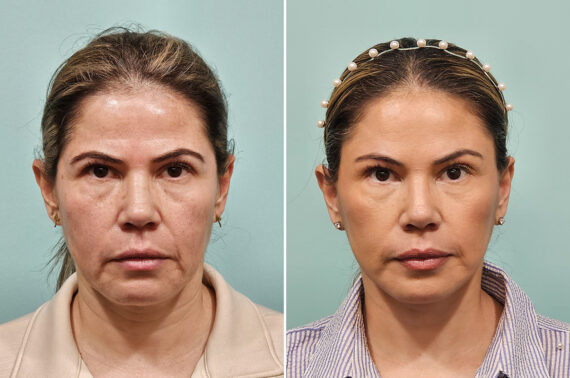
*Results vary from patient to patient
Revision facelift experience
Another factor patients should evaluate carefully is whether the surgeon performs revision facelift surgery. Revision facelifts are among the most technically difficult procedures in facial plastic surgery because prior surgery often alters anatomy, blood supply, scar tissue, and tissue support. Surgeons who regularly take on revision cases have learned to work with scarred and altered anatomy.
Board certification and fellowship training
Board certification and fellowship training are also important considerations. Patients should look for surgeons who have completed rigorous training specifically related to facial plastic surgery. Fellowship training provides advanced education in facial anatomy, aging, reconstruction, and aesthetic refinement that extends beyond general surgical education.
Book a Consultation
Thinking about a deep plane facelift? Meet Dr. Shervin Naderi, double board-certified facial plastic surgeon, at our offices in Reston, VA and Chevy Chase, MD.
Book a ConsultationLearn about deep plane facelift
Call Reston (703) 481-0002 or Chevy Chase (301) 222-2020.
Looking beyond social media popularity
Social media blurs the line between marketing and expertise. Polished videos and dramatic transformation clips get attention fast, but they rarely show surgical judgment, consistency or how patients feel years later. Watch them with a healthy dose of skepticism and look for substance.
What a thoughtful consultation looks like
One of the most revealing things about a consultation is whether the surgeon listens. A good facelift surgeon asks questions before recommending anything, studies your face closely and evaluates:
- Skin quality
- Bone structure
- Neck laxity
- Volume loss
- Emotional goals
A thoughtful consultation often reflects the same level of precision applied during surgery.
How often the surgeon performs facelifts
Patients should also ask how often the surgeon performs facelift and neck lift surgery. Frequency matters because repetition builds technical fluency and consistency. Surgeons who perform facial rejuvenation procedures regularly are more comfortable with variations in anatomy and with adapting the operation to each patient.

Make Your Consultation Count
Look for a surgeon who listens carefully and evaluates your face as an individual. Consult with Dr. Naderi.
Questions to Ask at Your Facelift Consultation
Bring questions of your own to the consultation and write them down beforehand. How a surgeon answers them, and how willing they are to answer at all, tells you more than any gallery.
- Are you board certified in facial plastic surgery, and how often do you perform facelifts? Certification shows the training; frequency shows current, hands-on experience with this exact operation. You want both.
- Which technique do you recommend for me, and why? Ask whether the plan repositions the deeper tissues or mainly pulls the skin tight, and how your neck and midface will be handled. A surgeon who has really studied your face can explain the choice in plain terms.
- Can I see results in patients whose faces are like mine? Look for a similar age, skin thickness and neck shape, in profile as well as from the front, and check that those patients still look like themselves. Our guide on how to evaluate a facelift before and after walks through the details.
- What does a natural result mean to you? The answer shows the surgeon’s taste. For Dr. Naderi it means a face that keeps its expressions and simply looks rested. He does not create the overdone, pulled look.
- Am I a good candidate, and would you tell me if I weren’t? Dr. Naderi advises against surgery when it isn’t in a patient’s best interest. Sometimes the better plan is waiting, skincare, a laser treatment or conservative injectables. Because he also performs his own injections, his advice isn’t tilted toward the operating room.
- How will my result hold up over time? A result that relies on skin tension tends to show, and to age less gracefully, than one where the deeper tissue has been repositioned. What you do afterward counts too: sun protection, not smoking and good skincare all help a facelift last.
- Where will the surgery be done, and who will handle anesthesia? A facelift is a long operation, so you want an accredited operating room and an experienced anesthesia team watching over you from start to finish.
- What will my recovery look like? Ask about bruising, drains, time off work, exercise, travel and the follow-up schedule, so you can plan your time off and line up help at home.
- What happens if something goes wrong? Every operation carries risks, including bleeding, infection, scarring, temporary numbness, asymmetry and facial nerve injury. A surgeon who discusses them openly is being straight with you. Be wary of anyone who says complications don’t happen.
One last question is for you to answer on the drive home: did the surgeon listen and leave room for everything you wanted to ask? A facelift takes trust, and you should feel it before you book.
Red Flags When Choosing a Facelift Surgeon
Be cautious if a consultation includes any of these:
- Guaranteed results
- Pressure to book on the spot
- Only a handful of before-and-after photos, or only the most dramatic ones
- Little or no discussion of risks
- A pitch built around a device or a trend instead of your anatomy
- The same plan for every face, whatever the patient’s age, sex or ethnicity
A facelift is not the place to cut corners. The right surgeon will take the time to explain your options and will not rush your decision.
Facelift safety and surgical facilities
Safety comes first. A safe facelift depends on an accredited surgical facility, an experienced anesthesia team and clear safety protocols, and you should know all three before anything is scheduled.
Dr. Naderi performs facelifts in the operating room at Prince William Surgery Center, under general anesthesia given by board-certified anesthesiologists who supervise nurse anesthetists (CRNAs). A deep plane facelift takes about four hours. He prefers general anesthesia because the patient stays completely still, which gives him the best conditions for precise work. Every patient has a careful preoperative assessment, detailed recovery instructions and scheduled follow-up visits.
The role of the neck in facial rejuvenation
Patients considering facelift surgery should also understand that the neck is often equally important to the final result. Even a technically excellent facelift may appear incomplete if neck aging is not properly addressed. Neck contour, jawline definition, platysmal banding, and skin laxity all contribute significantly to facial aging.
Skin quality and complementary treatments

A skilled facelift surgeon also understands the importance of skin quality. Surgical lifting alone may not address:
- Sun damage
- Fine lines
- Pigmentation
- Texture irregularities
Combining facelift surgery with treatments such as laser resurfacing, skin care, or volume restoration may produce more comprehensive rejuvenation while maintaining natural harmony.
What to know about facelift scars
Many patients worry about facelift scars. In experienced hands, facelift incisions are carefully designed to follow natural contours around the ears and hairline. Careful placement, keeping tension off the skin edges and good wound care can make the scars hard to spot once they mature.
Individualized facelift results
Another important consideration is whether the surgeon creates individualized results or repeated “signature looks.” Faces are unique. What can vary significantly from patient to patient is:
- Ethnicity
- Gender
- Facial proportions
- Aging patterns
A good facelift surgeon works with those differences instead of giving everyone the same look.
Male facelift surgery
Male facelift surgery deserves particular expertise because men often have different goals, skin thickness, hairline patterns, and anatomical structures compared to women. Overly aggressive lifting in male patients can sometimes create an unnatural appearance if masculine contours are not preserved carefully.
Facelift recovery and patient preparation
Facelift recovery is another area where experience matters. Swelling and bruising are expected at first. Drains are not usually needed with Dr. Naderi’s facelifts, and most patients can return to exercise after about a month. A clear recovery plan helps patients ease back into normal activities without surprises. Surgeons who educate patients thoroughly before surgery often help reduce anxiety and improve healing expectations.
“Patients are often surprised that the emotional side of facelift recovery can be just as important as the physical recovery,” says Dr. Naderi. “Preparation, realistic expectations, and strong communication help patients feel confident throughout the process.”
Realistic expectations and ethical care
Be careful with any surgeon who suggests everything will come out “perfect” or promises a dramatic transformation. An ethical surgeon tells you plainly what is possible and where the limits are. That honesty builds trust and lets you decide with a clear head.
Consistency is one of the best signs of a good surgeon. Natural, balanced results across different ages and face types are something marketing can’t fake.
Making the final decision
Choosing the right facelift surgeon means looking past trends and focusing on:
- Experience
- Specialization
- Judgment
- Artistry
- Safety
- Authenticity
The goal is a face that looks refreshed and is still clearly yours.
A consultation is where general advice like this becomes specific to your own face and goals.
To see if a facelift or a neck lift is actually right for you, you can book a consultation with Dr. Shervin Naderi at The Naderi Center in Reston or Chevy Chase for a more personal review of your facial structure, your balance proportions, and the overall look you’re aiming for.
See the Doctor
Questions about what you just read? Ask Dr. Naderi in person. Book a consultation in Reston or Chevy Chase, or start with a virtual consultation from home.
Book a ConsultationVirtual consultation
Call Reston (703) 481-0002 or Chevy Chase (301) 222-2020.
Frequently Asked Questions About Choosing a Facelift Surgeon
About Dr. Shervin Naderi
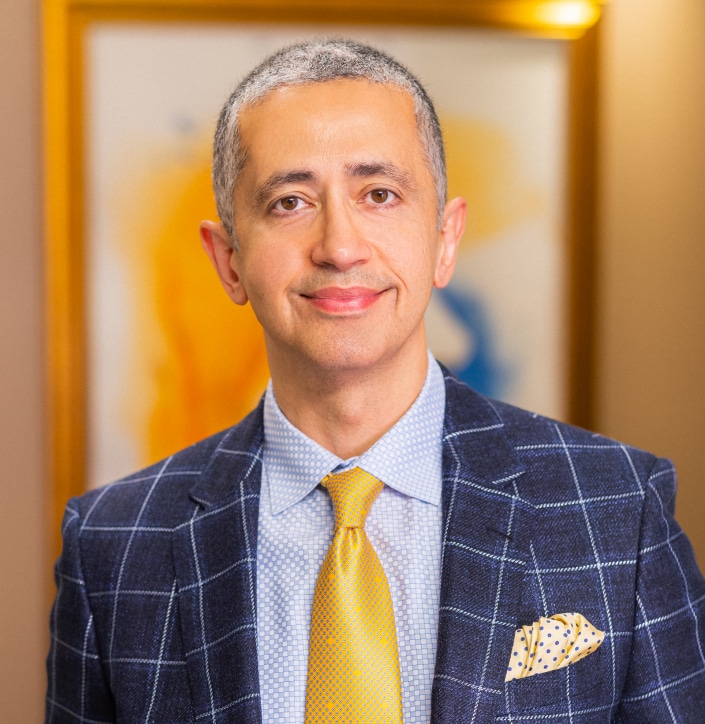
Dr. Shervin Naderi, MD, FACS, is a double board-certified facial plastic and reconstructive surgeon and the founder of The Naderi Center for Plastic Surgery and Dermatology. With more than 20 years of experience, he focuses extensively on aesthetic facial surgery, including facelifts, neck lifts, rhinoplasty, and facial rejuvenation. Dr. Naderi completed fellowship training in facial plastic and reconstructive surgery and is a Fellow of the American College of Surgeons. His approach emphasizes individualized planning, patient safety, thoughtful surgical judgment, and natural-looking results that enhance rather than change a patient’s appearance.

Patient Financing
Pay Over Time with Cherry
Monthly payment plans for surgery and treatments, including 0% APR options for qualifying patients. Checking whether you qualify won’t affect your credit score.