
Medically reviewed by Dr. Shervin Naderi, MD, FACS, double board-certified facial plastic surgeon. Last reviewed October 18, 2026.
The short answer
Yes, most overfilled faces can be fixed. If your filler is hyaluronic acid, which covers the Juvéderm, Restylane and RHA families, a physician can dissolve it with an enzyme called hyaluronidase. It starts working right away, the full effect shows in about 48 hours, and most patients need 2 to 4 sessions to get back to their own face. If you want to dissolve filler in Reston or Chevy Chase, only our two board-certified physicians do this work at The Naderi Center. You can read the details on our filler correction page.
Here’s why it’s on everyone’s mind this fall. After a decade of quarterly touch-ups, a lot of people have quietly hit filler fatigue. We hear it from patients in Great Falls and Potomac who never wanted a done look and somehow ended up with one anyway, half a syringe at a time. Social media is full of dissolving videos now, which is a little ironic given where most of the filler trend started.
“Nobody walks in and asks to look overfilled,” says Dr. Shervin Naderi, a double board-certified facial plastic surgeon. “It sneaks up on people. Each visit adds a little, and one day the face in the mirror belongs to somebody else.”
What does an overfilled face look like?
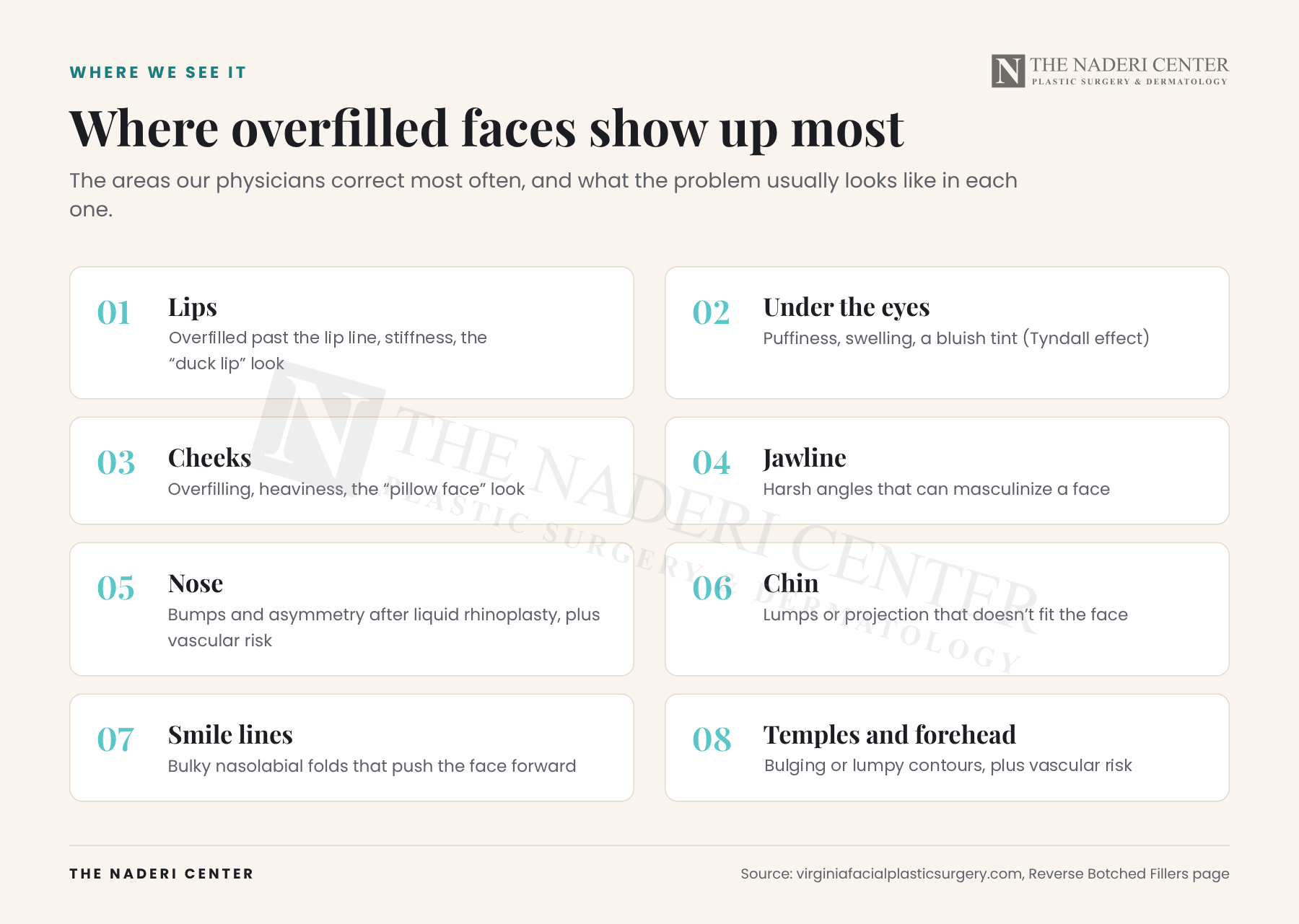
An overfilled face looks heavy in places that should look lifted. The cheeks sit too far forward and round off the face, which is what people mean by pillow face. An overfilled lip can push past the natural lip line, which looks as if the filler moved, or it can turn stiff, and a jawline built up with too much product can look harsh and masculine on a woman.
Under the eyes there’s a specific tell. Filler placed too close to the surface can give a bluish tint called the Tyndall effect. Smile lines are another trap. Filling the nasolabial folds directly tends to push the whole face forward, so our physicians often treat the cheek instead, which lifts the fold and softens it. More on that on our filler injections page.
Why does filler build up over time?
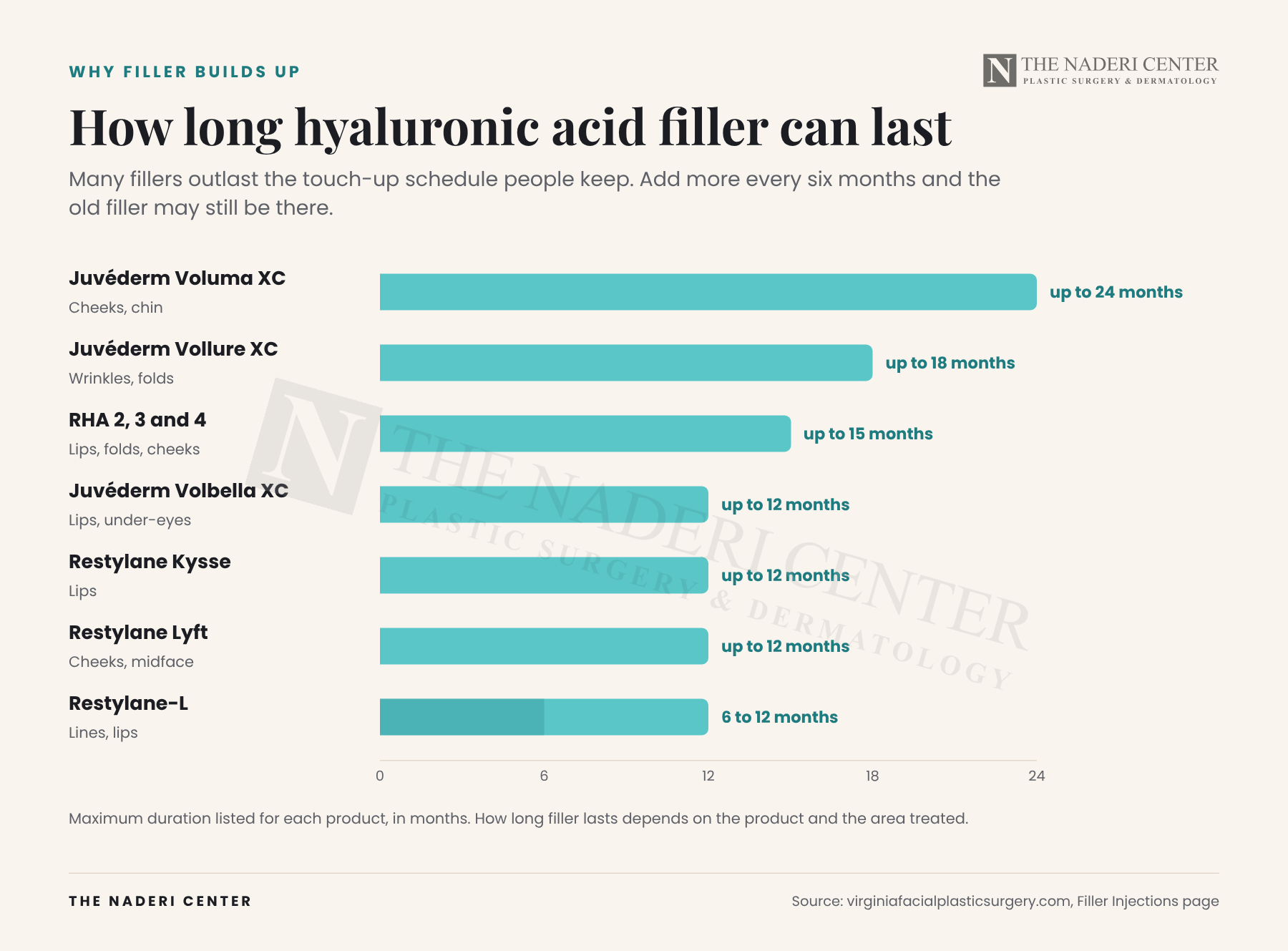
Filler often lasts longer than the schedule people keep. Most hyaluronic acid fillers last somewhere between 6 and 24 months, depending on the product and where it’s placed, and the chart below shows the ranges listed on our site. When new filler goes in before the last treatment has worn off, the volume can quietly add up.
“Filler in the wrong layer tends to stick around longer than anyone expects,” Dr. Naderi says. “I’ll see someone from Arlington who swears her last lip syringe was two years ago, and I can still feel it. Under the eyes, poorly placed filler can hang on even longer.”
How does dissolving filler work?
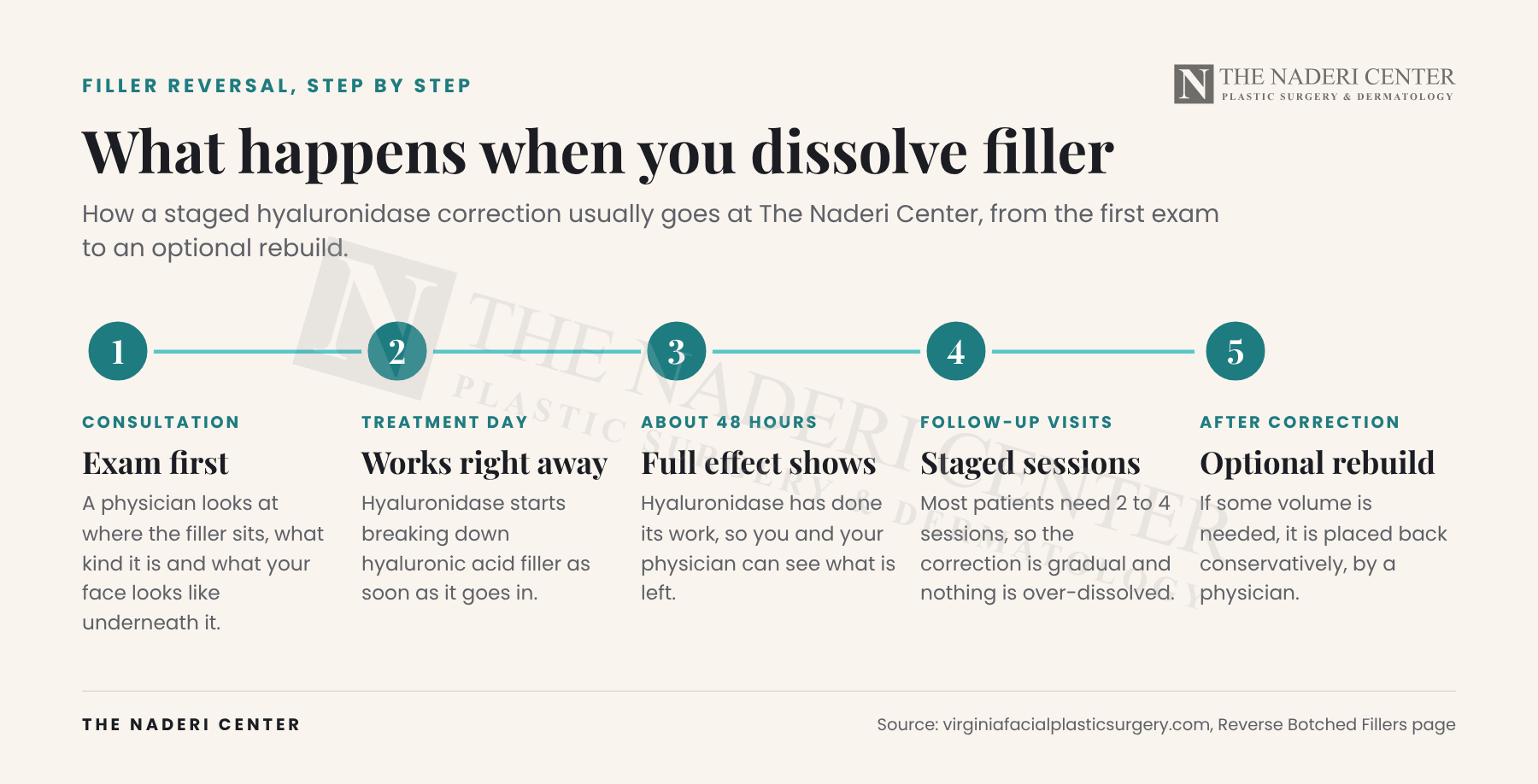
Hyaluronidase is an enzyme that breaks down hyaluronic acid filler. Your physician injects it into the area that needs correcting, it starts working right away, and you’ll see the full effect in about two days. Filler will break down on its own eventually, but that can take months to years, and the enzyme is the only safe way to speed things up.
We dissolve in stages on purpose. Taking out everything in one visit can leave a hollow or an uneven contour, especially in someone who had real volume loss before the filler went in. “Melting filler is easy. Melting the right amount is the skill,” says Dr. Naderi. “I’d much rather see you back for another round than overshoot and leave you looking older than when you walked in.”
How many sessions does it take to dissolve filler?
Most patients need 2 to 4 sessions, depending on the type of filler and how much is there. Under-eye filler is often simpler, and 1 to 2 sessions usually bring back a natural look, though complicated cases can take more. Your first visit includes a full facial assessment and your first hyaluronidase treatment, so treatment can start at that first appointment. Our tear trough correction page covers the under-eye side in more detail.
In practice that means a few short visits rather than one big day. Patients from Vienna and Reston tend to fit them into a workday at our Reston office on Town Center Parkway.
Which fillers can be dissolved, and which can’t?
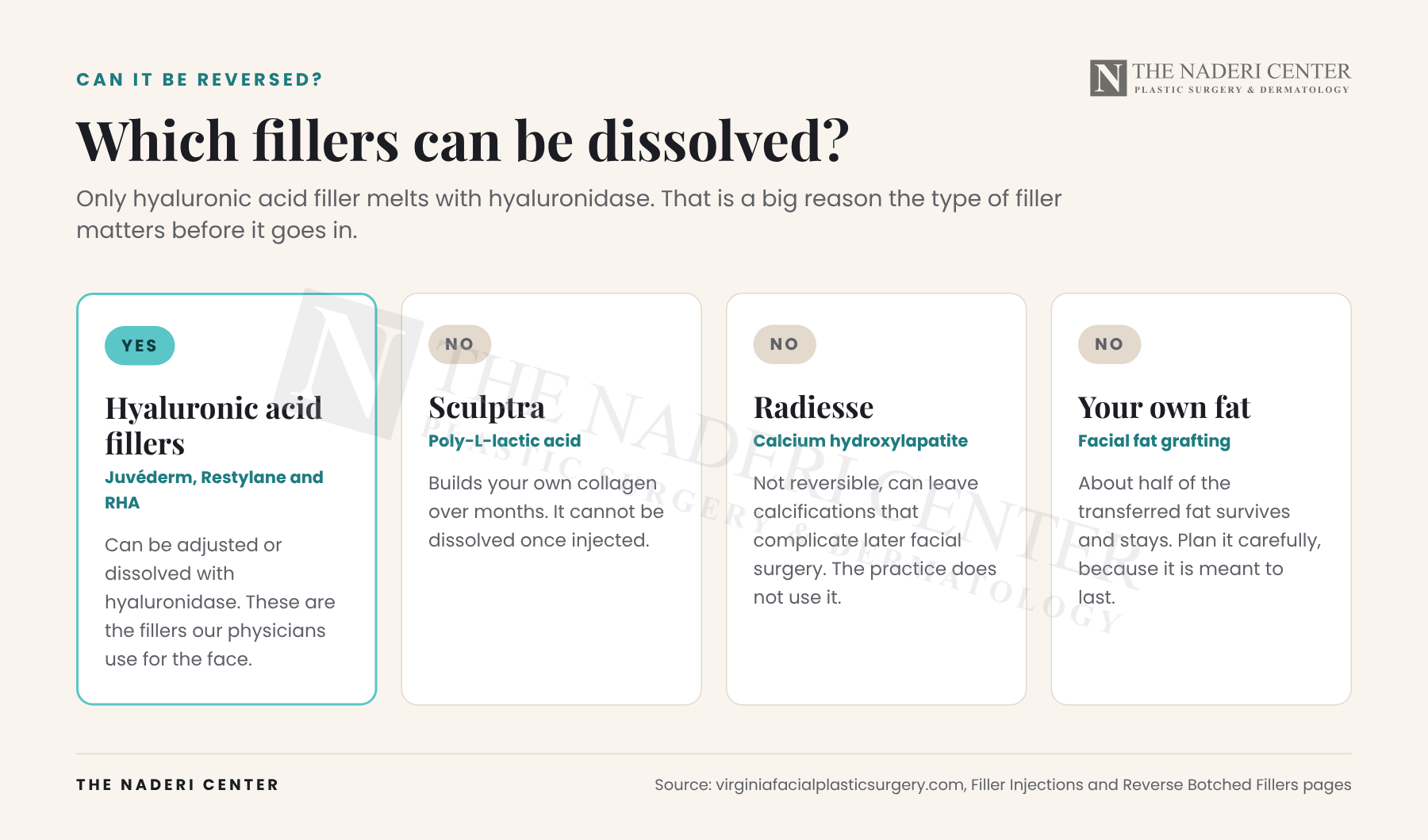
Only hyaluronic acid filler dissolves with hyaluronidase, and that includes everything in the Juvéderm, Restylane and RHA collections. Sculptra can’t be dissolved once it’s injected, because it works by building your own collagen over several months. Radiesse isn’t reversible either. It can leave calcifications that complicate future facial surgery, and it’s not a filler our practice uses.
“Before anything goes into your face, ask what it is and whether it can come out,” Dr. Naderi says. “If the answer is no, you’d better be very sure about the person holding the syringe.”
Fat is its own category. With facial fat grafting, about half of the transferred fat typically survives and stays, which is the whole appeal for people tired of repeat injections. It also means fat isn’t something an enzyme can undo, so it should be planned with the same care as surgery.
Who should dissolve filler?
A physician who knows facial anatomy in detail should do it. At The Naderi Center every filler reversal is performed by Dr. Shervin Naderi or Dr. Alexandra Snodgrass, a board-certified dermatologist. Every injection in our practice is done by a physician, so the person treating you has years of training in facial anatomy and in handling complications. Both offices keep hyaluronidase on hand.
The reason is safety. Filler sits close to blood vessels and nerves, and even in experienced hands it can enter a vessel and block it. That’s called a vascular occlusion, and it needs to be recognized and treated quickly. Patients drive in from McLean and Alexandria after another office tried to fix a problem by adding product on top, which usually makes things worse.
“The worst fix for too much filler is more filler,” says Dr. Naderi. “Filler doesn’t wander. When a lip is overfilled, the extra volume pushes past the border and it looks like it moved, so somebody fills above it to balance it out. Now you have two problems and a bigger lip.”
Dr. Naderi has spent more than 25 years focused on the face. He served as a clinical instructor for Allergan and Medicis, teaching other physicians filler and Botox technique, and as a board examiner for the American Board of Facial Plastic and Reconstructive Surgery. Our practice has performed more than 100,000 Botox and filler treatments.
Can I get filler again after it’s dissolved?
Yes, if you want it, once the correction is complete. Re-injection is optional, and many patients find they need far less than they thought. Our physicians build volume gradually. For lips, a useful guide is an upper lip with about two-thirds the volume of the lower lip, and the goal is a shape that fits your face.
“Once the old filler is gone, a lot of people realize they only wanted a little help in one spot,” Dr. Naderi says. “Sometimes the right amount turns out to be half a syringe. Sometimes it’s none, and I’ll tell you that.”
Sometimes the honest answer is that filler was never the right tool. True under-eye bags respond better to lower eyelid surgery, and real sagging along the jaw is a job for a deep plane facelift. Piling filler onto a face that needs lifting is often how the overfilled look starts in the first place.
Dermal filler before and after photos
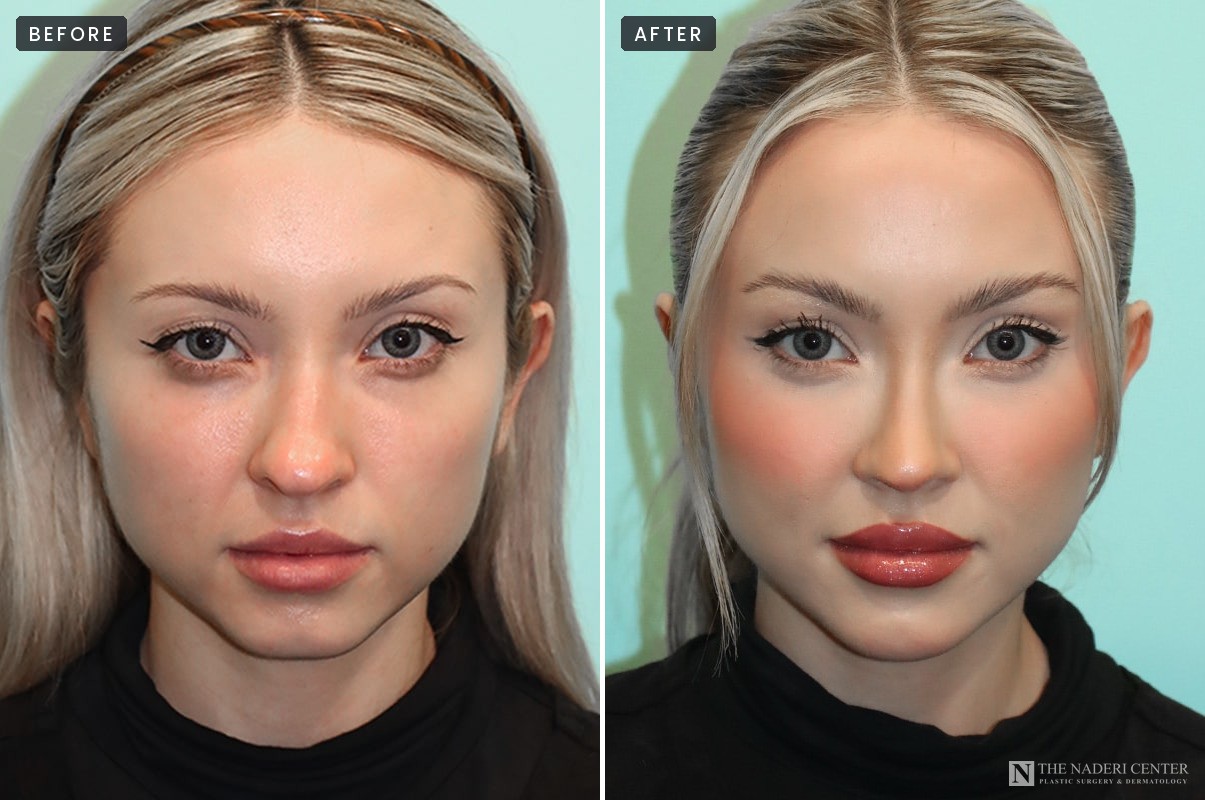
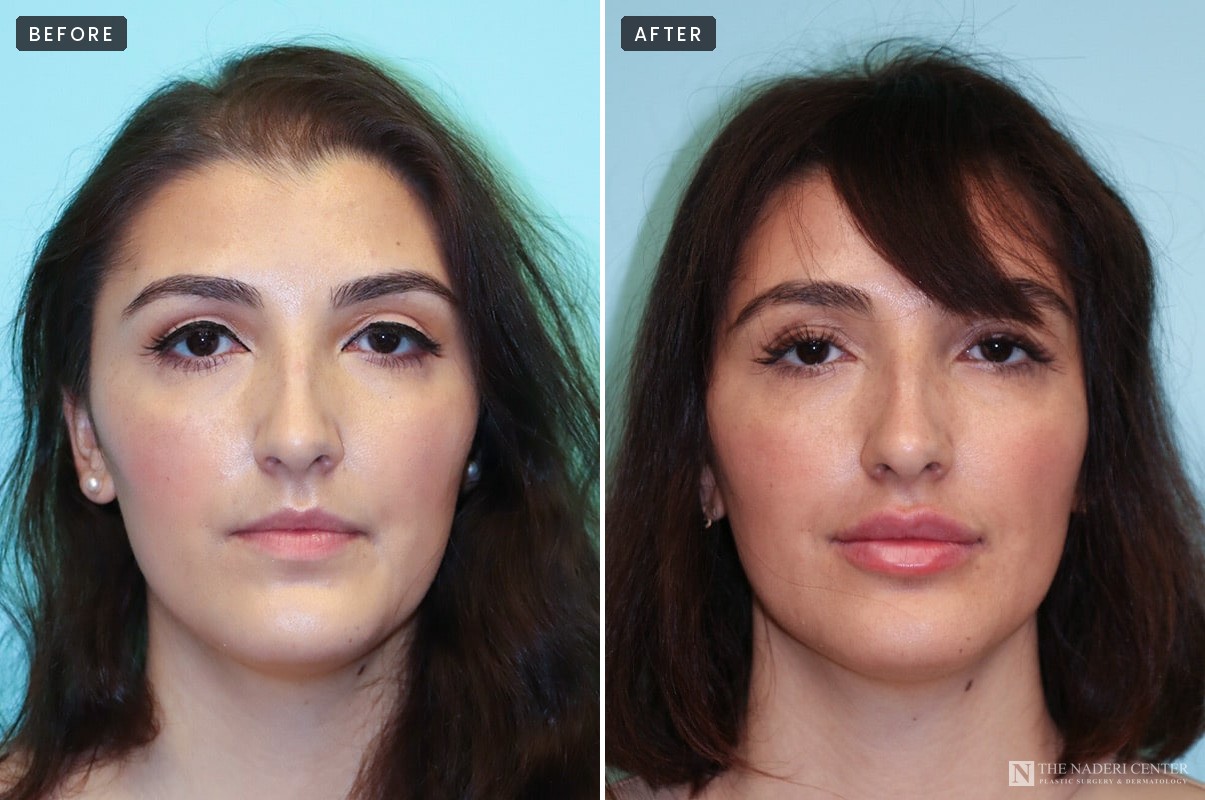
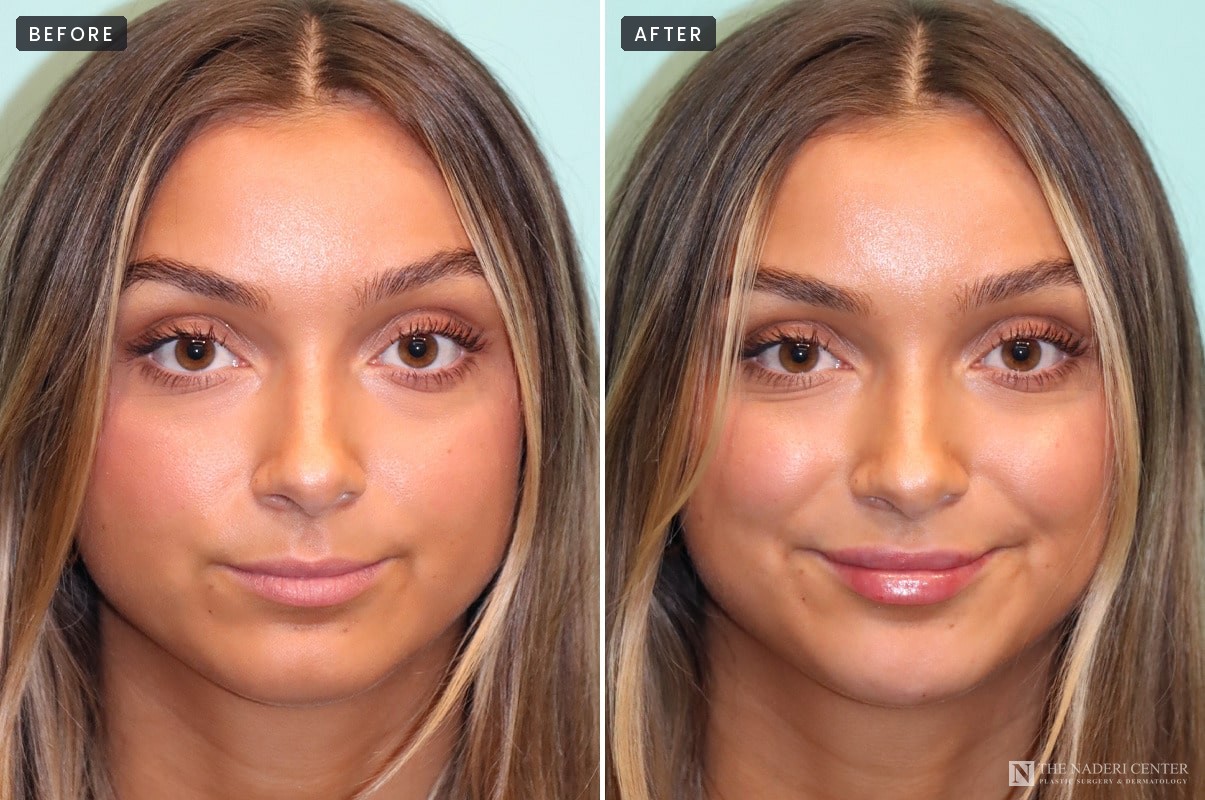
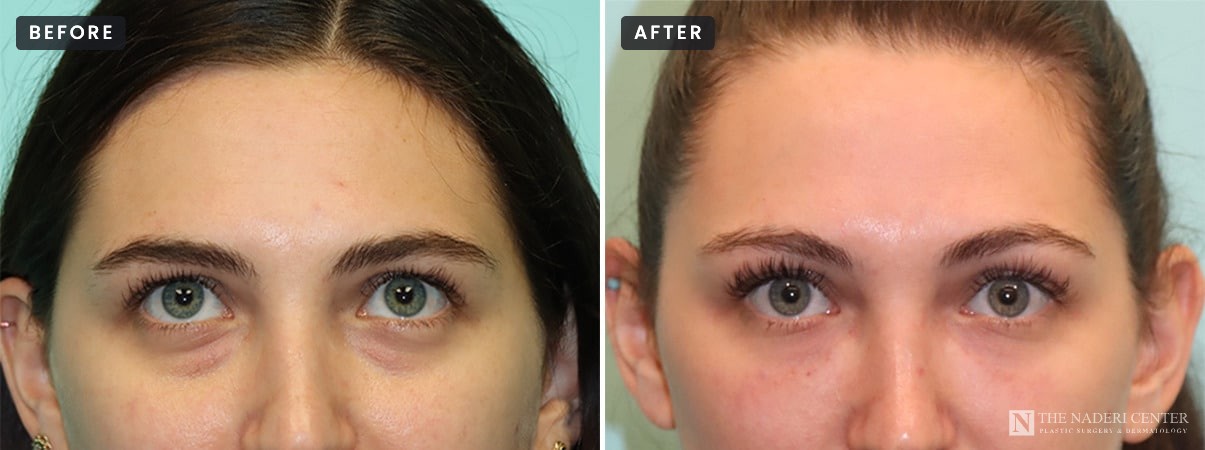
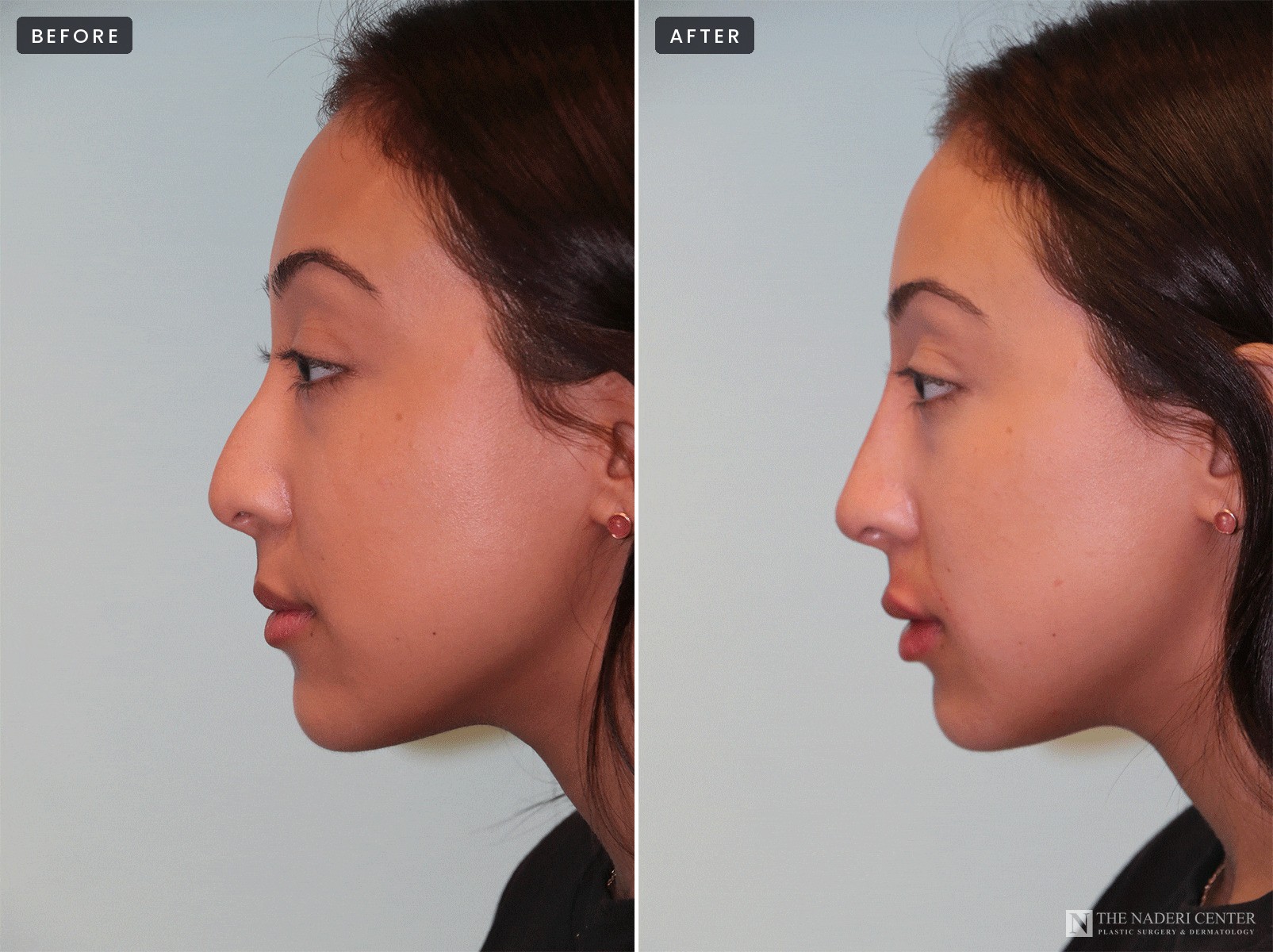
Real patients of The Naderi Center. Individual results vary.
Where can I get filler dissolved near McLean, Bethesda or Washington DC?
You can see either of our two physicians for a consultation at either office. Our Reston office is at 1850 Town Center Parkway, Pavillion II, Suite 551, Reston, VA 20190, (703) 481-0002, an easy drive from McLean. Our Chevy Chase office is at 5454 Wisconsin Ave, Suite 1655, Chevy Chase, MD 20815, (301) 222-2020, right at the DC line and close to Bethesda.
Timing matters a little this time of year. Thanksgiving is less than six weeks away, and the holiday party photos from Washington DC to Old Town Alexandria come right after. Starting now leaves room for staged sessions and a careful rebuild, if you want one, instead of rushing it into one visit.
If you live farther out, we offer virtual consultations before you travel. “Bring photos of yourself from before you ever had filler,” Dr. Naderi says. “That’s the face we’re trying to get back to, and it’s the most useful thing a patient can hand me.”
Because every injection here is done by a physician, our schedules book up months ahead, so it helps to plan early. You can book an appointment online with Dr. Naderi or Dr. Snodgrass at whichever office is closer to you.
Frequently asked questions
How long does it take for hyaluronidase to dissolve filler?
It starts working right away, and the full effect shows in about 48 hours. Most patients need 2 to 4 sessions, and under-eye filler often takes 1 to 2.
Can filler dissolve on its own?
Yes, but it can take months to years. Hyaluronic acid fillers last roughly 6 to 18 months on average, and filler placed in the wrong layer can last longer. Hyaluronidase is the only safe way to speed it up.
Can you dissolve Sculptra or Radiesse?
No. Hyaluronidase only breaks down hyaluronic acid fillers such as Juvéderm, Restylane and RHA. Sculptra and Radiesse can’t be dissolved, and The Naderi Center does not use Radiesse.
Who dissolves filler at The Naderi Center?
Only our board-certified physicians, Dr. Shervin Naderi and Dr. Alexandra Snodgrass. Reversing filler calls for a detailed knowledge of facial anatomy and of how to handle complications, which is why our physicians do it themselves.
How much does it cost to dissolve filler?
Our menu of services lists hyaluronidase treatment starting at $1,500 per treatment. Your physician gives you an exact plan at your consultation, since the number of sessions depends on the filler and how much is there.
Do you dissolve filler for patients in Northern Virginia and Maryland?
Yes. Consultations are offered at both our Reston office and our Chevy Chase office, which are convenient for patients across Northern Virginia, Maryland and Washington DC.