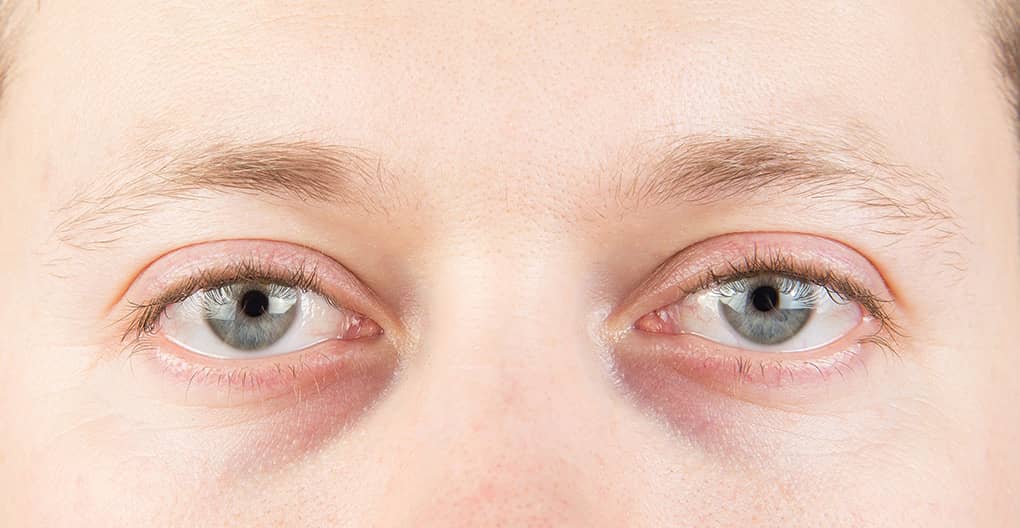
Around this time every year, the same sentence walks into our office. “Everyone keeps telling me I look tired, and I slept fine.” It usually comes from someone who has spent a month back on video calls after summer, studying their own lower eyelids under bad overhead light.
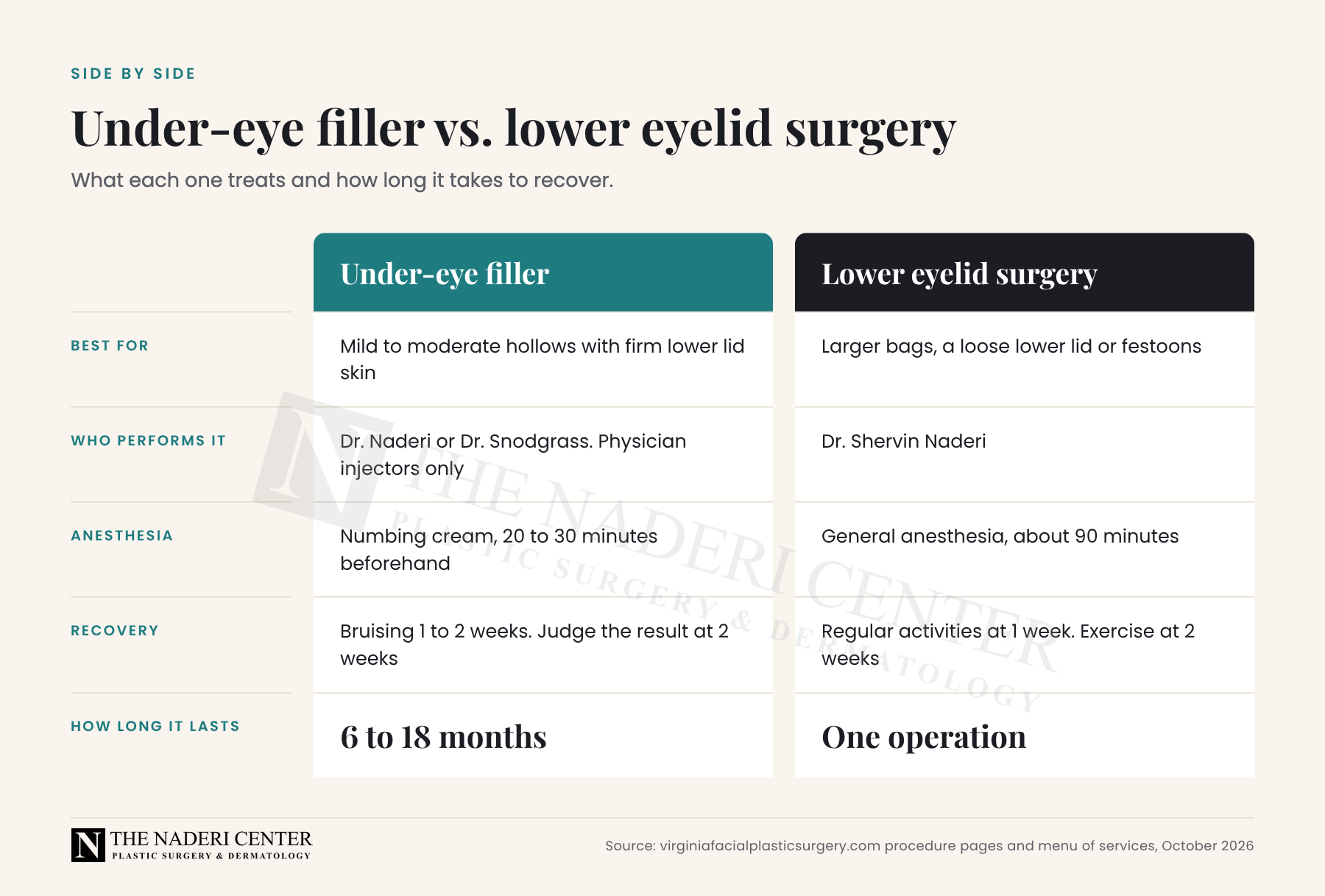
The short answer: under-eye filler works well for mild to moderate hollows when the lower eyelid skin is still firm. Lower eyelid surgery works better once there are true bags, loose skin or deep hollowing. Tear trough filler lasts roughly 6 to 18 months, while lower blepharoplasty is done once. Which one you need comes down to the exam, and birthdays have surprisingly little to do with it.
What causes under-eye hollows and bags?
Under-eye hollows come from volume loss and loosening tissue along the tear trough, the groove that runs from the inner corner of the eye down toward the cheek. Doctors call it the nasojugal groove. With age, the fat under the lower eyelid and upper cheek thins out, and the skin and muscle of the lid lose their snap. Sometimes the tissue behind the lid pushes forward, and that bulge is what people call a bag.
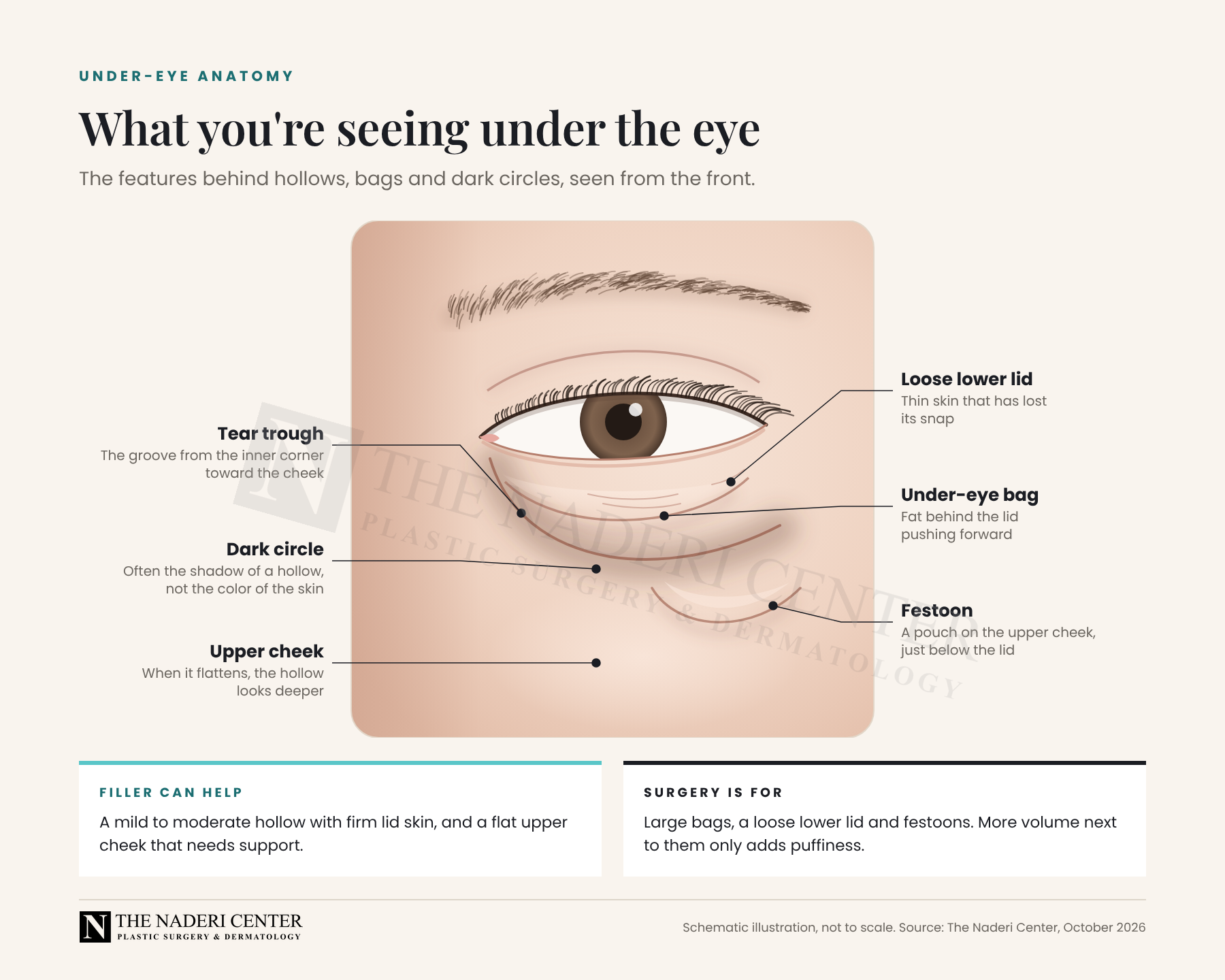
The dark circle is often a shadow. A dip sitting next to a bulge catches light badly, which is why concealer stops working at some point. “A lot of the dark circles I’m asked about are really a hollow casting a shadow,” says Dr. Shervin Naderi, double board-certified facial plastic surgeon. “Smooth out the contour and the darkness improves. Paint over it and it’s back by 3 p.m.”
Who is a good candidate for under-eye filler?
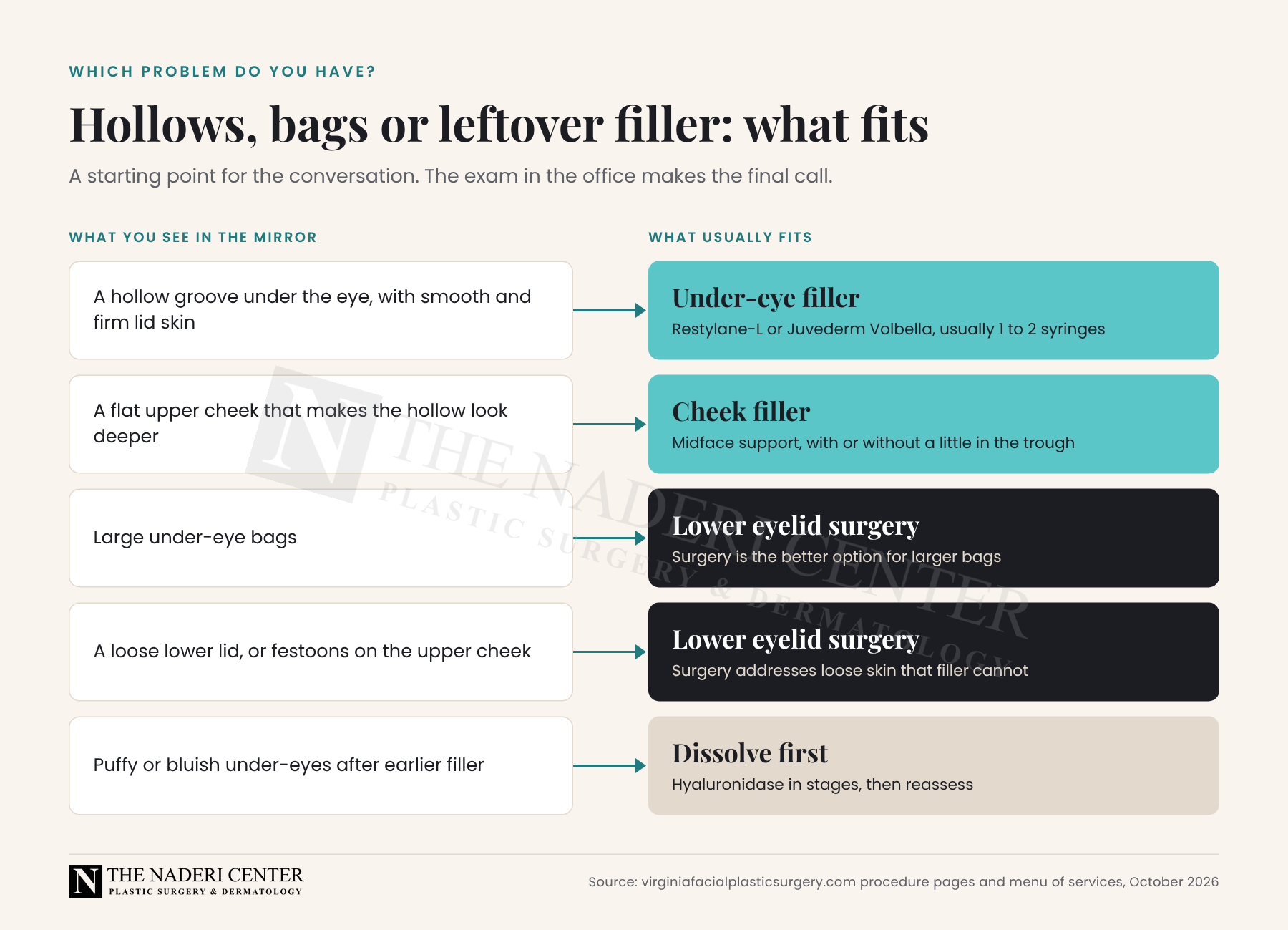
A good candidate for under-eye filler has mild to moderate hollowness, decent skin tone in the lower lid and no large bags. These are the patients whose friends keep asking whether they got enough sleep. You also shouldn’t be on medications that affect bleeding, because this area bruises more easily than the rest of the face.
For the tear trough itself, we most often reach for Restylane-L or Juvederm Volbella. Restylane-L is fluid and spreads easily. Volbella takes on less volume from the surrounding tissue, which means less chance of swelling in a spot that is unforgiving about swelling. We also carry the full RHA line, which earns its keep in areas that move a lot, like the fine lines around the mouth. Dr. Naderi picks the gel to match the tissue in front of him, and brand loyalty doesn’t enter into it.
Most people need one to two syringes, and a syringe holds less than you’d think. One syringe is about one fifth of a teaspoon. “Patients worry I’m going to overfill them with a single syringe,” Dr. Naderi says. “Then I show them how little is in there. We add slowly. I’d rather see you again after the swelling is gone than guess.”
How is under-eye filler done at The Naderi Center?
Under-eye filler at our practice is injected by a physician, every time. That means Dr. Naderi or Dr. Alexandra Snodgrass, our board-certified dermatologist. We place tiny, well-spaced amounts of hyaluronic acid filler along the groove. A blunt cannula lowers the odds of bruising and of entering a blood vessel. A fine needle allows more exact placement of very small amounts, and that micro-droplet method is the one we generally prefer.
Preparation starts two weeks before. We ask you to skip fish oil, nuts, seeds and anti-inflammatory pain relievers like ibuprofen, since they make bruising worse. You can start arnica a week ahead. On the day, eat something, go light on makeup and arrive 30 minutes early so the numbing cream has its 20 to 30 minutes to work.
How long does under-eye filler last, and how long is recovery?
Under-eye filler typically lasts 6 to 18 months, and it tends to last longer here than in the lips because the lower eyelid doesn’t move as much. “How long it lasts depends heavily on whether we fully corrected the hollow,” Dr. Naderi says. “If you need two syringes and we do one, expect to be back sooner. That’s fine, as long as you know it going in.”
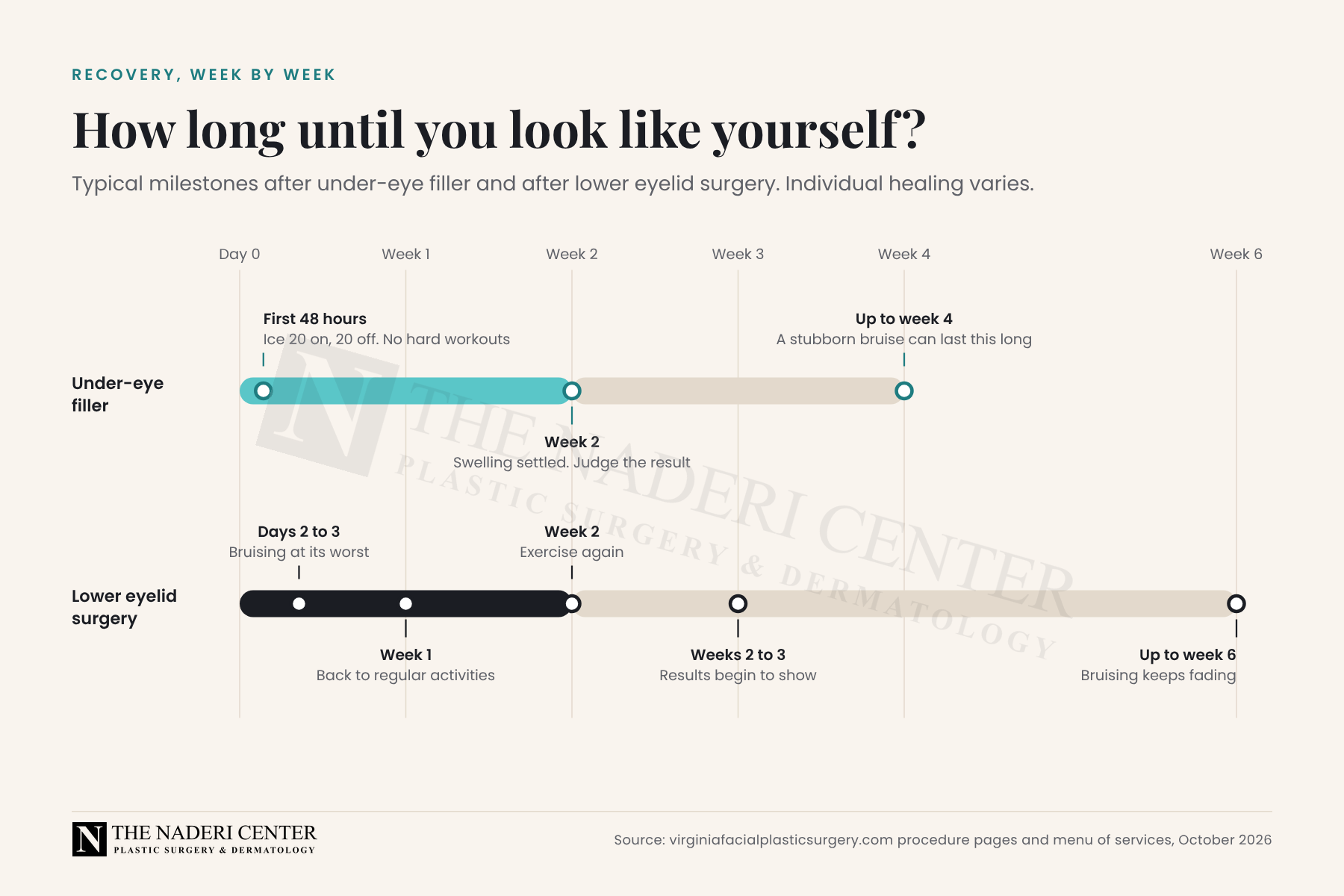
Recovery is mostly about bruising. Ice for 20 minutes on and 20 minutes off over the first 48 hours, and skip hard workouts for those two days. Bruises usually fade in one to two weeks, though a bad one can hang around for four. Swelling takes about two weeks to settle, so please don’t judge the result, or your symmetry, before then. Concealer is allowed the same day.
When is lower eyelid surgery a better choice than filler?
Lower eyelid surgery is the better choice when the lower lid has become loose or the bags are large. The same goes for festoons, the pouches of tissue that sit on the cheek just below the lid. Severe hollowing also tends to do better with surgery. In those situations filler is being asked to do a job it wasn’t built for.
“Putting filler next to a big bag is like parking a second car beside the first one and hoping the driveway looks emptier,” Dr. Naderi says. “You can soften the edge a little. You can’t hide a bulge by adding more volume to the neighborhood, and the people who try end up puffy.”
A lower blepharoplasty at our practice is done through an incision hidden inside the eyelid, an approach called transconjunctival. The bulging fat pads are addressed, loose skin is dealt with if it’s there, and the muscle that supports the lid is preserved. Surgery takes about 90 minutes under general anesthesia. It can be combined with laser resurfacing to improve the skin at the same time.
Most patients are back to regular activities in about a week and back to exercise at two weeks. Pain is mild. Bruising looks its worst on the second and third day, which is right when people start doubting their decisions, and then it steadily clears over the following weeks. Cool compresses, ten minutes on and ten off, do a lot of the work on day one. Results begin to show at two to three weeks.
How much does under-eye filler cost compared with lower eyelid surgery?
Under-eye filler at The Naderi Center is $1,500 per syringe, and lower blepharoplasty is listed at $8,000 to $15,000 on our menu of services. Filler is repeated every 6 to 18 months, while surgery is done once, so the better choice depends on which problem you actually have.
Can under-eye filler go wrong, and can it be fixed?
Yes, under-eye filler can go wrong, and most of the time it can be fixed. The common complaints are puffiness, lumps and a bluish tint under thin skin called the Tyndall effect. The rare problems are serious: filler that enters a blood vessel can damage skin and, in the worst cases around the eye, vision. That risk is the reason only physicians inject here.
Hyaluronic acid fillers can be dissolved with an enzyme called hyaluronidase. We do it in stages so we don’t overshoot and leave a new dent. Our physicians handle every filler reversal personally. “I see plenty of under-eyes that need filler taken out before anything else can happen,” Dr. Naderi says. “Usually it was too much product in someone who needed surgery in the first place.”
Are cheek filler or fat grafting alternatives to under-eye filler?
Sometimes the better move is to treat the cheek. When the upper cheek has flattened, the lower lid loses its support and the hollow looks deeper than it is. A syringe of Juvederm Voluma in the midface can smooth the transition between lid and cheek, with or without a small amount in the trough itself.
Fat grafting uses your own fat, taken with gentle liposuction and purified before it’s placed. On average 30 to 50 percent of what’s transferred survives, and what survives stays. Dr. Naderi does it on its own or alongside other facial surgery.
Under-eye filler and lower eyelid surgery before and after photos
Each pair shows the same patient before treatment on the left and after on the right.
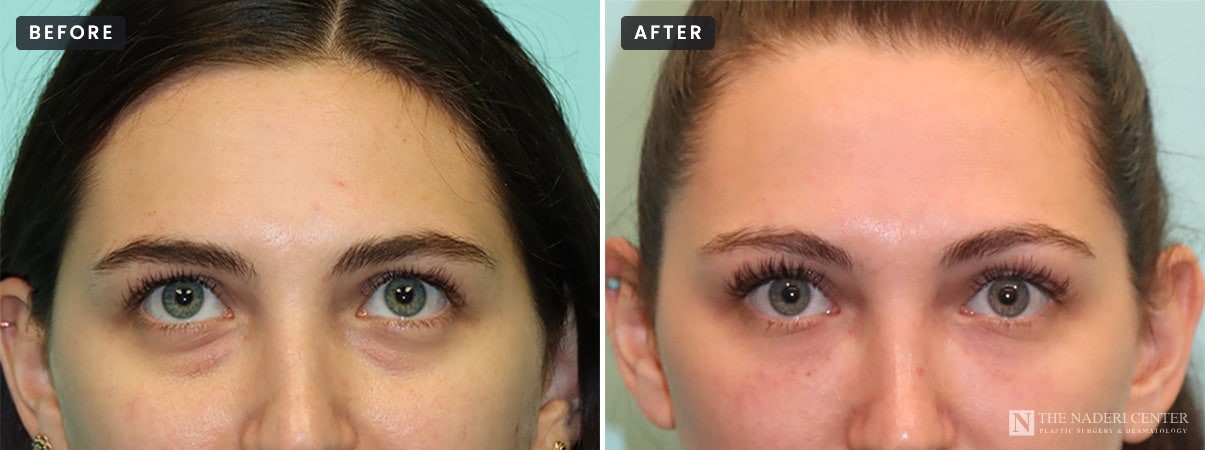
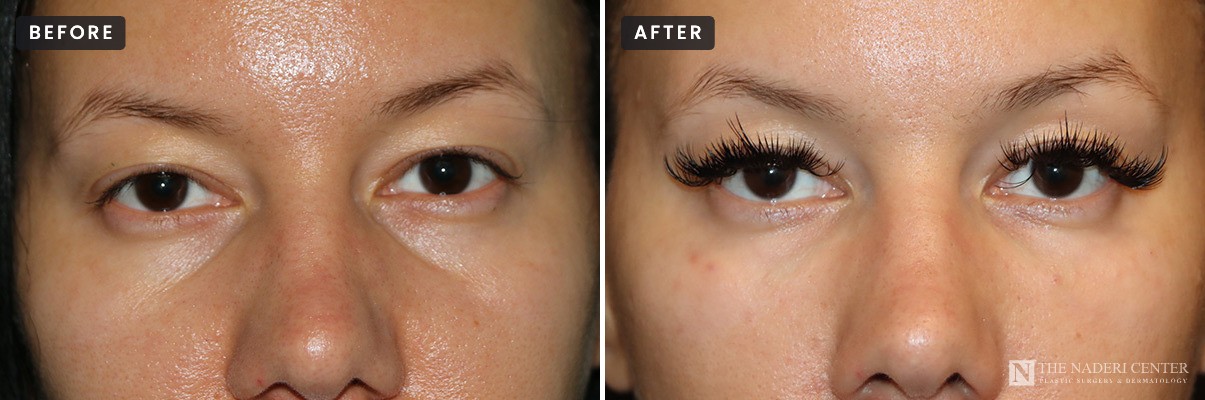
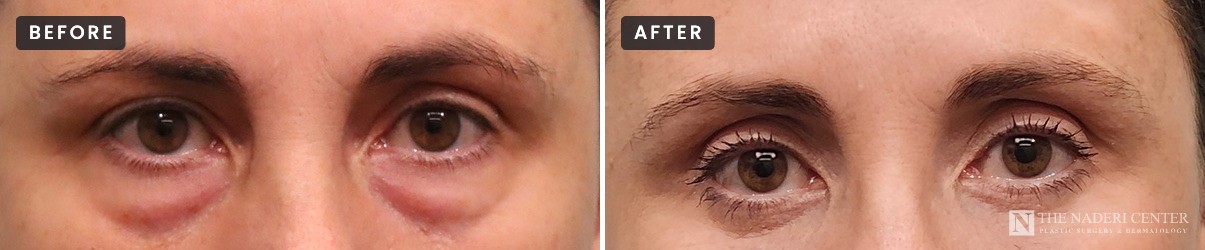
Real patients of The Naderi Center. Individual results vary.
Why is fall a good time to treat under-eyes in the DC area?
Fall works because you can count backward from the holidays. Thanksgiving falls on November 26 this year. Filler needs two weeks to settle. Surgery needs a week before you’re back to normal life and a few more before the bruising is a memory. One caution: our physicians’ schedules tend to fill three to four months out, so the calendar is less forgiving than it looks.
Where can I get an under-eye consultation near McLean, Bethesda or Washington DC?
We see patients for consultations at both of our offices. The Virginia office is at 1850 Town Center Parkway, Pavillion II, Suite 551, Reston, VA 20190, (703) 481-0002. It’s an easy drive from Great Falls and Vienna, and not much farther from McLean. The garage parking is free, which in Northern Virginia counts as a small miracle.
The Maryland office is at 5454 Wisconsin Ave, Suite 1655, Chevy Chase, MD 20815, (301) 222-2020. Patients come to us there from Bethesda and Potomac, and from across the line in Washington DC. Arlington and Alexandria patients split between the two offices depending on which bridge they trust that day.
If your under-eyes bother you, come in and let one of us look. “The most useful thing I do in these visits is tell people which problem they have,” Dr. Naderi says. “Some need a syringe and some need surgery. A few just need to hear that they can leave it alone.” You can book an appointment online or call either office.
Frequently asked questions
Does under-eye filler get rid of dark circles?
Under-eye filler improves dark circles that are caused by a hollow casting a shadow. It fills the dip so light falls evenly. It does not change the color of the skin itself, so your physician should look at which kind of dark circle you have before treating it.
How many syringes of filler do I need under my eyes?
Most patients need one to two syringes per session. One syringe holds about one fifth of a teaspoon, and our physicians prefer to add volume slowly and reassess after two weeks.
Is under-eye filler painful?
Most patients feel only minor discomfort. Numbing cream is applied 20 to 30 minutes beforehand, and some fillers contain lidocaine. The area can stay numb for one to two hours afterward.
How soon can I go back to work after lower eyelid surgery?
Most patients return to regular activities about one week after lower blepharoplasty and to exercise at two weeks. Bruising is heaviest on days two and three and keeps improving over the following six weeks.
Who injects under-eye filler at The Naderi Center?
Only physicians inject filler at The Naderi Center. Under-eye filler is performed by Dr. Shervin Naderi, a double board-certified facial plastic surgeon, or Dr. Alexandra Snodgrass, a board-certified dermatologist. Consultations are offered in both Reston, Virginia and Chevy Chase, Maryland.