It’s one of the most heartbreaking trends we are seeing in our practice: an increasing number of patients walking through our doors with faces distorted by poorly performed cosmetic fillers. These patients feel anxious, embarrassed, and frustrated, and often feel hopeless that the damage can be undone.
Frankly, botched fillers are becoming far too common. And the reason lies in the gaps of training and oversight in the aesthetic industry.
At The Naderi Center for Plastic Surgery and Dermatology, we have developed a national reputation for expertly correcting poorly done filler work. In this blog, we want to shed light on why this happens, why it’s so dangerous, and how our board-certified physicians can help you safely reverse these complications.

Things to Know About Botched Fillers
- Botched fillers are more common than ever due to poor injector training.
- Signs of bad filler include lumps, puffiness, overfilled areas that bulge past their natural borders, and facial distortion.
- Filler complications can happen anywhere on the face, not just the lips.
- Quick fixes or cheap treatments often make the problem worse.
- At The Naderi Center, filler correction is done only by physicians, in stages rather than all at once.
Why Are Botched Fillers So Common?
There is a massive boom in demand for nonsurgical facial treatments, but the quality of training for injectors has not kept pace.
In most states, regulations are loose, and training varies widely from one injector to the next. Some people start injecting after little more than a weekend course.
Facial fillers require not only an artistic eye but an expert understanding of facial anatomy and vascular safety. Without this, patients are left vulnerable to:
- Overfilled, distorted features
- Lumps, bumps, and nodules
- Bulges past natural borders such as the lip line, which can look as if the filler moved
- Tyndall effect (bluish discoloration under the skin)
- Serious vascular complications (skin necrosis, blindness)
We see patients with lip filler pushed past the lip line, bulky cheeks, unnatural jawlines, under-eye puffiness, and complications from “liquid rhinoplasties.” In many cases, the original injector lacked the skill or knowledge to recognize or correct these issues.
The Emotional Toll of Botched Fillers
We know this goes deeper than looks. Many patients feel anxious and ashamed, and they regret what has happened to their face. Part of our job is to listen, explain what went wrong and what can be done about it, and take the correction one careful step at a time.
The Gaps in Education and Training
Most training courses for injectables do not adequately prepare injectors to manage complications. Providers are often taught how to inject, but not what to do if something goes wrong.
This is why every filler injection at The Naderi Center, including every correction, is done by a board-certified physician with in-depth anatomical training. The practice has worked this way through more than 20 years of injecting.
Unfortunately, many patients are drawn to the lowest price rather than the highest level of skill, and the result is often a need for expensive, multi-step correction later.
Book a Consultation
Thinking about correcting overfilled filler? Our physicians see patients at our offices in Reston, VA and Chevy Chase, MD.
Book a ConsultationLearn about correcting overfilled filler
Call Reston (703) 481-0002 or Chevy Chase (301) 222-2020.
How Dermal Fillers Can Go Wrong in Every Area of the Face

Fillers can be botched virtually anywhere in the face:
- Lips: stiff, duck-like appearance, or an overfilled lip bulging above the vermilion border
- Cheeks: “pillow face,” heaviness, facial distortion
- Under Eyes (Tear Troughs): puffiness, swelling, bluish hue (Tyndall effect)
- Jawline: overly masculine, boxy angles
- Chin: unnatural projection or lumpiness
- Nose (Liquid Rhinoplasty): asymmetry, filler bumps, vascular risk
- Nasolabial Folds / Marionette Lines: bulky, exaggerated folds
- Temples / Forehead: vascular risks, bulging or lumpy contours
Each area requires customized, precise correction by an expert injector, not a one-size-fits-all approach.
Why Filler Builds Up Over Time
Not every overfilled face comes from one bad appointment. Often it happens slowly. Most hyaluronic acid fillers last somewhere between 6 and 24 months, depending on the product and where it is placed, and filler sitting in the wrong layer can last longer than anyone expects. When new filler goes in on a fixed schedule before the last treatment has worn off, the volume adds up a little at a time, and one day the face in the mirror no longer looks like your own.
Some habits make it worse. Filling the nasolabial folds (smile lines) directly tends to push the whole face forward, which is why our physicians often treat the cheek instead; supporting the cheek lifts and softens the fold. Jowls work the same way. The jowl itself is left alone, and volume goes in front of it, behind it at the angle of the jaw and sometimes in the chin.
Filler is also no substitute for lifting. Piling it onto a face that has started to sag is one of the most common ways the overfilled look begins, because the face gets fuller without getting any younger.
The Naderi Center’s Approach to Filler Reversal
At The Naderi Center, filler correction is performed exclusively by our board-certified physicians:
- Dr. Shervin Naderi, Double Board-Certified Facial Plastic Surgeon
- Dr. Alexandra Snodgrass, Cosmetic Dermatology
Reversing filler safely takes years of training in facial anatomy and in handling complications. Dr. Naderi has taught filler and Botox technique to other physicians as a clinical instructor for Allergan and Medicis, and both of our offices keep hyaluronidase on hand.
Our process includes:
- Comprehensive facial assessment
- Strategic use of hyaluronidase to dissolve poorly placed hyaluronic acid filler.
- Gradual staging of correction for a natural look
- Optional re-injection (once the face is fully ready) with advanced techniques
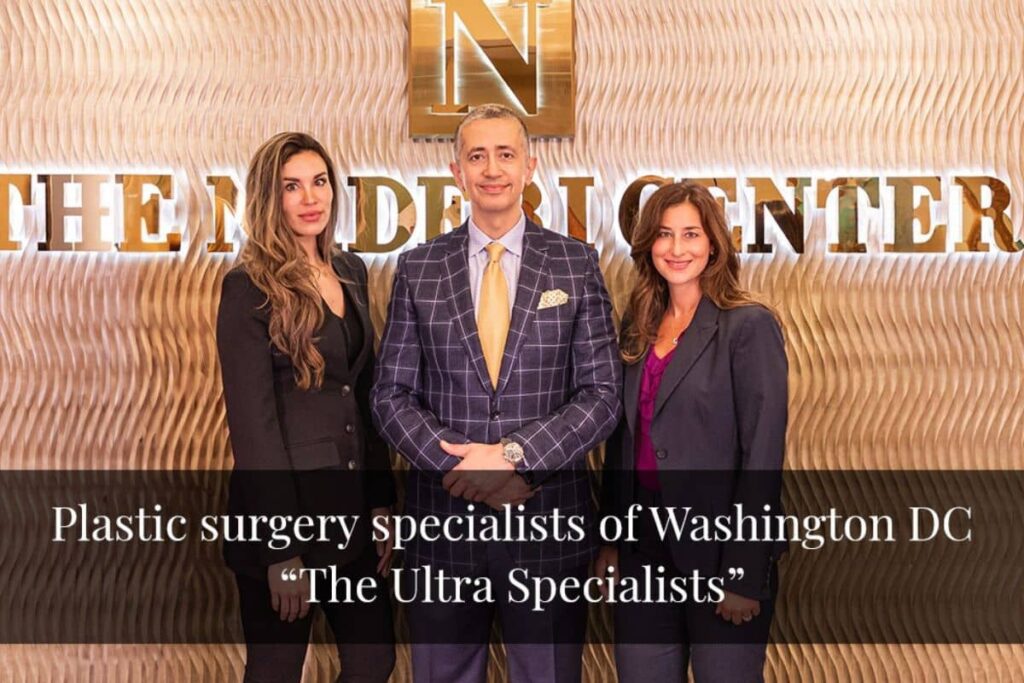

See why patients nationwide trust The Naderi Center
Book a personalized consultation with our expert physicians to begin a safe correction plan.
Safety First: Why You Should Not “Fix” Fillers With Another Untrained Injector
Many patients try to fix bad filler by simply seeing another low-cost injector or attempting more filler to mask the problem. This often makes the situation worse. “The worst fix for too much filler is more filler,” says Dr. Naderi. “Filler doesn’t wander. When a lip is overfilled, the extra volume pushes past the border and it looks like it moved, so somebody fills above it to balance it out. Now you have two problems and a bigger lip.”
Filler correction is a medical procedure and it requires advanced knowledge of facial anatomy, filler behavior, and vascular safety. Done improperly, it can cause tissue damage or worsen asymmetry.
Trust your face to true experts.
How Dissolving Filler With Hyaluronidase Works
Hyaluronidase is an enzyme that breaks down hyaluronic acid filler. Your physician injects it into the area being corrected. It starts working right away, and the full effect shows in about 48 hours. Filler does break down on its own eventually, but that can take months to years, and the enzyme is the only safe way to speed it up.
We dissolve in stages on purpose. Years of extra volume can stretch the tissue, and taking everything out in one visit can leave a hollow or uneven contour, especially in someone who had real volume loss before the filler went in. “Melting filler is easy. Melting the right amount is the skill,” says Dr. Naderi. Under-eye filler is often simpler to correct, and 1 to 2 sessions usually bring back a natural look there, though complicated cases can take more.
Which Fillers Can Be Dissolved?
Only hyaluronic acid fillers respond to hyaluronidase. That covers the Juvéderm, Restylane and RHA collections. Other materials can’t be reversed:
- Sculptra works by building your own collagen over several months, so there is nothing to dissolve once it is in.
- Radiesse can’t be melted either, and it can leave calcifications that complicate future facial surgery. Our practice does not use it.
- Fat grafting is permanent for the portion that survives, typically about half, so it is planned with the same care as surgery.
Before anything goes into your face, ask what it is and whether it can come out.
Reverse Botched Fillers Service At The Naderi Center
We are transparent about our treatment process:
- Initial Consultation & Injection Session: Includes full assessment and initial hyaluronidase melting treatment.
- Follow-Up Melting Sessions: Most patients require 2-4 sessions for full correction.
- Re-injection (Optional): Charged at our standard practice rates.
Correction is a process, not a single treatment, and we prioritize achieving the safest, most natural result possible. For fees, please see our pricing page.
Rebalancing the Face After Filler Is Dissolved
Once the excess is gone and the tissue has settled, some patients want a little volume back. Re-injection is optional, and many people find they need far less than they had before. Our physicians build back gradually and place filler where the face has actually lost support, so the result restores shape without recreating fullness. For lips, a useful guide is an upper lip with about two-thirds the volume of the lower lip.
“Once the old filler is gone, a lot of people realize they only wanted a little help in one spot,” Dr. Naderi says. “Sometimes the right amount turns out to be half a syringe. Sometimes it’s none, and I’ll tell you that.”
Sometimes the honest answer is that filler was never the right tool:
- Hollows and bags under the eyes: we steer most patients away from tear trough filler. Real hollowness usually does better with fat injections, and true under-eye bags with lower eyelid surgery.
- Sagging along the jaw: this is a job for a deep plane facelift. If a facelift is planned within about a year, we skip filler and add fat during the surgery instead.
Because Dr. Naderi performs both injections and surgery, he has no reason to steer you toward one or the other. “Bring photos of yourself from before you ever had filler,” he says. “That’s the face we’re trying to get back to, and it’s the most useful thing a patient can hand me.”
How to Prevent Botched Filler Injections
We fix bad outcomes, but the best approach is to stop them from happening. This is how you can lessen your risk:
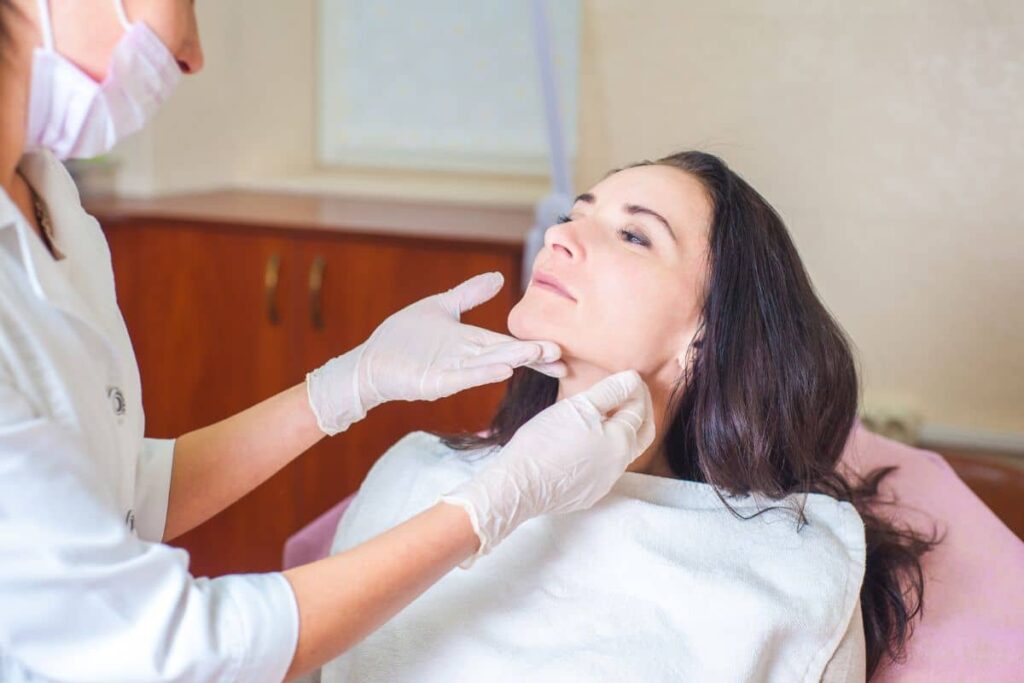
1. Choose the Right Medical Expert and Verify Their Credentials
The most important step in preventing botched fillers is selecting a board-certified medical professional, ideally a facial plastic surgeon or dermatologist with advanced training in anatomy and injection safety.
A trained specialist will answer your questions and explain their method clearly. They also put your long-term result ahead of a quick change.
2. Beware of Bargain Deals
Low-cost filler deals often come with high-cost mistakes. Cheap services may use:
- Unlicensed or undertrained injectors
- Counterfeit or expired fillers
- Unsafe techniques that jeopardize your health
- No plan, and no hyaluronidase on hand, if something goes wrong
3. Know What Good Filler Should Look Like
Natural filler results should:
- Respect your facial proportions
- Move with your expressions
- Stay within natural anatomical boundaries
If you’re seeing “duck lips” or puffy cheeks on Instagram, that’s not the goal; that’s overfilling.
4. Avoid Overfilling and Over-Correcting
Less is often more. You should trust providers who use a careful, step-by-step method. Do not trust those who say they can do everything perfectly at once. A skilled injector builds a result gradually.
You Deserve to Love Your Face Again
If you have suffered the consequences of botched fillers or feel unhappy with your results, you are not alone. Our physicians can see you in Reston or Chevy Chase, look at what was done and tell you honestly what can be corrected and how many visits it is likely to take.
Contact us today to schedule your appointment and take the first step toward restoring your natural beauty.
See the Doctor
Questions about what you just read? Ask our doctors in person. Book a consultation in Reston or Chevy Chase, or start with a virtual consultation from home.
Book a ConsultationVirtual consultation
Call Reston (703) 481-0002 or Chevy Chase (301) 222-2020.
FAQs about Botched Fillers

Patient Financing
Pay Over Time with Cherry
Monthly payment plans for surgery and treatments, including 0% APR options for qualifying patients. Checking whether you qualify won’t affect your credit score.
One Response
Such a great information. This is really very helpful for bloggers