Medically reviewed by Dr. Shervin Naderi, MD, FACS, double board-certified facial plastic surgeon. Last reviewed October 21, 2026.
October in the Washington area brings cooler mornings and softer light, and for many of our patients it also brings a closer look in the mirror. After a summer of sailing off the Alexandria waterfront and weekend hikes at Great Falls, brown patches that were barely there in May can look deeper by fall. Here is your guide to telling melasma from ordinary sun spots, choosing the right treatment for each, and planning the season so your skin looks clear and even by spring.
The short answer: sun spots and freckles usually respond beautifully to Sciton BBL light therapy or a targeted Pico Majesty laser treatment. Melasma calls for a gentler plan, so we pair low-energy pico toning with a medical-grade pigment routine and, for some patients, a VI Precision Plus Peel. Fall and winter are the ideal months to begin, and the first step is an accurate diagnosis at a consultation.
Why do brown spots and melasma look darker after summer?
Brown spots look darker after summer because ultraviolet light signals the pigment cells in your skin, called melanocytes, to make more melanin. Freckles darken and multiply over the summer, and sun spots collect where the sun lands most, such as the cheeks, forehead, nose and the backs of the hands. Melasma follows the seasons too. It tends to deepen in the summer months and soften in winter, though staying out of the sun alone may not clear it when hormones are part of the picture.
“Every October we meet patients from McLean, Potomac and across the region who feel their skin changed over a single summer,” says Dr. Shervin Naderi, double board-certified facial plastic surgeon. “Most of the time the pigment was already there, and the sun simply brought it forward. The lovely news is that fall gives us the calmest season of the year to treat it.”
Is it melasma, a sun spot or freckles?
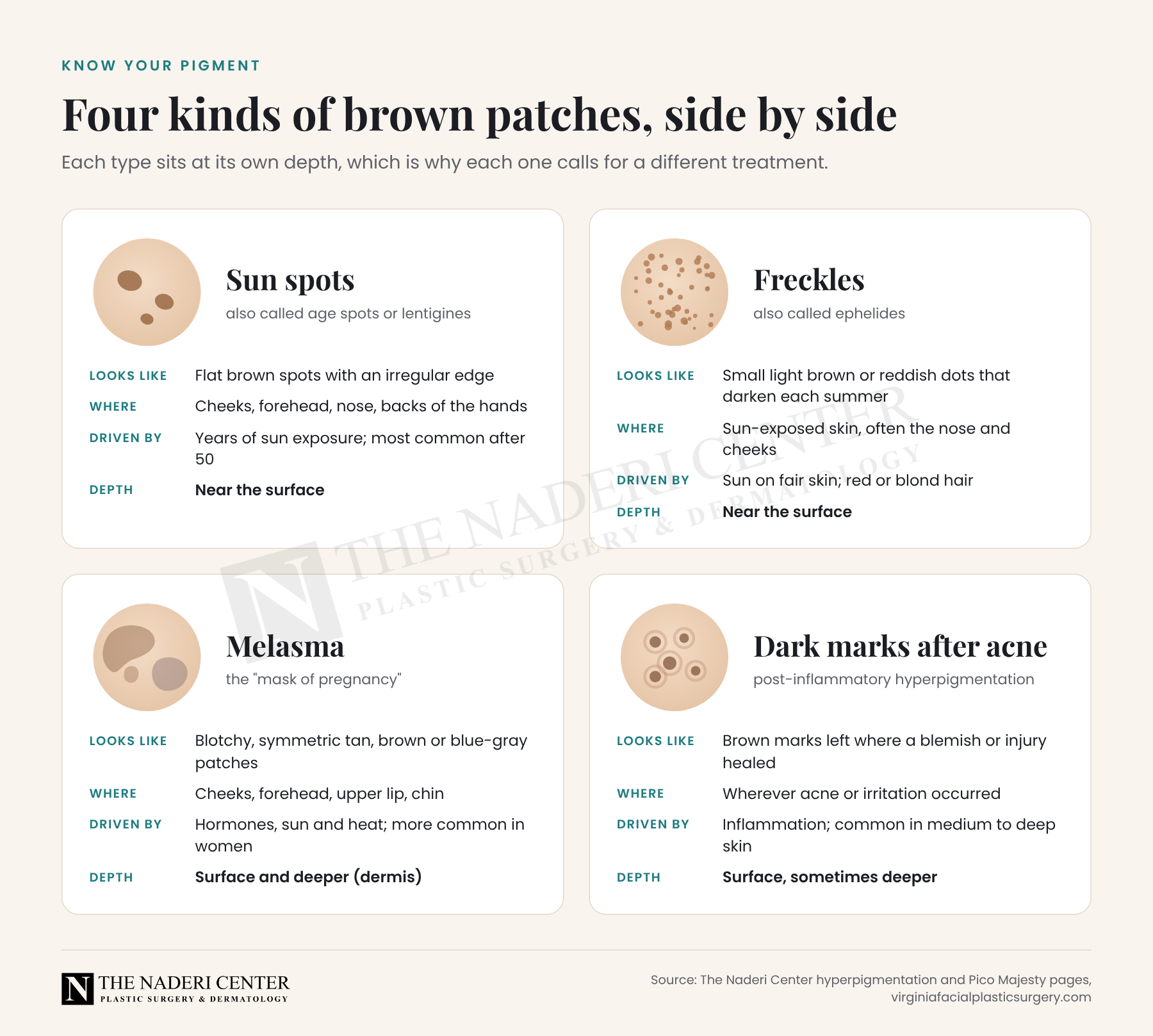
The quickest clue is the pattern. Sun spots, also called age spots or lentigines, are flat brown spots with an irregular edge that appear on sun-exposed skin, most often after age 50. Freckles are smaller light brown or reddish dots that tend to appear in fair skin with red or blond hair. Both sit near the surface of the skin, which is why light and laser treatments that target surface pigment work so well for them.
Melasma looks different. It appears as blotchy, symmetric patches of tan, brown or blue-gray color, usually on the cheeks, forehead, upper lip and chin. Hormonal shifts such as pregnancy, birth control pills and hormone therapy can set it off, and it is more common in women and in medium to olive skin tones. A fourth type, post-inflammatory hyperpigmentation, is the darker mark that lingers after acne or an injury to the skin has healed.
Because each type sits at its own depth, your physician will examine the pigment closely before any treatment is planned. A Wood’s lamp can show whether pigment is closer to the surface or deeper in the dermis, and gently stretching the skin offers another clue. Any spot that looks unusual is evaluated by a physician first, and we never treat a spot with a laser if it could be a skin cancer.
What is the best treatment for sun spots and freckles?
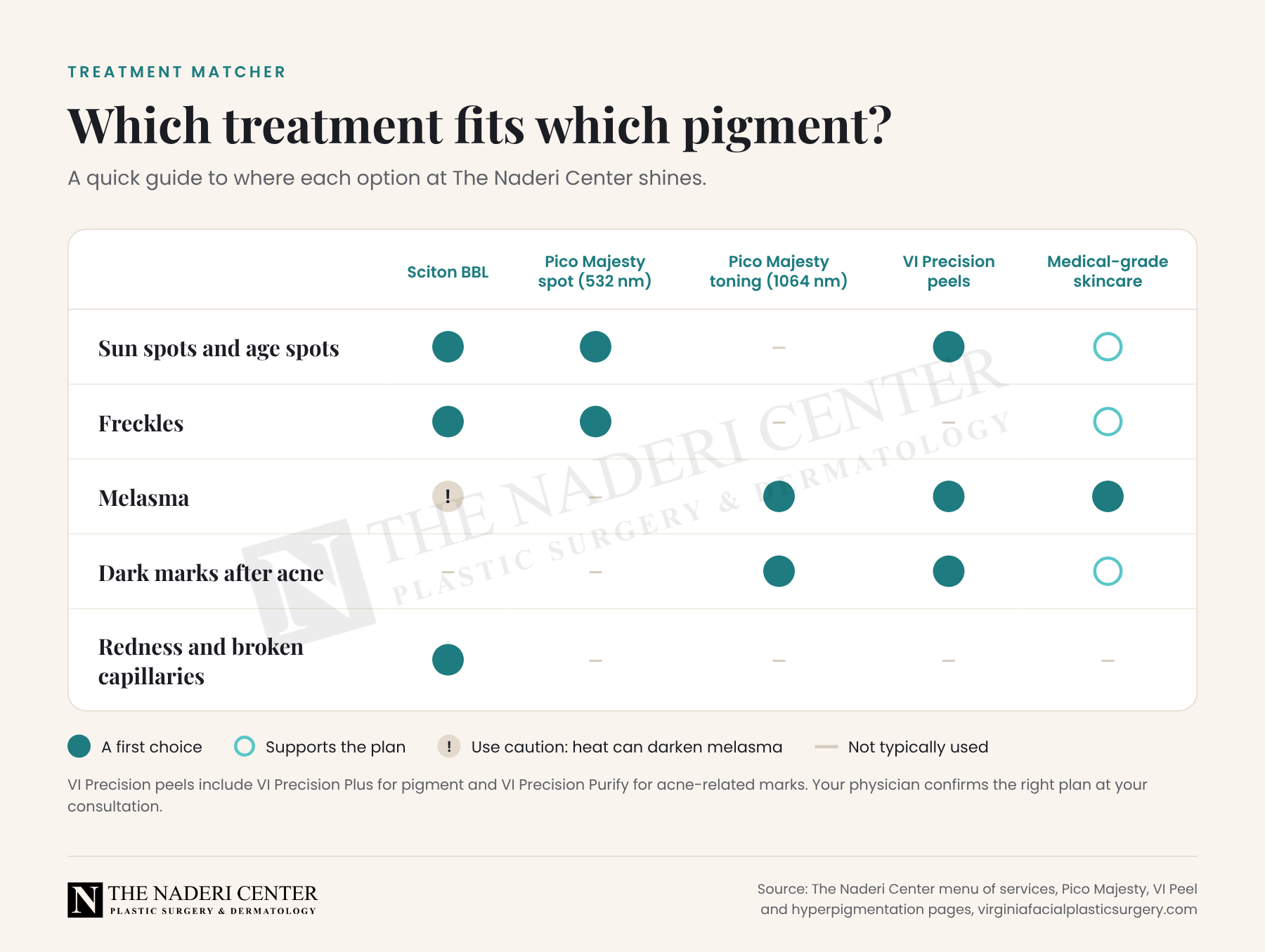
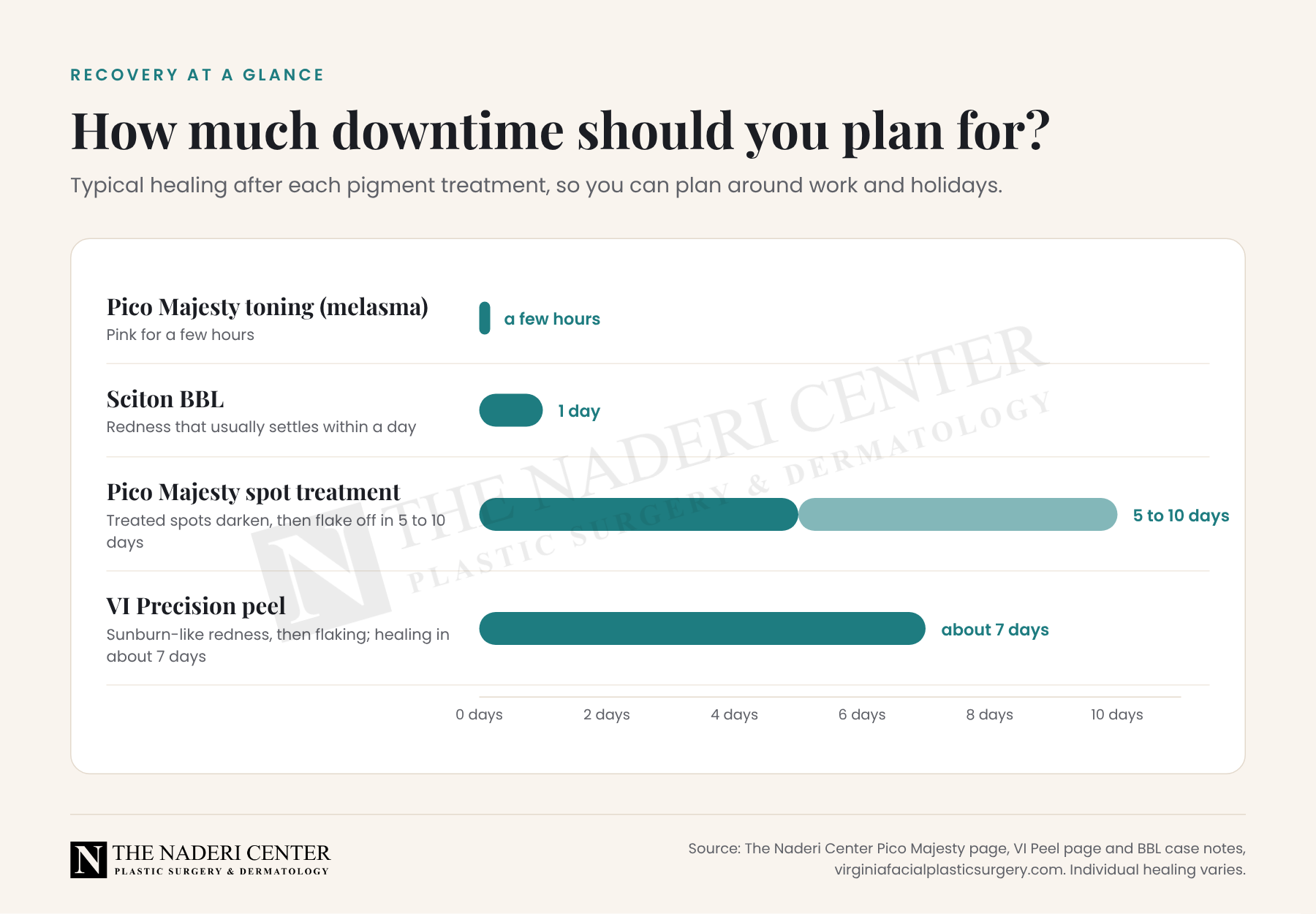
For scattered sun spots and freckles across the face, we often recommend Sciton BBL (BroadBand Light), a form of intense pulsed light delivered with the Sciton Joule platform. BBL uses wavelengths of light that pigment absorbs, and it can soften redness and broken capillaries in the same visit. We recommend a series of 3 to 6 treatments, typically spaced 4 to 6 weeks apart, and most patients see only mild redness that usually settles within a day.
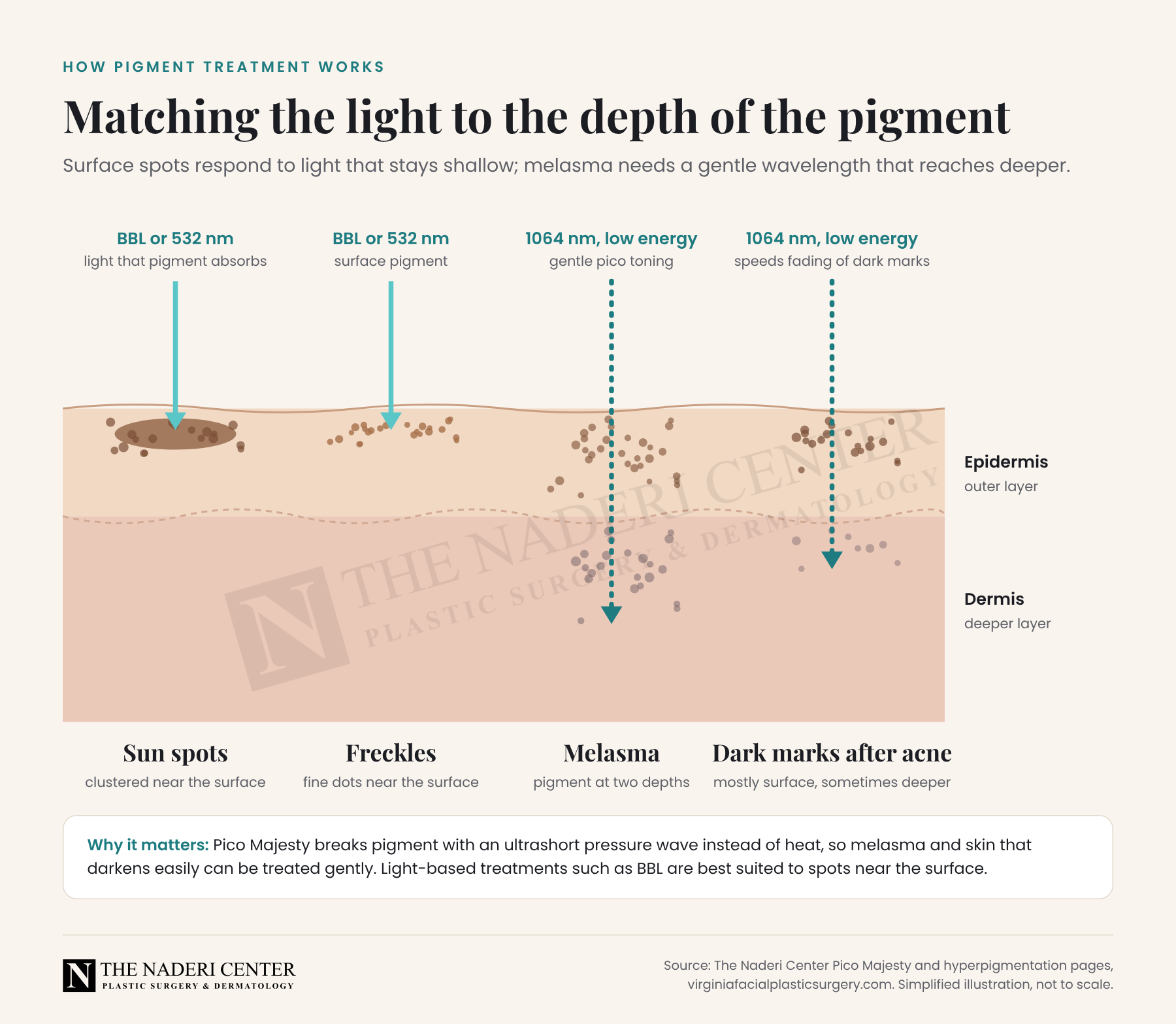
When a few distinct spots are the concern, we treat each one individually, either with targeted spot treatment on the Sciton Joule or with Pico Majesty, our picosecond laser. Pico Majesty’s 532 nm wavelength works without relying on heat: each ultrashort pulse sends a pressure wave that breaks pigment into tiny particles your body clears over the following weeks. With either approach, treated spots turn darker for a few days and then flake away. After Pico Majesty this usually takes 5 to 10 days, and most sun spots and freckles need 1 to 3 sessions about 4 weeks apart.
“For a patient with a sprinkle of sun spots across the cheeks, BBL is a lovely, efficient choice,” says Dr. Naderi. “For two or three stubborn spots, spot treatment with the Sciton Joule or our picosecond laser lets us treat exactly what bothers you and leave the rest of your skin undisturbed.”
How do you treat melasma without making it darker?
Melasma is treated with gentle, low-heat methods, because heat is one of its triggers. Aggressive lasers and intense pulsed light can provoke a rebound that leaves the patches darker than before, which is why melasma is planned differently from ordinary sun spots. For melasma we use Pico Majesty at very low energy across the whole face with its 1064 nm wavelength, a technique often called pico toning, which reduces excess pigment a little at a time.
A typical melasma plan is a series of 5 to 8 toning sessions, spaced 2 to 4 weeks apart, followed by maintenance visits. There is no peeling, and most people are pink for only a few hours before going about their day. Melasma can be controlled, though not cured, because its triggers can return at any time. Keeping the energy low and spacing sessions thoughtfully also protects against pale spots, which can appear when melasma is toned too hard or too often.
“Melasma rewards patience,” says Dr. Naderi. “We treat it gently and consistently, and we partner with each patient on a home routine. When those two pieces work together, we see the most beautiful and lasting improvement.”
Medical-grade skincare does much of the daily work. Our hyperpigmentation protocols often pair prescription hydroquinone 4% with tretinoin, and patients on that combination can expect to see results within 8 to 12 weeks. Hydroquinone is used for no more than 4 to 6 months at a time, and our board-certified dermatologist, Dr. Alexandra Snodgrass, advises that pigment-blocking products are never stopped abruptly. Your provider will instead ease you onto a maintenance routine, often with ZO Skin Health products, to guard against rebound pigment.
For patients who prefer a peel, or whose skin is not an ideal match for laser, the VI Precision Plus Peel is a gracious alternative. The VI Precision line is about 25% stronger than the standard VI Peel and is designed for stubborn pigment, including melasma and age spots. Healing takes about seven days, with sunburn-like redness at first and gentle flaking toward the middle and end of that week.
Is laser treatment safe for darker skin tones?
Yes, with the right laser and a careful hand. For years, patients with brown and Black skin were told to avoid lasers, because heat-heavy devices can leave new dark patches or light spots. Pico Majesty’s 1064 nm wavelength passes through much of the surface melanin, and its pulse is too short to build up much heat, which makes it a gentle choice for medium and deep skin. We lower the risk further with conservative settings, a test spot when it makes sense, skin-prep products when they help, and sun protection before and after. When deeper resurfacing is the goal, the UltraClear laser, performed by Dr. Snodgrass, is another option well suited to darker skin.
“Many of the patients we see from Bethesda, Vienna and Washington DC have skin that darkens easily after heat or irritation,” says Dr. Naderi. “That is exactly why we chose a picosecond laser designed for that skin. Every skin tone deserves treatment that is both effective and safe.”
When is the best time of year to treat summer pigment?
Late fall and winter are the best time to treat summer pigment. Tanned skin is more likely to darken after laser or light treatment, so we ask patients to let a summer tan fade and to avoid direct sun, tanning beds and self-tanner for 2 to 4 weeks before a Pico Majesty session. Retinol, tretinoin, glycolic and salicylic acids and scrubs are paused on the treatment area 3 to 5 days beforehand. If you have a history of cold sores and we are treating around your mouth, we will prescribe an antiviral to take ahead of time.
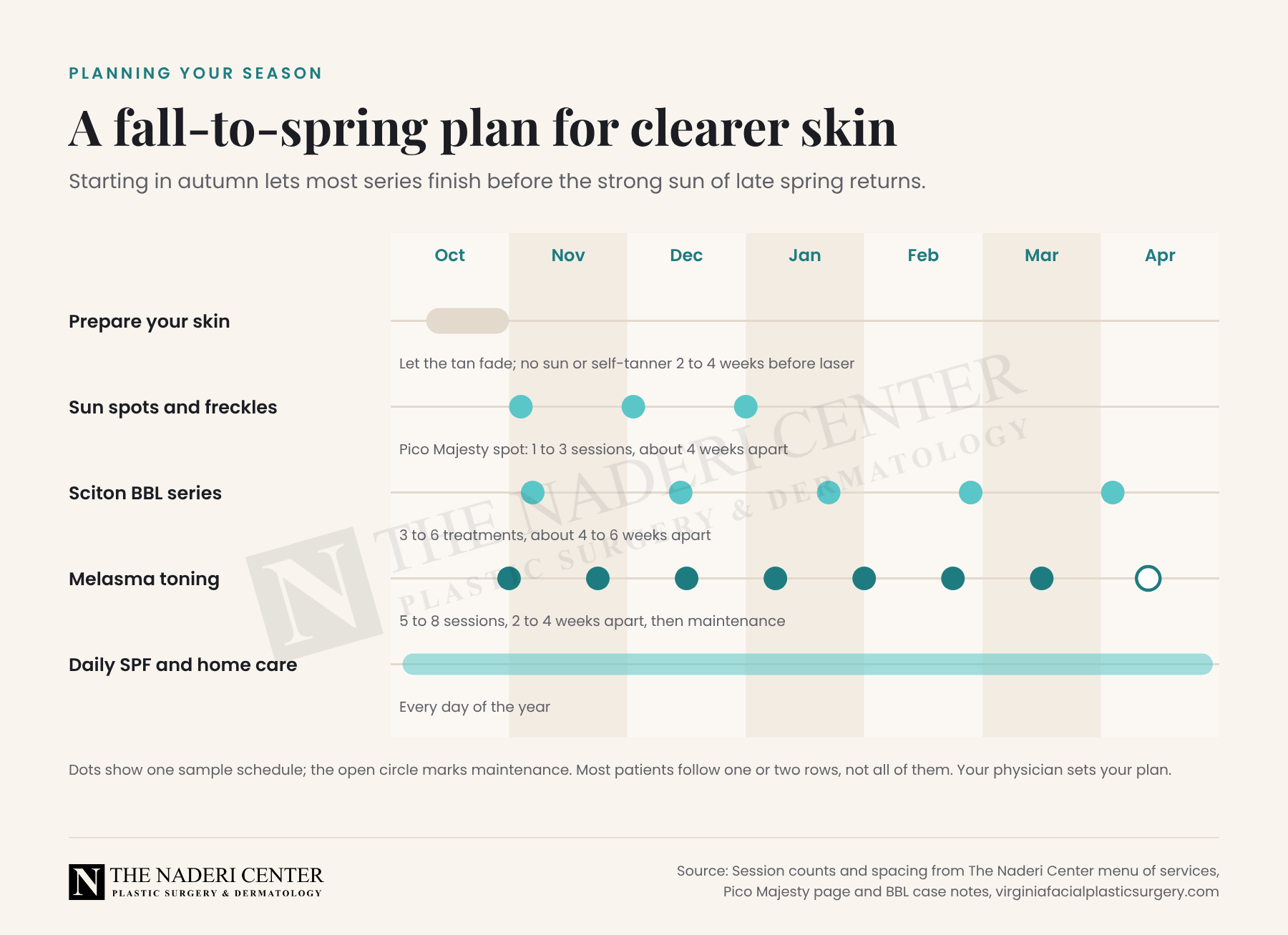
With a little planning, a series that begins in November can be well along, and often complete, by the time the cherry blossoms open in Washington DC. If a holiday party or family photo is on the calendar, we suggest booking spot treatments at least two weeks ahead so darkened spots have time to clear completely, while gentle toning can be scheduled closer to the date. Your provider will map your sessions around travel and your calendar.
How do I keep brown spots and melasma from coming back?
Daily sun protection is the foundation of every pigment plan. We recommend a broad-spectrum sunscreen of SPF 30 to 50, ideally a mineral formula, worn every day of the year, including gray winter mornings on the way to work in Arlington or downtown. Even the best sunscreens typically work for no longer than about 90 minutes, so reapply when you are outdoors, add a wide-brimmed hat, and seek shade during the peak hours of 10 AM to 4 PM. We also suggest using one SPF product at a time, since combining two can dilute their protection.
Maintenance keeps your results looking fresh. Patients who clear sun damage with BBL often return for a booster treatment once a year, and melasma patients continue periodic toning along with their home routine. Antioxidants such as vitamin C, applied in a medical-grade formula that truly penetrates the skin, add another layer of protection. Whenever possible, let blemishes heal on their own, since picking at the skin is a common cause of new dark marks.
“I like to tell patients that clear skin is something we look after together,” says Dr. Naderi. “A few minutes each morning and a thoughtful maintenance visit now and then will help your skin keep the brightness you worked for.”
Brown spot and pigment treatment before and after photos
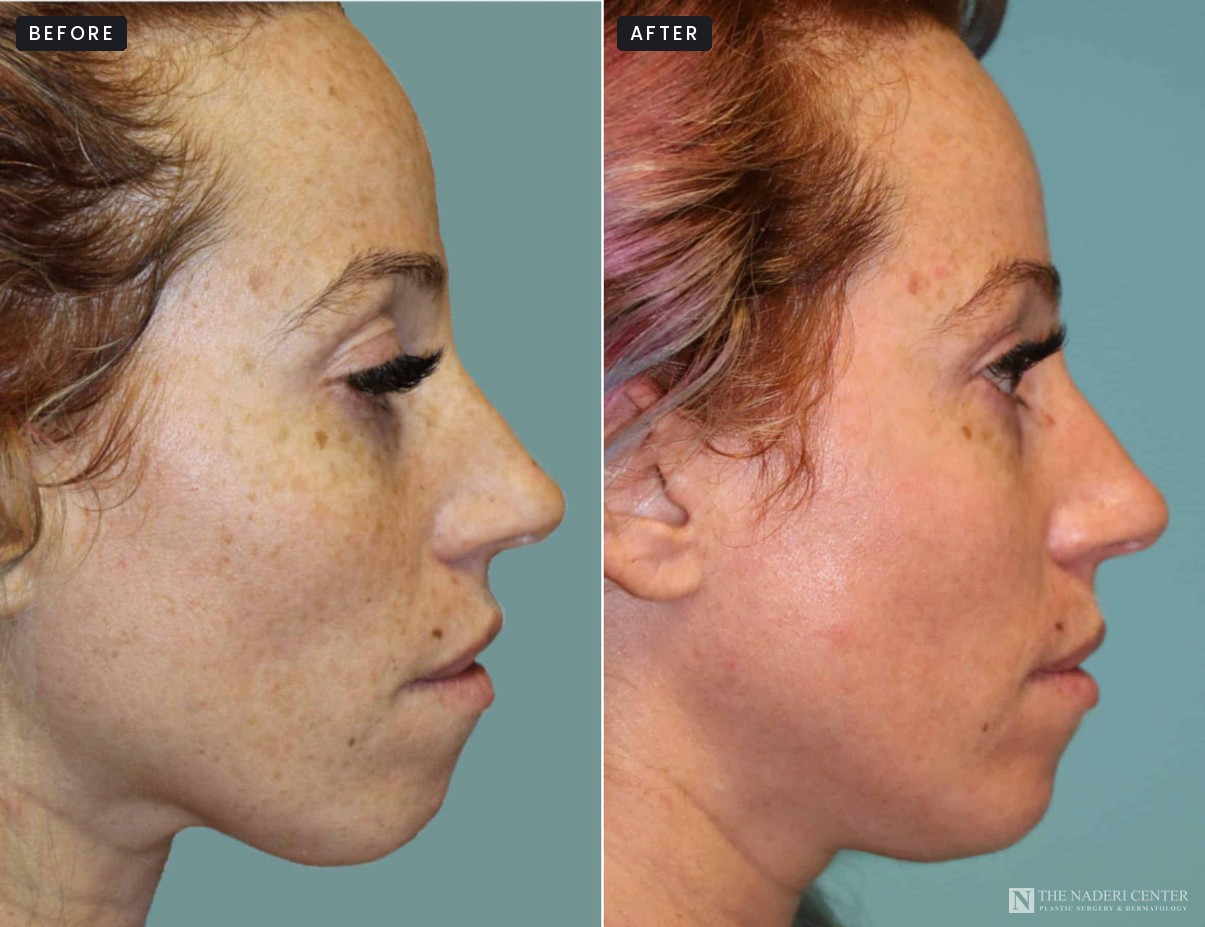
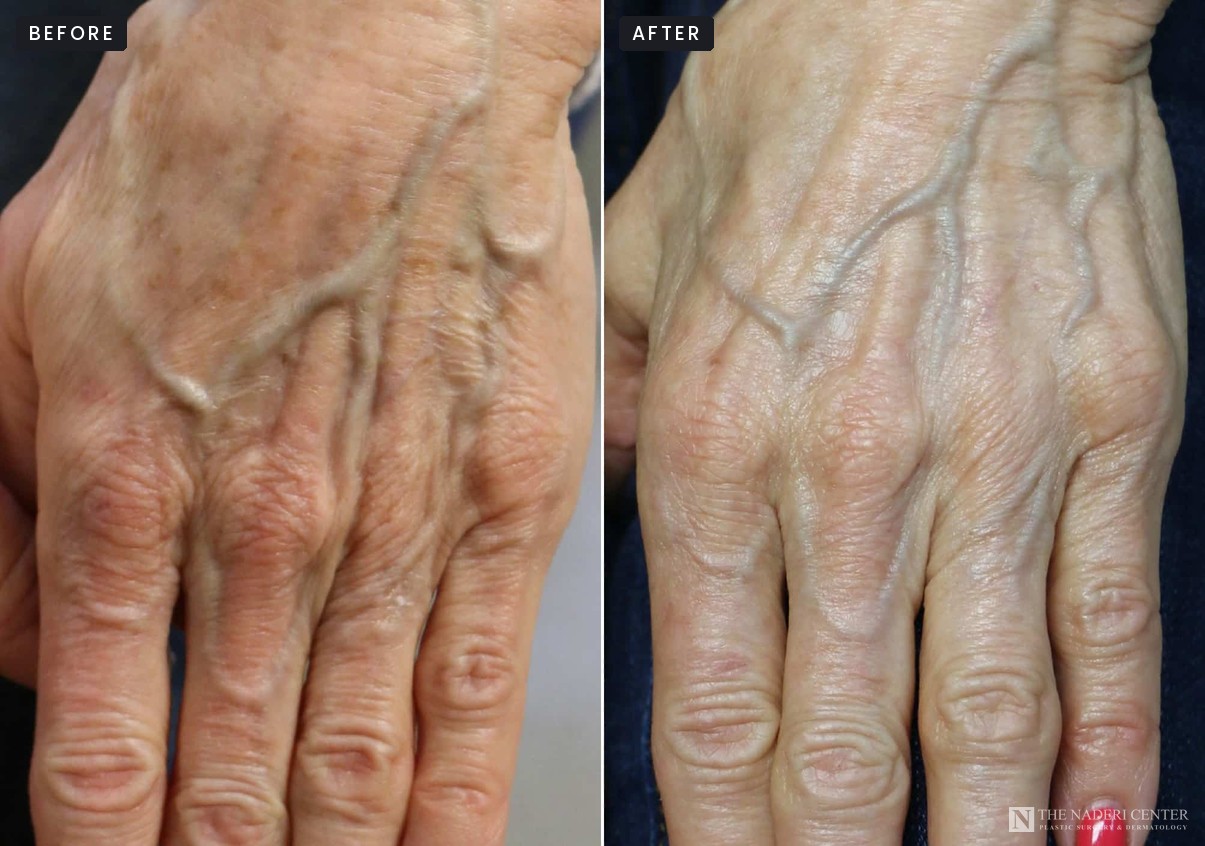
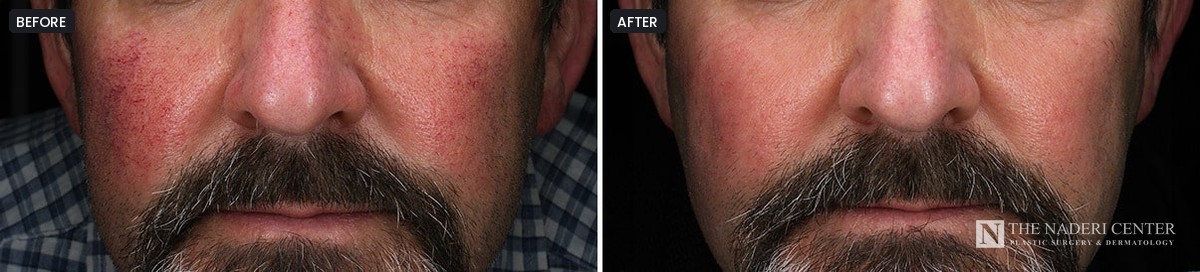
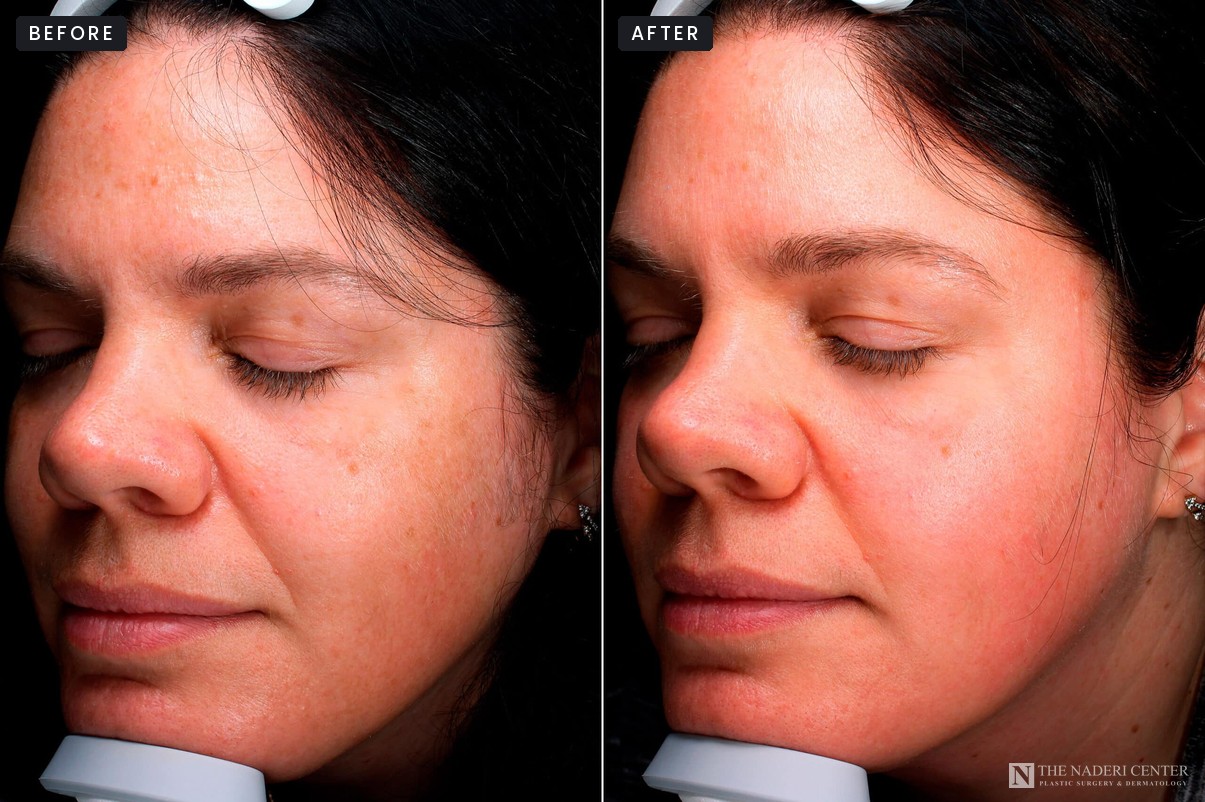
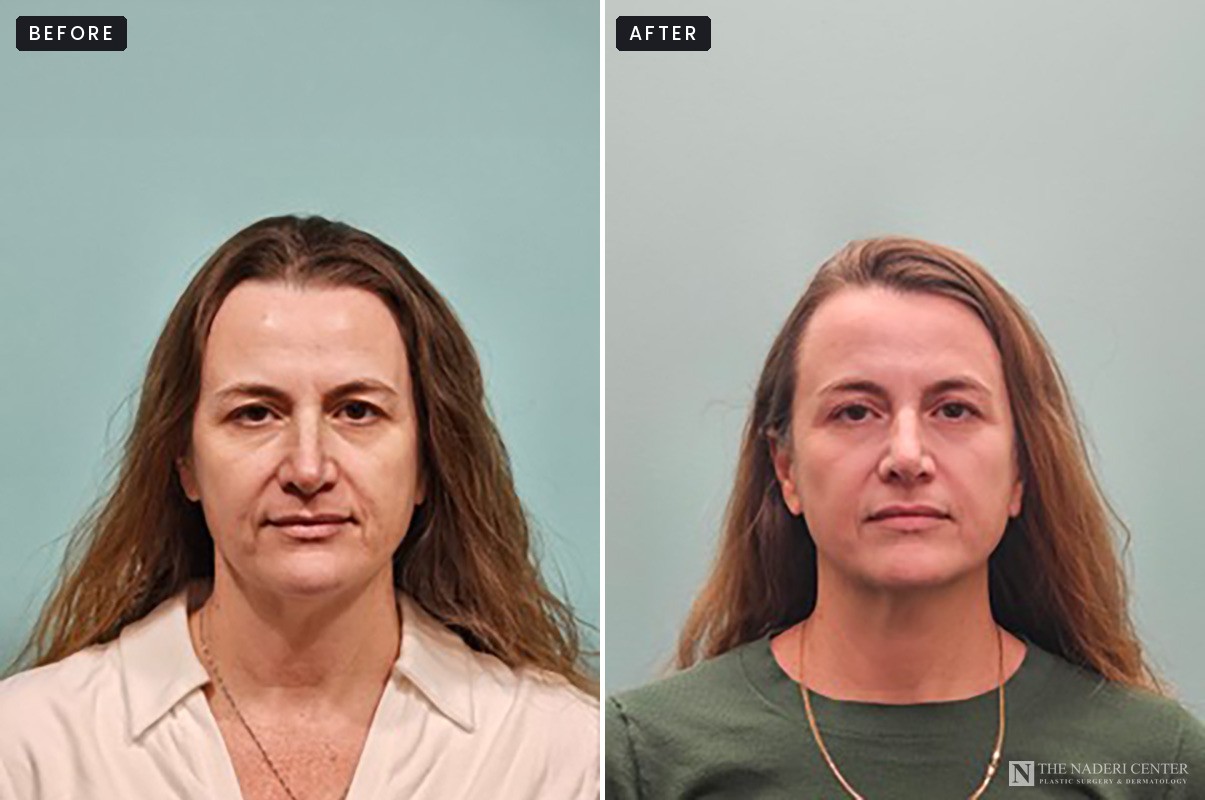
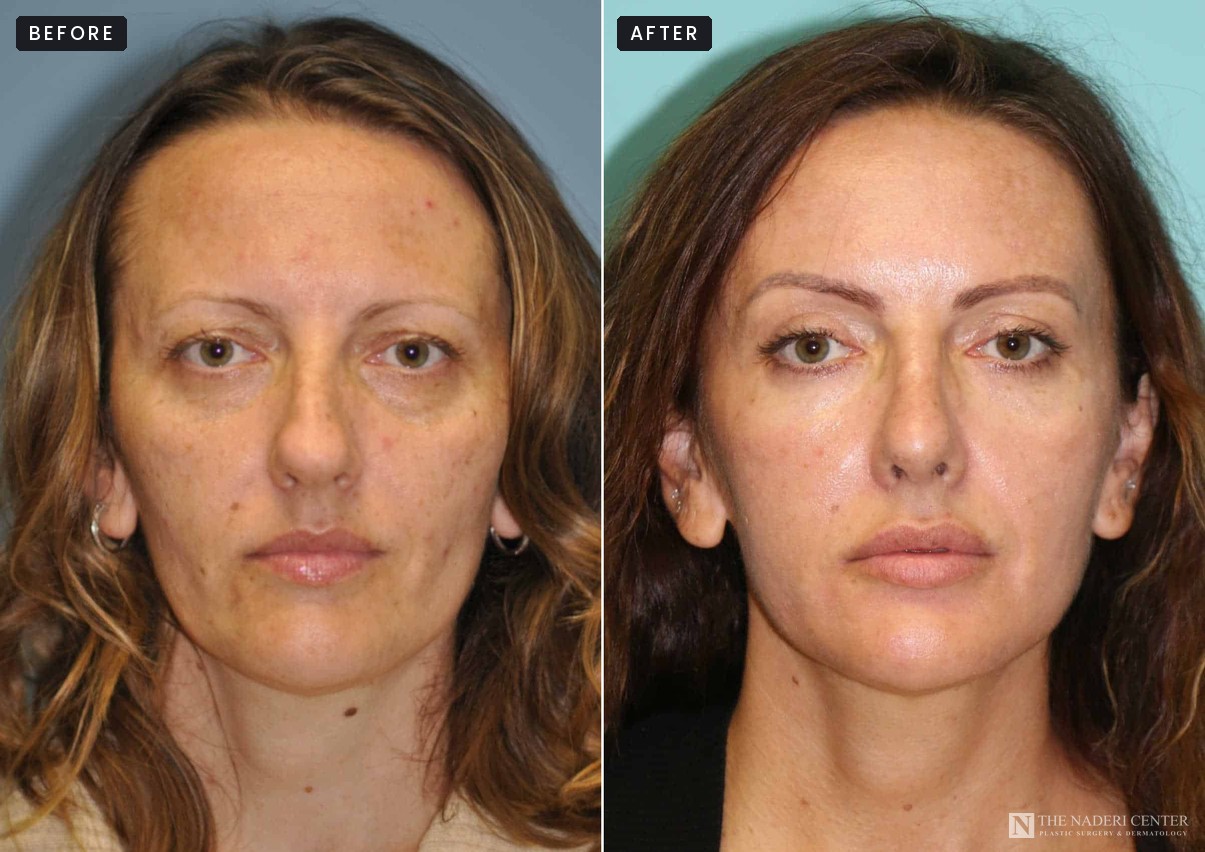
Real patients of The Naderi Center. Individual results vary.
Who performs pigment treatments at The Naderi Center?
Pigment care at The Naderi Center is physician-led. Dr. Snodgrass focuses on cosmetic dermatology with a special interest in lasers and brings years of experience treating hyperpigmentation across skin types. Pico Majesty treatments are performed by Dr. Snodgrass and by our licensed aesthetician, a certified laser technician who builds a home skincare routine for each patient. Sciton BBL treatments are performed by our master aesthetician or by Dr. Snodgrass. Dr. Naderi, whose practice is devoted exclusively to the face, has been named to Newsweek’s list of America’s Best Plastic Surgeons four years running.
Where can I get melasma treatment near McLean, Bethesda or Washington DC?
We welcome you at two offices. Our Reston office is at 1850 Town Center Parkway, Pavillion II, Suite 551, Reston, VA 20190, (703) 481-0002, and our Chevy Chase office is at 5454 Wisconsin Ave, Suite 1655, Chevy Chase, MD 20815, (301) 222-2020. Consultations are offered at both offices, and Pico Majesty treatments take place in Reston. For melasma treatment in Reston, patients from Vienna, McLean and Great Falls are close by, while patients from Bethesda, Potomac and Washington DC often begin with a consultation in Chevy Chase.
If your skin has carried a little more summer into fall than you would like, we would be delighted to help you plan a gentle, effective course for the months ahead. Book an appointment with our team, and your physician will guide you toward the treatment that suits your skin and your calendar.
Frequently asked questions
How much does treatment for brown spots and melasma cost?
Sciton BBL is $600 per treatment and the VI Precision peel is $475. Pico Majesty toning for melasma is $700 a session for the full face, with savings on a series of 3 or 6. Your physician will walk you through your plan at your consultation.
Can I have pigment treatments while pregnant or breastfeeding?
We suggest waiting. Pico Majesty is not performed during pregnancy or while breastfeeding, and your physician can recommend gentle ways to protect your skin in the meantime and plan treatment for afterward.
Can I wear makeup after treatment?
After pico toning, most people can wear makeup the next morning. After a VI Peel, makeup is fine for the first few days, though it is best set aside during the second half of the healing week, when the skin is flaking.
I took Accutane recently. Can I still have laser treatment?
Isotretinoin (Accutane) within the last 6 months is a reason to wait before Pico Majesty. Please also let us know about any past gold therapy, antibiotics or other light-sensitizing medications, and bring a list of your medications and supplements to your consultation.
Can brown spots on the hands, neck and chest be treated too?
Yes. BBL is commonly used on the hands, chest and neck as well as the face, and Pico Majesty can add the neck, hands or chest to a full-face treatment.