When patients search for a facelift surgeon, one of the first things they do is look at before and after photographs. It seems simple enough: find a result you like and choose the surgeon who created it.
However, according to facial plastic surgeon Dr. Shervin Naderi, most patients do not know what they should actually be evaluating.
“A facelift before and after photograph can be very deceiving,” says Dr. Naderi. “Most patients immediately look at the wrinkles or ask, ‘Does this person look younger?’ But as surgeons, we look at entirely different things. We look at the jawline, the neck contour, the ears, the hairline, and most importantly, whether the patient still looks like themselves.”
A truly exceptional facelift is not one that makes a person look dramatically different.

The best facelift should make people ask:
“You look amazing. Did you lose weight? Did you go on vacation?”
not:
“Who did your facelift?”
“The greatest compliment after facelift surgery is when nobody knows you had surgery,” explains Dr. Naderi. “A successful facelift turns back the clock while preserving your identity.”
Unfortunately, there are many facelift results online that may appear impressive at first glance but reveal signs of over-tightening, unnatural pulling, poor incision placement, or loss of the patient’s unique facial character.
In this guide, Dr. Naderi explains how he evaluates facelift results and teaches patients to see before and after photographs the way a facial plastic surgeon does.
Key Takeaways
- A natural facelift should refresh your appearance without changing your identity.
- The jawline, neck, ears, hairline, and incision placement can reveal the quality of a facelift result.
- Consistent before and after photography makes it easier to judge surgical outcomes fairly.
- Dr. Shervin Naderi emphasizes preserving natural facial features while restoring more youthful contours.
- A large gallery of consistent results can help patients evaluate a surgeon’s experience and aesthetic approach.
- Key Takeaways
- 1. Evaluate the Jawline: The Foundation of a Beautiful Facelift
- 2. Turn to the Side: The Neck Profile Reveals Everything
- 3. Examine the Earlobes: The Detail Most Patients Never Notice
- 4. Look Carefully at the Hairline and Incisions
- 5. Ask the Most Important Question: Does This Person Still Look Like Themselves?
- 6. A Great Facelift Must Look Natural in Motion
- 7. Be Aware of Misleading Before and After Photography
- 8. A Large, Consistent Gallery Is a Sign of Experience
- Dr. Naderi’s Facelift Philosophy: You, Only More Refreshed
- Schedule a Facelift Consultation With Dr. Shervin Naderi
- Frequently Asked Questions About Facelift Before and After Results
- About Dr. Shervin Naderi
1. Evaluate the Jawline: The Foundation of a Beautiful Facelift
One of the most important areas Dr. Naderi examines in a facelift result is the jawline.
A youthful face typically has a smooth, continuous jaw contour. With aging, tissues descend, jowls form, and the once-defined transition between the cheek and jaw becomes interrupted.
A successful facelift restores that clean mandibular line without making it appear artificially carved or pulled.
“When I look at a facelift result, my eyes often go immediately to the jawline,” says Dr. Naderi. “A beautiful jawline should look effortless. It should not look like someone took the skin and pulled it backward.”
This is why modern facelift surgery focuses on the deeper support structures of the face, including the SMAS layer, rather than simply tightening the skin.
A high-quality facelift should show:
- A smoother jaw contour
- Improvement of jowls
- Better facial definition
- A natural transition between the cheeks and neck
Warning signs of a poor result include a jawline that appears too sharp, too flat, overly stretched, or disconnected from the patient’s natural anatomy.
“Every patient has their own skeletal structure and facial identity,” says Dr. Naderi. “The goal is not to give every patient the same jawline. The goal is to restore the jawline they had years earlier.”
2. Turn to the Side: The Neck Profile Reveals Everything
One of the biggest mistakes patients make is judging a facelift only from the front.
“The side profile is where the truth is,” says Dr. Naderi. “I always tell patients: don’t just look straight on. Turn the photograph sideways and study the relationship between the chin, jawline, and neck.”
The neck is one of the areas that most clearly reveals aging. Loose skin, excess fat, muscle banding, and tissue descent can blur the youthful angle between the neck and chin.

A successful facelift and neck lift should create a smoother, more elegant profile while maintaining a natural appearance.
When examining side-view photographs, patients should look for:
- A cleaner neck contour
- Better jaw-to-neck separation
- Reduction of fullness beneath the chin
- A graceful, natural neck angle
Be cautious of results that appear overly tight or have a “windblown” appearance.
“A youthful neck is not a tight neck,” Dr. Naderi explains. “It is a naturally contoured neck. If it looks like the skin is being stretched backward, that is not the hallmark of a beautiful facelift.”
3. Examine the Earlobes: The Detail Most Patients Never Notice
One of the easiest ways for a facial plastic surgeon to identify a poorly performed facelift is by looking at the earlobes.
An overly tight skin closure can pull the earlobe downward, creating a telltale sign known as a pixie ear deformity.
“Once I teach a patient to recognize the earlobe, they can never unsee it,” says Dr. Naderi. “You start looking around and noticing people whose facelift is announced by their ears.”
A natural facelift should preserve:
- The natural shape of the earlobe
- The free-hanging appearance of the ear
- Normal anatomy around the ear attachment
The reason this matters is because a beautiful facelift should not leave visible clues that surgery was performed.
“In my opinion, the best facelift is one where someone looks refreshed, but you cannot identify what was done,” says Dr. Naderi.
4. Look Carefully at the Hairline and Incisions
A beautiful facelift should not require a patient to change their hairstyle to hide signs of surgery.
Poorly designed incisions can distort the sideburn, pull the hairline backward, or create visible scars.
“The incision is not just a cut—it is part of the artistry of the procedure,” says Dr. Naderi. “A well-planned facelift incision should disappear into natural facial borders and preserve the patient’s hairline.”
When reviewing before and after photographs, pay attention to:
- The position of the sideburn
- The temple hairline
- The area around the ear
- Whether scars are visible
Excellent surgical planning allows patients to wear their hair up, pull it behind their ears, and style it naturally without revealing they had surgery.

Discover Dr. Naderi’s Approach to Facelift Surgery
Learn how his approach focuses on restoring a refreshed appearance while respecting each patient’s individual features.
5. Ask the Most Important Question: Does This Person Still Look Like Themselves?
This is perhaps Dr. Naderi’s most important test.
A facelift can be technically successful but aesthetically unsuccessful if the patient no longer looks like the same person.
“The face tells your story,” says Dr. Naderi. “Your expressions, your asymmetries, the little details that make you look like you—those should be preserved. My job is not to create a new face. My job is to restore the face that aging slowly took away.”
When evaluating before and after photographs, ask yourself:
Would I recognize this person if I passed them in a restaurant?
The answer should be yes.
They should look:
- More rested
- More vibrant
- More youthful
They should not look like someone else.

6. A Great Facelift Must Look Natural in Motion
A photograph captures only one second of a person’s life.
Real beauty happens when people laugh, speak, smile, and express emotion.
“A facelift should look just as good when someone is telling a joke or smiling at their grandchildren as it does in a photograph,” says Dr. Naderi.
An excellent result preserves:
- Natural smiling
- Normal movement around the mouth
- Individual facial expressions
- Personality and warmth
A face that appears frozen, stiff, or overly pulled has missed the true purpose of facial rejuvenation.
7. Be Aware of Misleading Before and After Photography
Not all before and after galleries are equal.
Photography can be manipulated intentionally or unintentionally through changes in lighting, makeup, camera angle, facial expression, or posture.
Dr. Naderi advises patients to look for consistency.
“The best before and after photographs are boring from a photography standpoint,” he says. “The lighting is the same, the angle is the same, the expression is the same. The only thing that should be different is the patient.”
8. A Large, Consistent Gallery Is a Sign of Experience
Any surgeon can showcase a handful of excellent results.
What truly demonstrates mastery is consistency across hundreds of different patients with different ages, facial structures, skin qualities, and degrees of aging.
“When you review a surgeon’s gallery, don’t ask, ‘What is their best result?’ Ask, ‘Is this level of natural beauty consistent over and over again?’” says Dr. Naderi.
Consistency is often the hallmark of experience.
Facelift Before & After
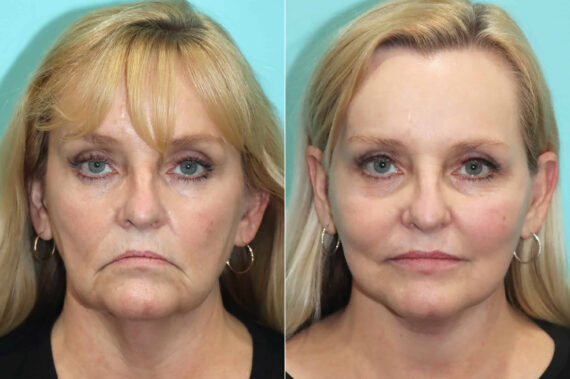
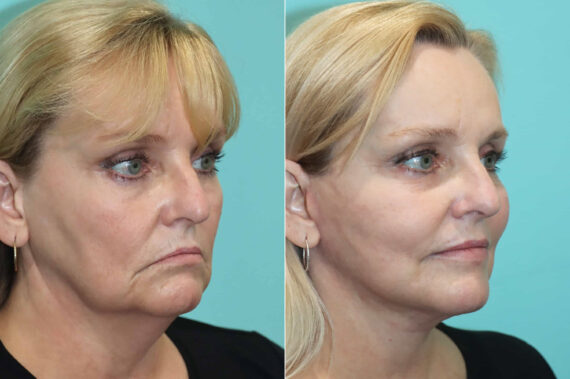
*Results vary from patient to patient
Dr. Naderi’s Facelift Philosophy: You, Only More Refreshed
The art of facelift surgery is not about making someone look younger at any cost.
It is about understanding facial aging, anatomy, proportion, and harmony.
Aging affects the skin, fat compartments, muscles, and deeper support structures of the face. A sophisticated facelift addresses these changes in three dimensions.
“My favorite compliment from a patient is not, ‘I look different,’” says Dr. Naderi. “It is, ‘I look like myself again.’ That is the goal of great facial rejuvenation.”
Schedule a Facelift Consultation With Dr. Shervin Naderi
Learning how to evaluate facelift before and after photographs is one of the most important steps in choosing the right surgeon. A beautiful facelift is not measured by how much someone has changed; it is measured by how naturally they have been restored.
With decades of experience as a facial plastic surgeon and a meticulous artistic approach to facial harmony, Dr. Shervin Naderi focuses on creating elegant, natural-looking facelift results that allow patients to look refreshed, rested, and like the best version of themselves.
To learn whether facelift surgery is right for you and discuss your individual goals, schedule a personalized consultation with Dr. Naderi at The Naderi Center in Reston and Chevy Chase.
Frequently Asked Questions About Facelift Before and After Results
About Dr. Shervin Naderi
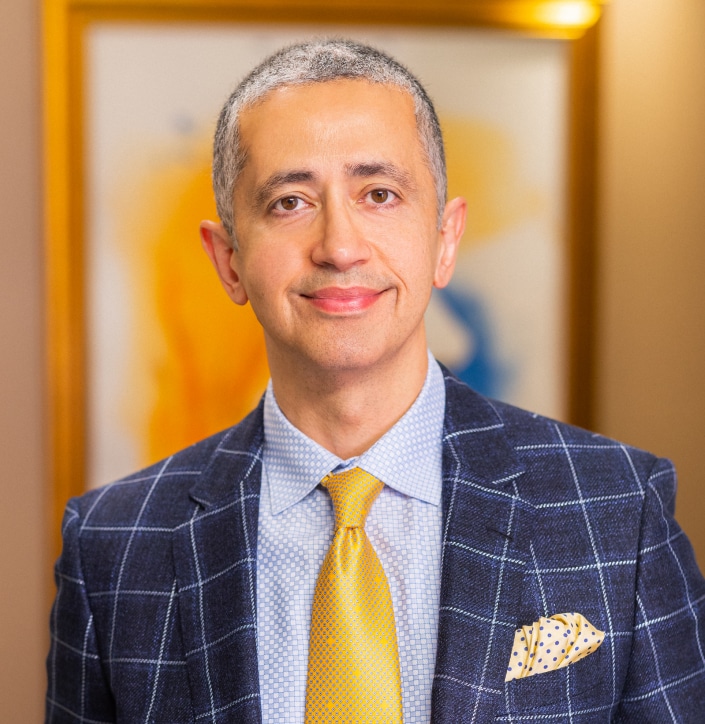
Dr. Shervin Naderi, MD, FACS, is the founder of The Naderi Center for Plastic Surgery and Dermatology. His professional background includes advanced fellowship training in facial plastic and reconstructive surgery, as well as contributions to physician education through clinical teaching, lectures, medical publications, and board examination work.