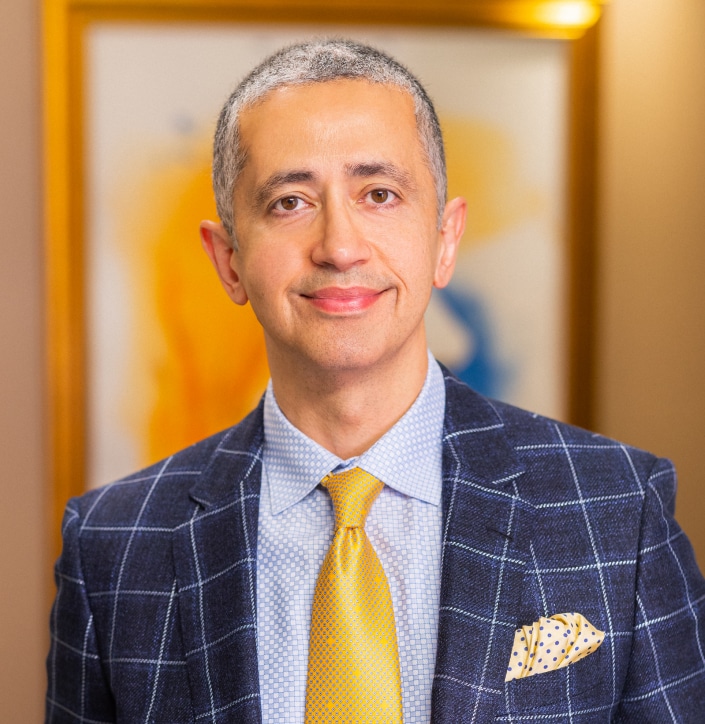
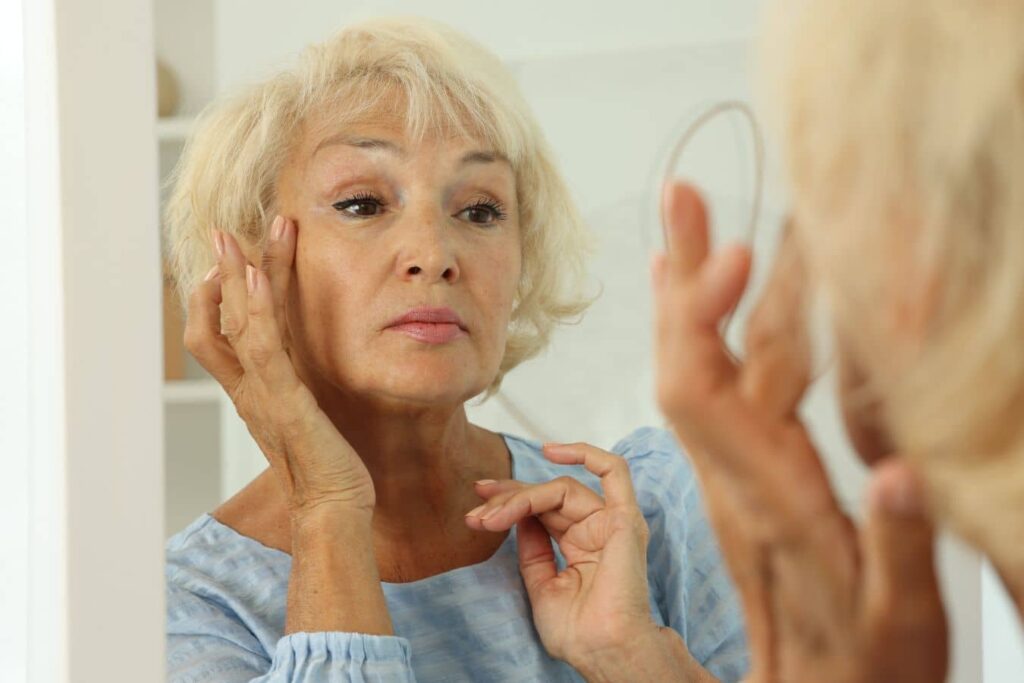
If you’ve started noticing heaviness along your jawline or a soft “bulge” forming below your cheeks, you’re not alone. Jowls are one of the most common concerns patients bring to facial plastic surgeons and one of the most misunderstood.
Most people assume jowls are simply loose skin.
In reality, jowls are the result of deep structural changes inside the face, not just surface aging. That’s why creams, fillers, and skin tightening devices often produce only modest or temporary improvement.
According to facial plastic surgeon Dr. Shervin Naderi, jowls are best understood as a three-dimensional descent of facial support structures, not a skin problem.
Key Takeaways
Jowls are not simply a skin problem, and they are not caused by a single aging change.
They result from a combination of:
- structural facial descent
- volume redistribution
- weakening support systems
- subtle skeletal changes
Dr. Naderi summarizes it best:
“If you treat jowls like a surface problem, you’ll only get a surface result.”
Why Jowls Actually Form (It’s Not Just Skin Laxity)
As we age, the face doesn’t just “sag”; it reorganizes.
Multiple layers of support begin to change at the same time, including the deeper connective tissue, fat pads, and even the underlying bone structure.
The result is a gradual shift of facial volume downward, which eventually collects along the jawline.
That’s what we see externally as jowls.
Dr. Naderi often explains this to patients in simple terms:
“Jowls are not excess skin. They are displaced facial tissue that has lost its structural support.”
At advanced facial plastic surgery practices such as The Naderi Center, jowls are never treated as a surface problem. They are evaluated as a multi-layer descent of facial anatomy requiring precise diagnosis before treatment.
The Real Reason Your Jawline Changes Over Time
There isn’t just one cause of jowls; it’s a combination of changes that happen together.
1. Deep facial support begins to loosen
The internal support system of the face weakens over time, allowing cheek tissue to gradually descend.
Dr. Naderi explains:
“When the midface descends, it doesn’t disappear—it falls. And it often lands right along the jawline, creating the appearance of jowls.”
2. Facial volume shifts downward
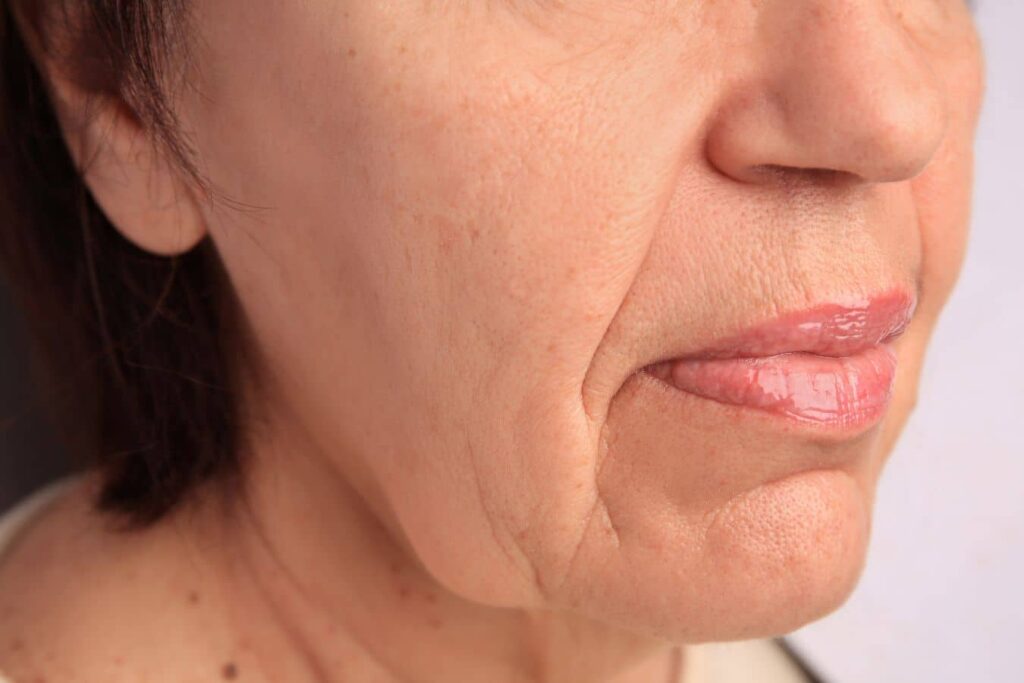
Many patients think they are “losing fat,” but in reality, fat is often shifting position.
As volume moves downward:
- the midface looks flatter
- the lower face looks heavier
- the jawline loses definition
Dr. Naderi notes:
“Overfilling the lower face without understanding this shift can actually make jowls look worse, not better.”
3. The jawline loses structural definition
The jawline itself changes with age due to subtle bone remodeling and soft tissue thinning.
Dr. Naderi explains:
“The foundation of the jawline changes over time. When that foundation weakens, even mild descent becomes more visible.”
Why Jowls Are So Hard to Fix With Non-Surgical Treatments
Many patients understandably start with the least invasive options: tightening devices, fillers, or skin treatments.
These can help in early stages, but they have limits.
Dr. Naderi summarizes this clearly:
“Non-surgical treatments improve quality, not position. Jowls are primarily a positional problem.”
This is why results can look subtle when laxity becomes more advanced.
They may improve skin texture and mild contour irregularities, but they do not reposition descended facial structures.

Start With a Detailed Facial Analysis
Dr. Naderi evaluates the full face, not just the jawline, to determine which treatment options may provide the most natural-looking improvement.
What Actually Works for Jowls (Depending on Severity)
The right treatment depends entirely on how advanced the changes are.
Early jowls: subtle contour changes
In early stages, the goal is maintenance and prevention.
Options may include:
- skin tightening treatments
- collagen-stimulating procedures
- carefully placed volume restoration
Dr. Naderi often describes this stage as:
“The point where we can still guide the aging process rather than reverse it.”
Moderate jowls: combination approach
Once jowls become visible, treatment must address multiple layers.
This may include:
- improving skin quality
- restoring midface support
- strategic contour balancing
Dr. Naderi explains:
“At this stage, it’s no longer about one treatment. It’s about restoring balance across the entire face.”
Advanced jowls: structural repositioning
When jowls are fully developed, deeper repositioning is required.
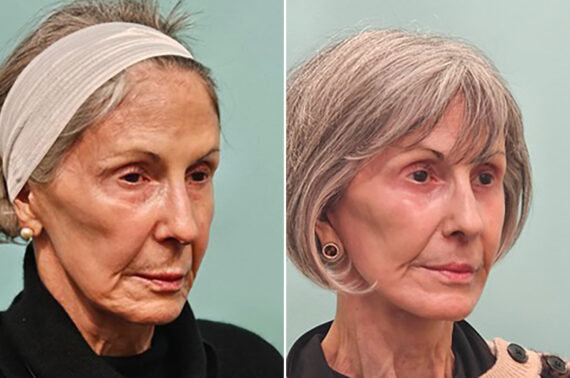
This is where facelift surgery becomes the most effective option.
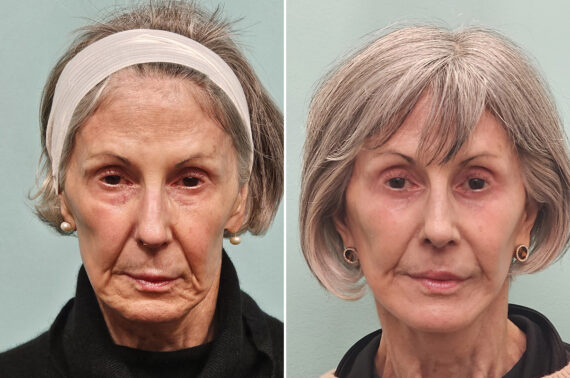
SMAS facelift and deep plane facelift physically reposition descended tissue rather than simply tightening skin.
Dr. Naderi notes:
“A true facelift is not about pulling the skin tighter. It’s about restoring where the face used to sit.”
Facelift Patient Before and After
Why Some Patients Still Look “Jowly” After Treatment
Persistent jowling after treatment usually happens for one of three reasons:
- only the skin was treated, not deeper structure
- filler was used without restoring facial balance
- surgical correction was not matched to the severity of aging
Dr. Naderi summarizes this simply:
“The biggest mistake in jowl treatment is choosing the wrong layer of the face to treat.”
How Experts Actually Evaluate Jowls
At high-level facial aesthetic practices such as The Naderi Center, jowls are not evaluated based on appearance alone.
Instead, Dr. Naderi and his team assess:
- midface descent pattern
- fat compartment displacement
- jawline support strength
- degree of skin laxity vs structural laxity
Dr. Naderi explains:
“Two patients can look similar in photos but require completely different treatments. That’s why facial analysis matters more than the jowl itself.”
Take the Next Step Toward a Sharper Jawline
Jowls are best treated with a personalized plan based on your facial anatomy and degree of aging. To figure out which approach fits you, set up a consultation with The Naderi Center in Reston, VA or Chevy Chase, MD.
FAQ: How to Get Rid of Jowls
About the Author
Dr. Shervin Naderi, MD, FACS, is a double board-certified facial plastic and reconstructive surgeon and founder of The Naderi Center, with offices in Reston, VA and Chevy Chase, MD. His clinical work focuses exclusively on the face and includes extensive experience with facial aging, facelift surgery, and lower-face concerns such as jowls, jawline laxity, and tissue descent.