Have you ever wondered why the most admired faces on social media no longer look done but effortlessly flawless? The rise of the so-called “undetectable era of beauty” is redefining what it means to enhance our appearance. The trend has moved away from dramatic transformations and toward refined results that still look like you.
The heavily filled “Instagram face” of a few years ago is giving way to work that preserves what makes each person unique. People now prefer subtle aesthetic work and aesthetic treatments that bring out their natural look rather than altering it completely. What they want is to look rested and well, with features that stay in proportion.

What is the Undetectable Era of Beauty?
The undetectable era of beauty is a growing beauty trend centered around achieving enhancements that look completely natural and untraceable. Instead of a dramatic makeover, people want small, well-placed changes that keep their own features intact. Done well, nobody can point to what was done; people just notice that you look rested.
What Caused This New Face of Facial Plastic Surgery?
Techniques have improved. Cosmetic surgery is more precise and less invasive than it used to be, and far more attention goes into keeping results natural. Surgeons can now make lasting improvements that refine a face without drastically changing it. That gives patients the option of treatments that work with their existing features instead of replacing them.
Celebrities have also played a key role in this cultural shift. Many high-profile figures are embracing a more refined and authentic image, influencing beauty standards and public expectations. Their choices have inspired everyday individuals to seek enhancements that reflect their own beauty rather than conform to a uniform ideal. Looking rested rather than altered has become the goal.
Finally, the public’s burnout from overly sculpted or exaggerated looks has fueled this evolution toward understated refinement. People have grown tired of results that look artificial or overdone. A request we hear often in consultations now is some version of “Can I just look like myself again?”
Why Overfilled Faces Fell Out of Favor
The overfilled look grew up on social media. Ring lights, filters and phone-camera distortion flatter a lot of volume, so faces that looked striking on a screen often looked heavy in person. Most people didn’t get there in one visit. A little more filler went in at each appointment, often before the last treatment had worn off, and the extra volume added up over a few years.
The signs are easy to spot once you know them:
- Cheeks that sit too far forward and round off the face, often called “pillow face”
- A heavy midface that looks puffy even at rest
- Lips that push past the natural lip line or look stiff when you talk
- A chin or jawline built up until the lower face looks wide or harsh
- Expressions that look less natural than they used to
One point causes a lot of confusion. Filler doesn’t travel around the face. When an area looks as if the filler has moved, such as a ridge above the upper lip, the usual cause is that the area was overfilled and the extra volume is pushing past its natural border. Adding more filler nearby to even things out only makes the problem bigger.
As patients have learned more about facial anatomy and how filler behaves over time, many now ask for less: fewer syringes, more time between visits and, in some cases, help taking out what is already there.
Structure, Not Volume
A face ages in layers. Bone slowly remodels, fat pads thin out and shift, and the ligaments that hold soft tissue in place loosen. Filler can replace some lost volume, but it can’t lift tissue that has started to descend. When filler is used year after year to make up for sagging, the face gets bigger without getting younger.
That is why a natural result starts with a diagnosis rather than a syringe count. Small amounts of filler placed deep, where support has actually been lost, can restore shape without adding puffiness. Sometimes the right answer is to inject nothing at all.
Jowls are a good example. The jowl itself is left alone. Without surgery, volume goes in front of the jowl, behind it at the angle of the jaw and sometimes in the chin, using filler or fat. If a facelift is planned within about a year, we skip filler entirely and add fat during the facelift instead. If surgery is years away, well-placed filler is a reasonable choice.
When descent is the real problem, surgery usually gives the more natural result: a deep plane facelift to lift the deeper tissues, a neck lift for the jawline and neck, or fat grafting for lasting volume. Because Dr. Naderi does his own injections as well as surgery, he has no reason to push you toward either one. He will tell you plainly when filler can do the job and when it can’t.
Undoing an Overfilled Look
If you already have more filler than you want, it can usually be taken out. Hyaluronic acid filler, which includes the Juvéderm, Restylane and RHA families, can be dissolved with an enzyme called hyaluronidase, and we keep the enzyme on hand in both our Reston and Chevy Chase offices.
We rarely take everything out at once. Years of extra volume can stretch the tissue, and removing it all in one visit can leave a face looking hollow or older than expected, especially if there was real volume loss before the filler went in. The usual plan is to dissolve in stages, let the tissue settle and then decide whether anything should go back. Many patients find they need far less than they had, and some need none.
Not every filler can be reversed, so before anything goes into your face, ask what it is and whether it can come out.
Subtlety as the New Goal for Plastic Surgery
Subtlety now drives most modern facial work. Patients want improvements that blend in with their own features rather than transform them. That means looking at the whole face and how each part relates to the others, rather than changing one feature in isolation. These are the treatments most often used to get there.
Book a Consultation
Have a question about your own face or skin? Our physicians see patients at our offices in Reston, VA and Chevy Chase, MD.
Book a ConsultationStart with a virtual consultation
Call Reston (703) 481-0002 or Chevy Chase (301) 222-2020.

Botox Brow Lift
The modern Botox brow lift gives the brows a small lift without freezing the face. By strategically placing small doses of what is often called baby Botox around the forehead and eyebrows, specialists can achieve a subtle brow lift that smooths wrinkles while maintaining movement.
It softens lines and opens up the eyes. The change is small, but it can make you look noticeably less tired.

Facial Fat Grafting
Facial fat grafting restores volume the face has lost with age. Using a patient’s own fat cells, surgeons can gently fill areas such as the cheeks, temples, and under-eye hollows to create soft, natural enhancements.
It can also improve skin quality over time. Because fat is living tissue, the portion that survives, typically about half, stays for the long term and looks and feels natural. It can’t be dissolved the way hyaluronic acid filler can, so it is planned with the same care as surgery. For real hollowness under the eyes, fat is usually a better choice than tear trough filler.

Earlier Facelifts
More patients are choosing facelifts earlier, to treat the first signs of aging before they become obvious. By tightening the deeper tissues rather than pulling on the skin, a facial plastic surgeon can lift the lower face and jawline without changing how the patient looks.
The aim is a face that looks refreshed, not pulled. Dr. Naderi does not create the tight, overdone look, and if that is the look you want, he is not the right surgeon for it. Starting earlier usually means smaller changes, which helps the jawline and neck keep their shape for years.

Injectable Fillers
Dermal fillers have become one of the most popular cosmetic treatments for creating balanced, youthful contours while maintaining a natural appearance. Hyaluronic acid fillers from the Juvéderm, Restylane and RHA collections let an experienced injector restore volume in the lips, cheeks, chin and jawline in small, controlled amounts.
A light lip filler treatment and support for the midface follow the same rule: small amounts in the right layer, planned around the patient’s own proportions. At The Naderi Center every injection is done by a physician, and the practice has been injecting filler for more than 20 years.
Topical Skin Treatments
Good skincare is part of any natural-looking result. With the rise of regenerative skin boosters and medical-grade formulas, patients can now target specific skin concerns, like uneven tone, texture, or fine lines, while improving overall skin quality.
A good plan aims at prevention as much as correction, and daily sun protection is part of it. The medical-grade lines we rely on most, SkinBetter Science, Alastin, ZO Skin Health and Plated, also help protect the results of in-office treatments.
Hair Restoration Procedures
Hair restoration has moved in the same direction, toward results nobody can spot. Regenerative treatments such as PRP and PRF injections to the scalp aim for fuller, healthier-looking hair.
Treatment is planned around each person’s hair pattern so new growth looks natural. The goal is more density that blends in with the hair you already have.

Secure Your Safe Surgery Experience with The Naderi Center
Join our satisfied clients who’ve experienced safe, effective procedures.
Frequently Asked Questions
What does “undetectable” cosmetic work mean?
It means changes that look like you on a good day rather than like a procedure. The aim is balance and proportion across the whole face, using small, well-placed treatments or surgery on the deeper structures, so people notice you look rested without being able to say why.
How do I know if I’ve been overfilled?
Common signs are puffiness, a heavy or rounded midface, lips that push past the lip line, a wide or harsh jawline, and expressions that look less natural than they used to. Photos of yourself from before you ever had filler are the best comparison.
Will dissolving filler make my face look older?
Not when it is done in stages. Removing too much at once can leave hollows, so our physicians dissolve gradually, let the tissue settle and add a small amount back only if it is needed.
Can a facelift replace filler?
For true sagging, yes. A facelift lifts tissue that filler can only fill around. If a facelift is planned within about a year, we skip filler and add fat during the surgery instead.
Is under-eye filler a good idea for hollows?
We steer most patients away from tear trough filler. For mild hollows, PRF can give a small improvement, but real hollowness under the eyes usually responds better to fat injections.
How often should I get filler to keep a natural look?
There is no fixed schedule. Many fillers last longer than people expect, so treatment should follow how your face actually changes rather than the calendar, and sometimes the right amount is none.
Consult with a Facial Rejuvenation Expert
Choosing an experienced facial plastic surgeon is key to achieving results that enhance your natural beauty without compromising harmony or proportion. That takes a detailed knowledge of facial anatomy and the judgment to know when to stop. A good plan is built around your face, not a template.
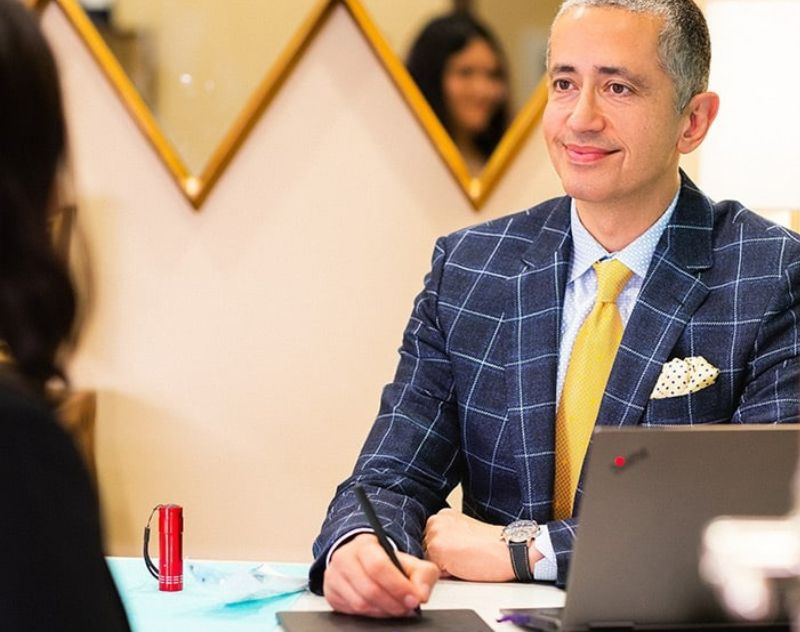
At The Naderi Center, our physicians focus on facial rejuvenation and skincare. Dr. Naderi is a double board-certified facial plastic surgeon whose surgical work is devoted to the face and neck. If you aren’t sure what you need, that is what the consultation is for. Call us today at (301) 222-2020 (Chevy Chase), (703) 481-0002 (Reston), or visit our contact page to schedule your consultation.
See the Doctor
Questions about what you just read? Ask our doctors in person. Book a consultation in Reston or Chevy Chase, or start with a virtual consultation from home.
Book a ConsultationVirtual consultation
Call Reston (703) 481-0002 or Chevy Chase (301) 222-2020.

Patient Financing
Pay Over Time with Cherry
Monthly payment plans for surgery and treatments, including 0% APR options for qualifying patients. Checking whether you qualify won’t affect your credit score.