Here is your guide to one of the questions we hear most often in the fall: is this brown patch melasma, or is it a sun spot? The two can look alike in the bathroom mirror, especially after a summer outdoors, yet they come from different causes and respond to very different care. Knowing which one you have is the first step toward fading it safely.
What is the difference between melasma and sun spots?
The short answer: sun spots are flat brown spots with an uneven edge that form where the sun lands most, while melasma appears as blotchy, matching patches on the cheeks, forehead, upper lip and chin, set off by hormones, sun and heat. Sun spots usually clear beautifully with light or laser treatment. Melasma asks for a gentler, low-heat plan.
Both are forms of hyperpigmentation, which simply means the pigment cells in one area make more melanin than the skin around them. Because the triggers differ, our physicians treat them differently, and a careful diagnosis always comes before any laser. Our page on melasma and hyperpigmentation treatment describes every option we offer; this article is devoted to telling the two apart.
What do sun spots look like?
Sun spots, often called age spots, are flat brown spots with an uneven edge. Each one tends to stand on its own, with clear skin around it, and they gather on the cheeks, forehead, chest and the backs of the hands. Freckles are their smaller relatives: light brown dots, most common in fair skin, that darken and multiply each summer.
“A sun spot is a record of where the sun has landed,” says Dr. Shervin Naderi. “When I find them on the cheeks, I usually find them on the backs of the hands and across the chest as well, and that pattern tells us a great deal.”
Patients from Great Falls and McLean who spend their weekends on the trails or the tennis court often notice new spots each September, alongside older ones that have slowly deepened in color. Spots that sit in sun-exposed places like these, and that resemble one another, usually point toward sun damage.
What does melasma look like?
Melasma appears as blotchy brown or gray-brown patches, most often on both cheeks, the forehead, the upper lip or the chin. The patches tend to mirror each other from one side of the face to the other, so the overall impression is of soft shading rather than individual spots.
Hormones, sun and heat all drive melasma, and it is more common in women and in medium to olive skin tones. It often begins during pregnancy, and it can return or darken whenever one of those triggers stirs it up again.
“With melasma, the first clue is symmetry,” Dr. Naderi explains. “When I see the same soft patch on both cheeks, or across the forehead and upper lip, melasma is the first thing I consider, even before we have talked about your history.”

Book a Consultation
Thinking about melasma or sun spot treatment? Our physicians see patients at our offices in Reston, VA and Chevy Chase, MD.
Book a ConsultationLearn about dark spot treatment
Call Reston (703) 481-0002 or Chevy Chase (301) 222-2020.
Can you have melasma and sun spots at the same time?
Yes, and many of our patients do. A woman in Vienna or Arlington may have scattered sun spots from years of morning runs alongside soft melasma patches across both cheeks. Having both is common, and it is one reason a plan made from a single photo can fall short.
When both are present, the melasma sets the pace. We favor low-heat options such as the Pico Majesty laser, which treats melasma with gentle toning across the face and fades individual spots with targeted pulses, so both concerns can be addressed without provoking the melasma.

How do dermatologists tell melasma from sun spots?
A physician confirms the diagnosis with an exam, often with VISIA skin analysis. At The Naderi Center, board-certified dermatologist Dr. Alexandra Snodgrass leads our pigment care. VISIA imaging reveals sun damage and pigment beneath the surface, which helps us choose your treatment and follow your progress over time.
Your history matters as much as the images. We will ask when the patches first appeared, whether they began with a pregnancy or a new medication, how they behave through the summer, and what you have already tried. Any spot that looks unusual is examined first, and we never laser a spot that could be a skin cancer.
“I would gently encourage anyone not to diagnose themselves from a picture online,” says Dr. Naderi. “Two patients can have brown patches that look nearly identical, and the plan that helps one could make the other darker. A careful exam protects you.”

Why does it matter which one you have?
It matters because the treatments that clear sun spots best can make melasma darker. Sciton BBL, a broadband light treatment, is one of our favorite ways to clear scattered sun spots and freckles on the face, neck, chest and hands. For melasma, however, we do not use IPL or BBL at all, because heat can trigger a rebound that leaves the patches darker than before.
“Heat is the dividing line,” Dr. Naderi says. “Sun spots welcome a confident light treatment. Melasma asks for patience and a lighter touch, and when we respect that, patients are usually delighted with how far it comes.”
How are sun spots treated?
Sun spots respond well to Sciton BBL or Pico Majesty, and individual spots can also be treated with Sciton Joule. After treatment, the spots darken for a few days and then flake away, usually within a week to ten days. Sun spots and freckles often clear in 1 to 3 Pico Majesty sessions or 3 to 6 Sciton BBL sessions.
The same treatments work just as gracefully below the jawline. Sciton BBL and Pico Majesty treat sun spots on the neck, chest and backs of the hands, so the skin at your neckline and on your hands can share the same gentle evenness as your face.
Laser and BBL treatments are performed at our Reston office. Many patients from Alexandria and Washington DC book a morning visit, since BBL usually means only about a day of redness while the spots darken.
How is melasma treated?
Melasma is treated gently and steadily. We use low-energy Pico Majesty toning across the whole face, usually 5 to 8 sessions spaced 2 to 4 weeks apart, together with prescription skincare such as hydroquinone 4% with tretinoin. Some patients add VI Peels. After toning, the skin is pink for a few hours, with no peeling.
Prescription pigment care is used for a set period under a physician’s care, typically 4 to 6 months at a time for hydroquinone, and then tapered to a maintenance routine, never stopped suddenly. Melasma can be controlled but not cured, so daily sun protection remains part of the plan for good.
“We think of melasma care as a partnership,” says Dr. Naderi. “Our treatments do their part in the office, and the routine you keep at home protects that progress between visits.”

What about dark marks left after acne?
A third kind of pigment is often mistaken for both. Post-inflammatory hyperpigmentation is the brown mark left after a pimple, rash, burn or scratch heals, and it sits exactly where the blemish was rather than in a pattern. These marks fade well with VI Peels, Pico Majesty and prescription skincare, while raised or pitted acne scars are a separate concern treated with laser resurfacing or microneedling.
Melasma and sun spot treatment before and after photos

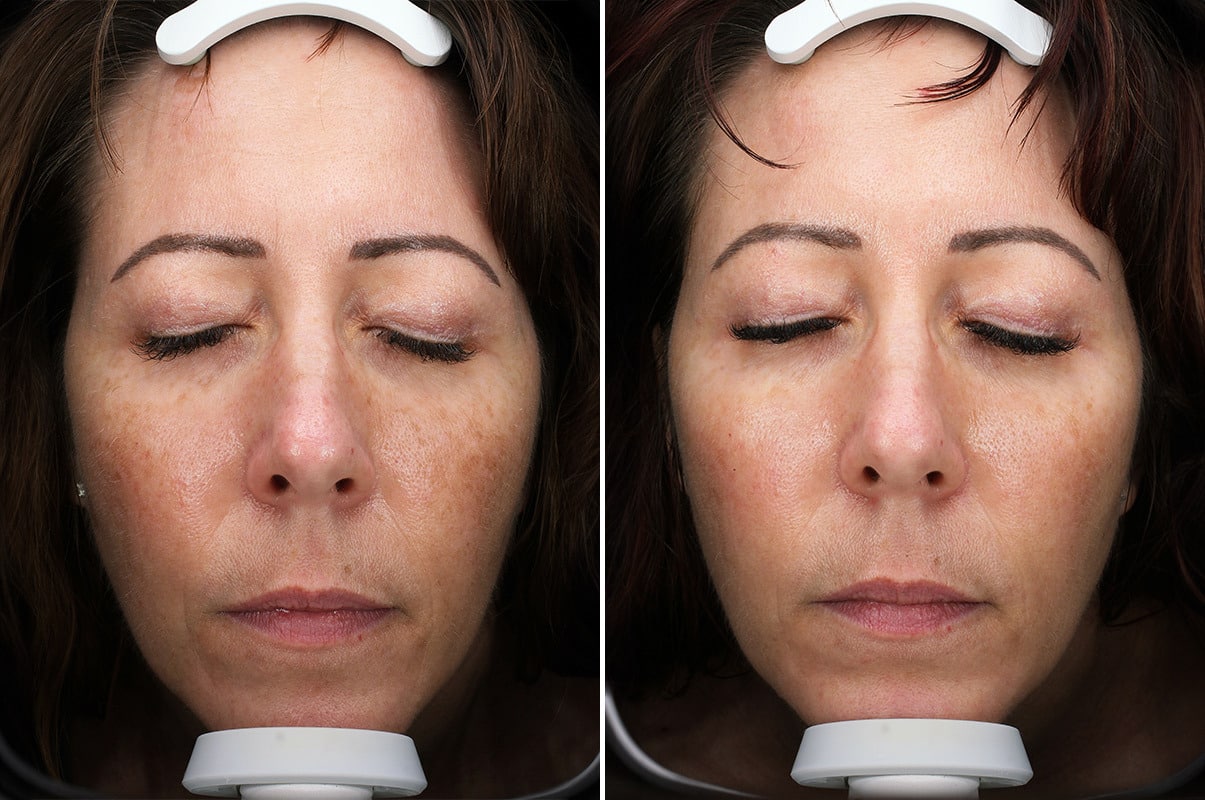
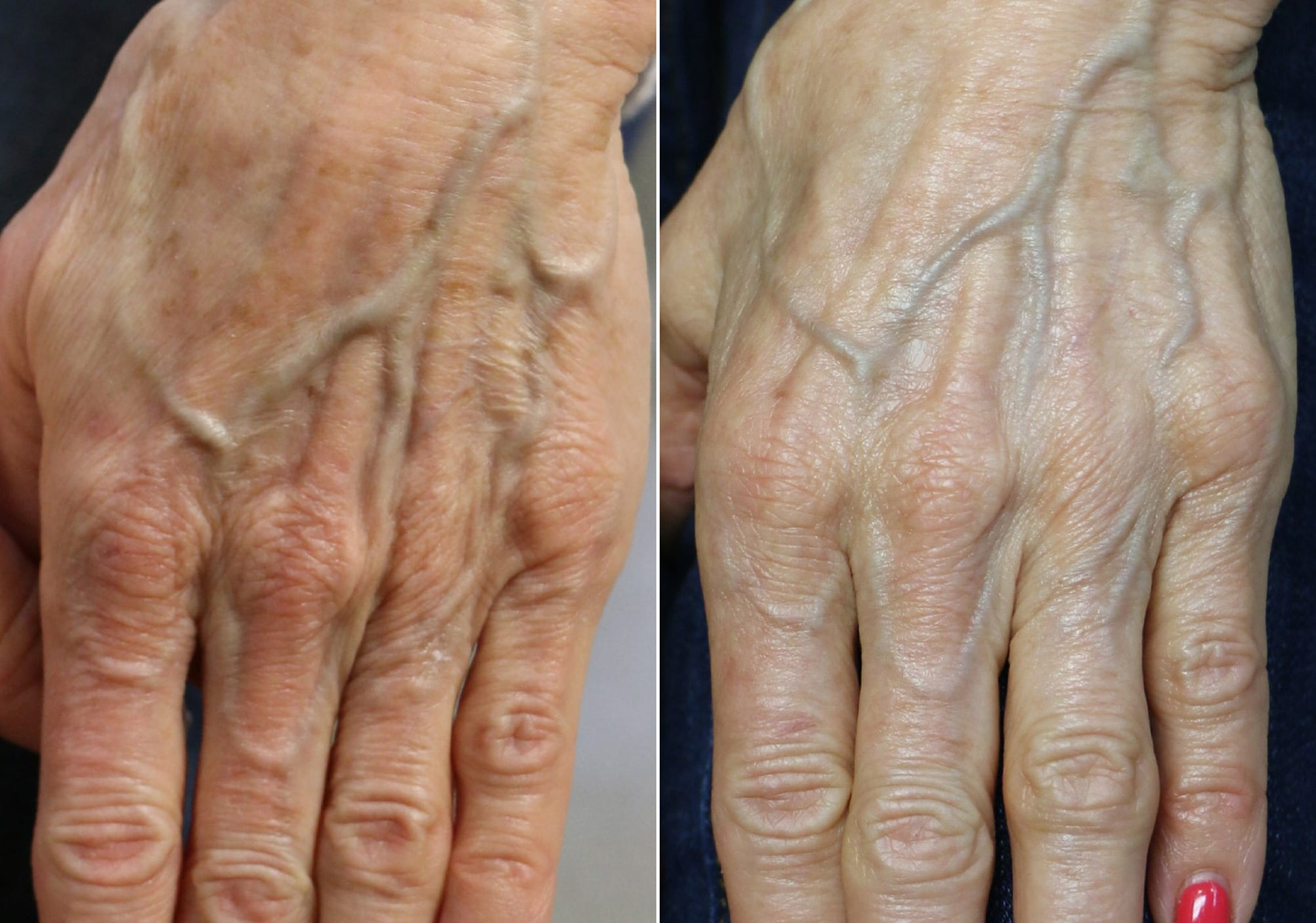

Real patients of The Naderi Center. Individual results vary.
Where can I have melasma or sun spots checked near McLean, Bethesda or Washington DC?
Consultations are offered at both of our offices: the Reston office at 1850 Town Center Parkway, Pavilion II, Suite 551, Reston, VA 20190, and the Chevy Chase office at 5454 Wisconsin Ave, Suite 1655, Chevy Chase, MD 20815. VI Peels and prescription skincare are available at both, and laser and BBL sessions take place in Reston. Many patients from Bethesda, Potomac and Chevy Chase begin with a consultation close to home and visit Reston for their laser care.
When is the best time to find out which one you have?
Fall and winter are the ideal seasons to sort out your pigment and begin dark spot treatment, because there is less sun to darken treated skin. A series that begins in November can be well along by spring. “Most patients feel relieved simply to have a name for what they see,” says Dr. Naderi. “From there, the plan nearly writes itself, and we would be delighted to help you begin.”
Book a Consultation
Thinking about melasma or sun spot treatment? Our physicians see patients at our offices in Reston, VA and Chevy Chase, MD.
Book a ConsultationLearn about dark spot treatment
Call Reston (703) 481-0002 or Chevy Chase (301) 222-2020.
Melasma or Sun Spots: Frequently Asked Questions
How much does treatment for melasma or sun spots cost?
At The Naderi Center, Pico Majesty melasma toning is $700 a session, full-face Pico Majesty dark spot treatment is $750, treatment of a few individual spots is $350, a full-face Sciton BBL session is $600 and a VI Peel is $475. Your provider maps out your sessions at your consultation. Cosmetic pigment treatment is not covered by insurance.
Can I be treated while pregnant or breastfeeding?
Pigment treatment waits until you are no longer pregnant or breastfeeding. Your physician can still confirm the diagnosis and plan your treatment for afterward.
Is laser treatment safe for darker skin tones?
Yes, with the right laser and careful settings. Pico Majesty’s 1064 nm wavelength works without building up much heat, and UltraClear is safe for all skin types. We do a test spot when it makes sense, and we do not use IPL on very dark or tanned skin.
How should I prepare for a pigment treatment?
Avoid direct sun, tanning beds and self-tanner for 2 to 4 weeks, and pause retinol, tretinoin, glycolic and salicylic acids and scrubs 3 to 5 days before a laser or peel. If you get cold sores and we are treating near your mouth, we prescribe an antiviral.
Which sunscreen is best for melasma?
A broad-spectrum SPF 30 or higher every day, reapplied every 2 hours outdoors. A tinted mineral sunscreen also blocks visible light, which can darken melasma, and a wide-brimmed hat adds protection between 10 a.m. and 4 p.m.
Medically reviewed by Dr. Shervin Naderi, MD, FACS, double board-certified facial plastic surgeon. Last reviewed November 14, 2026.

Patient Financing
Pay Over Time with Cherry
Monthly payment plans for surgery and treatments, including 0% APR options for qualifying patients. Checking whether you qualify won’t affect your credit score.