If your melasma faded beautifully after treatment and then returned with the summer, you are in very good company, and nothing went wrong on your part. Here is your guide to why melasma comes back and the gentle, steady plan our physicians use to keep it quiet, written for patients across Northern Virginia, Maryland and Washington DC.
The short answer: why does melasma come back?
Melasma comes back because the pigment cells behind it stay reactive after the patches fade, and sun, visible light, heat and hormones can switch them on again. Treatment lightens the patches you can see, and a daily routine keeps the cells calm. That is why melasma can be controlled but not cured, and why our melasma and hyperpigmentation treatment, led by board-certified dermatologist Dr. Alexandra Snodgrass, plans for maintenance from your very first visit.
How is melasma different from an ordinary sun spot?
Melasma appears as blotchy, matching patches on the cheeks, forehead, upper lip and chin, while a sun spot is a flat brown mark with an uneven edge where the sun has landed for years. Sun spots come from sun alone. Melasma answers to hormones, sun and heat together, so it has more than one way back.
If you are not yet sure which you have, our guide to telling melasma from sun spots walks through the differences. A physician confirms the type at your consultation, often with VISIA skin analysis, which shows pigment beneath the surface that the eye cannot yet see.
Why does melasma return after it has faded?
Fading the patches does not change how sensitive the cells beneath them are. Those cells, called melanocytes, sit at the base of the upper layer of skin and stay ready to overproduce pigment the next time they receive a strong signal. A bright week in Great Falls or a change in hormones can be enough to wake them.
“When melasma fades, it means the plan is working,” says Dr. Shervin Naderi. “Keeping it that way comes from gentle, consistent care, and our team stays with you through every season.”
Book a Consultation
Thinking about melasma treatment? Our physicians see patients at our offices in Reston, VA and Chevy Chase, MD.
Book a ConsultationLearn about melasma treatment
Call Reston (703) 481-0002 or Chevy Chase (301) 222-2020.
What triggers a melasma flare?
Sun is the most familiar trigger, and short stretches outdoors count, such as the walk to the Metro in Arlington or a weekend afternoon on a patio in Reston. Daily broad-spectrum SPF 30 or higher is the foundation, reapplied every two hours whenever you are outside.
Visible light can darken melasma as well, so we often recommend a tinted mineral sunscreen, which helps block it. Your physician can help you find a shade that suits your skin tone.
Heat is the trigger that surprises patients most. Melasma can darken after time in warm settings even when the skin never burns, so a humid Washington summer or a heat-based skin treatment can each play a part.
Hormones are a powerful influence too. Melasma often begins during pregnancy, and hormonal shifts later on can bring it back. When melasma appears during pregnancy or while breastfeeding, pigment treatment waits until you are no longer pregnant or breastfeeding, and your physician will plan your care for afterward.

Why don’t we use IPL or BBL for melasma?
We do not use IPL or Sciton BBL for melasma, because heat can make melasma darker. Strong lasers and intense light can set off a rebound that leaves the patches deeper than before treatment began. Sciton BBL remains a wonderful choice for scattered sun spots, freckles and redness, so if you have both melasma and sun spots, your physician will match each concern with the right device.
“With melasma, gentler is almost always wiser,” says Dr. Naderi. “We choose low-heat treatments and patient pacing, because calming the pigment cells is what allows a result to last.”
How do we bring melasma under control?
We begin with low-energy Pico Majesty toning across the whole face, usually 5 to 8 sessions spaced 2 to 4 weeks apart. Pico Majesty fires ultrashort pulses that break pigment into fine particles with very little heat, and the body clears those particles over the following weeks. That low heat is what makes it a gentle option for melasma on every skin tone, from fair to deep.

Prescription skincare does much of the daily work. Hydroquinone 4% with tretinoin is one of the most effective combinations for pigment, used for 4 to 6 months at a time under a physician’s care, and most patients see results in 8 to 12 weeks. The research supports combining ingredients: a Cochrane review found triple-combination cream more effective than hydroquinone alone.
Some patients add a series of VI Peels, a medical-grade peel made for all skin tones that helps lift stubborn pigment, often in a series of three. Your physician decides whether a peel belongs in your plan and how to space it around your toning sessions.
“The most successful melasma plans layer a few gentle tools,” says Dr. Naderi. “Toning in the office, a prescription routine at home and faithful sun protection each carry part of the work, and together they hold a result far better than any single treatment could.”

Why should you never stop a pigment cream suddenly?
A sudden stop can invite melasma back quickly. Dr. Snodgrass explains it this way: “It is important to note that you should never stop using any tyrosinase inhibitors abruptly. Patients must be slowly transitioned off of one tyrosinase inhibitor onto a different skincare protocol that will protect them against rebound pigment production.”
In practice, your physician moves you gently from hydroquinone onto a maintenance routine rather than letting a prescription simply run out. If you are coming to the end of a tube, or traveling and tempted to pause, we suggest calling us first so we can guide the transition with you.
What does a melasma maintenance routine look like?
A maintenance routine is a short daily habit that fits into a full week, whether your mornings begin in Vienna or on Capitol Hill. Mornings start with your sunscreen, and on days outdoors a wide-brimmed hat and shade between 10 a.m. and 4 p.m. add real protection. Evenings bring the brightening products your physician has chosen for your skin.
For many patients, that routine includes ZO Skin Health products such as Brightalive Skin Brightener, Retinol Skin Brightener 0.3% and Smart Tone SPF 50, which our physicians recommend for dark spots and melasma. Your physician will tell you which suit your skin and where each belongs in your day.
“Maintenance is where a beautiful result is kept,” says Dr. Naderi. “Occasional pico toning, timed around the seasons, keeps melasma quiet, and gentle, hands-off care for any blemish spares you new dark marks, since picking leaves marks of its own.”
When is the best time of year to treat melasma?
Fall and winter are the kindest seasons for melasma treatment, because there is less sun to darken freshly treated skin and treated skin clears faster. A toning series that begins in November can be well along by spring, so the brightest months of a Washington summer find you in maintenance rather than mid-series. If you have a summer tan, we let it fade for 2 to 4 weeks before any laser session.

“November is a lovely time to begin,” says Dr. Naderi. “Starting as the days shorten gives the skin a calm, low-sun stretch to respond, so that by cherry blossom season you are simply maintaining.”
Melasma and pigment treatment before and after photos
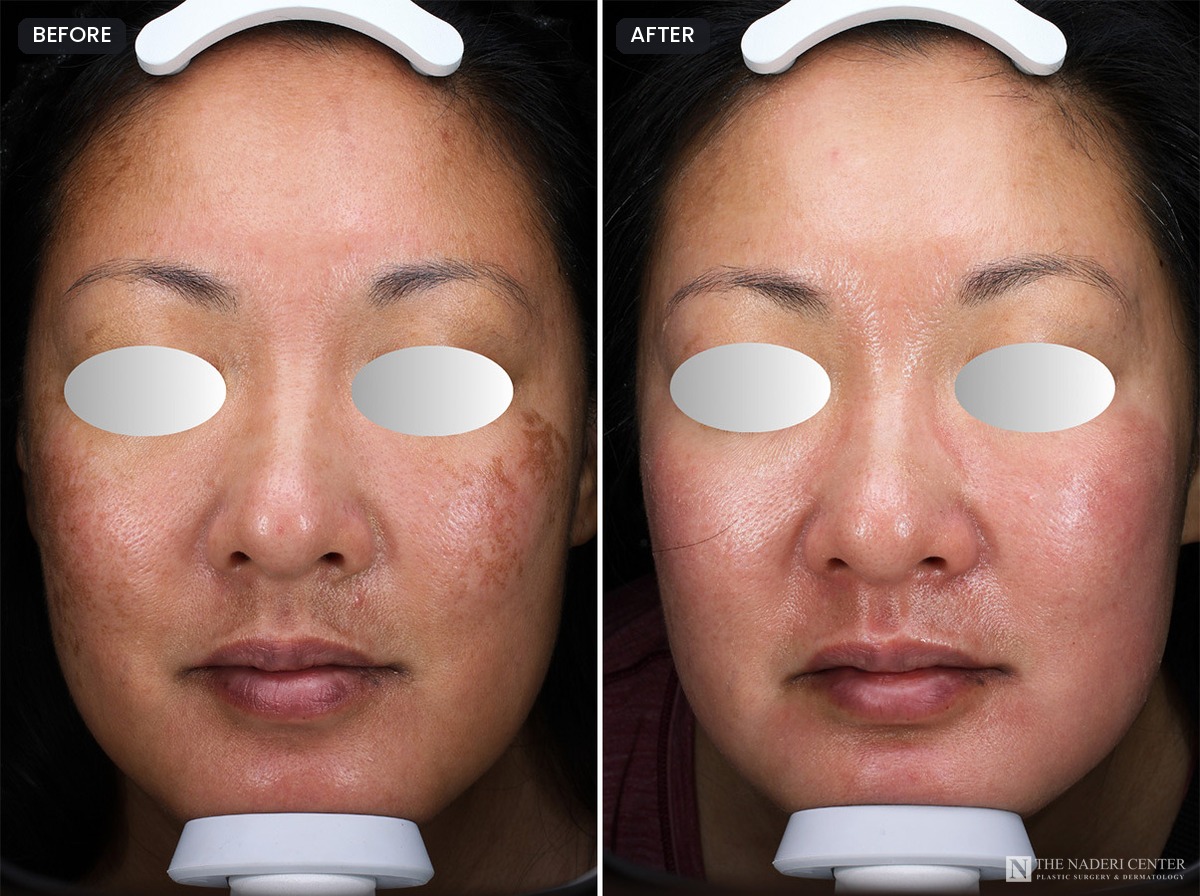
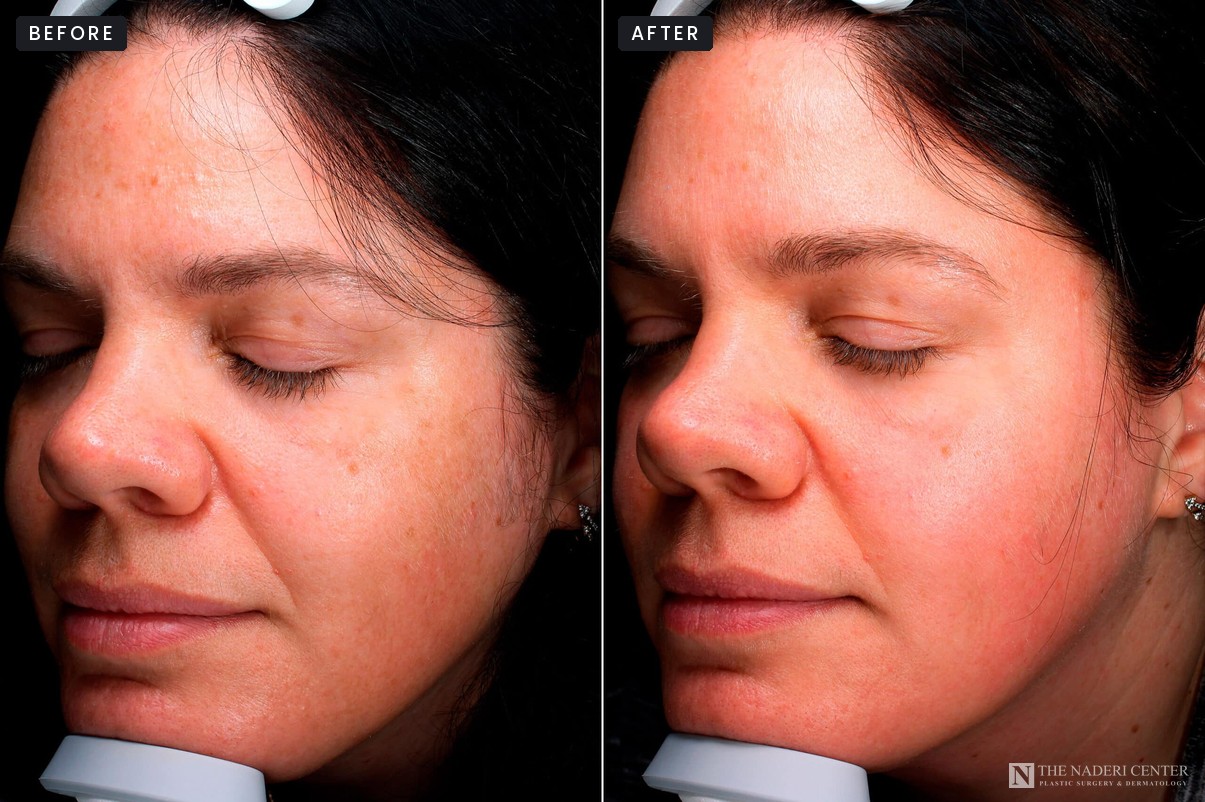
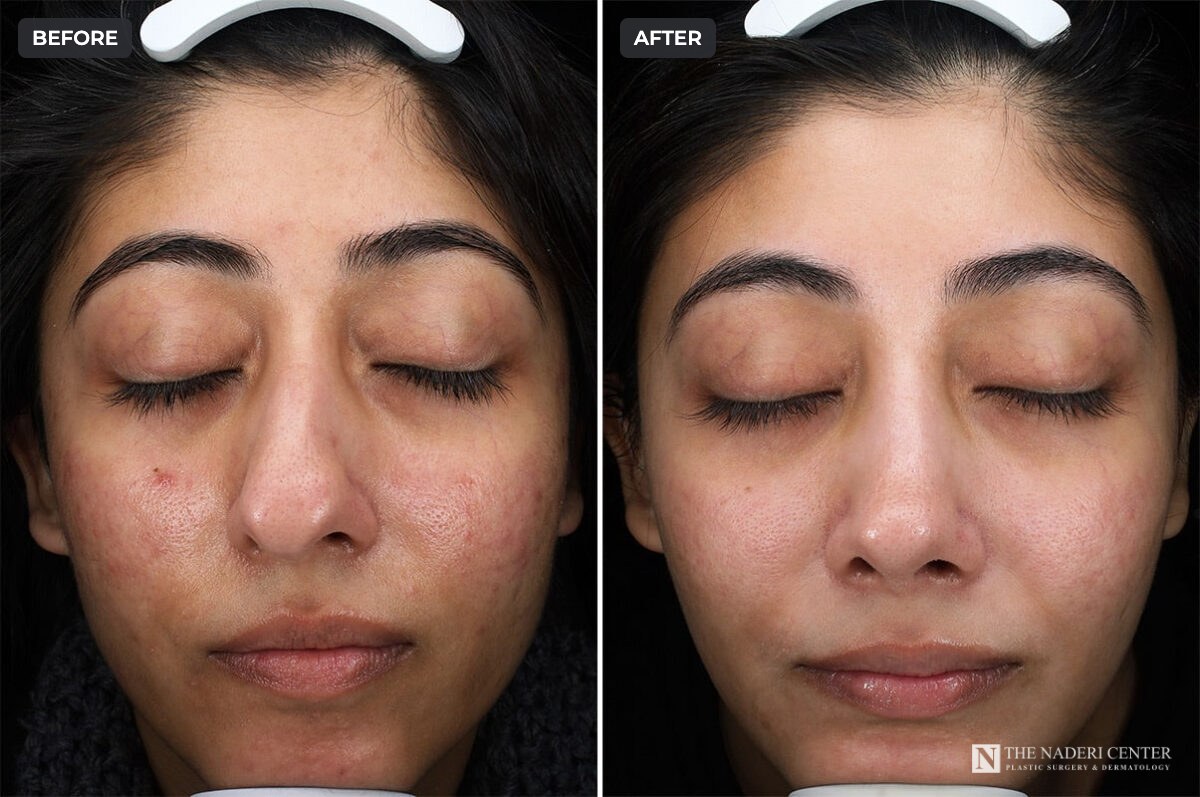
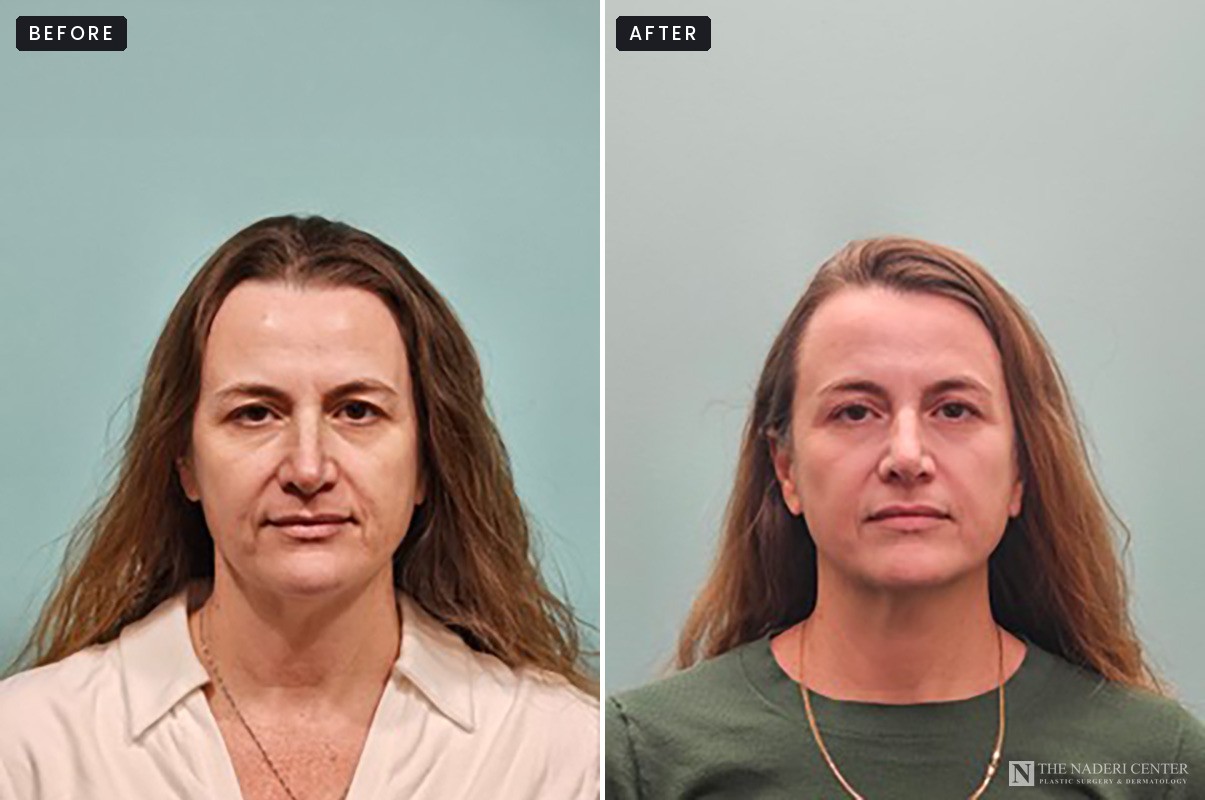
Real patients of The Naderi Center. Individual results vary.
Where can patients from McLean, Bethesda and Washington DC see our dermatologist for melasma?
Consultations are offered at our Reston office, 1850 Town Center Parkway, Pavilion II, Suite 551, Reston, VA 20190, (703) 481-0002, at our Chevy Chase office, 5454 Wisconsin Ave, Suite 1655, Chevy Chase, MD 20815, (301) 222-2020, or by virtual consultation. Pico Majesty toning and our other laser and light treatments are performed in Reston, while VI Peels and prescription skincare are available at both offices. Patients from McLean and the Dulles corridor often find Reston convenient, and patients in Bethesda, Potomac and Northwest Washington DC often begin in Chevy Chase.
What should I bring to my melasma consultation?
Please bring a list of the skincare and medications you use, including any pigment creams and how long you have used them, along with photos of your skin from different seasons if you have them. Seasonal photos help your physician see how your melasma behaves through the year. “Bring every question you have,” says Dr. Naderi. “Whether you are coming from Alexandria or just up Wisconsin Avenue in Chevy Chase, we would be delighted to build a plan around your skin and your calendar, and to begin your dark spot treatment when the timing is right.” You can book your consultation online whenever you are ready.
Book a Consultation
Thinking about melasma treatment? Our physicians see patients at our offices in Reston, VA and Chevy Chase, MD.
Book a ConsultationLearn about melasma treatment
Call Reston (703) 481-0002 or Chevy Chase (301) 222-2020.
Melasma: Frequently Asked Questions
How much does melasma treatment cost?
Pico Majesty melasma toning is $700 a session and a VI Peel is $475, according to our Menu of Services. Your physician maps out the sessions you need, and your total, at your consultation.
Is there downtime after pico toning for melasma?
Very little. The skin is usually pink for a few hours with no peeling, and most patients return to makeup the same day.
Should I pause retinol before a melasma treatment?
Yes, briefly. Pause retinol, tretinoin, glycolic and salicylic acids and scrubs 3 to 5 days before a laser or peel treatment. This short pause is different from tapering off a pigment cream, and your physician will tell you exactly what to hold and when to resume.
Is melasma treatment covered by insurance?
Cosmetic pigment treatment is not covered by insurance. Your consultation includes a clear plan so you know what to expect before you begin.
What if I am prone to cold sores?
Please let us know. If you get cold sores and we are treating near your mouth, we prescribe an antiviral beforehand, and an active cold sore or skin infection in the treatment area means we wait until it has healed.
Medically reviewed by Dr. Shervin Naderi, MD, FACS, double board-certified facial plastic surgeon. Last reviewed November 17, 2026.

Patient Financing
Pay Over Time with Cherry
Monthly payment plans for surgery and treatments, including 0% APR options for qualifying patients. Checking whether you qualify won’t affect your credit score.