
If your cheeks seem to stay pink a little longer after a brisk walk on the W&OD Trail or a holiday dinner in Washington DC, you are not imagining it. Rosacea, a chronic inflammatory skin condition that causes flushing, persistent redness and sometimes visible blood vessels, often becomes more noticeable as the weather turns cold. Here is your guide to why that happens and how our physicians help patients bring their complexion back to a calm, even tone.
In this guide
What is the short answer on rosacea treatment?
The short answer is that rosacea can’t be cured, but it can be controlled beautifully with a plan matched to your kind of redness. At The Naderi Center, that plan usually combines Sciton BBL (BroadBand Light) for redness and broken capillaries, prescription care for bumps and inflammation, and gentle medical-grade skincare at home.
“Rosacea is one of the most common reasons patients ask us about redness, and it is also one of the most rewarding to treat,” says Dr. Shervin Naderi, double board-certified facial plastic surgeon. “Once we understand which kind of redness you have, we can choose treatments that work in harmony, so the skin calms rather than reacts.”
What is rosacea, and how do I know if I have it?
Rosacea affects nearly 16 million Americans and usually appears after age 30. It is seen more often in women and in fair skin, although it tends to be more severe in men, and it appears to run in families. Flare-ups wax and wane, sometimes lasting a few weeks to months before settling.
The most familiar sign is symmetric flushing across the cheeks, nose, chin and forehead, often with a sense of warmth. Others include fine visible vessels called telangiectasias, small red bumps, facial swelling and, in some patients, gradual thickening of the skin on the nose. Rosacea can also affect the eyes, causing irritation, redness and watering, which is known as ocular rosacea.
Because the bumps resemble breakouts, rosacea is easily mistaken for acne. A helpful clue is the stinging or burning that often comes with rosacea bumps. A board-certified dermatologist can confirm the diagnosis with a careful look at your skin and your history.
Why does rosacea flare in the fall and winter?
Cold weather brings several of rosacea’s best-known triggers together. Rosacea responds to temperature extremes in both directions, so a windy morning in Great Falls followed by a warm, dry office can bring on flushing twice in a single day. Fireplaces, hot showers and steaming mugs of coffee add more heat, and the season’s dinners bring spicy dishes and wine.
Science offers part of the explanation. Rosacea is linked to higher levels of VEGF, a growth factor that encourages new blood vessels and makes small capillaries leakier, and to inflammatory signals that drive flushing. Each time those vessels dilate, the redness can linger a little longer.

“We encourage patients to treat the holidays as a season to be gentle with their skin,” says Dr. Naderi. “If you enjoy a glass of wine at a gathering in McLean or Chevy Chase, white wine is usually kinder than red. Small choices like that add up beautifully over a long winter.”
Book a Consultation
Thinking about rosacea treatment? Our physicians see patients at our offices in Reston, VA and Chevy Chase, MD.
Book a ConsultationLearn about rosacea treatment
Call Reston (703) 481-0002 or Chevy Chase (301) 222-2020.
What is the best treatment for rosacea redness and broken capillaries?
For flushing, persistent redness and broken capillaries, Sciton BBL is often our first recommendation, and it is considered one of the best treatments for rosacea. BBL is Sciton’s advanced form of intense pulsed light (IPL). Our Sciton Joule platform uses filters to tailor broad-spectrum light to its target, so a single session can soften both redness and brown sun spots.
Here is how it works. Hemoglobin, the red pigment in blood, absorbs the light and turns it into heat, and the small vessel coagulates, clamps down and closes while the skin around it is spared. Over the following weeks your body clears the closed vessels and the redness fades. Studies also suggest BBL lowers VEGF in rosacea patients, which may slow the growth of new facial vessels, and it helps with the small breakouts rosacea can bring.

“Not every light device is created equal,” says Dr. Naderi. “We chose the Sciton Joule because it delivers consistent energy with every pulse. For sensitive, reactive skin, that consistency is what allows us to treat effectively while keeping you comfortable.”
For a few stubborn vessels that remain, often around the nose, laser removal of individual facial capillaries can be added to your plan. Most patients see a visible improvement after their first BBL session, and a series builds on that result.

Do I need prescription medication for rosacea?
Many patients do best with a prescription alongside light treatment, especially when bumps and pustules are part of the picture. Metronidazole 0.75% gel quiets the immune cells that release inflammatory chemicals, reducing redness and pustules. Azelaic acid is anti-inflammatory as well and helps prevent the skin from thickening.
For more persistent inflammation, low-dose doxycycline is FDA-approved for the red bumps of rosacea, and at this low dose it works as an anti-inflammatory rather than as an antibiotic. Low-dose isotretinoin is reserved for patients who haven’t responded to other therapies, and it calls for close physician monitoring.
At The Naderi Center, Sciton BBL is performed by our master aesthetician and by Dr. Alexandra Snodgrass, our board-certified dermatologist, who also guides each rosacea plan. “Dr. Snodgrass knows that no two cases of rosacea are alike,” says Dr. Naderi. “One patient is beautifully controlled with skincare and BBL, while another needs a prescription for a season, and she tailors each plan to the person’s skin and lifestyle.”
Which skincare is safe for rosacea-prone skin in winter?
A gentle routine is the foundation of calm skin. Some common skincare ingredients irritate rosacea and can set off a flare, so we suggest avoiding products with menthol, eucalyptus oil, clove oil, peppermint, witch hazel, camphor or sodium lauryl sulfate. Washcloths, toners, astringents and exfoliating scrubs can aggravate rosacea as well. Daily sunscreen of SPF 30 or higher still matters on a bright January afternoon along the C&O Canal in Potomac, and many sensitive patients find formulas with dimethicone especially comfortable.
In the office, our customized rosacea facials are designed to soothe and calm reactive skin. At home, ZO Skin Health products such as Gentle Cleanser and Rozatrol Normalizing Serum are lovely choices for rosacea-prone skin.
We also suggest bringing your medication list to your visit, since certain medications, including sildenafil, calcium channel blockers, nitrates and nicotinic acid, can worsen rosacea. While treatment takes effect, a green-tinted makeup gently neutralizes redness, and a light touch is kinder to the skin than heavy or waterproof foundations.
Why is fall the best time to start BBL for rosacea?

BBL asks for careful sun protection on both sides of each session: no sun, tanning beds or self-tanner for three weeks before, and strict sun avoidance for three months after. Tanned skin can’t be treated safely, so a summer tan may mean waiting. The shorter days of fall and winter make all of this far easier, and a series begun in November can be complete well before spring tennis in Alexandria or a summer at the beach.
Most patients do best with a series of three to six sessions spaced four to six weeks apart. Once redness has settled, our Forever Young BBL protocol, performed every three, four or six months, helps keep the complexion clear. Our Sciton BBL care instructions walk you through each step before and after your visit.
Recovery is gentle. Expect redness, warmth and a mild sunburned feeling for the first day or two; brown spots may darken and flake between days three and seven, and the skin is usually healed by day eight. “BBL fits gracefully into a busy week,” says Dr. Naderi. “Our patients from Vienna and Arlington appreciate that downtime is minimal, which is exactly how a treatment for sensitive skin should feel.”
Where can I get rosacea treatment near McLean, Bethesda or Washington DC?
Rosacea consultations are offered at both of our offices, and Sciton BBL treatments take place in Reston. Our Reston office, at 1850 Town Center Parkway, Pavillion II, Suite 551, Reston, VA 20190, welcomes patients from Vienna and McLean. Our Chevy Chase office, at 5454 Wisconsin Ave, Suite 1655, Chevy Chase, MD 20815, is a natural choice for patients from Bethesda and Northwest Washington DC.
“Patients come to The Naderi Center when they want a true specialist for the concern in front of them,” says Dr. Naderi. “For rosacea, that means a board-certified dermatologist guiding your plan and a skin team trained on the finest light technology. We would be delighted to help you plan a calmer, clearer winter.”
Sciton BBL before and after photos
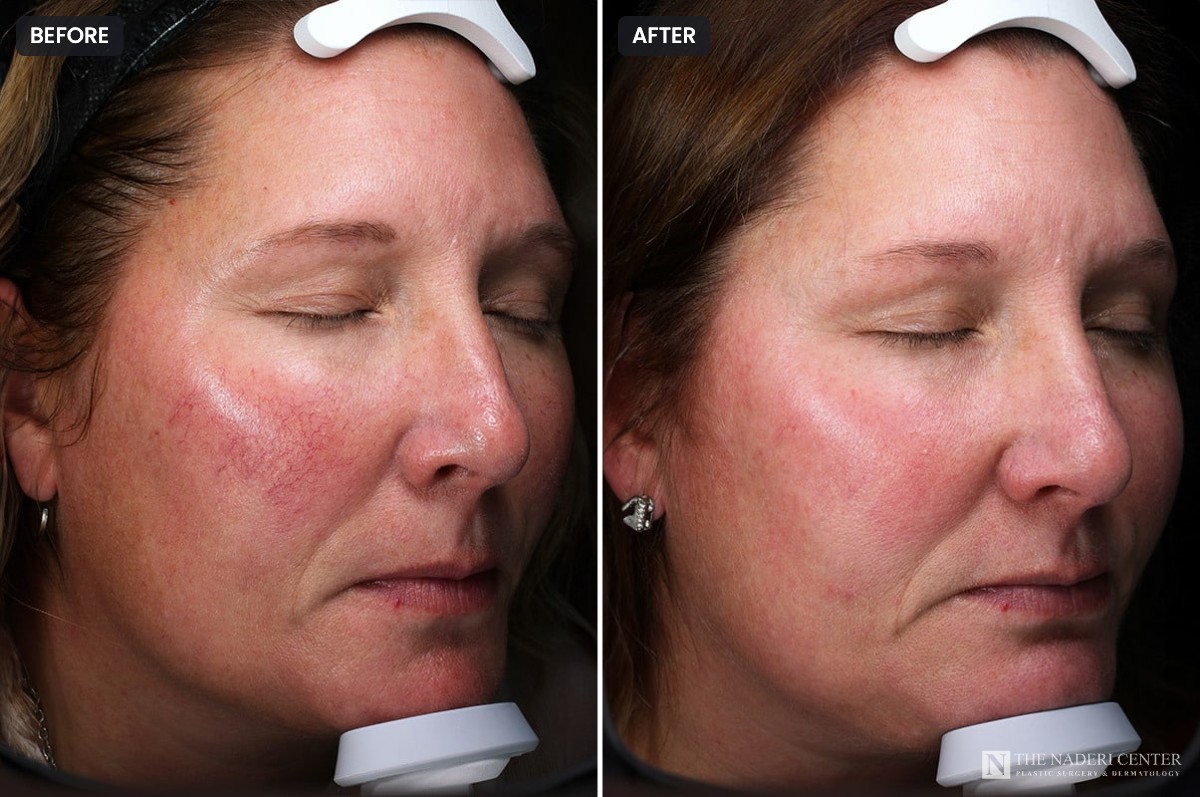
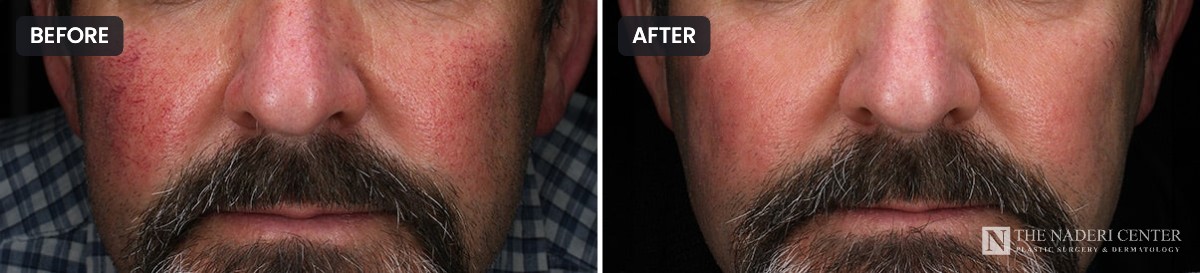
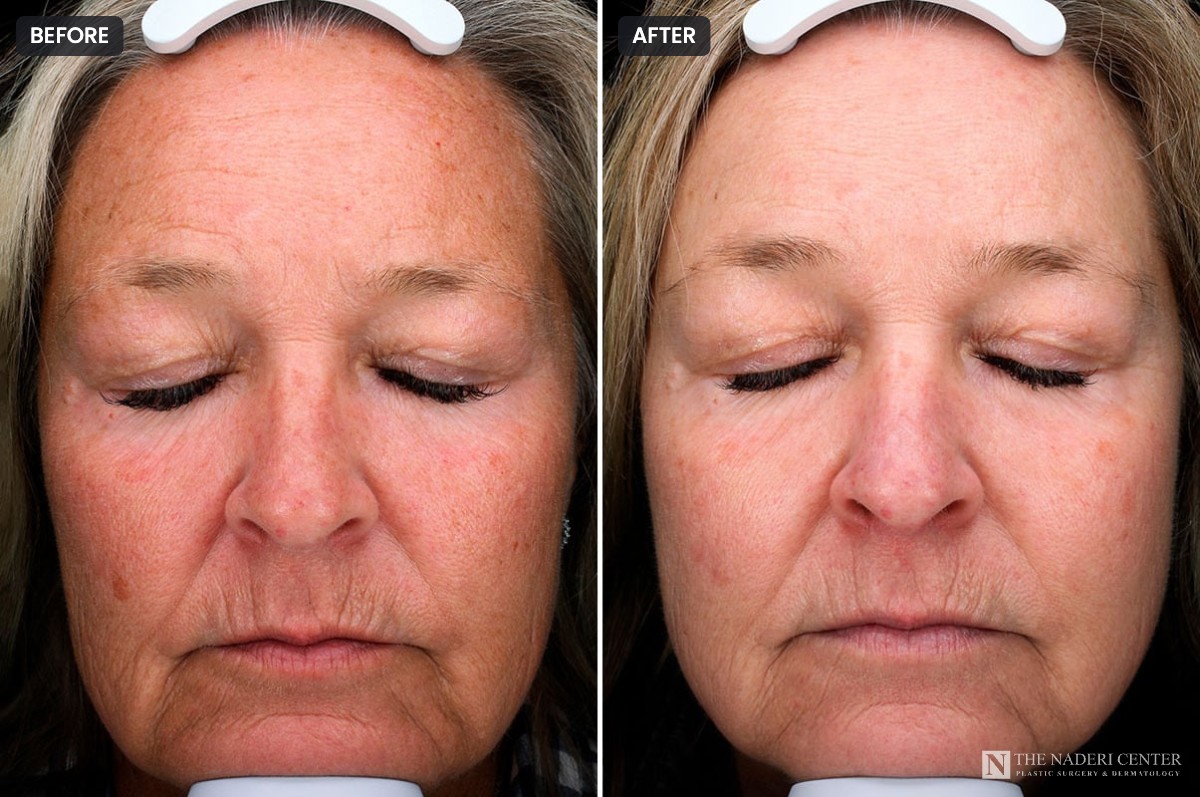
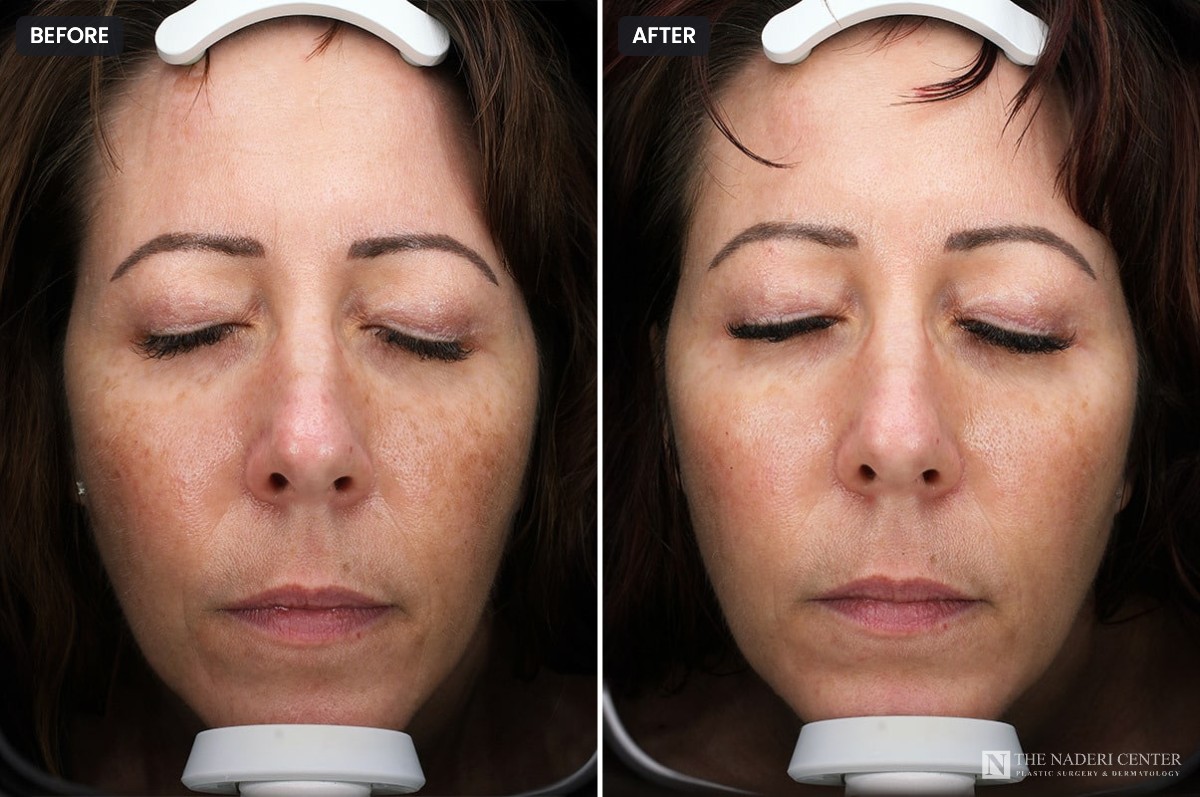
Real patients of The Naderi Center. Individual results vary. See more BBL before and after photos.
The best time to begin is before the coldest weeks arrive. We suggest booking a consultation this fall so your physician can confirm the diagnosis and design a plan that carries your skin gracefully through the holidays and into spring. Book your consultation online, or start with a virtual consultation from home.
See the Doctor
Questions about what you just read? Ask our doctors in person. Book a consultation in Reston or Chevy Chase, or start with a virtual consultation from home.
Book a ConsultationVirtual consultation
Call Reston (703) 481-0002 or Chevy Chase (301) 222-2020.
Frequently asked questions about rosacea and BBL
How much does BBL for rosacea cost?
At The Naderi Center, a Sciton BBL treatment is $600, and laser removal of facial capillaries starts at $350. Your physician will recommend the number of sessions at your consultation, and you can review current fees on our menu of services.
Can BBL treat rosacea on darker skin tones?
Not everyone is a candidate for BBL because of skin color and type, and BBL is not recommended for very dark skin. Many patients are prepared with 4% hydroquinone and Retin-A for several weeks beforehand to lower the risk of post-inflammatory hyperpigmentation, and your physician will let you know whether you need it.
Is BBL safe if I also have melasma?
BBL should not be used on melasma, which usually calls for consistent at-home skincare and strict sun avoidance instead. Please tell us before treatment if you have melasma, or any mole that is new or changing, so that area can be avoided.
I have a beard. Do I need to shave before BBL?
Please shave the area closely the night before or the morning of your treatment, since hair and stubble absorb the light. BBL can also thin hair in the treated area, so let us know if you would like your beard protected.
Can I wear makeup after BBL?
Please arrive with clean skin, free of makeup, moisturizer and sunscreen. From the second day you may use a water-based powder makeup, applied gently.
Can I have BBL if I have taken Accutane?
Please let us know if you have taken Accutane (isotretinoin) in the past six months, so your physician can plan the timing of your treatment safely. If you are prone to cold sores, you will also be given an antiviral medication to take before your visit.

Patient Financing
Pay Over Time with Cherry
Monthly payment plans for surgery and treatments, including 0% APR options for qualifying patients. Checking whether you qualify won’t affect your credit score.