When people start looking into facelift surgery, they often find out there are many techniques. They will see names like SMAS facelift, deep plane facelift, mini facelift, lower facelift, and neck lift. At first, it can be hard to tell how they differ from one another. The online descriptions do not always make it simple.
One of the most important distinctions in modern facial rejuvenation is the difference between a traditional SMAS facelift and a deep plane facelift.
Both methods aim to reduce signs of facial aging. Still, they work in different ways on the face’s structure. Knowing how they differ can help someone talk clearly with a facial plastic surgeon. After that, patients can determine what matches their face and what they want to improve.

Key Takeaways
- Both SMAS and deep plane lifts treat more than sagging skin.
- A deep plane facelift goes under the SMAS layer and helps free retaining ligaments so facial tissues can be repositioned.
- No single method fits everyone. The best option depends on your face anatomy and what you want to improve.
- A trained surgeon and a clear understanding of facial anatomy are key. With that, results can look even and natural, not overdone.
- Dr. Shervin Naderi focuses on facial rejuvenation and uses advanced lift methods based on each person’s needs.
Why Facelift Technique Matters
Aging of the face is not simply a problem of loose skin.
The face is made up of multiple layers:
- Skin
- Fat compartments
- Facial muscles
- The superficial musculoaponeurotic system (SMAS)
- Retaining ligaments
- Bone structure
In addition, over time, these structures change together:
- Facial fat descends
- Ligaments loosen
- Collagen decreases
- The supporting framework of the face gradually loses youthful definition.
An effective facelift must address the areas responsible for visible aging, not just tighten the outer skin.
Dr. Shervin Naderi, a facial plastic surgeon specializing in facial rejuvenation and deep plane facelift surgery, explains:
“The difference between an average facelift result and an exceptional facelift result often comes down to understanding facial anatomy. The goal is not to tighten what is visible on the outside. The goal is to restore the deeper structures that have shifted over time.”
What Is a SMAS Facelift?
The SMAS (superficial musculoaponeurotic system) facelift was a major advancement in facial rejuvenation surgery. Before SMAS techniques became widely adopted, many facelifts focused primarily on removing and tightening excess skin.
While skin tightening alone could improve laxity, it often created limitations:
- Increased tension on the skin
- A tighter or less natural appearance
- Less improvement in deeper facial descent
- Potential for shorter-lasting results
The SMAS facelift changed this approach by allowing surgeons to lift and reposition the deeper connective tissue layer beneath the skin.
During a SMAS facelift, the surgeon typically:
- Elevates the skin from the underlying tissues
- Modifies or lifts the SMAS layer
- Redrapes the skin with less tension
- Removes or adjusts excess tissue as needed
For many patients, a well-performed SMAS facelift can create excellent improvement in the lower face and jawline.
However, there are anatomical limitations depending on the patient’s degree of aging and areas of concern.
What Is a Deep Plane Facelift?
A deep plane facelift is a more advanced technique that works beneath the SMAS layer and releases specific facial retaining ligaments, allowing the deeper facial tissues to be repositioned as a single unit.
Rather than pulling separate layers, the surgeon mobilizes the deeper facial structures and repositions them upward.
This approach focuses on restoring the natural youthful relationship between:
- The cheeks
- Nasolabial folds
- Jowls
- Jawline
- Neck
Because the deeper tissues are repositioned, the skin can often be redraped more naturally with less tension.
How Is a Deep Plane Facelift Different From a SMAS Facelift?

The main difference is the level of dissection and tissue movement. In a SMAS facelift, the surgeon focuses mostly on the SMAS layer. In a deep plane facelift, the work starts beneath the SMAS. Next, deeper attachments are released because they can limit how the tissues move.
Think of it like moving furniture in a room:
A traditional approach may involve adjusting what is visible on the surface. A deeper approach involves repositioning the underlying structure so the entire appearance changes more naturally.
Key Differences Between Deep Plane and SMAS Facelift
| Deep Plane Facelift | SMAS Facelift | |
|---|---|---|
| Surgical plane | Beneath the SMAS layer | At the SMAS layer |
| Main focus | Repositioning deeper facial tissues | Tightening and lifting SMAS structures |
| Skin tension | Often less reliance on skin tension | More variable depending on technique |
| Cheek rejuvenation | Strong improvement in many patients | Variable depending on anatomy |
| Jawline improvement | Often excellent | Often excellent |
| Surgeon expertise required | Highly advanced anatomical knowledge | Advanced surgical skill required |
| Best suited for | Patients needing deeper structural rejuvenation | Patients with appropriate aging patterns |

Experience Matters in Facelift Surgery
Choose a surgeon with advanced knowledge of facial anatomy and extensive experience in facial rejuvenation.
Why Deep Plane Facelift Has Become So Popular
Over the past decade, deep plane facelift surgery has received significant attention because patients increasingly want results that look natural.
For many people, it is not only about looking younger. They also do not want to look as if they went under surgery.
The deep plane approach aligns with this modern philosophy by emphasizing:
- Natural movement
- Facial harmony
- Restoration rather than alteration
- Avoiding excessive skin tension
Dr. Naderi describes the philosophy this way:
“A facelift should not create a new face. It should reveal a more refreshed version of the face that has always been there.”
Facelift Before & After
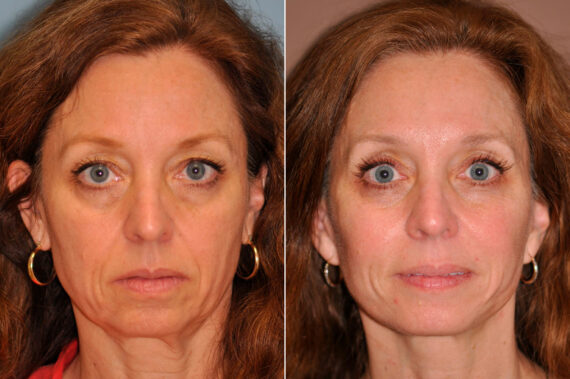
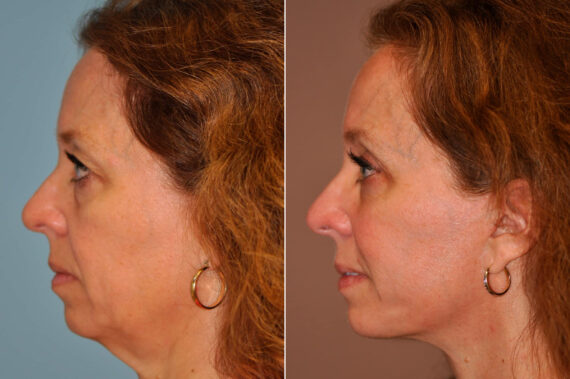
*Results vary from patient to patient
Does a Deep Plane Facelift Always Mean Better Results?
This is an important question.
A deep plane facelift is not automatically better for every patient simply because it is a newer or more talked-about technique.
The best facelift technique depends on:
- Facial anatomy
- Degree of skin laxity
- Amount of tissue descent
- Neck aging
- Skin quality
- Patient goals
- Surgeon experience
A highly skilled facial plastic surgeon should recommend the technique that best addresses the patient’s specific concerns, not simply the technique currently receiving the most attention.
The surgeon’s understanding of anatomy, judgment, and technical execution are ultimately more important than the name of the procedure.
Why Choosing a Facial Plastic Surgeon Matters
A facelift can be one of the toughest procedures in cosmetic surgery. The face has complex structures, and nerves there control motion, including branches of the facial nerve. For that reason, the whole surgery demands careful, technical work.
A surgeon performing deep plane facelift surgery must have:
- Extensive knowledge of facial anatomy
- Experience with advanced facelift techniques
- Understanding of facial proportions
- Ability to customize surgery for different aging patterns
People around Washington, DC often start by looking for a surgeon who works on facelifts all the time. That includes residents from Reston and McLean, as well as from Great Falls, Arlington, Alexandria, Bethesda, Chevy Chase, and Potomac.
The Right Question Is Not “Which Facelift Is Best?”
Patients often ask:
“Is a deep plane facelift better than a SMAS facelift?”
The more useful question is:
“Which technique is best for my face, my aging pattern, and my goals?”
A facelift consultation should involve an analysis of:
- Where volume has shifted
- Where tissues have descended
- How the neck has aged
- Skin elasticity
- Facial proportions
- Desired degree of rejuvenation
The procedure should be customized, not selected from a menu.
Choosing the Right Facelift for You
Both SMAS facelift and deep plane facelift techniques represent significant advances compared with older skin-only facelifts.
A deep plane facelift is an advanced approach that allows surgeons to reposition deeper facial structures and restore youthful contours with a focus on natural-looking results. However, the ultimate outcome depends on the combination of the right procedure, the patient’s anatomy, and the surgeon’s expertise.
For patients considering facelift surgery in Northern Virginia, Washington, DC, or Maryland, including Reston, McLean, Great Falls, Arlington, Alexandria, Bethesda, Chevy Chase, and Potomac, the most important first step is selecting a surgeon who understands facial aging at a deep anatomical level and can create a personalized plan.
To learn which facelift approach may be right for you, schedule a consultation with Dr. Shervin Naderi and his facial plastic surgery team.

About Dr. Shervin Naderi
Dr. Shervin Naderi, MD, FACS, is a double board-certified facial plastic and reconstructive surgeon and founder of The Naderi Center for Plastic Surgery and Dermatology. With more than 25 years of experience in aesthetic facial surgery, he specializes in facial rejuvenation and advanced facelift techniques, with an emphasis on individualized treatment plans and natural-looking results.