Skin laxity is one of the most common and frustrating signs of aging. It usually develops gradually, then speeds up after weight loss, hormonal changes or years of sun exposure. At The Naderi Center for Plastic Surgery & Dermatology, we look at skin tightening as a medical and anatomical question first, and choose treatments from there.

Non-Surgical Tightening Procedures and When to Consider Surgery
- Skin laxity develops slowly as the body makes less collagen and the skin’s support weakens.
- Non-surgical options are very effective in boosting skin firmness during the early to moderate stages of aging.
- Once laxity is advanced, surgery is usually the only way to get a meaningful, lasting result.
- Weight loss from GLP-1 medications can speed up facial volume loss and loose skin.
- At The Naderi Center for Plastic Surgery and Dermatology, each plan is based on the patient’s skin, anatomy and goals.
Skin Tightening as a Medical and Anatomical Issue
The Naderi Center, under the guidance of Dr. Shervin Naderi, a double board-certified facial plastic surgeon with more than 20 years in facial surgery, combines modern technology with surgical skill to give patients natural, durable skin tightening.
“True skin tightening isn’t about chasing devices,” says Dr. Shervin Naderi. “It’s about understanding facial aging, collagen biology, and knowing when technology works, and when surgery is the better solution.”
How Skin Ages Over Time
Skin starts aging earlier than most people think. Collagen production is already declining before any sagging shows, and the skin’s support weakens gradually.
Prevention in your 20s
In your 20s, collagen production and elasticity are at their peak. Sun and pollution are already wearing down the skin’s support structure, though, even if you can’t see it yet. This is the decade for prevention: protecting the collagen you have before damage shows.
Skin Changes in Your 30s
By your 30s, collagen production slows, fine lines become more visible, and slight drooping may start around the eyes and jawline. This is when collagen-stimulating treatments such as microneedling can help maintain firmness and put off more noticeable sagging.
Hormonal and Structural Changes in Your 40s
In your 40s, hormonal changes make skin aging more noticeable, especially in women as estrogen declines. Skin gets thinner, loses elasticity and loses collagen faster. Men’s skin is thicker and has more collagen, so it ages differently, but loosening eventually shows in both men and women.
Advanced Skin Laxity in the 50s and Beyond
From the 50s on, gravity, descending fat pads and bone remodeling add to years of collagen loss, and the face, jawline and neck begin to sag. Non-invasive treatments can still help, but results are often better when they are combined with injectables or surgery.
“Male and female skin ages differently,” explains Dr. Shervin Naderi. “Ignoring those differences leads to unnatural results. Our approach is always customized.”
Book a Consultation
Have a question about your own face or skin? Our physicians see patients at our offices in Reston, VA and Chevy Chase, MD.
Book a ConsultationStart with a virtual consultation
Call Reston (703) 481-0002 or Chevy Chase (301) 222-2020.
Non-Surgical Skin Tightening Options
Non-surgical skin tightening treatments stimulate collagen in the deeper layers of the skin to improve firmness, with no incisions and little recovery time. They work best for early to moderate laxity, and done at the right stage, they can postpone the need for surgery.
Morpheus8 Radiofrequency Microneedling
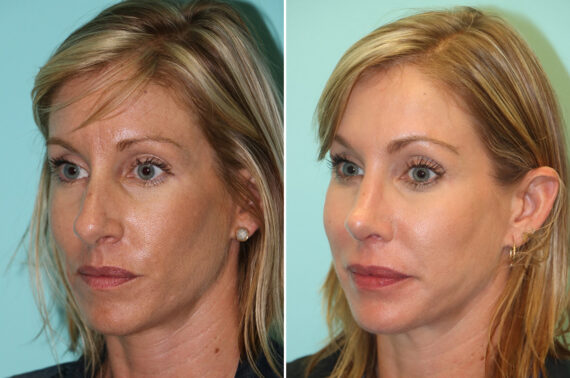
For non-surgical skin tightening, The Naderi Center offers Morpheus8. It combines microneedling with radiofrequency energy to remodel collagen deep in the skin. Treatment is done at our Reston office, usually as a series of 3 to 4 sessions followed by about one maintenance session a year.
Morpheus8 is especially effective for tightening the face, neck, jawline, and lower eyelids while also improving skin texture and tone. Because the energy is delivered beneath the surface, it works on collagen where laxity begins. It won’t match a surgical lift, but for mild to moderate laxity it can make a visible difference.
“Morpheus8 allows us to tighten skin structurally without surgery,” says Dr. Shervin Naderi. “It’s one of the most impactful non-invasive treatments we offer.”
InMode, the company that makes Morpheus8, named The Naderi Center a Top Morpheus8 Provider in 2023 and 2024.
UltraClear Laser Skin Tightening
Lasers can also tighten skin. The UltraClear laser is a cold fiber erbium laser that stimulates collagen while minimizing thermal damage and downtime.
UltraClear can significantly improve fine lines, wrinkles, crepey skin, and mild laxity while enhancing overall skin quality. It allows controlled tightening and resurfacing with a faster recovery than traditional ablative lasers: about 5 to 7 days for a light treatment and 7 to 10 days for a deeper one. UltraClear is safe on all skin types and is performed at our Reston office.
“UltraClear gives us exceptional control,” notes Dr. Shervin Naderi. “We can tighten, smooth, and rejuvenate skin safely and predictably.”


Explore Options That Fit Your Lifestyle
Non-surgical tightening can be effective when chosen for the right degree of laxity and skin quality. Consult with our experts for the best option.
Microneedling for Early Skin Laxity
Microneedling alone remains an excellent option for patients with early laxity. By creating controlled micro-injuries, microneedling triggers the body’s natural collagen and elastin production, resulting in gradual tightening and improved skin texture over time.
Microneedling suits younger patients and those focused on prevention. Downtime is usually about 24 to 48 hours. Most patients start with 4 to 6 treatments spaced 4 to 6 weeks apart, then return about every 4 months to maintain results, and microneedling can be combined with medical-grade skincare for enhanced results.
Skin Laxity After Weight Loss and GLP-1 Medications

One of the fastest-growing causes of skin laxity today is rapid weight loss from GLP-1 medications such as Ozempic and Wegovy. While these medications can improve metabolic health, they often result in facial volume loss and loose skin.
“We’re seeing a surge of patients with sudden hollowing and sagging after medical weight loss,” says Dr. Shervin Naderi. “This requires a thoughtful, multi-layered approach.”
At The Naderi Center, Ozempic-related changes are addressed using both non-surgical and surgical solutions. Treatments may include fat grafting to restore lost volume, Sculptra to stimulate collagen, and dermal fillers to rebalance facial contours.
When Surgery Becomes the Best Option
When skin laxity becomes advanced, surgery remains the gold standard. Facelifts and neck lifts address excess skin and deeper structural descent in ways non-invasive treatments simply cannot.
“Surgery isn’t a failure of non-invasive treatments,” explains Dr. Shervin Naderi. “It’s the right tool when biology demands it.”
Preventing Skin Laxity Before It Starts
Prevention does more than any single treatment. Daily broad-spectrum sunscreen, limiting sun exposure and a consistent skincare routine are the best ways to preserve collagen and slow skin aging.
Unhealthy habits like smoking, unhealthy eating, and heavy sun exposure can cause skin to lose its firmness much more quickly. Starting preventive care early can push back the need for more aggressive treatment later.
A Customized Approach to Skin Tightening
The Naderi Center for Plastic Surgery & Dermatology offers both non-surgical skin tightening and facial surgery, so the advice you get isn’t skewed toward one or the other. Your plan is based on your age, sex, anatomy and lifestyle.
If your skin is getting looser and you aren’t sure which treatment fits, a consultation is the quickest way to find out. You can meet with our providers in Chevy Chase or Reston to talk through your concerns and goals.
See the Doctor
Questions about what you just read? Ask our doctors in person. Book a consultation in Reston or Chevy Chase, or start with a virtual consultation from home.
Book a ConsultationVirtual consultation
Call Reston (703) 481-0002 or Chevy Chase (301) 222-2020.
Skin Tightening FAQs

Patient Financing
Pay Over Time with Cherry
Monthly payment plans for surgery and treatments, including 0% APR options for qualifying patients. Checking whether you qualify won’t affect your credit score.