More people are choosing prejuvenation: starting non-surgical and minimally invasive treatments early to slow or prevent signs of aging, rather than waiting until surgery becomes necessary. At The Naderi Center for Plastic Surgery and Dermatology, we think it is a sensible approach. Aging is a process, not an event, and our goal is to help patients age well, with as little surgery as possible and results that look natural.

Your Path to Aging Smarter
- Prejuvenation is a method that centers around applying timely and preventative treatments which can delay visible aging signs until they are hardly noticed.
- Regular maintenance that uses injectables, lasers and medical-grade skincare keeps collagen and facial structure intact as the years pass.
- Carefully chosen adjustments, not large-scale operations, give results that look natural and endure for a long time.
- Each patient follows a schedule and plan that is created only for them. They will receive the correct mix of therapies at the right moment.
- At The Naderi Center, injections are performed by physicians only, and the same team can guide you from your first preventive treatment to surgery, if you ever need it.
Why Patients Are Choosing Prejuvenation
The motivation behind prejuvenation is clear. Many patients today tell us: “I want to take care of my skin now so that I don’t have to ‘fix’ it later.” They see early signs of fine lines, sun spots, mild laxity, pigmentation, hollowing under the eyes, or volume loss in the midface, and want to act before those early changes deepen. As Dr. Shervin Naderi says, “The art of aesthetic medicine is not waiting until the damage is done. It’s preserving what’s left.”
Prejuvenation is sensible, regular maintenance rather than a chase for perfect youth. It combines treatments, skincare and lifestyle to delay or reduce the need for surgery. Here is your guide to the main options, from injectables to lasers to skincare, and how we put them together at The Naderi Center.
Understanding the Early Signs of Aging
When people think of aging, wrinkles and sagging often come to mind first. But structural changes start well before those show: collagen and elastin are gradually depleted, volume begins to shift, and repeated muscle movements etch fine lines deeper. Left alone, these changes become more permanent and need more aggressive treatment later.
Neuromodulators for Prevention
Injectable neuromodulators such as Botox (onabotulinumtoxinA) work on the muscle side of this. By relaxing the muscles that cause dynamic lines, such as frown lines, forehead creases and crow’s feet, they keep those lines from becoming etched in as static wrinkles. Some patients begin Botox in their late 20s or early 30s, not to erase existing folds but to prevent them from deepening.
What Is Baby Botox?
A more subtle variant, often dubbed “baby Botox”, involves lower doses over a broader field. Instead of fully freezing movement, it softens lines while preserving natural expression. This is ideal for younger clients who want prevention without an “overdone” look. Dr. Naderi often remarks, “Baby Botox lets us intervene gently: enough to calm movement, but not enough to rob you of facial character.”

Dermal Fillers for Early Volume Support
Relaxing muscles is only part of it. As volume loss builds, especially in the midface, temples, cheeks and under the eyes, dermal fillers become important. Conservative use of hyaluronic acid fillers can help maintain subtle fullness, reduce hollows, and provide a scaffold for support, delaying sagging and jowling. For prejuvenation, we use small amounts placed where they do the most good, not dramatic augmentation, and all injections at The Naderi Center are performed by physicians.
Biostimulators for Long-Term Collagen Support
Biostimulators are a different kind of injectable. Rather than simply filling, they prompt the body to make its own collagen over time. The best-known example is Sculptra® (poly-L-lactic acid). When injected, Sculptra triggers a controlled inflammatory cascade, encouraging fibroblasts to deposit collagen gradually over months. The effect is a more natural, progressive thickening of tissue, which helps resist sagging and volume loss. Because the results build slowly, it avoids abrupt changes and can last years.
We adjust biostimulator treatment to each patient’s anatomy and to how their face is aging. As Dr. Naderi puts it, “We don’t chase trends; we engineer longevity.” In many instances, we’ll blend small amounts of filler now with Sculptra or poly-L-lactic acid boosters to maintain support long term.
Book a Consultation
Have a question about your own face or skin? Our physicians see patients at our offices in Reston, VA and Chevy Chase, MD.
Book a ConsultationStart with a virtual consultation
Call Reston (703) 481-0002 or Chevy Chase (301) 222-2020.
Collagen-Stimulating Procedures
Treatments that stimulate collagen in the skin itself work alongside these injectables. Two of the most popular are microneedling (also called collagen induction therapy) and Morpheus8 (a microneedling + radiofrequency hybrid).
Microneedling
With microneedling, an array of ultra-fine needles creates controlled microinjuries that prompt the skin to heal by making new collagen, elastin, and glycosaminoglycans. This remodels texture, refines pore size, smooths superficial lines, and improves tone. Over repeated sessions, the cumulative effect is thicker, more resilient skin.
Morpheus8 (Microneedling + RF)
Morpheus8 adds radiofrequency energy delivered at depth, which heats the subdermal tissue, tightening and contracting while the needles stimulate repair. Because it tightens deeper tissue while renewing the surface, Morpheus8 works well for mild laxity or early sagging along the jawline, neck and cheeks and under the eyes. Patients often see firmer skin and a cleaner contour, though Morpheus8 is not a substitute for a surgical lift. At The Naderi Center, Morpheus8 is done at our Reston office, usually as 3 to 4 sessions followed by about one treatment a year.
InMode, the company that makes Morpheus8, named The Naderi Center a Top Morpheus8 Provider in 2023 and 2024.
IPL
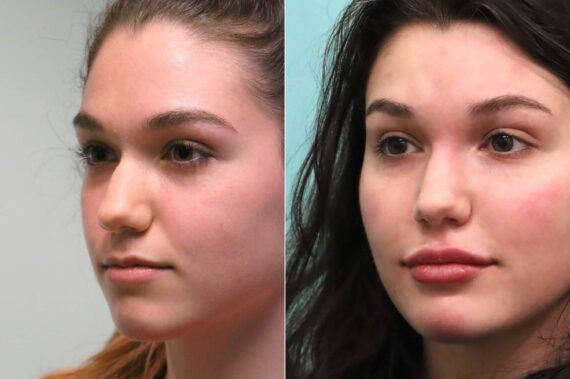
A complementary approach is Intense Pulsed Light (IPL) therapy. By targeting hemoglobin and melanin, IPL reduces sunspots, rosacea, broken capillaries and freckles. It also causes mild remodeling in the dermis and can modestly boost collagen. At The Naderi Center, IPL is done with the Sciton BBL, and for prejuvenation we often recommend repeat sessions through the year to keep skin tone clear and even.
Fractional Laser Skin Resurfacing
Fractional laser skin resurfacing uses microscopic columns of laser energy to vaporize tiny zones of the epidermis and dermis, which triggers renewal. Younger patients are increasingly asking for it before significant sun damage develops. Done at the right time, it can improve texture, smooth fine lines and fade sunspots while stimulating collagen. Downtime depends on how deep the treatment goes, so we set the intensity based on your age, your skin and how much time you can take off.
Medical-Grade Skincare as the Foundation of Prejuvenation
Yet no single treatment removes the need for a strict, medical skin care routine. A daily routine of leave-on products is the foundation of prejuvenation. This includes:
- Sunscreen daily (broad spectrum, SPF 30–50 or more). Nothing does more to prevent UV damage.
- Antioxidants (e.g. vitamin C, vitamin E, niacinamide) to neutralize free radicals and protect collagen.
- Retinoids / retinols (vitamin A derivatives) to increase cell turnover and stimulate collagen synthesis.
- Peptides, growth factors, and ceramides to reinforce the skin barrier and facilitate repair.
Patients who apply an antioxidant in the morning, a sunscreen, a retinoid at night, and who exfoliate from time to time slow the arrival of dark marks, rough texture and sun damage that would otherwise need stronger treatment later. The skincare lines we rely on most are SkinBetter Science, Alastin, ZO Skin Health and Plated.

PRP and PRF as Natural Collagen Boosters
In addition, platelet-rich plasma (PRP) and its derivative platelet-rich fibrin (PRF) are increasingly popular as natural prejuvenation treatments. Because they use your own growth factors and cytokines, they gently promote collagen, blood supply and healing. We may combine PRP with microneedling, or inject PRF under the eyes, into the nasolabial folds or into the scalp. Because PRF has a fibrin matrix scaffold, its growth factors release more slowly and may provide more sustained stimulation than traditional PRP. PRF is usually given as two treatments 6 to 8 weeks apart, then about once a year to maintain skin quality.

Look Better, Never Different
Experience our natural, specialized approach in Reston, VA and Chevy Chase, MD
Proactive Laser Approaches in Younger Patients
More people in their 30s and early 40s are asking about laser skin resurfacing and fractional ablative treatments instead of waiting until their 50s. They want light to moderate treatments that address early lines, sunspots and laxity before these become pronounced, which often reduces the need for more extensive resurfacing later.
The Power of a Combined Prejuvenation Plan
These treatments tend to work better together than on their own. Over several years, a prejuvenation plan might include Botox to soften muscle movement, a small amount of filler in the midface, Sculptra every few years, microneedling about every 4 months or Morpheus8 about once a year, IPL quarterly, and a consistent daily skincare routine. Together they protect the skin and the soft tissue beneath it, which buys time before more invasive procedures are needed.
Because daily choices shape the skin, we teach patients how to shield themselves from light: use sunscreen every day, stay out of tanning beds and direct sun, cover the head with a hat, protect the eyes with sunglasses, and avoid smoking. We urge them to take antioxidants through food and, when suitable, through supplements and to apply antioxidant products externally. We also encourage enough sleep, enough water and a diet that gives the body what it needs to keep collagen strong.
Prejuvenation Puts You in Charge
Much of the appeal of prejuvenation is control. Instead of waiting for jowls or hollow under-eyes to appear, you take an active part in how you age, using proven treatments with a physician guiding the plan.
Not every patient is a candidate for every treatment, which is why The Naderi Center’s ultra-specialization matters. Our physicians and aesthetic team cover facial plastic surgery, cosmetic dermatology, laser treatments and injectables, and each works within their own area of expertise when we build a prejuvenation plan.

When Surgery Becomes Appropriate
The emergence of deeper changes (a sagging jawline, moderate jowls, deep nasolabial folds, loose skin on the neck) is usually the point where surgery makes sense. Depending on the patient, Dr. Naderi may recommend a facelift, a neck lift or fat transfer. Starting treatment early can often postpone surgery or reduce how much is needed later. As Dr. Naderi emphasizes, “Our mission is to let you age, but let it be a choice.”
Treatment Timelines in Prejuvenation
Here is how the main treatments typically fit into a prejuvenation timeline:
| Treatment | Typical Timing / Frequency |
|---|---|
| Botox / Baby Botox | Late 20s or 30s when fine dynamic lines appear |
| Hyaluronic fillers (conservative) | Small volume injections to early-loss areas |
| Sculptra (biostimulator) | Series treatments with maintenance every 1–2 years |
| Microneedling | Every 4 months after the first series |
| Morpheus8 | About once a year after 3 to 4 sessions |
| IPL / Photofacial | Quarterly or semiannual |
| PRP / PRF | Annually |
Every patient’s timeline is different. What matters most is consistency and small, gradual steps.
You may have seen related trends online, such as “skin minimalism,” “maintenance over overhaul” and “collagen banking.” They reflect the same wish for subtle, natural results, which is how we approach treatment at The Naderi Center.
Decade-by-Decade Prejuvenation Progression
Here’s how a patient might progress over a decade with prejuvenation in mind:
| Age Range | Typical Prejuvenation Steps |
|---|---|
| Early 30s | Sunscreen, antioxidants, baby Botox |
| Mid-30s | Mild filler, IPL |
| Late 30s – Early 40s | Morpheus8, fractional laser |
| Early 50s | Minor surgical options if needed |
These are general patterns, and every face is different, which is why a consultation and regular follow-up matter. We look at your skin quality, facial anatomy, lifestyle and goals, then map out a prejuvenation plan for you.
Results and Philosophy at The Naderi Center
What we aim for is slower aging with as little surgery as possible, results that look natural, and healthy skin. Our patients often say they look “better, not different,” and that is the standard we hold ourselves to.
If you’re wondering whether you should start earlier, you’re not alone. Contact The Naderi Center for Plastic Surgery and Dermatology to book a consultation, and we’ll help you decide what makes sense now and what can wait.
For more details, look at our Skincare and Laser page, review the Injectables section or book an appointment at either our Reston or Chevy Chase location.
See the Doctor
Questions about what you just read? Ask our doctors in person. Book a consultation in Reston or Chevy Chase, or start with a virtual consultation from home.
Book a ConsultationVirtual consultation
Call Reston (703) 481-0002 or Chevy Chase (301) 222-2020.
FAQ Section on Prejuvenation

Patient Financing
Pay Over Time with Cherry
Monthly payment plans for surgery and treatments, including 0% APR options for qualifying patients. Checking whether you qualify won’t affect your credit score.