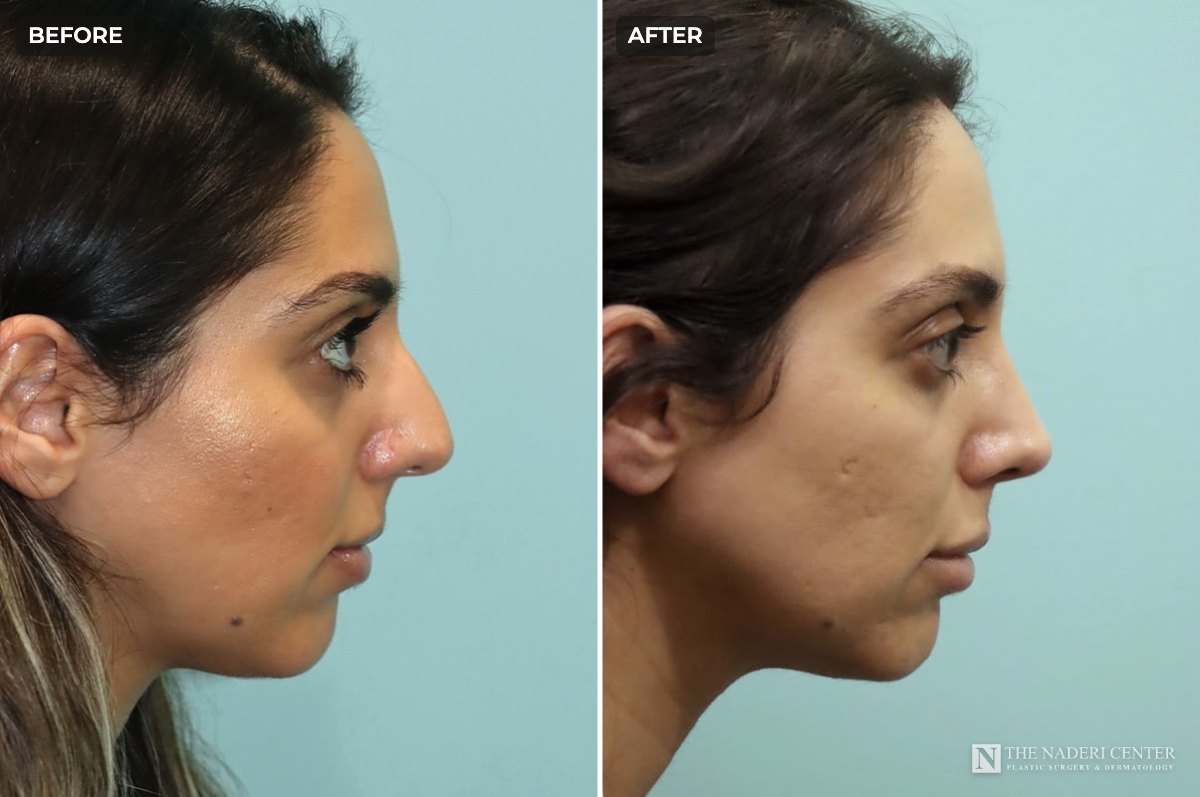
Preservation rhinoplasty has changed how many surgeons think about the nose. Instead of cutting a hump away and rebuilding what is left, it keeps the natural bridge intact and lowers it. Pair that with a closed approach, and some patients can have a smoother profile with no visible scar at all.
Here’s your guide to closed preservation rhinoplasty: how it works, who it suits and how Dr. Shervin Naderi uses it alongside his other techniques.
The short answer: closed preservation rhinoplasty lowers a dorsal hump by keeping the bridge in one piece and bringing it down from underneath, all through incisions inside the nostrils. It suits many patients whose main concern is a hump on the bridge and who like their tip as it is.
What is preservation rhinoplasty?
In a traditional hump reduction, the top of the bridge is shaved or cut off. That leaves an opening, often called an open roof, which is closed by moving the nasal bones and rebuilding the bridge. In preservation rhinoplasty, the bridge stays whole and is lowered from below, so its natural, smooth lines are kept.

Two Ways to Lower a Hump
A simplified side view of the bridge
The hump is removed
The top of the bridge is shaved or cut off. The open roof left behind is closed by moving the bones and rebuilding.
The bridge is kept and lowered
The natural bridge stays in one piece and is lowered from underneath, keeping its smooth lines.
Dr. Naderi often combines preservation and structural techniques, choosing what each nose needs.
Keeping the bridge intact helps the profile look natural from every angle, without the telltale signs of an operated nose. It also protects the support and the smooth contour that people often lose with older techniques.
Can preservation rhinoplasty be done closed?
Yes. When the change is mostly on the bridge, Dr. Naderi can perform preservation work entirely through incisions inside the nostrils. The skin over the tip is never lifted, and nothing shows on the outside of the nose.
Every nose is unique, and I plan each one for the face it belongs to. When a patient loves her tip, I leave it alone and lower the bridge precisely, so the nose looks like she was born with it.
Dr. Shervin Naderi, double board-certified facial plastic surgeon
The tools that make it precise
How Closed Preservation Works
The tools Dr. Naderi uses to reshape the bridge without an outside scar
Hidden incisions
Everything is done through incisions inside the nostrils, so nothing shows on the outside.
Power rasp
A fine, powered rasp smooths and sculpts bone with control, for a clean, even bridge.
Ultrasonic instruments
Ultrasonic tools shape bone while sparing the soft tissue around it, when the nose calls for them.
Dr. Naderi uses a power rasp to sculpt bone smoothly and with control, giving a clean, even bridge. He can also perform ultrasonic rhinoplasty, using instruments that shape bone while sparing the soft tissue around it, when a nose calls for it. Both help fine bony work feel more controlled through a closed approach.
Who is a good candidate?
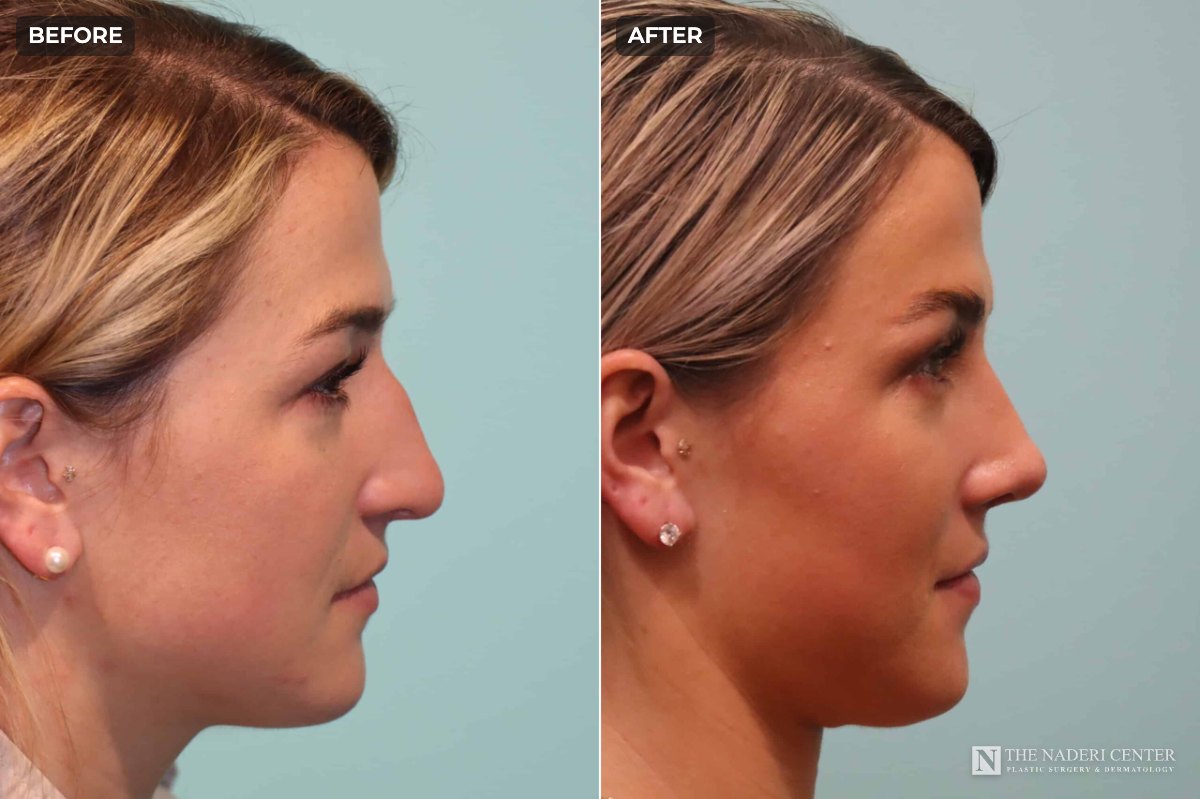
Closed preservation is often a beautiful fit for a straight but humped bridge, a small bump, or a profile that needs lowering while the tip stays as it is. Patients who say “I just want the bump gone” are frequently in this group.
It is less suited to noses with a twisted bridge, weak or uneven tip cartilage, or a previous surgery. Those noses often need the structural work and direct view of an open rhinoplasty.
Preservation and structure, together
Most noses do not fit neatly into one technique. Dr. Naderi often blends preservation and structural rhinoplasty, keeping what is good about a nose while adding support where it is needed. That hybrid approach is a big part of how his results stay natural and strong over time.
When a nose needs that blend, especially at the tip, the open approach usually gives the best result. Today about 85 percent of his rhinoplasties are open and 15 percent are closed. His guide to closed rhinoplasty explains how he decides.
Book a Consultation
Want to know if closed preservation fits your nose? Dr. Naderi sees patients at our offices in Reston, VA and Chevy Chase, MD.
Book a ConsultationLearn about scarless rhinoplasty
Call Reston (703) 481-0002 or Chevy Chase (301) 222-2020.
Recovery after closed preservation
Recovery follows the same path as other rhinoplasty: home the same day, the cast off in five to ten days, about a week off work and no exercise for a month. Because the tip skin is not lifted, early tip swelling is often a little less.
The profile change is usually visible as soon as the cast comes off, and it keeps refining over the following months as swelling settles.
Choosing a surgeon for preservation rhinoplasty
Preservation techniques reward experience. Ask a surgeon how often they use them, whether they also perform structural and open rhinoplasty, and to show you profiles that look natural from the side and the front.
Dr. Shervin Naderi is a double board-certified facial plastic surgeon with more than 20 years of practice and a strong surgical focus on rhinoplasty. Patients visit his offices in Reston, Virginia and Chevy Chase, Maryland from Great Falls, McLean, Vienna, Potomac, Bethesda and across Washington, DC.
See the Doctor
Questions about what you just read? Ask Dr. Naderi in person. Book a consultation in Reston or Chevy Chase, or start with a virtual consultation from home.
Book a ConsultationVirtual consultation
Call Reston (703) 481-0002 or Chevy Chase (301) 222-2020.
Frequently asked questions
What is closed preservation rhinoplasty?
A rhinoplasty that lowers a dorsal hump by keeping the bridge in one piece and bringing it down from underneath, performed entirely through incisions inside the nostrils so there is no visible scar.
Is preservation rhinoplasty better than traditional hump removal?
For many humps, preservation keeps the bridge smoother and more natural because it is not cut away and rebuilt. The best technique still depends on the nose, and Dr. Naderi often combines preservation and structural methods.
Can preservation rhinoplasty change the tip?
Preservation mainly addresses the bridge. Some tip refinement is possible, but tips that need real reshaping are usually treated with structural techniques through an open approach.
Does Dr. Naderi use a power rasp or ultrasonic rhinoplasty?
Yes. Dr. Naderi uses a power rasp to sculpt bone precisely and can also perform ultrasonic rhinoplasty when a nose calls for it.
Who is a candidate for closed preservation rhinoplasty?
Often patients with a hump or bump on a fairly straight bridge who like their tip. Twisted noses, weak tip cartilage and revisions usually need a different plan.
Where can I have preservation rhinoplasty near Washington, DC?
Dr. Shervin Naderi performs closed and open preservation rhinoplasty at The Naderi Center in Reston, VA and Chevy Chase, MD.
Medically reviewed by Shervin Naderi, MD, FACS, double board-certified facial plastic surgeon. Last reviewed November 4, 2026.

Patient Financing
Pay Over Time with Cherry
Monthly payment plans for surgery and treatments, including 0% APR options for qualifying patients. Checking whether you qualify won’t affect your credit score.