Short answer: Ozempic face can cause facial volume loss and sagging skin after significant weight loss. Fillers can restore volume, but more pronounced changes may require fat grafting, a facelift, or a neck lift.
Losing significant weight can be an extraordinary accomplishment. For many people taking GLP-1 medications such as Ozempic®, Wegovy®, Mounjaro®, or Zepbound®, weight loss can improve health, mobility, energy, and confidence. But there is another, more noticeable effect of weight loss and that is the way the face changes. Cheeks may look hollow, the temples may become more sunken, the skin along the jawline may loosen, and jowls or neck laxity may become more noticeable. This collection of changes is commonly referred to as “Ozempic face.”
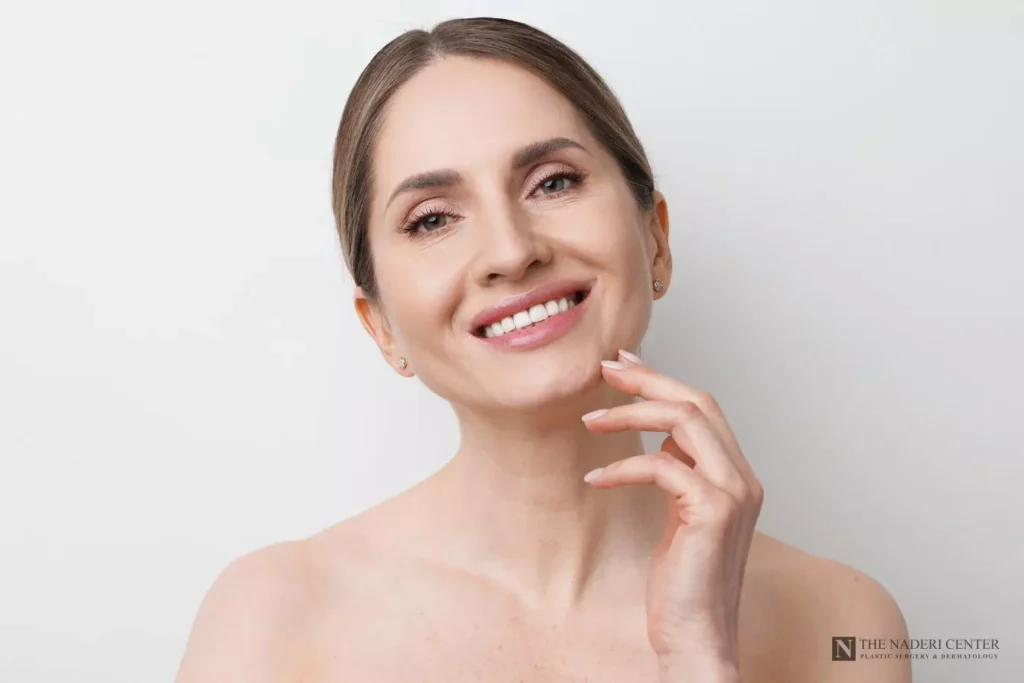
While not technically a diagnosis, Ozempic face refers to changes to the facial features of some patients that can occur as a result of substantial or rapid weight loss, specifically when the patient’s face loses both fat and structural support. The extent of these facial changes will vary between patients; for some, the change will be almost unnoticeable, while others will have facial features that look much thinner, older and tired even though they feel healthier than ever.
This brings up a key point: Can fillers fix Ozempic face? Usually, not completely. Fillers can add some volume back into an area of the face, but they will not do any work on any sagging or tightening of skin, and they definitely won’t be able to provide the effects that aging-related facial surgery can. That is why it’s important to figure out which issue is the root cause of your facial appearance change.
Key Takeaways
- Serious complications after a facelift are uncommon, especially with careful patient selection and an experienced facial plastic surgeon.
- Swelling, bruising, tightness and mild numbness are expected parts of healing, not complications.
- During your visit, ask specific things about how the work is done, how safety is handled, what recovery is like, and what happens if a problem occurs.
- Not smoking, getting your health in order before surgery and following your aftercare instructions all lower your risk.
- A good consultation helps you see if the surgeon fits what you want. You can compare their experience, their philosophy, and the plan they recommend.
- Key Takeaways
- What Is Ozempic Face?
- Why Does Weight Loss Make the Face Look Older?
- Ozempic Face Is Not Just a Volume Problem
- Are Fillers Enough to Treat Ozempic Face?
- When Can Filler Be a Good Choice?
- When Can Too Much Filler Become a Problem?
- Fat Grafting for Ozempic Face
- Ozempic Face and Facelift Surgery
- What About a Neck Lift After Weight Loss?
- What About the Eyes and Temples?
- Skin Quality Is Another Piece of the Puzzle
- Why Choose a Facial Plastic Surgeon for Ozempic Face?
- Dr. Naderi’s Approach to Natural Facial Rejuvenation
- When Should You Consider Treatment for Ozempic Face?
- Do You Have to Stop Ozempic Before Facial Plastic Surgery?
- The Future of Treating Ozempic Face Is Personalized Facial Rejuvenation
- The Bottom Line: Ozempic Face Is Not Always a Filler Problem
- Frequently Asked Questions About Ozempic Face
- About Dr. Shervin Naderi
What Is Ozempic Face?
Ozempic face generally refers to facial volume loss and changes in facial contour following substantial weight loss. When the body loses fat, some of that loss occurs in the face. Because youthful facial appearance depends partly on carefully distributed fat compartments, losing that volume can change the relationship between the skin, underlying tissues, and facial skeleton.
Patients may notice:
- Hollow cheeks
- Temple hollowing
- Deeper nasolabial folds
- More prominent marionette lines
- Changes beneath the eyes
- Less defined jawline or new jowling
- The neck may also appear looser or less defined.
Not everyone who takes a GLP-1 medication develops noticeable Ozempic face. The appearance depends on factors including:
- The amount and speed of weight loss
- Age
- Genetics
- Skin elasticity
- Pre-existing facial aging
- Sun exposure
- Facial anatomy
- How much facial volume the individual naturally carries
Why Does Weight Loss Make the Face Look Older?
Facial fat is not simply excess tissue. It is part of the architecture of the face. Fat compartments provide volume and create smooth transitions between the forehead, temples, cheeks, lower eyelids, mouth, and jawline.
As facial volume decreases, previously subtle signs of aging can become more apparent. A patient may have had mild skin laxity before losing weight, but once the underlying volume decreases, that laxity may become much more visible.
This is why some patients describe the experience as confusing: “I lost weight and became healthier, but my face looks older.”
The issue is not necessarily that weight loss caused premature aging. Instead, weight loss can unmask or accelerate the appearance of facial aging by reducing the volume that previously helped support and camouflage age-related changes.
Ozempic Face Is Not Just a Volume Problem
One of the most important concepts in treating post-weight-loss facial changes is distinguishing deflation from descent.
Deflation refers to loss of volume. Descent refers to tissues moving downward as the face ages. Skin laxity refers to the skin’s reduced ability to retract after losing volume and elasticity.
These problems can occur simultaneously.
A patient may therefore have hollow cheeks and jowls. They may have temple volume loss and loose skin. They may have a deflated midface and a lax neck.
This distinction matters because different treatments address different anatomical problems.
“Every face ages differently,” says Dr. Shervin Naderi, MD, FACS, a double board-certified facial plastic and reconstructive surgeon specializing in facial rejuvenation and facial aging surgery.
For Dr. Naderi, treating Ozempic face begins with determining what has actually changed rather than automatically adding volume.
Are Fillers Enough to Treat Ozempic Face?
Dermal fillers can be extremely effective when the primary issue is localized or moderate volume loss. Strategic filler placement may restore cheek projection, soften certain hollow areas, improve facial proportions, and replace some of the volume lost during weight reduction.
Fillers add volume. They do not remove excess skin or reposition descended facial tissues.
This distinction becomes increasingly important as the degree of post-weight-loss facial laxity increases.
For example, imagine a patient whose cheeks have become hollow but whose skin remains relatively firm. Carefully placed filler may be an excellent solution. Now consider a patient who has hollow cheeks, pronounced jowls, loose skin along the jawline, and significant neck laxity. Adding more filler may make the cheeks fuller, but it does not correct the underlying descent.
In some patients, repeatedly adding filler to compensate for sagging tissues can eventually make the face appear heavy or overfilled.
When Can Filler Be a Good Choice?
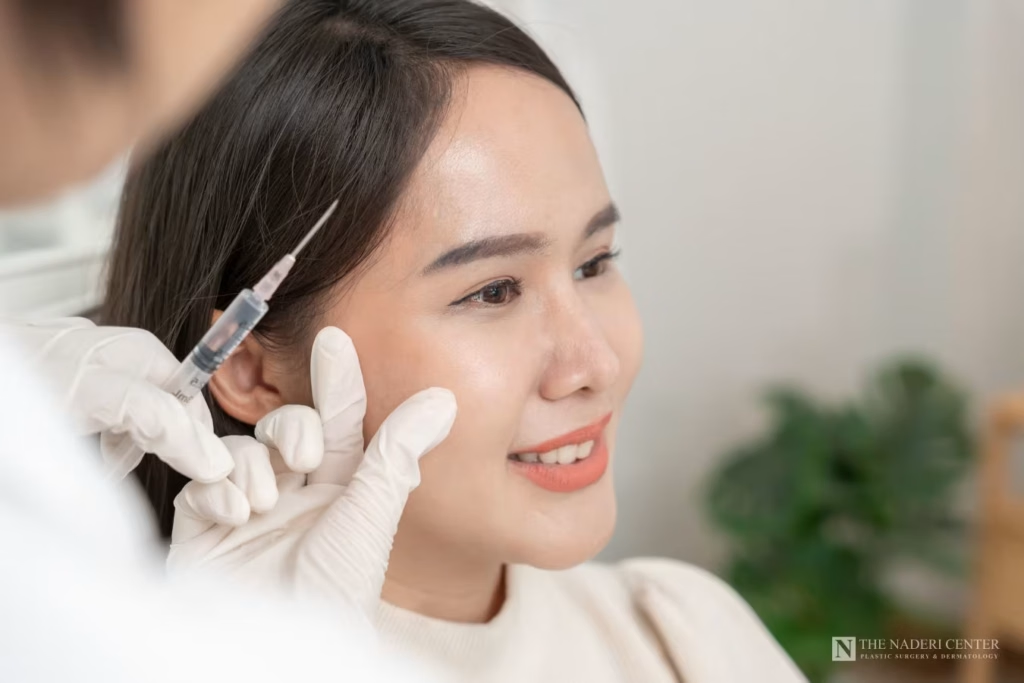
Filler may be appropriate for patients with relatively mild facial volume loss and good skin elasticity. It can also be useful as part of a larger treatment plan for someone who has already undergone facial rejuvenation surgery.
The objective should be strategic restoration rather than simply replacing every ounce of fat that was lost.
An experienced facial plastic surgeon considers the entire face:
- The cheeks in relation to the eyes,
- The midface in relation to the lower face
- The temples in relation to the forehead
- The jawline in relation to the neck
The goal is facial harmony, not simply fullness.
When Can Too Much Filler Become a Problem?
The temptation after major weight loss is understandable. A patient sees hollow cheeks and thinks, “I need volume.” But if the underlying issue includes significant skin laxity or tissue descent, more volume may not produce the desired result.
Over-reliance on filler can potentially create an overly full midface while leaving the jowls and neck unchanged.
This is particularly important in mature patients who have both age-related tissue descent and weight-loss-related volume depletion.
Dr. Naderi has described the principle behind modern facial rejuvenation clearly: “To achieve such results, oftentimes it’s not a simple matter of pulling, but also adding proper volume. Volume is added in the form of micro and nano fat injections. That is what creates a youthful look, not a simple pull.”
The important point is that pulling alone is not always enough, but adding volume alone is not always enough either.
Modern facial rejuvenation is about understanding which structures need to be repositioned, which need volume restored, and which need improvement in skin quality.
Fat Grafting for Ozempic Face
For patients with more extensive facial volume loss, fat grafting can be an important component of treatment.
Unlike a traditional filler, which comes in a syringe and is placed in selected areas, facial fat grafting uses the patient’s own fat. Small amounts can be carefully transferred to areas such as the cheeks, temples, and other regions that have become depleted.
Fat grafting can be particularly useful when volume loss is widespread rather than confined to one or two small areas.
It can also be combined with facelift surgery when a patient has both facial volume depletion and significant tissue descent.
The objective is not to make the face look heavier. It is to restore the three-dimensional architecture of the face that may have been lost with weight reduction and aging.
Ozempic Face and Facelift Surgery
When Ozempic face includes significant jowling, loose skin, facial descent, or neck laxity, facelift surgery may provide a more comprehensive solution than filler alone.
A modern facelift is not simply a matter of pulling the skin tighter.
Facial aging occurs in multiple layers. The skin changes, underlying connective tissues change, fat compartments shift, and the relationship between the face and neck evolves. Effective facial aging surgery therefore requires an understanding of the deeper anatomy of the face.
Depending on the individual patient’s anatomy, a facelift can reposition descended tissues, improve jowling, redefine the jawline, and address laxity that cannot be corrected with an injectable treatment.
For appropriate patients, combining facelift surgery with strategic volume restoration can address both major components of Ozempic face: descent and deflation.
Facelift Before & After
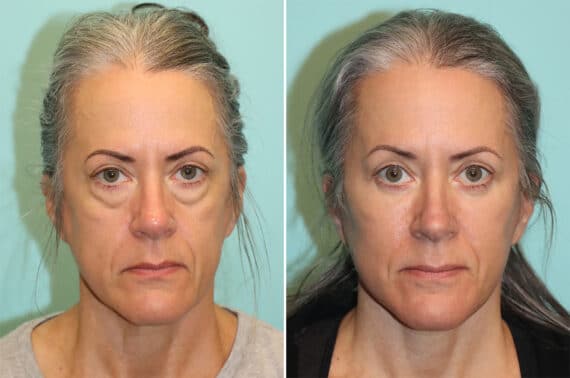
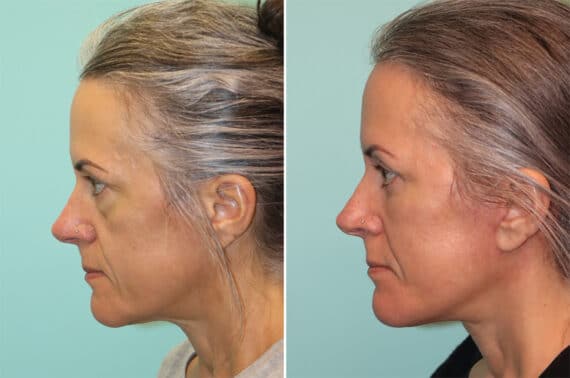
*Results vary from patient to patient
Book a Consultation
Thinking about a deep plane facelift? Meet Dr. Shervin Naderi, double board-certified facial plastic surgeon, at our offices in Reston, VA and Chevy Chase, MD.
Book a ConsultationLearn about deep plane facelift
Call Reston (703) 481-0002 or Chevy Chase (301) 222-2020.
What About a Neck Lift After Weight Loss?
The neck deserves special attention in patients who have experienced major weight loss.
A patient may lose significant fat beneath the chin and along the neck but be left with skin that does not fully contract. The result can be a loose neck, reduced jawline definition, or a persistent fullness or laxity that does not respond to facial filler.
Depending on anatomy, treatment may involve a neck lift, facelift with neck rejuvenation, platysma management, or other surgical techniques.
Treating the neck appropriately is important because the face and neck function as one aesthetic unit. A rejuvenated cheek with an untreated, lax neck may produce an incomplete result.

What About the Eyes and Temples?
Ozempic face can affect areas beyond the cheeks and jawline.
Some patients develop significant temple hollowing, making the upper face appear narrower or more skeletal. Others notice increased under-eye hollowing or a more tired appearance around the eyes.
These areas require particular precision. Simply adding volume everywhere can distort facial proportions.
An experienced facial plastic surgeon must determine whether the change represents true volume loss, age-related structural change, skin laxity, or a combination of factors.
The treatment might involve a conservative amount of filler, fat grafting, eyelid surgery, or a combination of approaches depending on the patient’s anatomy.

Trust Your Face to Specialized Expertise
Schedule a consultation with Dr. Naderi for a comprehensive facial evaluation.
Skin Quality Is Another Piece of the Puzzle
Volume and laxity are not the entire story.
Weight loss may make pre-existing sun damage, fine lines, pigmentation, and changes in skin texture more apparent. A patient can therefore have good facial volume restoration but still feel that the skin itself looks older.
This is where skin-quality treatments can become part of a comprehensive rejuvenation strategy.
Laser resurfacing and other skin treatments can improve texture and stimulate collagen remodeling, while surgical procedures address deeper structural changes.
At The Naderi Center, surgical and nonsurgical treatments can be considered together, allowing for treatment to be adjusted based on a patient’s unique anatomy instead of thinking all patients need to get the same procedure.
Why Choose a Facial Plastic Surgeon for Ozempic Face?
There are many ways to address “Ozempic face,” but the first step to choosing the right treatment is going beyond seeing where the face looks hollow.
A surgeon with a specialty in facial aging understands how the face and the neck interact and are affected by:
- Fat
- Skin
- Muscles
- Connective tissue
- Facial nerves
- Bone
Dr. Shervin Naderi is a double board-certified facial plastic and reconstructive surgeon who has chosen to limit his practice to facial plastic surgery. His practice offers facial rejuvenation, facelift and neck lift surgery, rhinoplasty, eyelid surgery, and advanced skin resurfacing as well as injectable facial treatments.
That specialization has benefits for the complex facial changes associated with Ozempic Face. That phenomenon typically requires multiple treatments in order to adequately address all the issues that occur.
Dr. Naderi’s Approach to Natural Facial Rejuvenation
The objective of facial aging surgery should not be to make a patient look as though they have undergone a procedure.
Dr. Naderi describes his philosophy this way: “My patients often tell me their friends can’t pinpoint what changed—they just get compliments about looking vibrant and rested.”
That philosophy is particularly important after significant weight loss. The goal is not to recreate the face the patient had before losing weight. It is to create a healthy, balanced, age-appropriate version of the face they have now.
That may mean restoring some lost volume. It may mean repositioning descended tissues. It may mean improving the neck. It may mean treating the skin. And for many patients, the best answer is a combination of these approaches.
When Should You Consider Treatment for Ozempic Face?
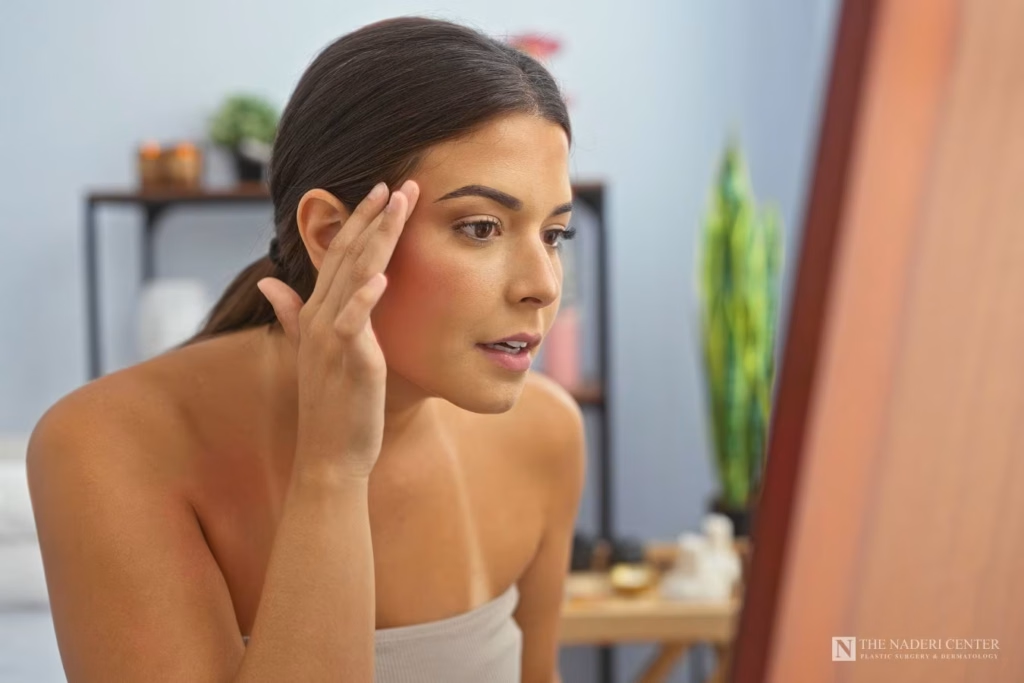
There is no universal age or amount of weight loss at which someone should undergo treatment.
The more important consideration is whether your weight has stabilized and whether the facial changes are persistent.
Patients considering facial rejuvenation after GLP-1-associated weight loss should discuss with both their medical provider and facial plastic surgeon:
- Overall weight-loss trajectory
- Medications
- Medical history
- Skin quality
- Aesthetic goals
For surgical patients, achieving relatively stable weight is generally an important part of planning. Your surgeon can help determine whether it is appropriate to proceed or whether additional weight stabilization would be beneficial.
Do You Have to Stop Ozempic Before Facial Plastic Surgery?
Patients should never independently stop, reduce, or change a prescribed GLP-1 medication because of concerns about their appearance.
GLP-1 medications have important medical uses, and decisions about continuing or temporarily holding these medications around surgery should be made with the physicians managing the medication and the surgical team.
For patients undergoing facial plastic surgery, medication management is part of the overall preoperative planning process.
The Future of Treating Ozempic Face Is Personalized Facial Rejuvenation
The growing number of patients experiencing facial changes after significant weight loss is changing the way facial plastic surgeons think about rejuvenation.
There is no single “Ozempic face procedure.”
Some patients need nothing more than conservative filler. Others may benefit from fat grafting. Some need laser treatment to improve skin quality. Patients with significant laxity may be better candidates for facelift or neck lift surgery. And patients with multiple components of facial aging may benefit from a carefully planned combination.
The key is identifying the underlying anatomy before deciding on the treatment.
The Bottom Line: Ozempic Face Is Not Always a Filler Problem
Significant weight loss can transform the body while simultaneously changing the face. Hollow cheeks, temple loss, loose skin, jowls, and neck laxity may all contribute to the appearance commonly called Ozempic face.
The most important question is not simply “How much filler do I need?”
It is “What changed in my face, and what treatment actually addresses those changes?”
For some patients, the answer may be strategic filler. For others, it may be fat grafting, laser resurfacing, facelift or neck lift surgery, or a combination of treatments.
As a double board-certified facial plastic and reconstructive surgeon specializing in facial aging, Dr. Shervin Naderi approaches Ozempic face by evaluating the entire face rather than treating isolated areas in isolation. His surgical and nonsurgical expertise provides multiple tools for addressing facial volume loss, tissue descent, skin laxity, and skin quality.
The goal is not to undo successful weight loss. It is to help the face catch up with the healthier body underneath it, and to do so in a way that looks natural, balanced, and unmistakably like you.
Schedule an appointment with Dr. Shervin Naderi to explore personalized options for natural facial rejuvenation.
See the Doctor
Questions about what you just read? Ask Dr. Naderi in person. Book a consultation in Reston or Chevy Chase, or start with a virtual consultation from home.
Book a ConsultationVirtual consultation
Call Reston (703) 481-0002 or Chevy Chase (301) 222-2020.
Frequently Asked Questions About Ozempic Face
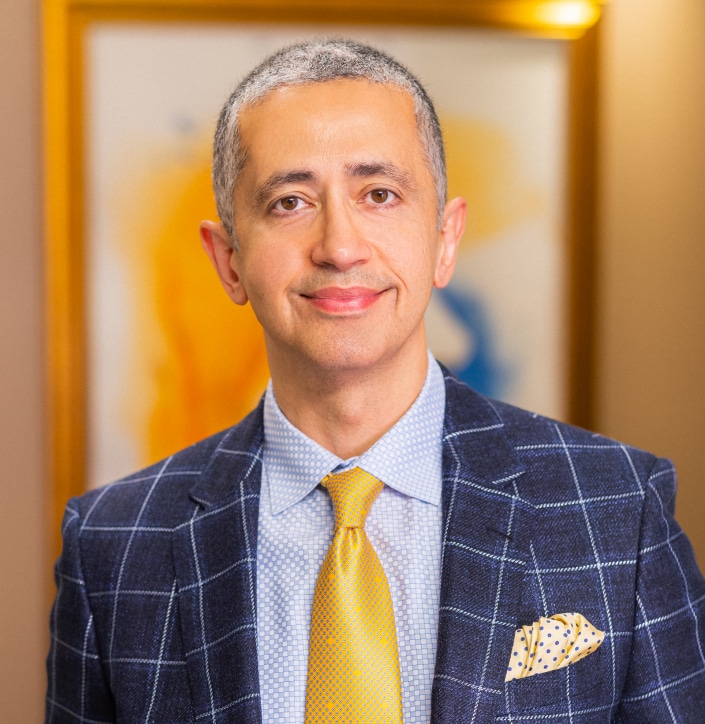
About Dr. Shervin Naderi
With over 20 years of experience, Dr. Shervin Naderi brings advanced training and expertise to facial plastic surgery. He completed his residency at Indiana University and fellowship training. A former oral board examiner and clinical assistant professor, Dr. Naderi is recognized for his contributions to the field and commitment to exceptional patient care.

Patient Financing
Pay Over Time with Cherry
Monthly payment plans for surgery and treatments, including 0% APR options for qualifying patients. Checking whether you qualify won’t affect your credit score.