A second facelift is not simply the first facelift repeated several years later.
Whether a patient is seeking another facelift because of normal aging, an incomplete result from previous surgery, or visible problems created by an earlier operation, the surgeon is no longer working with untouched anatomy. Previous surgery may have changed the skin, scars, SMAS, platysma, tissue planes, blood supply, hairline, ears, and even the expected location of important anatomical landmarks.
That is why I approach revision facelift surgery, also called a secondary facelift or secondary rhytidectomy, as a fundamentally different operation.
Considering a facelift? Learn about our deep plane facelift in Washington, DC.

“In a primary facelift, I am operating on the patient’s natural anatomy. In a revision facelift, I am operating on the anatomy they were born with plus everything the previous surgeon changed. That distinction affects the entire operation.” – Dr. Shervin Naderi
Quick Answer: Why Is a Revision Facelift More Complex?
Revision facelift surgery is generally more complex because previous surgery can create scar tissue, alter normal tissue planes, thin or reposition the SMAS and platysma, change skin availability, and distort normal anatomical landmarks.
The surgeon may also need to correct problems from the first operation, such as visible scars, an elevated or distorted hairline, abnormal earlobes, unnatural tension, recurrent jowling, persistent neck laxity, or contour irregularities, while simultaneously treating the patient’s continued facial aging.
Recent medical literature describes revision rhytidectomy as a particularly challenging operation because both natural aging and previous surgery can alter the skin, SMAS, platysma, facial nerve landmarks and deeper facial anatomy.
In other words, the surgeon may have to rejuvenate the face while also reconstructing aspects of a previous facelift.
Key Takeaways
- Needing to undergo another facelift does not necessarily mean your initial facelift was a failure.
- Due to the formation of scar tissue and the changes in your facial anatomy, revision facelift surgeries are generally more complex.
- An incision from a previous facelift can also alter your hairline, ears, neck, and facial features.
- Dr. Naderi designs every revision facelift surgery to match the specific needs of each of his patients by considering the facial structure and prior facelift(s), along with the patient’s goals for the procedure.
- A good revision facelift should be a noticeable, but natural, improvement. Patients need to keep expectations for their revision facelift realistic.
- Quick Answer: Why Is a Revision Facelift More Complex?
- Key Takeaways
- What Is a Revision Facelift?
- Does Needing a Second Facelift Mean the First Facelift Failed?
- Scar Tissue Changes the Operation
- The SMAS and Platysma May Already Have Been Altered
- Previous Facelift Vectors Matter
- The Hairline May Already Have Been Changed
- The Ears Can Reveal a Previous Facelift
- The Neck Can Be Particularly Challenging in Revision Surgery
- Previous Nonsurgical Treatments Can Matter Too
- Skin Is a Limited Resource in Revision Facelift Surgery
- Revision Surgery Is Not About Chasing Every Imperfection
- Can a Revision Facelift Still Look Natural?
- Is a Revision Facelift More Dangerous Than a First Facelift?
- Why Facial Anatomy Matters Even More During a Second Facelift
- What I Look for During a Revision Facelift Consultation
- A Second Facelift Requires a New Surgical Plan
- When Should Someone Consider a Second Facelift?
- The Bottom Line on Revision Facelift Surgery
- About Dr. Shervin Naderi
What Is a Revision Facelift?
A revision facelift is facial rejuvenation surgery performed after a previous facelift.
But there are two very different reasons someone may seek one.
The first is simply continued aging. A patient may have had an excellent facelift many years earlier, aged naturally, and now developed recurrent jowling, facial descent or neck laxity. In that situation, the original operation did not necessarily “fail.” The patient simply continued to age.
The second situation is different. A patient may seek revision because something about the previous facelift remains unsatisfactory:
- Persistent laxity
- Inadequate neck improvement
- Visible scars
- Unnatural pull
- Distorted ears or hairline
- Contour abnormalities
- Other surgical stigmata
Sometimes both situations exist simultaneously.
“The first thing I want to know in a revision patient is why we are revising. Are we treating ten more years of normal aging, correcting something the previous operation didn’t adequately address, repairing something the operation created—or all three?” – Dr. Naderi
That diagnosis determines the surgical plan.
Does Needing a Second Facelift Mean the First Facelift Failed?
No. A facelift does not stop the aging process, and needing another facelift years later does not by itself mean the original operation was unsuccessful.
Long-term studies of secondary facelift patients suggest that many return for another operation roughly a decade after their first procedure. One 20-year series reported an average interval of approximately nine years between primary and secondary facelift surgery. A more recent study of patients undergoing revision after deep-plane facelift reported an average interval of 10.9 years.
That is very different from a patient seeking corrective surgery relatively soon after an unsatisfactory first operation.
I distinguish between recurrent aging and surgical deformity because they are not the same problem and should not be approached the same way.
Scar Tissue Changes the Operation
Every surgical procedure produces some degree of internal scar tissue. That is part of normal healing.
After facelift surgery, however, scar tissue can change the tissue planes that a surgeon would normally expect to encounter.
In a primary operation, anatomical layers may separate in relatively predictable ways. In revision surgery, those same layers may be adherent, fibrotic, thinned, distorted or difficult to distinguish.
A 2026 systematic review of secondary rhytidectomy identified altered anatomy, including fibrosis, scarred tissue planes and thinner, more delicate SMAS, as among the most consistent findings encountered during revision surgery.
“Scar tissue doesn’t come with a roadmap. In revision surgery, the anatomy may not separate into the beautiful textbook layers a surgeon expects. You have to recognize what you’re looking at as you proceed and adapt the operation to what you actually find.” – Dr. Naderi
That requires more than memorizing a facelift technique.
It requires a strong understanding of facial anatomy so that the surgeon can orient himself even when the anatomy no longer looks completely normal.
The SMAS and Platysma May Already Have Been Altered
The SMAS, or superficial musculoaponeurotic system, is an important structural layer in facelift surgery. In the neck, the platysma is similarly important.
Previous surgery may have plicated, excised, elevated, divided, repositioned or otherwise altered these tissues.
A revision surgeon therefore cannot assume that the SMAS or platysma will look exactly as it would during a first facelift. Published revision-facelift series have described thinned SMAS and platysma layers and the need to modify the surgical plan accordingly.
This is one reason I want as much information as possible about a patient’s previous operation.
Operative reports can be extremely useful when available.
But even an operative report cannot tell me everything I will encounter surgically.
“The previous operative report tells me what the surgeon intended to do. The patient’s anatomy tells me what actually exists today. I need to understand both.” – Dr. Naderi
Previous Facelift Vectors Matter
A facelift is not simply about pulling tissue tighter. Direction matters.
The vectors in which skin and deeper tissues were previously repositioned can influence the appearance of the face years later. Abnormal or excessive tension can contribute to recognizable facelift stigmata involving:
- Ears
- Hairline
- Scars
- Facial contour
Revision literature specifically describes the importance of identifying and releasing abnormal SMAS vectors during secondary surgery.
When I evaluate a revision facelift patient, I therefore look not only at what has fallen again, but at where the tissues appear to have been moved previously.
“Revision surgery isn’t about pulling harder in the opposite direction. You have to understand the previous vector, understand the current anatomy, and then determine where the tissues actually belong.” – Dr. Naderi
Facelift Before & After
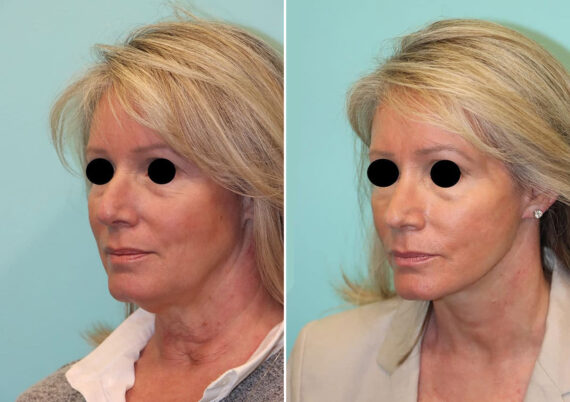
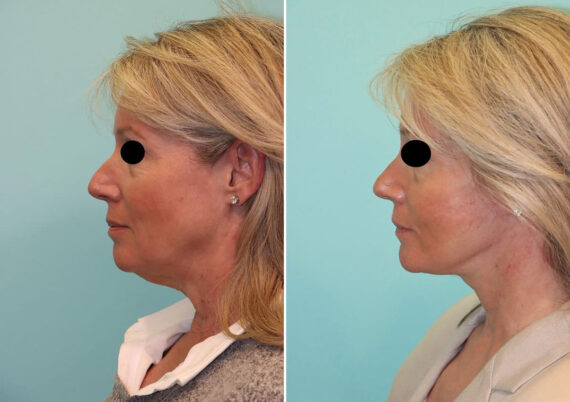
*Results vary from patient to patient
Book a Consultation
Thinking about a deep plane facelift? Meet Dr. Shervin Naderi, double board-certified facial plastic surgeon, at our offices in Reston, VA and Chevy Chase, MD.
Book a ConsultationLearn about deep plane facelift
Call Reston (703) 481-0002 or Chevy Chase (301) 222-2020.
The Hairline May Already Have Been Changed
Hairline position is one of the details patients may not think about when choosing a facelift surgeon, but it can become extremely important after one or more operations.
Previous facelift incisions and skin removal can alter the temporal hairline, sideburn and posterior hairline.
Published descriptions of secondary facelifts document problems including elevation or loss of the sideburn, temporal hairline distortion, visible scars and step-offs in the posterior hairline.
Once hair-bearing skin has been removed or a hairline has been displaced, a revision surgeon has fewer options than the original surgeon had.
That makes incision planning particularly important.
I do not simply make another incision wherever I would normally place one during a primary facelift. I need to evaluate the existing scars and hairline and determine whether they can be incorporated, repositioned, excised or avoided.
The Ears Can Reveal a Previous Facelift
The ears are another area I examine carefully.
Excessive skin tension or inappropriate vectors can distort the earlobe and surrounding anatomy. One recognizable deformity is the pixie ear, in which the earlobe appears pulled downward and attached unnaturally to the cheek.
The medical literature identifies skin overresection, inappropriate tension and vector imbalance among factors associated with post-facelift earlobe distortion.
There may also be changes around the tragus, widening or migration of scars, and distortion of the natural relationship between the ear and cheek.
“The ear should not advertise that someone had a facelift. When I’m evaluating a revision patient, the earlobe, tragus, sideburn and hairline tell me a tremendous amount about how the previous tissues were handled.” – Dr. Naderi
Sometimes the revision plan therefore involves more than lifting recurrent facial laxity. It may include restoring more natural anatomy around the ear.
The Neck Can Be Particularly Challenging in Revision Surgery
The neck deserves special attention because modern neck-lift surgery can involve far more than removing skin.
A patient may previously have undergone liposuction, platysma surgery, submental surgery, deep-neck contouring or some combination of these procedures.
That can change the anatomy encountered during a revision.
Contemporary revision literature specifically notes that previous aggressive neck procedures and deep-plane surgery can add complexity to subsequent operations.
The patient may also present with a problem that was never adequately addressed during the first operation, such as:
- Persistent platysmal banding
- Residual fat
- Recurrent laxity
- Contour deformity
A revision surgeon therefore has to determine what is recurrent aging, what was never corrected, and what may have been created by the previous surgery.
Previous Nonsurgical Treatments Can Matter Too

The surgical history is no longer the entire story.
Many revision facelift patients have spent the years between operations receiving fillers, threads, ultrasound treatments, radiofrequency procedures, lasers or other energy-based treatments.
Published revision-facelift literature specifically recognizes that nonsurgical procedures performed after the first facelift can create additional variables for the revision surgeon.
More recent research has also examined whether radiofrequency microneedling may alter tissue planes relevant to subsequent facelift surgery, although the long-term clinical implications remain incompletely defined.
This is why I want a complete history, not simply the date of the previous facelift.
“When I ask what has been done to the face, I mean everything: surgery, threads, fillers, energy devices and prior complications. What happened five or ten years ago may still influence what I encounter in the operating room today.” – Dr. Naderi
Skin Is a Limited Resource in Revision Facelift Surgery
Another important difference is that the previous surgeon has already removed some skin.
That matters.
Facelift surgery should not depend primarily on excessive skin tension, and repeatedly removing skin without understanding the deeper structures can contribute to distortion around the ears and hairline.
In revision surgery, I have to respect what remains.
The goal is not to make the skin as tight as physically possible. It is to restore appropriate deeper support and allow the skin to redrape naturally with as little unnecessary tension as possible.
This is particularly important around incisions, where excessive tension can contribute to unfavorable scarring and distortion. The American Society of Plastic Surgeons likewise notes unfavorable scars, hair loss, skin loss and visible deformities among recognized facelift risks.

Set Realistic Goals for Your Revision
Meet with Dr. Naderi to discuss achievable improvements and the limitations of corrective surgery.
Revision Surgery Is Not About Chasing Every Imperfection
Patients seeking revision surgery can understandably be highly focused on details.
Some have lived with an issue they dislike for years. Others have already gone through surgery expecting a result they did not receive.
That emotional history matters. But revision surgery has limitations.
Not every scar can be made invisible. Not every hairline can be returned precisely to its original location. Not every irregularity can be completely eliminated. And repeatedly operating on tissue can create new risks.
“The fact that I can identify a problem doesn’t mean I can erase every trace of it. Revision surgery requires a very honest conversation about what can be improved, what can be corrected, and what may be safer to leave alone.” – Dr. Naderi
Expectation management is therefore particularly important in secondary surgery, something the revision-facelift literature also emphasizes.
Can a Revision Facelift Still Look Natural?
Yes. The goal of a revision facelift should still be a natural, balanced face, not simply a tighter one.
In some patients, the revision operation is primarily about treating recurrent aging.
In others, part of creating a more natural result involves undoing or improving visible signs of the previous surgery.
That may mean correcting:
- Abnormal vector
- Improving an earlobe
- Revising a scar
- Preserving a compromised hairline
- Restoring volume
- Addressing residual neck anatomy
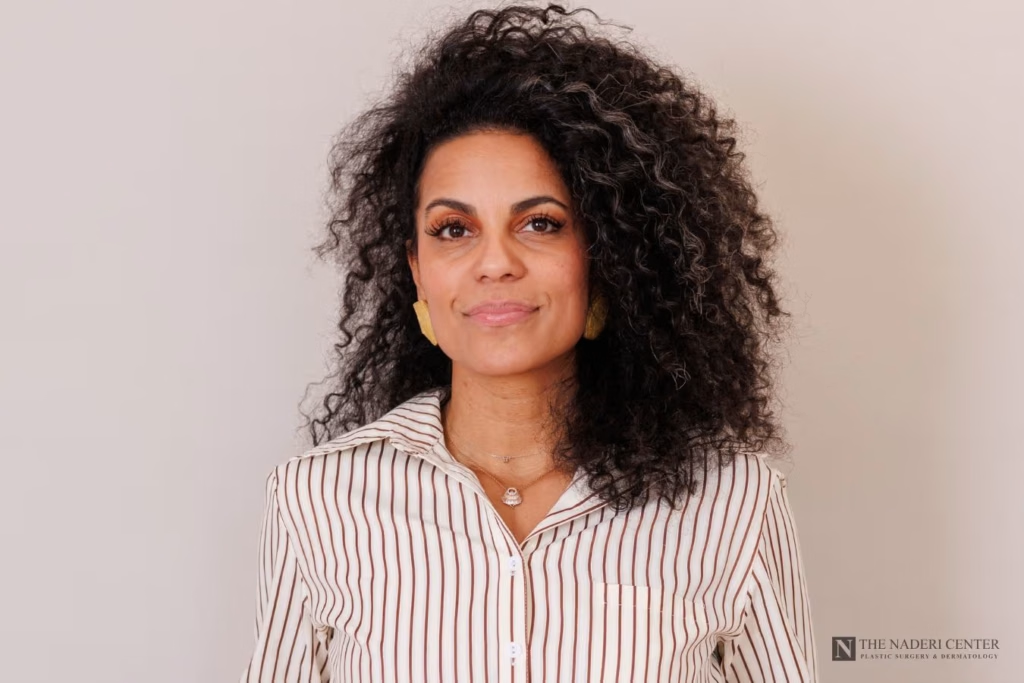
The operation should be designed around the individual patient rather than around a predetermined branded facelift technique.
Is a Revision Facelift More Dangerous Than a First Facelift?
Revision surgery introduces additional technical challenges because normal anatomy and tissue planes may have been altered. However, available evidence does not establish that every revision facelift necessarily has dramatically higher overall complication rates.
A recent systematic review found secondary rhytidectomy technically more demanding because of altered anatomy but reported that existing literature suggests overall complication rates can be comparable to primary facelift surgery, while emphasizing variability among studies and limitations in the available evidence.
All facelift surgery carries risks including:
- Hematoma
- Infection
- Poor healing
- Skin loss
- Nerve injury
- Unfavorable scarring
- Hair loss
- Contour irregularities
A revision operation requires those usual risks to be considered alongside the consequences of previous surgery.
Why Facial Anatomy Matters Even More During a Second Facelift
As a facial plastic surgeon, I think of the face in layers.
Skin is only the surface. Beneath it are fat compartments, the SMAS, muscles, retaining ligaments, nerves, blood vessels, glands and bone.
During a first facelift, understanding those relationships is essential.
During a revision facelift, I believe it becomes even more important because some of those relationships may have changed.
“The surgeon who understands only where the anatomy is supposed to be can become uncomfortable when it isn’t there. Revision surgery requires understanding the anatomy well enough to recognize it even after it has been altered.” – Dr. Naderi
That is one of the reasons revision facelift surgery is a strong test of surgical judgment.
What I Look for During a Revision Facelift Consultation
I begin by determining why the patient is seeking another operation. I examine the face at rest and in motion.
What do I evaluate?
- Scars
- Temporal hairline
- Sideburns
- Tragus
- Earlobes
- Jawline
- Neck
What do I look for?
- Recurrent tissue descent
- Volume loss
- Asymmetry
- Abnormal tension
- Contour irregularities
What I want to know?
- When the previous facelift was performed,
- Which procedures were done at the same time
- Whether there were complications
- What nonsurgical procedures have been performed since
When available, I want to review previous operative reports and photographs. Most importantly, I ask the patient what bothers them now. Because the goal isn’t to revise an operation.
The goal is to improve the patient.
A Second Facelift Requires a New Surgical Plan

I don’t believe a revision facelift should simply repeat whatever operation I normally perform on a primary patient.
The anatomy determines the plan.
One patient may have excellent previous scars and simply need treatment of recurrent facial descent. Another may require substantial scar and hairline planning. Another may have a distorted earlobe or an inadequately treated neck. Another may have significant volume loss that makes fat grafting an important component of rejuvenation.
A long-term secondary facelift series described this individualized philosophy as:
- Addressing scar
- Abnormal SMAS vectors
- Volume loss
- Reshaping of deeper tissues
- Skin redraping according to the patient’s specific problems
That principle makes sense to me.
“Revision facelift surgery should not begin with the question, ‘Which facelift technique am I going to use?’ It should begin with, ‘What did the previous surgery change, what has aging changed since then, and what does this patient actually need now?’” – Dr. Naderi
When Should Someone Consider a Second Facelift?
There is no universal number of years after which someone “needs” another facelift.
Some patients may never choose to have another operation.
Others return after many years because aging has again produced enough jowling, jawline loss or neck laxity to justify surgery. Published series have commonly found intervals around a decade between primary and secondary operations, but averages should not be interpreted as an expiration date for a facelift.
Patients seeking correction of an unsatisfactory result are a different group entirely, and timing depends on the nature of the problem, healing and whether further improvement is likely without additional surgery.
I do not operate according to a calendar.
I operate when the anatomy and circumstances justify another operation.
See the Doctor
Questions about what you just read? Ask Dr. Naderi in person. Book a consultation in Reston or Chevy Chase, or start with a virtual consultation from home.
Book a ConsultationVirtual consultation
Call Reston (703) 481-0002 or Chevy Chase (301) 222-2020.
The Bottom Line on Revision Facelift Surgery
A revision facelift is not simply another facelift.
The surgeon may be dealing with:
- Continued aging
- Scar tissue
- Altered tissue planes
- Thinner or previously manipulated SMAS
- Changes to the platysma
- Limited skin
- Distorted vectors
- Previous neck surgery
- Altered hairlines
- Ear deformities
- Visible scars
- Residual problems from the first procedure
Sometimes several of those issues exist simultaneously. That is why I believe revision facelift surgery requires particularly careful diagnosis, a detailed understanding of facial anatomy and the willingness to abandon a standardized surgical plan when the anatomy requires something different.
“The first facelift changes the face. Aging then continues to change the face. A revision surgeon has to understand both histories before making the next move.” – Dr. Shervin Naderi
With a revision facelift surgery, my primary focus at The Naderi Center is understanding the patient’s past surgeries and aging. It is vital to assess the goal of the prior procedure and then identify the areas that can be improved upon for each patient.
The goal is not simply to perform a second lift.
It is to create the right operation for a face that has already been operated on.
For a comprehensive evaluation, schedule a consultation with us.
About Dr. Shervin Naderi
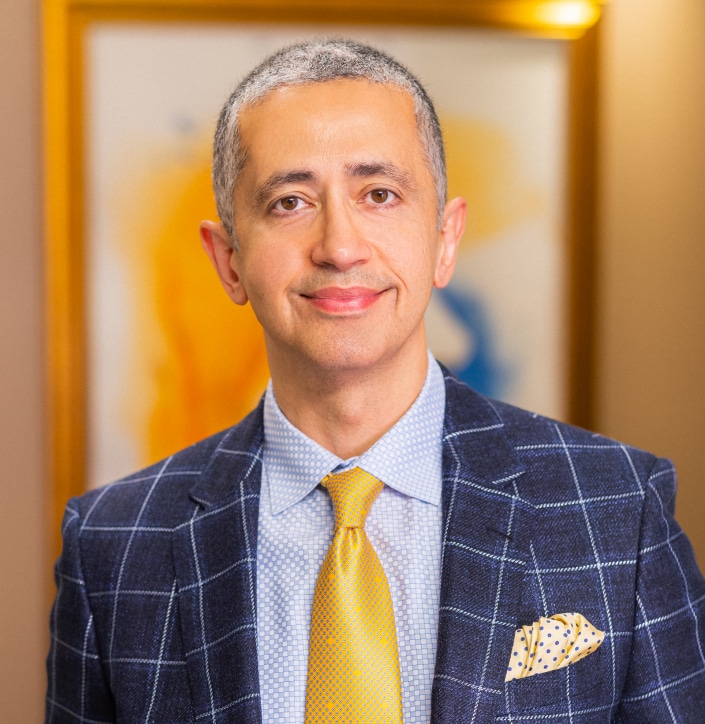
With over 20 years of experience, Dr. Shervin Naderi brings advanced training and expertise to facial plastic surgery. He completed his residency at Indiana University and fellowship training. A former oral board examiner and clinical assistant professor, Dr. Naderi is recognized for his contributions to the field and commitment to exceptional patient care.

Patient Financing
Pay Over Time with Cherry
Monthly payment plans for surgery and treatments, including 0% APR options for qualifying patients. Checking whether you qualify won’t affect your credit score.