How Do You Tape Your Nose After Rhinoplasty?
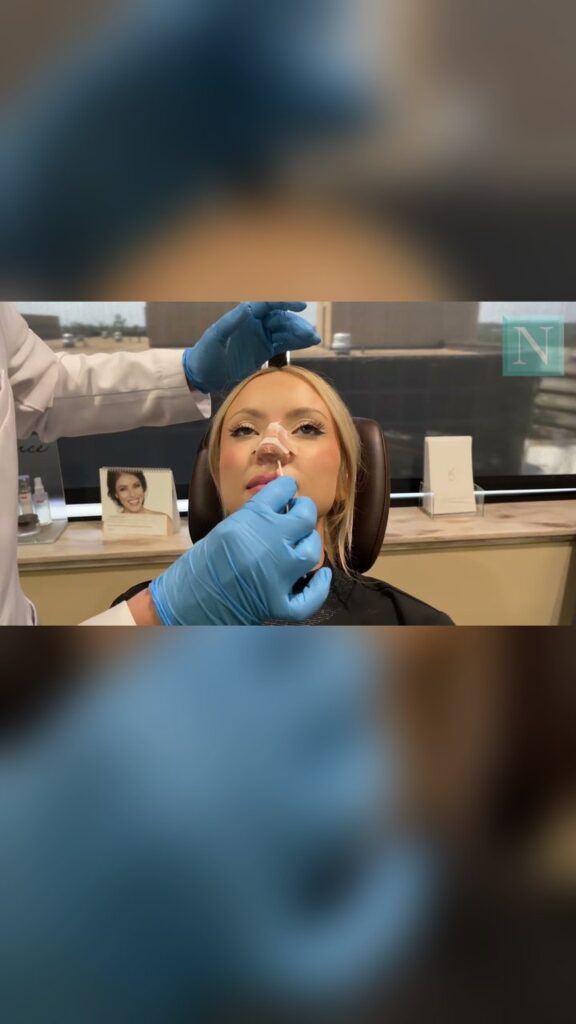
Dr. Naderi starts with clean, dry skin and lays 3M Micropore tape down in 50% overlapping strips from the bridge to just past half of the tip, then adds a V-shaped piece under the tip that never covers the nostrils. He says to lay the tape down rather than press it, and to change it only every three or four days during the first month or so.
Key Points from Dr. Naderi
- Prep the skin with an alcohol pad or an astringent toner first, because the skin is oily for the first few weeks after surgery.
- Lay the tape down in 50% overlapping strips. Pressing down can bend or damage cartilage and makes the result worse, not better.
- The bottom piece goes on the skin above the nostrils and out toward the eyes in a V, so it does not pinch the nostrils.
- Changing the tape too often can pull the skin up and add swelling. For the first month to month and a half, change it about every three or four days.
- After a couple of months, tape as needed, for example at night, for flights or for exercise.
Full Transcript
Here's what you're going to do. You're going to start with a little prepping of the skin, either a little alcohol pad or some toner with some astringent, something to dry the skin, because the skin gets oily for the first few weeks after surgery. So this really helps to prep it so that the tape will stick.
Then you start with the 3M Micropore tape. That's the only tape I like to use. It's a very special tape. Start with a small piece. You go at the bridge and just lay it down. You'll see me use the term "lay it down" a lot instead of "press it down." Don't press it down. It's always 50% overlapping, and you're going to be able to see the video once we're done, but it's just overlapping 50% at a time. I'm just laying it down, just kind of releasing it, so I'm not cinching it down and not pressing it down. And I just keep coming till I basically cover a little bit over half of the tip, right there. Don't make it go too wide. Don't go on the face, because you don't want to make it ugly. Stay on the nose.
Then you go on the bottom. This one's the longest piece. Don't cover the nostrils. It goes just on the little skin here above the nostrils, and then out towards the eyes, almost like a V. Don't make it a U, make it a V, and you'll see why: when you make it a V, you don't pinch the nostrils. Now, this part's not touching the skin, so you just come around and kind of crimp this, like that. Make a little shark fin, like that.
That's just one layer. I went from top to bottom. Now I'm doing it from bottom to top. Still, I'm not yanking on the tape. I'm not pulling on it. I'm just laying it down, crimping the bottom here, creating a little shark fin, and then going back up the nose. Again, super gentle. If you press down, you can bend cartilage, you can damage cartilage. So don't think that pressing down further gives you a better result. It doesn't. It actually makes it worse. You just lay it down. This prevents the skin from stretching, prevents you from making extra scar tissue and helps you heal nicer.
You also don't want to change the tape too frequently, especially in the beginning. You want to lay this tape there, set it and forget it. You want this tape to be there pretty much all the time. If you move it around too much, if you change the tape too frequently, you actually end up creating too much swelling. Every time the tape is lifted off, if you take it off too quickly, you can actually pull the skin up with the tape and create too much swelling, and that's not a good thing. So change it a couple times a week, once a week, twice a week. As long as it's nice and dry looking like this, leave it on.
Again, look, it's a small piece of tape. It's not gigantic. It's not a big deal. You can walk around with it. It's perfectly fine. It's cute. Nobody can tell you've got tape on, and it works really nicely. You just change it about every three or four days.
Now, after a few months go by, you can do it at nighttime. You can do it for flights, when you're flying somewhere. You can do it when exercising. But for the first month to a month and a half, you want to change it very infrequently, just every three or four days. Put it on, leave it there for a few days, then take it off, and go from there. After a couple months, you can use it as needed, for air flights, for exercise, for stuff like that.
More Answers from Dr. Naderi
 2:38Rhinoplasty
Should You Tape Your Nose After Rhinoplasty?
 8:52Rhinoplasty
How Do You Clean Your Nose After Rhinoplasty?
 2:33Rhinoplasty
When Can You Swim, Dive or Work Out After Rhinoplasty?