Celebrity plastic surgery is once again one of the internet’s favorite topics. This time the focus is Kris Jenner, whose new look has drawn strong reactions. On Instagram, TikTok, YouTube and Reddit, people are arguing over whether her facelift is modern facial rejuvenation at its best or just another example of filtered celebrity beauty.
Considering a facelift? Learn about our deep plane facelift for Washington, DC patients.
At The Naderi Center, we see these conversations as a chance to correct some common misconceptions. Much of what the public believes about facelifts is oversimplified, misleading, or entirely inaccurate, according to Deep Plane Facelift Specialist Dr. Shervin Naderi, a double board-certified facial plastic surgeon with more than 20 years of exclusive facial surgery experience.

What Matters Most in a Facelift
- Facelift results can’t be judged right away, because full healing takes months.
- Deep plane facelifts reposition the deeper structures of the face, which tends to look more natural than pulling skin.
- Results differ between patients, partly because aging continues after surgery at a different pace for each person.
- Dr. Shervin Naderi believes the surgeon’s skill and planning matter more than whichever technique is popular at the moment.
- A natural-looking result usually combines surgery with skin treatments and ongoing maintenance.
Facelift Results Cannot Be Judged Immediately
The biggest misunderstanding is that facelift results are visible right after surgery. Social media makes this worse: celebrity photos involve professional lighting, filters and editing, and they are often posted at the most flattering stage of recovery. What audiences see online is rarely the full picture.
Dr. Naderi explains that true facelift outcomes cannot be accurately evaluated in the first few weeks after surgery. Swelling, temporary tightness, lighting conditions, makeup, camera angles, and digital enhancement all influence appearance. Surgeons typically evaluate the results of major cosmetic surgery at three months, six months and one year.
Why Technique Alone Does Not Determine Facelift Results
Another common assumption is that one technique guarantees a better result. Much of the online debate about Kris Jenner has centered on whether she had a SMAS facelift or a deep plane facelift, but Dr. Naderi points out that technique alone does not determine the quality of the outcome.
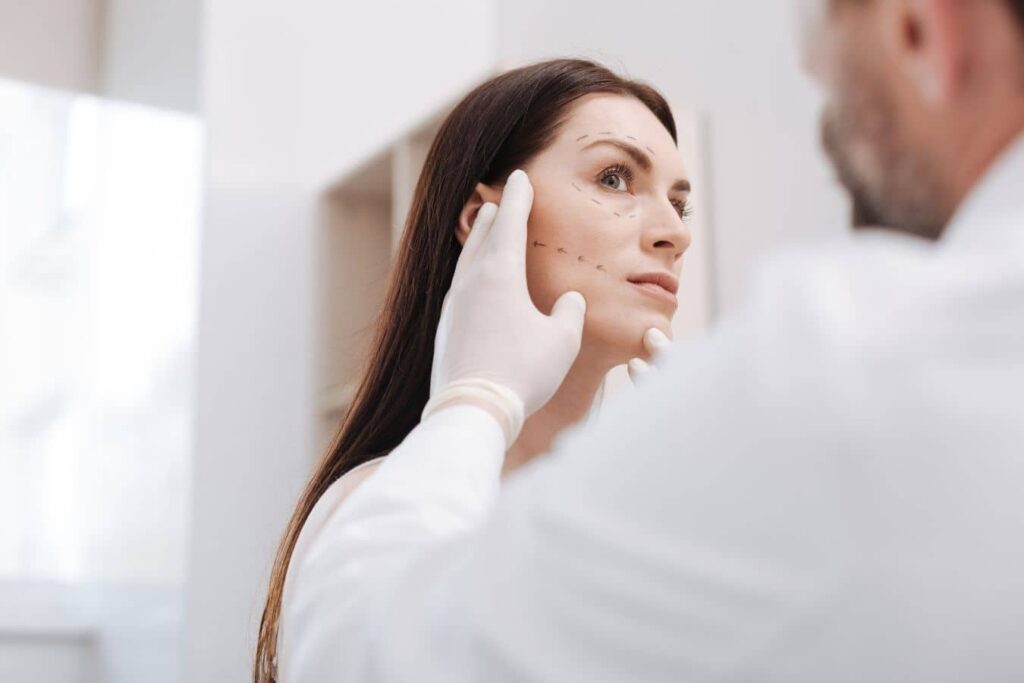
A facelift is not a one-size-fits-all procedure. Every patient has unique facial anatomy, ligament strength, skin thickness, fat distribution, collagen quality, skeletal support, healing capacity, and aging patterns. Two patients can undergo the exact same surgery and heal completely differently.
The Evolution of Modern Facial Rejuvenation
One reason the internet became fascinated with Kris Jenner’s appearance is that her results looked unusually natural compared to the overly pulled facelifts historically associated with celebrity cosmetic surgery. Modern facial rejuvenation has evolved significantly over the last two decades, with advanced surgeons now focusing on restoring youthful anatomy rather than simply tightening skin.
Book a Consultation
Thinking about a deep plane facelift? Meet Dr. Shervin Naderi, double board-certified facial plastic surgeon, at our offices in Reston, VA and Chevy Chase, MD.
Book a ConsultationLearn about deep plane facelift
Call Reston (703) 481-0002 or Chevy Chase (301) 222-2020.
Understanding the Deep Plane Facelift Surgery
Today, many facial plastic surgeons believe the deep plane facelift represents one of the most sophisticated facelift techniques available for properly selected patients. Unlike older skin-tightening methods, a deep plane facelift addresses the deeper structural layers of the face.
In a deep plane facelift, surgeons release facial retaining ligaments and reposition deeper tissues as a composite unit. This allows for elevation of the cheeks, jawline, and midface with less tension placed on the skin itself. Done well, the result looks softer and more natural.
Why Deep Plane Results Can Look More Natural
Dr. Naderi explains that one of the key advantages of the deep plane facelift is its ability to restore youthful facial contours without creating the unnatural “windswept” appearance associated with older facelift techniques. By repositioning foundational tissues instead of merely pulling skin tight, the face can maintain natural expression and movement.
The Problem With Deep Plane Marketing
However, Dr. Naderi also cautions patients against assuming that “deep plane” is a magical buzzword. In recent years, the term has exploded across social media marketing campaigns, with many practices labeling procedures as “deep plane facelifts” regardless of how extensively deeper anatomy is actually addressed.
According to Dr. Naderi, the skill and judgment of the surgeon matter far more than marketing terminology. A properly executed facelift requires an advanced understanding of facial anatomy, nerve pathways, tissue dynamics, facial balance, and individualized surgical planning.
How Age Affects Facelift Longevity
Age has a big effect on how long a facelift lasts. One of Dr. Naderi’s main points about Kris Jenner is that tissue quality changes significantly with age. A patient in their 70s does not have the same collagen support, skin elasticity, healing response, or ligament integrity as someone in their 40s or 50s.

Aging Continues After Surgery
Even the best facelift doesn’t stop aging. After surgery, these factors keep working on the face:
- Gravity
- Bone remodeling
- Collagen depletion
- Volume loss
- Sun exposure
- Genetics
- Skin thinning
Results Vary Between Patients
Some people keep their results for more than ten years, while others see them fade sooner because their tissues are weaker or they age faster. Online comparisons of celebrity results rarely account for this.
Dr. Naderi sees another problem with the online discussion: it reduces surgery to “good” or “bad” outcomes. In reality, results depend on artistry, anatomy, healing, genetics and the patient’s expectations, and most fall somewhere in between.

Get a Customized Facial Rejuvenation Plan
Work with Dr. Naderi on a treatment plan built around your facial anatomy and goals.
The Role of Non-Surgical Treatments
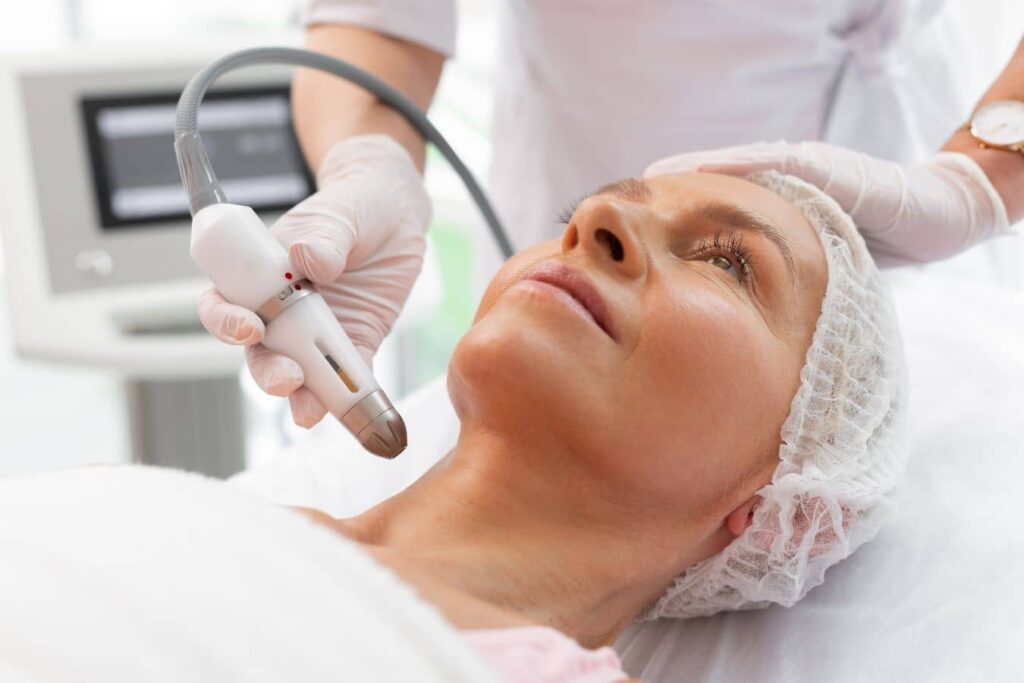
Social media also hides how much work goes into a celebrity’s appearance. Most combine surgery with several non-surgical treatments, including laser resurfacing, Morpheus8, IPL photofacials, chemical peels, neuromodulators, dermal fillers, skincare regimens and skin tightening treatments, and all of them contribute to the overall look.
Combining Cosmetic Procedures for Balanced Results
At The Naderi Center, facial rejuvenation plans often combine several treatments. Facelift patients may add Morpheus8, a Sciton BBL (IPL) photofacial or advanced laser resurfacing to improve skin texture and pigmentation and stimulate collagen.
Skin quality plays a large role in how youthful a facelift looks. Patients with sun damage, smoking history, poor collagen support, or chronic inflammation may not achieve the same refinement as patients with healthier skin, even if the surgical technique is excellent.
The Psychology of Facial Aging
The emotional side of facial aging rarely comes up online. Most facelift patients want to look better, not like a different person. They want their face to match how they feel, or simply to look more rested and refreshed.
Dr. Naderi notes that the best facelift results are often the least obvious. When surgery is performed properly, people may notice that a patient looks healthier or younger without immediately identifying that a facelift was performed.
The Importance of Preserving Individuality
Natural-looking results require restraint. Overaggressive surgery can change a person’s identity, flatten natural contours, widen the mouth unnaturally or create visible tension around the ears and jawline. Dr. Naderi does not create that overdone look; preserving what makes each face distinctive matters as much as making it look younger.
What Patients Should Know About Facelift Recovery
Recovery deserves a realistic discussion too. On social media, celebrity results seem to appear overnight, but facelift recovery takes time. Dr. Naderi’s deep plane facelift takes about 4 hours in the operating room, drains are not usually needed, and most patients wait about a month before exercising. Patients who travel in from out of town typically stay 10 to 14 days. Swelling and tightness are normal early on, and subtle improvements continue for many months.
Maintenance Still Matters After Surgery
A facelift does not replace good skincare routines, healthy living practices or long-term maintenance. To maintain the result, patients should keep up collagen-building treatments, medical-grade skincare products, sun protection and periodic non-surgical treatments.
See the Doctor
Questions about what you just read? Ask Dr. Naderi in person. Book a consultation in Reston or Chevy Chase, or start with a virtual consultation from home.
Book a ConsultationVirtual consultation
Call Reston (703) 481-0002 or Chevy Chase (301) 222-2020.
The Importance of Individualized Treatment Planning
Dr. Naderi plans every facelift around the individual patient. No single procedure, technique or trend works for everyone, so each plan starts with a careful analysis of the patient’s anatomy and facial balance.
Celebrity Facelifts and Public Perception
Celebrity facelift stories draw attention because they touch on bigger questions about aging, beauty standards, self-image and public scrutiny. Women in the public eye face heavy pressure to look young, and they are judged for having cosmetic treatments to do it.
Dr. Naderi would like to see these conversations move past judgment toward education and realistic expectations. In his view, good facial plastic surgery aims for refinement and balance rather than perfection, and for patients who feel confident in how they look.
Choosing a Surgeon With Facial Surgery Expertise
If you are considering a facelift, choose a surgeon with extensive experience and specialized training in facial anatomy and facial rejuvenation. The face combines complex aesthetic and functional structures, which is why facial surgery calls for more specialized training than general cosmetic surgery.
Dr. Shervin Naderi is a double board-certified facial plastic surgeon with more than 20 years of experience in facial surgery, and his facial work has earned national recognition. His approach favors natural results and structural balance, and he plans each surgery around the individual patient.
A More Realistic Understanding of Facial Rejuvenation
The reaction to Kris Jenner’s facelift shows how misunderstood facial rejuvenation still is. Results depend on many factors: anatomy, tissue quality, surgical technique, healing, skincare, genetics, age and time.
As Dr. Naderi explains, the internet wants simple answers about facelifts, whether one technique is “best,” whether one surgeon is “better,” or whether one celebrity result is “perfect.” Real facial plastic surgery is more complicated than that. The best outcomes come from a surgeon’s skill and knowledge of anatomy, a plan built for the individual patient and realistic expectations, not from trends or viral marketing.
The Naderi Center has consultations available at its Chevy Chase and Reston locations for people interested in facial rejuvenation surgery and who want information about deep plane facelifts, facial aging and personalized treatment planning.
Frequently Asked Questions
What is a deep plane facelift?
A deep plane facelift releases the facial retaining ligaments and repositions the deeper tissues of the face as one unit, instead of pulling on the skin. This lifts the cheeks, jawline and midface with less tension on the skin, so the result looks softer and more natural.
How long do deep plane facelift results last?
Results often last 10 years or more, but aging continues after surgery and tissue quality varies from person to person. Sun protection, not smoking, good medical-grade skincare and non-surgical maintenance all help the result last longer.
When can you judge the results of a facelift?
Not in the first few weeks, while swelling and tightness are still settling. Surgeons typically evaluate facelift results at three months, six months and one year after surgery.
What is recovery like after a deep plane facelift?
Dr. Naderi performs the surgery in the operating room under general anesthesia, and it takes about 4 hours. Drains are not usually needed, most patients return to exercise after about a month, and out-of-town patients typically stay 10 to 14 days.
Will a facelift make me look overdone?
It shouldn’t. Dr. Naderi does not create the overly tight, overdone look; his goal is for patients to look rested and refreshed while still looking like themselves.

Patient Financing
Pay Over Time with Cherry
Monthly payment plans for surgery and treatments, including 0% APR options for qualifying patients. Checking whether you qualify won’t affect your credit score.