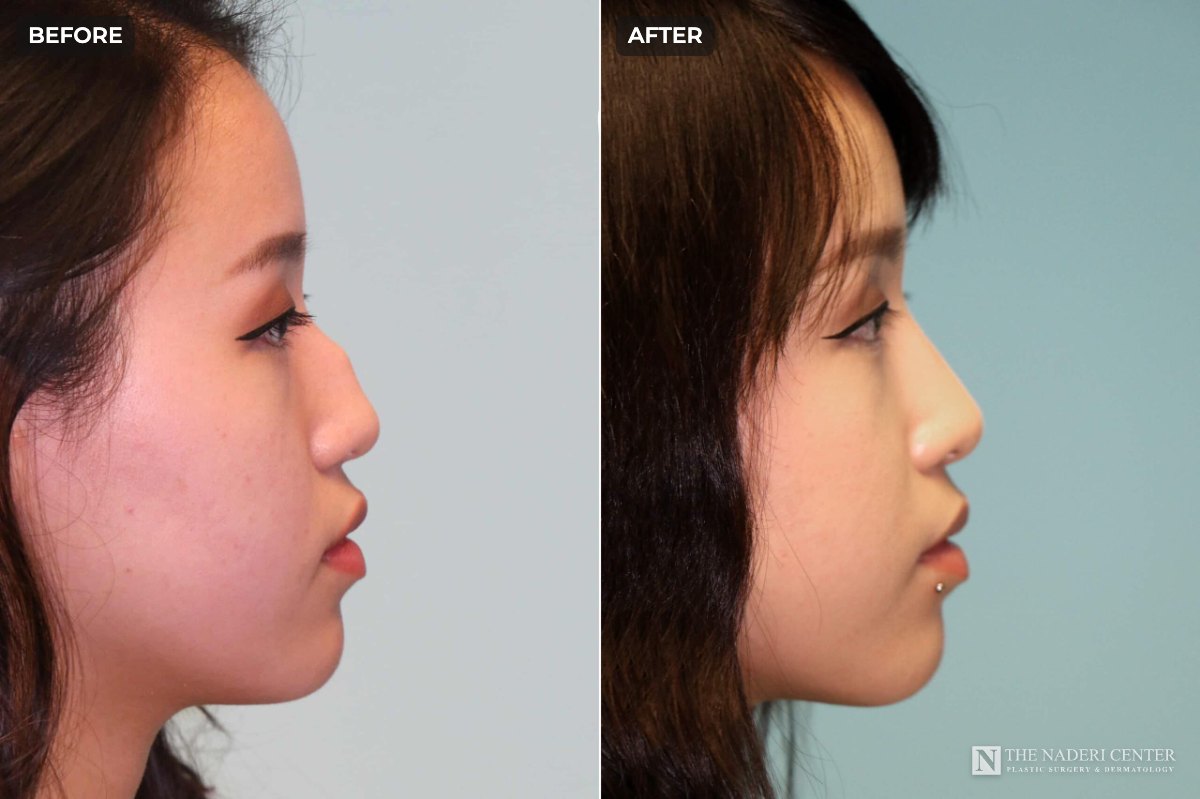
If you are unhappy with a nose job, the last thing you may want is another visible change, let alone a scar. So it is natural to hope that a revision could be done through the nostrils, quietly and with no trace. For a small number of noses, it can.
Here’s your guide to when a revision rhinoplasty can be done closed, why most are done open, and what the path to a revision looks like with Dr. Shervin Naderi.
The short answer: a closed revision can work for small, focused fixes, such as a bump left on the bridge or a minor irregularity. When the nose needs rebuilding, new support or cartilage grafts, an open revision is almost always the better choice.
Why revision rhinoplasty is different
A revision rhinoplasty is not a repeat of the first surgery. The nose now has scar tissue, cartilage that may have been removed or weakened, and anatomy that no longer follows the usual map. Every step is more demanding, and the surgeon needs to see more, not less.
That is why revision is a specialty within a specialty. Many of Dr. Naderi’s patients come to him for revision because of his expertise, and many of them fly in from out of state to have it done.
When a revision can be done closed
Some problems are limited to the bridge. A small hump that was left behind, a minor irregularity along the profile or a bridge that sits slightly off center can sometimes be corrected through incisions inside the nostrils, without lifting the skin.
When the problem is this limited, Dr. Naderi can often correct it through a closed revision. A bridge left uneven after a nose job elsewhere, for example, can be straightened from inside the nostrils, with no new incision on the outside and a result that holds up over the years.

Can a Revision Be Done Closed?
Sometimes. It depends on what needs fixing.
Small, focused fixes
- A small bump left on the bridge
- A minor bridge irregularity
- A slightly crooked bridge
Rebuilding and support
- Pinching or collapse
- An uneven or twisted tip
- Breathing problems that need grafts
- Cartilage needed from the septum or rib
- Several surgeries before
Most revisions are done open, because scar tissue and missing cartilage are easier to see and repair.
When a revision needs the open approach
Most revisions involve more than a bump. Pinching, collapse, a twisted or uneven tip, and breathing problems all need the framework of the nose to be rebuilt and supported. That work requires a clear view of every cartilage and every area of scar tissue.
Rebuilding often calls for cartilage grafts. Dr. Naderi uses the patient’s own septal cartilage when enough remains, and his preference when more is needed is the patient’s own rib cartilage. He does not use ear cartilage grafts. Placing and securing these grafts precisely is far more reliable through an open approach.
Every nose is different, and a revision even more so. I choose the approach that gives you the best and most lasting result, not the one that sounds best in an advertisement.
Dr. Shervin Naderi, double board-certified facial plastic surgeon
Waiting for the right time
A nose needs a full year after its last surgery before a revision, so the tissues can heal and settle. Operating too early means working through swelling and active scar tissue, which makes the result less predictable. Our guide to knowing when to fix a nose job covers this in more detail.
The Path to a Revision
From your last surgery to your new result
Your nose needs a full year after its last surgery to heal and settle.
Dr. Naderi examines the inside and outside of your nose. When scar tissue makes the result hard to predict, he may skip computer imaging.
Usually 2 to 4 hours, under general anesthesia, often open.
The same as a first rhinoplasty: about a week off, no exercise for a month.
Why computer imaging is not always possible
In a first rhinoplasty, computer imaging is a wonderful way to preview the plan. In revision, scar tissue from earlier surgery can make it hard to predict exactly how the nose will respond. When that is the case, Dr. Naderi may decide imaging would not be accurate enough to show you, and he will tell you so honestly.
Book a Consultation
Thinking about revising a previous nose job? Dr. Naderi sees patients at our offices in Reston, VA and Chevy Chase, MD.
Book a ConsultationLearn about revision rhinoplasty
Call Reston (703) 481-0002 or Chevy Chase (301) 222-2020.
Surgery and recovery
Revision surgery is done under general anesthesia and usually takes two to four hours, depending on how much rebuilding is needed. Even when rib cartilage is used, patients do not need to stay overnight.
Recovery is the same as a first rhinoplasty. The cast comes off in five to ten days, most people take a week off work, and exercise waits for a month. Patients traveling from out of town stay about a week and have our nursing concierge service during recovery.
Choosing your revision surgeon
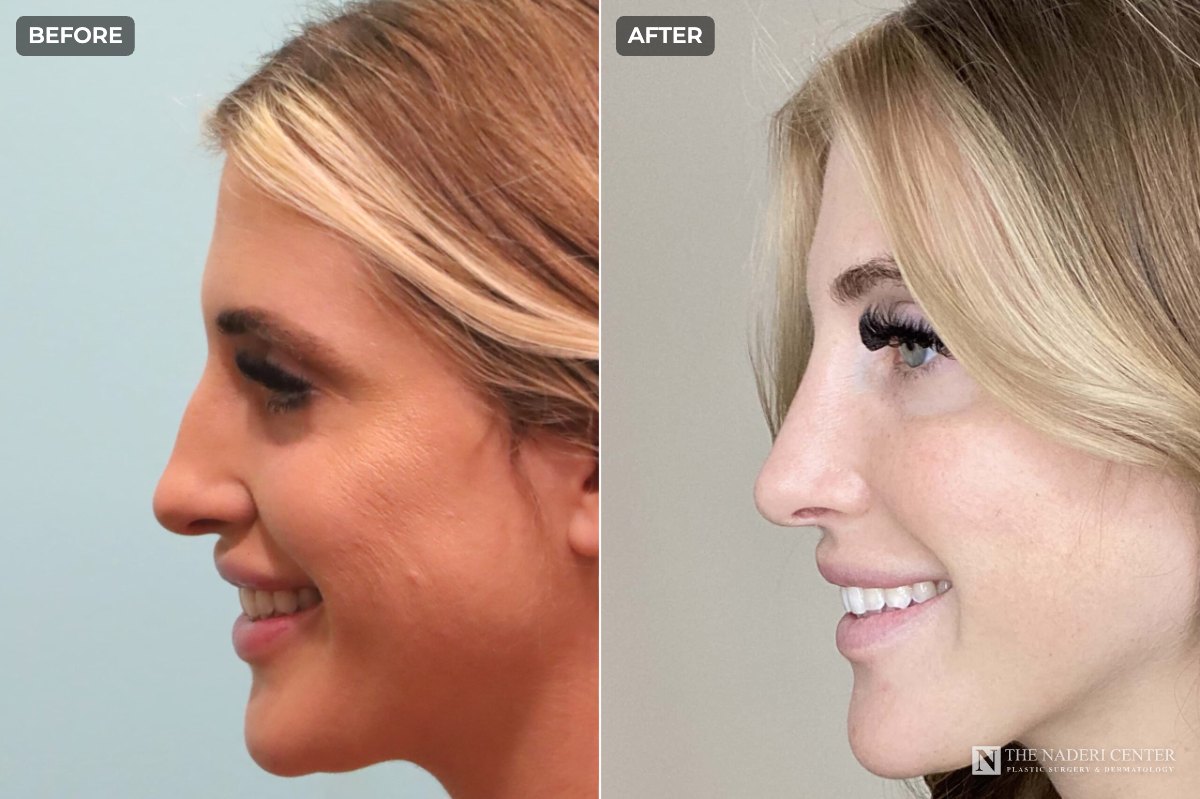
For revision, look for a surgeon whose practice is built around the nose, who performs both closed and open techniques, and who can show you natural results from many angles. Ask how often they perform revisions and how they handle grafts.
Dr. Naderi is a double board-certified facial plastic surgeon with more than 20 years of practice and a strong surgical focus on rhinoplasty. He sees revision patients in Reston, Virginia and Chevy Chase, Maryland, close to McLean, Arlington, Bethesda and Washington, DC, and welcomes patients from across the country through virtual consultations.
See the Doctor
Questions about what you just read? Ask Dr. Naderi in person. Book a consultation in Reston or Chevy Chase, or start with a virtual consultation from home.
Book a ConsultationVirtual consultation
Call Reston (703) 481-0002 or Chevy Chase (301) 222-2020.
Frequently asked questions
Can revision rhinoplasty be done closed?
Sometimes. A closed revision can correct small, focused problems such as a leftover bump or a minor bridge irregularity. Most revisions need rebuilding or grafts and are done open.
Why are most revision rhinoplasties done open?
Scar tissue, weakened or missing cartilage and the need for grafts all require a clear, direct view of the nasal framework, which the open approach provides.
How long should I wait before a revision rhinoplasty?
At least one year after your last nose surgery, so the tissues have healed and settled.
What cartilage is used in revision rhinoplasty?
Dr. Naderi uses the patient’s own septal cartilage when enough remains, and prefers the patient’s own rib cartilage when more is needed. He does not use ear cartilage.
Is recovery from revision rhinoplasty longer?
Recovery is the same as a first rhinoplasty: the cast comes off in five to ten days, about a week off work, and no exercise for a month.
How much does revision rhinoplasty cost?
Revision rhinoplasty with Dr. Naderi starts at $45,000 for the surgeon’s fee, with anesthesia and surgical facility fees separate. See our revision rhinoplasty page for details.
Medically reviewed by Shervin Naderi, MD, FACS, double board-certified facial plastic surgeon. Last reviewed November 4, 2026.

Patient Financing
Pay Over Time with Cherry
Monthly payment plans for surgery and treatments, including 0% APR options for qualifying patients. Checking whether you qualify won’t affect your credit score.