Nobody plans on a second nose surgery. You picked a surgeon, took the week off, wore the cast and waited for the swelling to go down. Then a year went by, and the nose in the mirror still isn’t the one you signed up for. Or it looks fine and you can’t breathe through one side.
The short answer: Revision rhinoplasty is a second or third operation to correct a nose after an earlier rhinoplasty, and Dr. Shervin Naderi asks patients to wait one year after their last nose surgery before having it. Surgery takes 2 to 4 hours under general anesthesia, and most revisions are done open. Recovery is the same as a first rhinoplasty: a cast for 5 to 10 days, one week off, and no exercise for a month.
Dr. Naderi is a double board-certified facial plastic surgeon with 20+ years of strong surgical focus on rhinoplasty. He sees revision patients at both Naderi Center offices, in Reston and in Chevy Chase. “Most people who sit down for a revision consult start by apologizing for their first decision,” he says. “You don’t owe anybody an apology. You owe yourself a careful second plan.”
What is revision rhinoplasty?
Revision rhinoplasty is surgery to correct a nose that did not turn out right after an earlier operation. Some patients are unhappy with the shape. Others haven’t breathed well since their first surgery. Plenty have both problems, which is its own special kind of unfair.
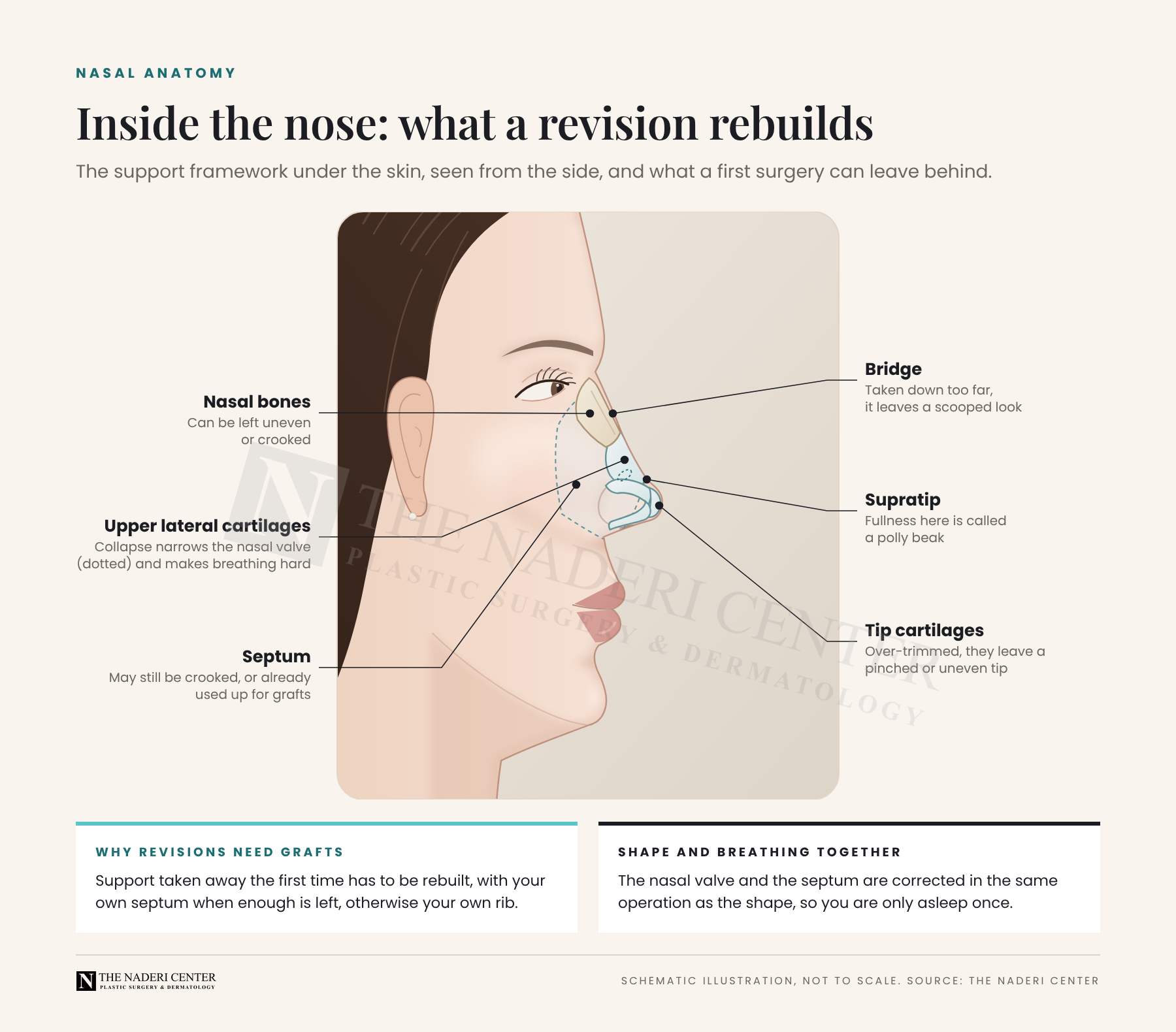
A revision can be small, such as smoothing a bump or refining the tip. It can also mean rebuilding the support of the nose. “The size of the problem on the outside tells you very little about the size of the operation,” says Dr. Naderi. “I can’t know what’s left under the skin until I’ve examined the nose, inside and out.”
How do I know if I need a revision rhinoplasty?
You may be a good candidate if your last nose surgery was at least a year ago and you’re unhappy with how your nose looks, how it breathes, or both. You should also be in good health, willing to stop smoking before and after surgery, and realistic about your goals.
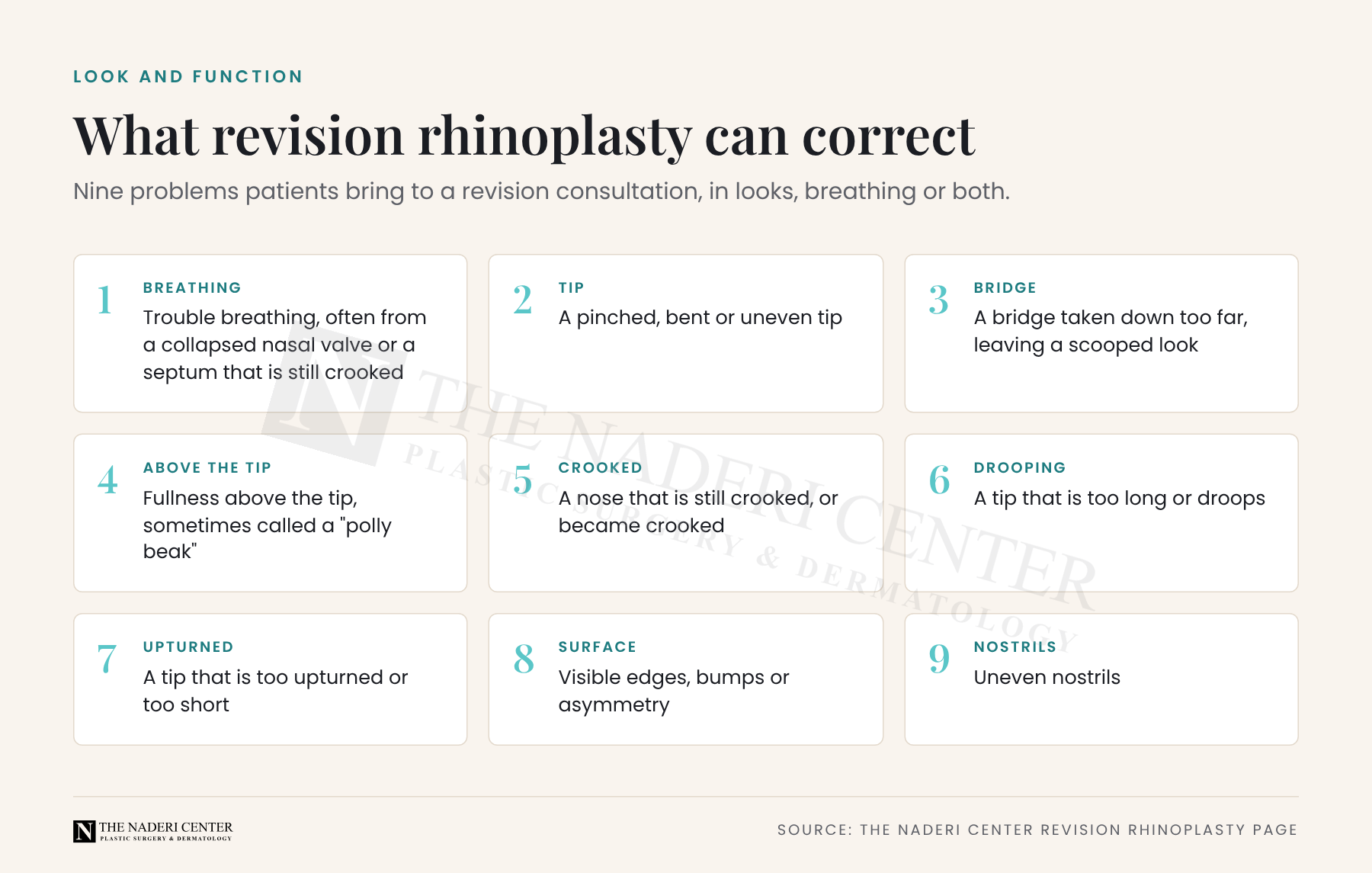
The complaints are fairly consistent. Trouble breathing, often from a collapsed nasal valve or a septum that is still crooked. A pinched or uneven tip. A bridge taken down too far, which leaves a scooped look. Fullness above the tip, sometimes called a “polly beak.” A tip that droops, or one that turned up too far. You don’t need the surgical name for yours. Pointing at it works fine.
How long should I wait before a revision rhinoplasty?
Wait one year after your last nose surgery. Swelling has to settle and scar tissue has to mature before the result can be judged fairly and the next surgery planned safely.
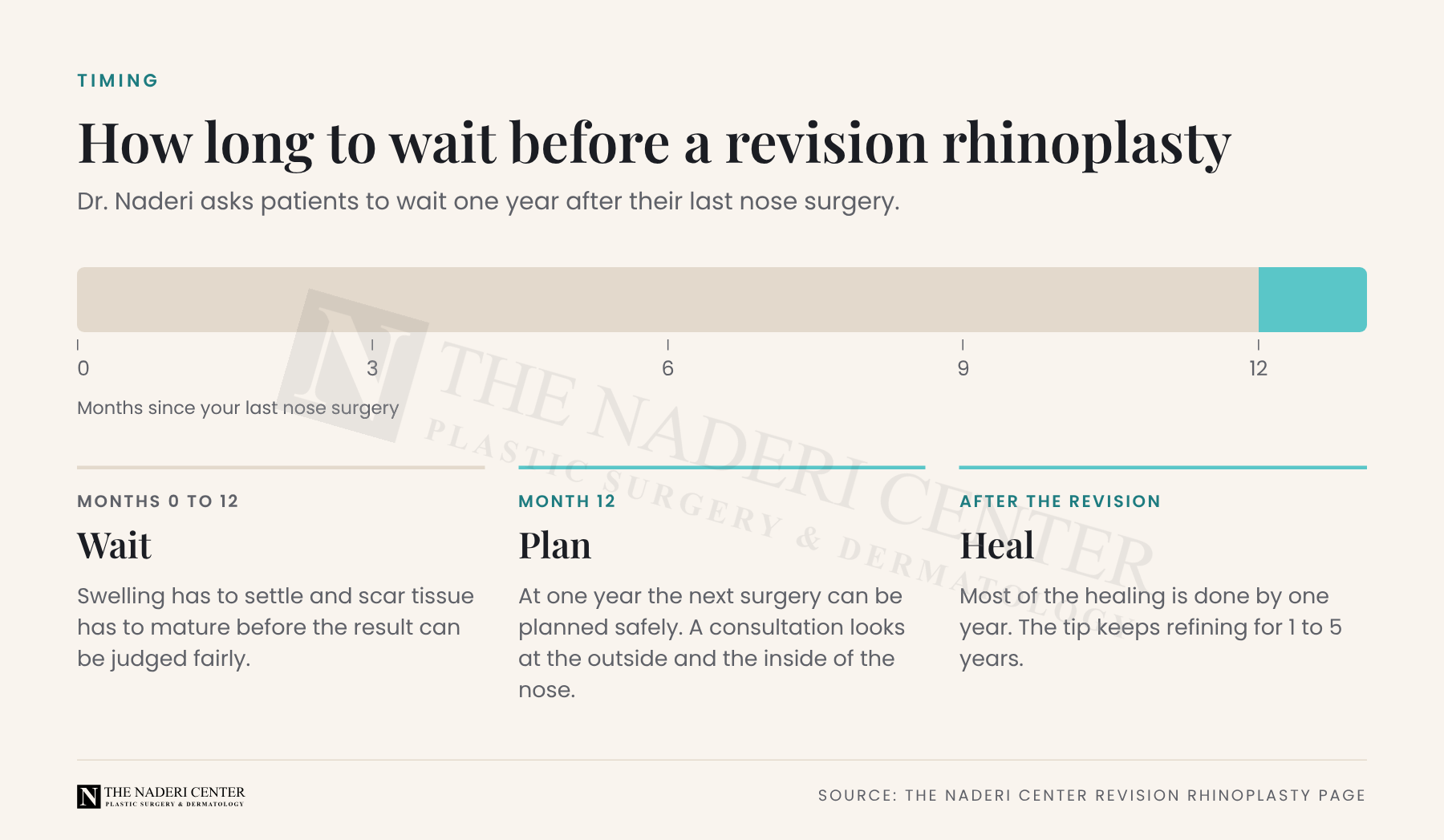
That year is the hardest part for most people. “I know twelve months sounds like forever when you dislike your nose,” Dr. Naderi says. “But a nose at four months is still changing. If I operate on a moving target, I’m guessing, and you didn’t come to me for a guess.”
So here is the October math. If your last nose surgery was in the fall of 2025 or earlier, your year is up. If you had it over winter break last year, in December 2025, you reach the one-year mark this December. Recovery calls for one week off work or school, which is why the holidays come up so often in these conversations.
Why is a revision harder than a first rhinoplasty?
A revision is harder because the surgeon works through scar tissue, often with less cartilage left for support. Scar tissue doesn’t move or heal like untouched tissue, and the skin may be less forgiving than it was the first time. We wrote a separate post on how scar tissue is managed in revision rhinoplasty if you want the long version.
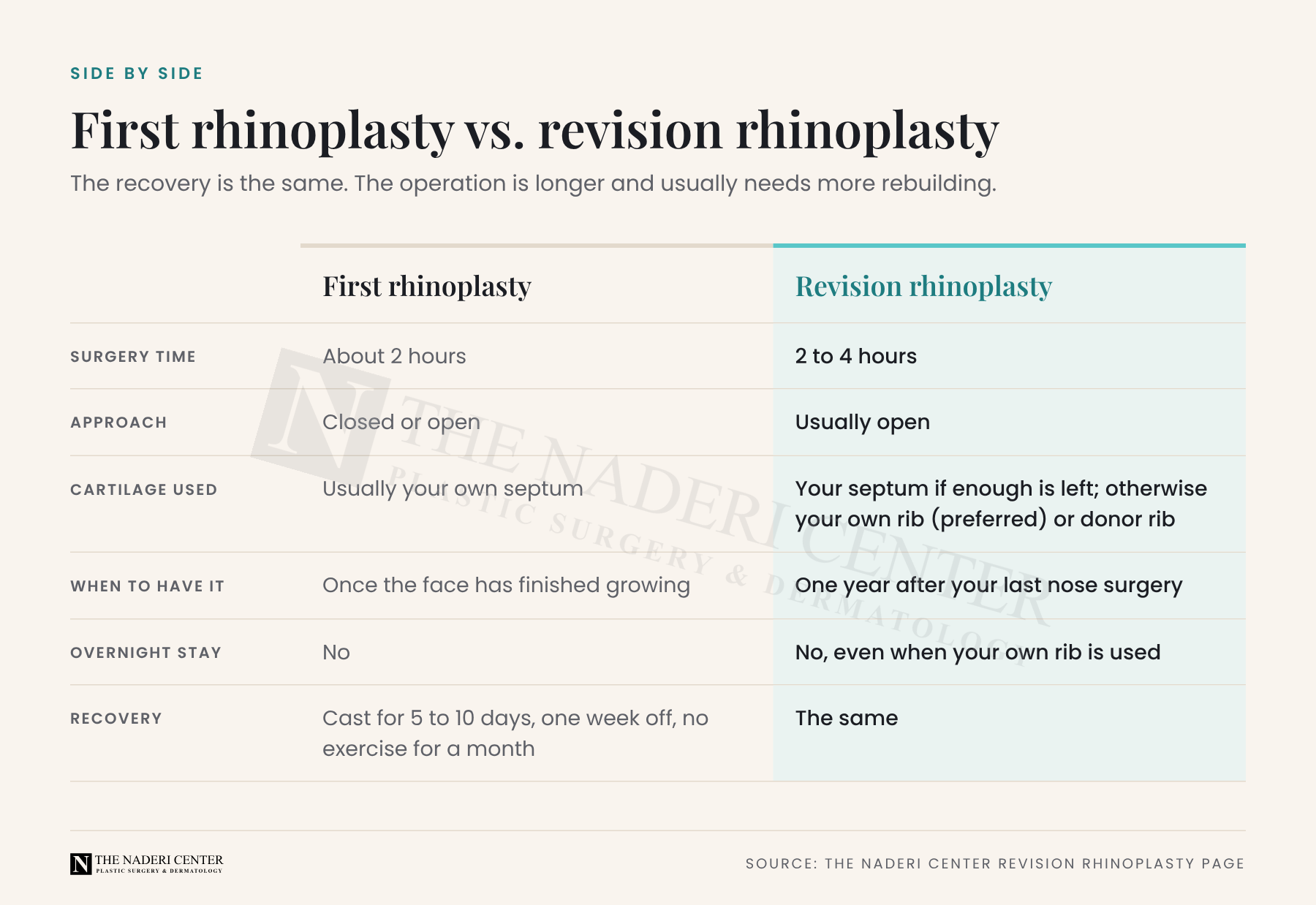
The numbers tell part of it. A first rhinoplasty takes about 2 hours and can be done closed or open. A revision takes 2 to 4 hours and is usually done open, through a small incision across the skin between the nostrils, so Dr. Naderi can see and rebuild the structures directly. Neither one involves an overnight stay.
“The first surgeon had an untouched nose to work with. I have whatever was left,” says Dr. Naderi. “That’s the job, and I’d rather say so plainly than pretend a revision is a touch-up.”
Revision rhinoplasty before and after photos
Each pair shows the same patient before surgery on the left and after on the right.
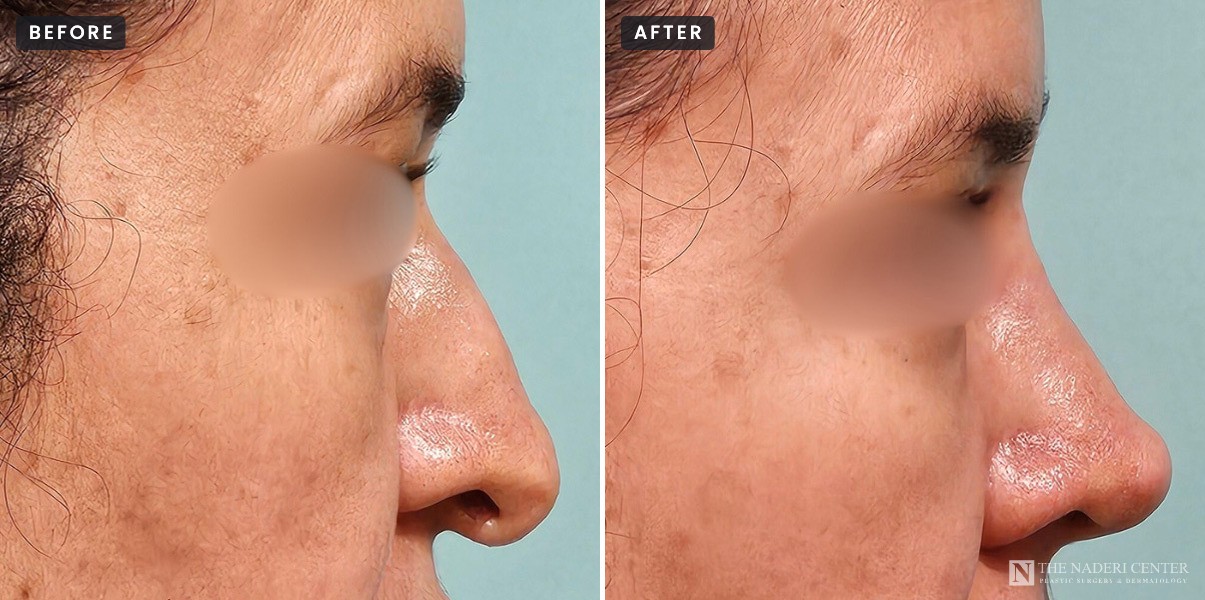
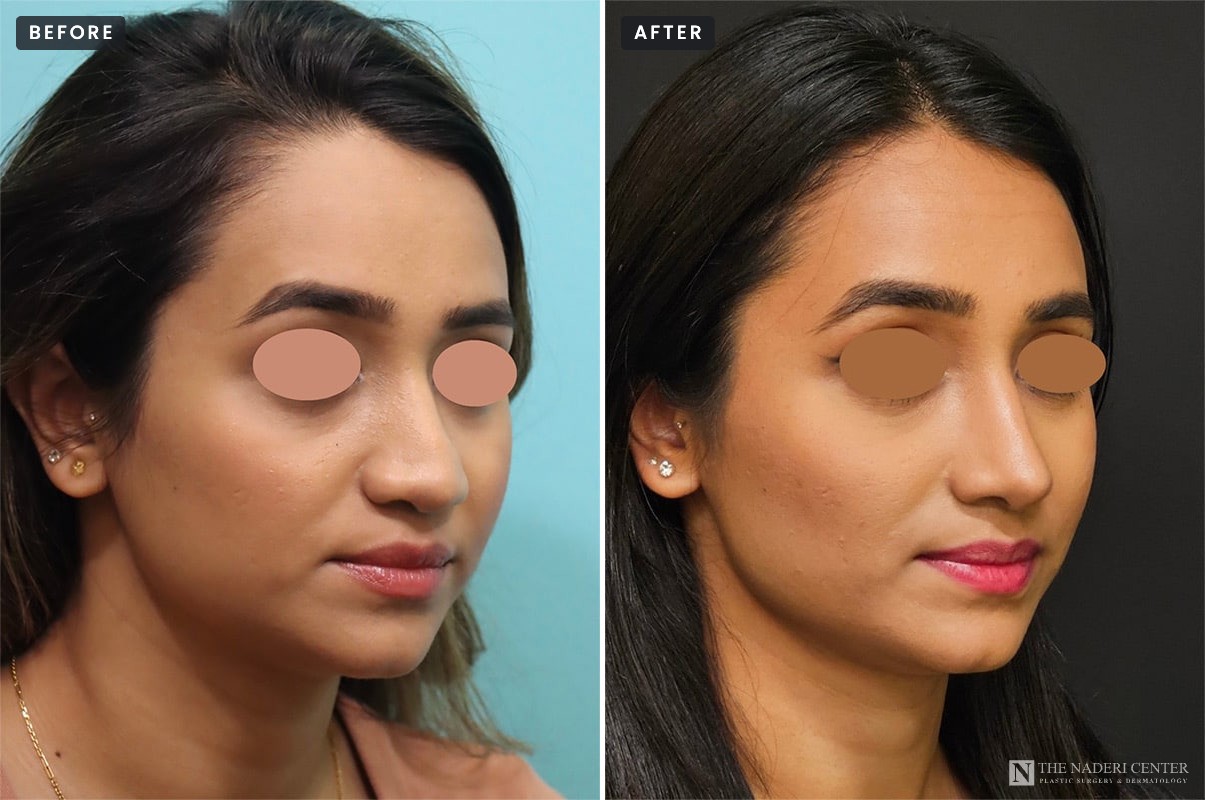
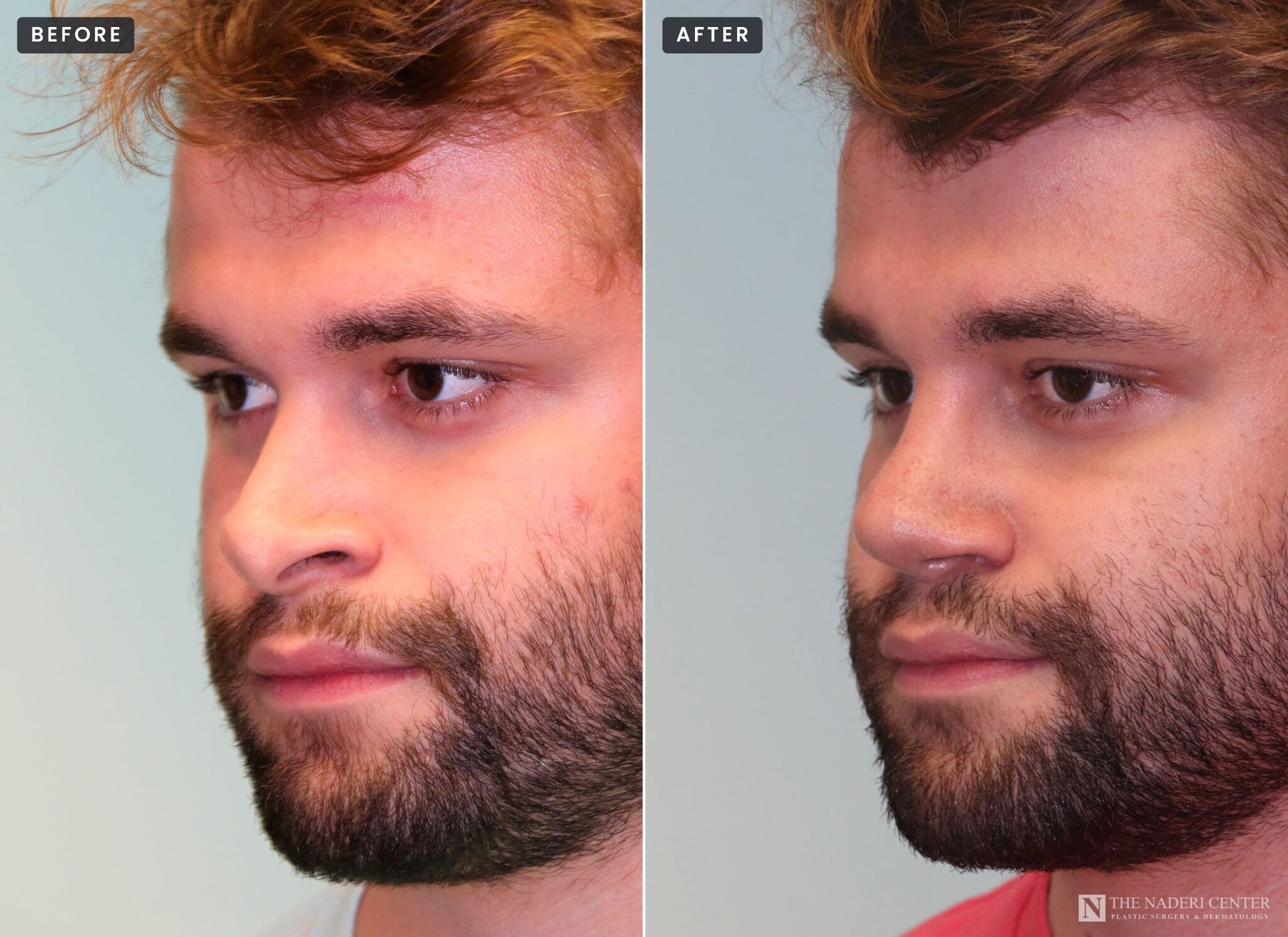
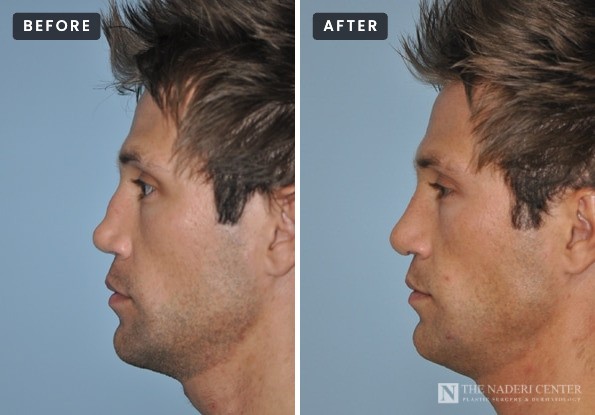
Real patients of The Naderi Center. Individual results vary. See all revision rhinoplasty before and after photos.
Will I need rib cartilage for my revision?
Not always. When enough is left, Dr. Naderi uses cartilage from your own septum. When the septum was used up in the first surgery, he prefers your own rib cartilage. It’s strong, there is plenty of it, and it’s your own tissue.
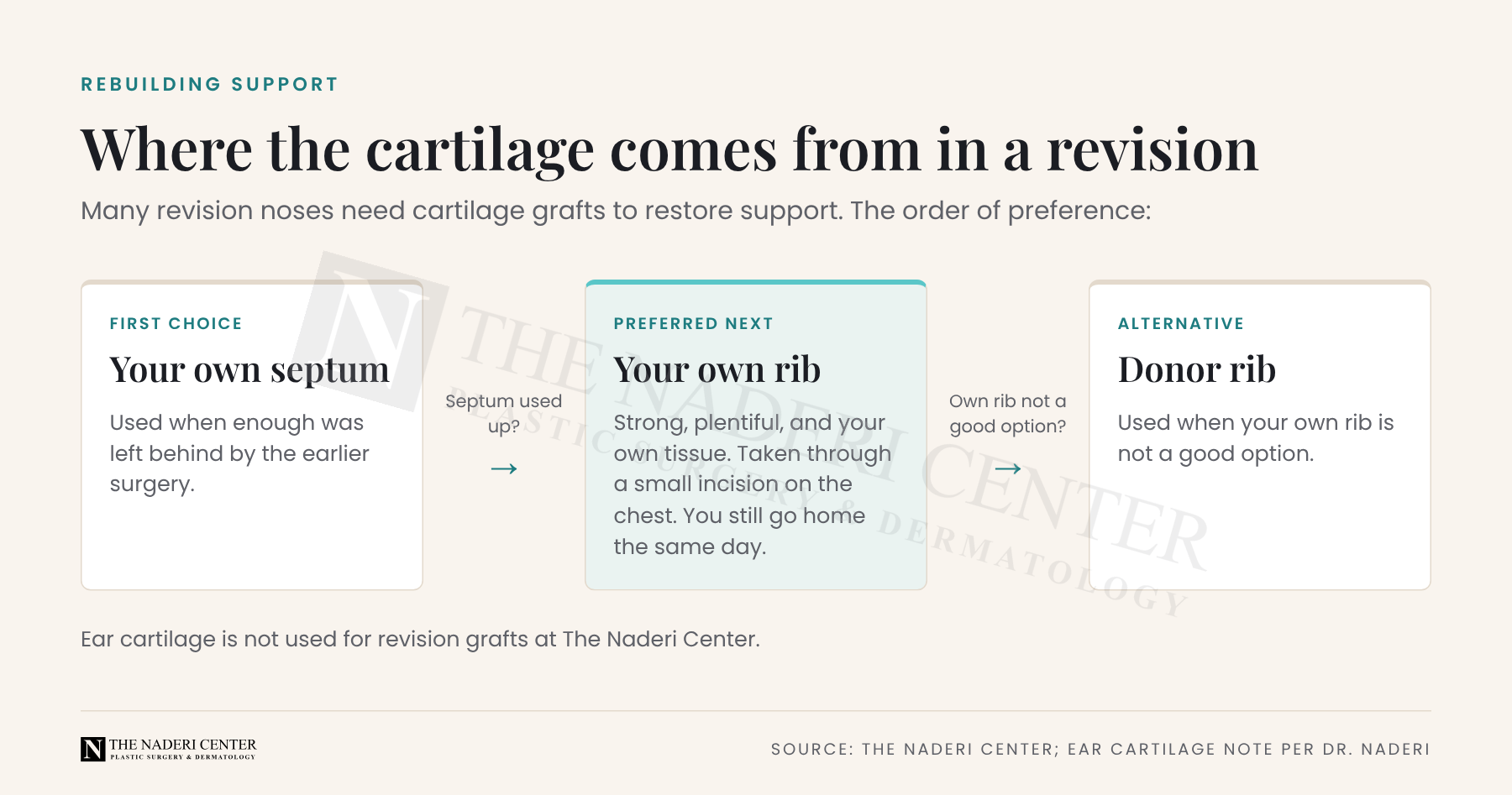
Rib cartilage is taken through a small incision on the chest, and you still go home the same day. When your own rib is not a good option, he uses donor rib cartilage. The trade-off with your own rib is a small scar on the chest and some soreness there while it heals. He does not use ear cartilage for these grafts.
Can a revision fix my breathing too?
Yes. Dr. Naderi is also board certified in otolaryngology (head and neck surgery), so breathing problems such as a collapsed nasal valve or a crooked septum are corrected in the same operation. “A nose that looks good and doesn’t work is half a result,” he says. “I fix both at once, so you’re only asleep one time.”
What happens at a revision rhinoplasty consultation?
Dr. Naderi examines the outside and the inside of your nose, asks what bothers you and how you breathe, and reviews what was done before. Consultations are offered at both offices, and patients who live far away can start with a virtual consultation.
He also does the computer imaging himself. “It’s important to me that as the surgeon, I perform all of the imaging rather than a photographer, making sure what I show on the computer screen is surgically plausible,” Dr. Naderi says. In some revision cases, scar tissue from the earlier surgery makes the result too hard to predict. When that happens he may skip the imaging rather than show you a picture that may not be accurate.
He will also tell you when another surgery is not in your best interest. “Sometimes the right answer is to leave a nose alone,” says Dr. Naderi. “Nobody drives in from Bethesda hoping to hear that, but I’d be a poor surgeon if I only ever said yes.”
What is recovery like after revision rhinoplasty?
Recovery after a revision is the same as after a first rhinoplasty. Plan on one week off work or school. A small cast stays on your nose for 5 to 10 days. The sutures from an open approach come out at the same visit, and most patients go back to work or school with a little cover-up makeup for any light bruising.
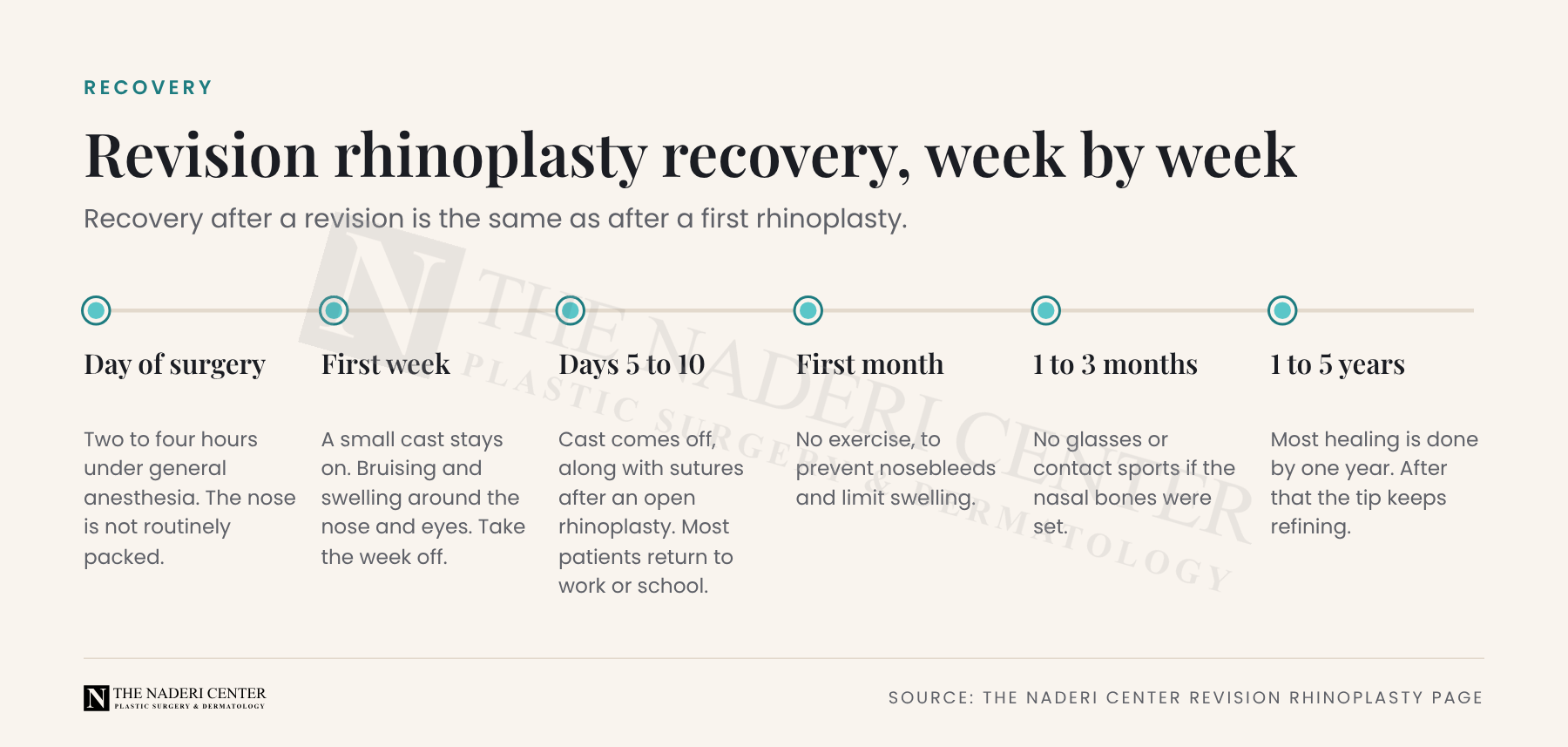
Exercise waits for one month, to prevent nosebleeds and limit swelling. The gym will still be there. If the nasal bones were set, glasses and contact sports wait 1 to 3 months. Most of the healing is done by one year, and after that the tip keeps refining and gaining definition for up to 5 years.
Dr. Naderi does not routinely pack the nose, so many patients need little or no pain medication. He operates at Prince William Surgery Center, where he has been medical director since 2023.
What are the risks of a second nose surgery?
Every surgery has risks. For a revision the main ones are bleeding, infection, swelling that takes time to settle, breathing that is not fully improved, asymmetry, and the chance that another small procedure is needed. “Anyone who promises you a perfect revision is selling something,” Dr. Naderi says. “What I can promise is a straight conversation about what’s realistic for your nose.”
Where can I see a revision rhinoplasty surgeon near Washington, DC?
Dr. Naderi sees revision patients at two offices. The Reston office is at 1850 Town Center Parkway, Pavillion II, Suite 551, Reston, VA 20190, (703) 481-0002, and it’s the easier drive from Great Falls, Vienna and McLean. The Chevy Chase office is at 5454 Wisconsin Ave, Suite 1655, Chevy Chase, MD 20815, (301) 222-2020, close to Bethesda, Potomac and Washington DC. Patients from Arlington and Alexandria tend to pick whichever one their commute dislikes less.
Many revision patients fly in, and our out-of-town patient guide covers the planning. You start with a virtual consultation, stay for one week after surgery, and have access to our nursing concierge service during recovery. If your year is up and your nose still bothers you, book an appointment and bring your questions. All of them.
Frequently asked questions
How long should I wait before a revision rhinoplasty?
Dr. Naderi asks patients to wait one year after their last nose surgery, so swelling can settle and scar tissue can mature before the next surgery is planned.
Will I need rib cartilage for a revision rhinoplasty?
Not always. When enough is left, Dr. Naderi uses cartilage from your own septum. When the septum was used up in the first surgery, he prefers your own rib cartilage and uses donor rib when your own rib is not a good option.
How long does revision rhinoplasty surgery take?
Usually 2 to 4 hours under general anesthesia, depending on how much needs to be rebuilt. You go home the same day, even when your own rib cartilage is used.
How much does revision rhinoplasty cost?
Revision rhinoplasty with Dr. Naderi starts at $45,000, including anesthesia and the surgical facility. Your exact fee depends on how complex your revision is and is given to you after your consultation.
Is revision rhinoplasty covered by insurance?
Revision rhinoplasty done for cosmetic reasons is not covered by insurance. Insurance may cover part of the surgery when there is a medical need, such as correcting a breathing problem. Check with your insurance company.
Can revision rhinoplasty be combined with other procedures?
Yes. Revision rhinoplasty can be combined with other facial procedures, such as chin augmentation, in the same operation. Dr. Naderi will tell you at your consultation whether combining makes sense for you.