One of the more surprising things I tell patients during a facelift consultation is: “I don’t think you’re ready for a facelift yet.”
That can be unexpected. A patient has taken the time to research facelift surgeons, scheduled a consultation, and come to see me specifically because I perform facial rejuvenation surgery. It would be easy to assume that my job is simply to determine how I am going to operate.
I see my responsibility very differently.
Considering a facelift? Learn about our deep plane facelift in Washington, DC.

A facelift is elective surgery. The question is not simply whether I can make someone’s face tighter. The question is whether the anatomical changes I see are significant enough that surgery can produce a meaningful, natural improvement that justifies the scars, recovery, cost, and risks of an operation.
“Being technically capable of performing a facelift doesn’t mean I should perform one. Sometimes the most important decision I make as a surgeon is telling a patient that surgery is not yet the right answer.” – Dr. Shervin Naderi
Quick Answer: How Do I Know If I’m Ready for a Facelift?
You may be ready for a facelift when facial aging has produced meaningful structural changes, such as:
- Jowling
- Loss of jawline definition
- Descent of the cheeks or lower face
- Laxity of the face and neck
These can be significantly improved by repositioning deeper facial tissues.
Age alone does not determine whether someone needs a facelift.
I evaluate the anatomy of aging:
- What has descended
- Where volume has changed
- How the skin has aged
- What is happening to the jawline and neck
- Whether surgery can create enough improvement to be worthwhile
Just as importantly, I evaluate what a facelift cannot fix.
Key Takeaways
- A facelift needs to have visible results that are worth the investment of surgery, recovery time, and the potential risks.
- Signs of facial aging do not all respond to surgery.
- Dr. Naderi may recommend alternatives to facelift surgery.
- To ensure good facelift results, patients should have realistic expectations, good health, and an overall good disposition.
- Facelift results depend heavily on the customized approach and surgical plan that is used.
- Quick Answer: How Do I Know If I'm Ready for a Facelift?
- Key Takeaways
- There Is No Perfect Age for a Facelift
- Sometimes There Simply Isn't Enough to Lift
- A Facelift Does Not Treat Every Sign of Facial Aging
- I Look for the Anatomical Problem Before Choosing the Procedure
- When a Patient Needs Less Than a Facelift
- When a Facelift Alone Is Not Enough
- Why I May Recommend Younger Patients Wait for a Facelift
- Unrealistic Expectations Can Make Someone the Wrong Candidate
- I Want Patients to Still Look Like Themselves
- Health and Healing Matter
- Smoking and Nicotine Are Particularly Important
- Weight Changes Can Affect Timing
- More Surgery Is Not Automatically Better Surgery
- Why Being a Facial Plastic Surgeon Influences How I Evaluate a Facelift
- A Good Facelift Consultation Should Sometimes End Without Surgery
- So, When Is the Right Time for a Facelift?
- My Philosophy on Facelift Timing
- About Dr. Shervin Naderi
There Is No Perfect Age for a Facelift
Patients frequently ask me, “What is the best age to get a facelift?”
There isn’t one.
Professional guidance similarly focuses on health, smoking status, anatomy and realistic expectations rather than establishing a specific age at which someone should have a facelift.
I have evaluated relatively young patients with significant jowling and neck laxity who were anatomically reasonable candidates for surgery. I have also evaluated older patients whose facial anatomy simply did not justify a major operation.
I don’t operate on someone’s birthday. I operate on anatomy.
Two people who are exactly 55 years old can have remarkably different faces. Factors that influence what happens to the face over time, include Genetics
- Skeletal structure
- Facial fat
- Skin quality
- Sun exposure
- Weight fluctuations
- Individual patterns of aging
“The calendar tells me how long you’ve been alive. Your face tells me whether you need a facelift. Those are two very different pieces of information.” – Dr. Naderi
Sometimes There Simply Isn’t Enough to Lift
This is one of the most common reasons I tell a patient to wait.
A facelift is designed to reposition facial tissues that have descended with aging and improve problems such as:
- Jowling
- Loss of jawline definition
- Lower-face laxity
- Aging of the neck
Modern facelift planning requires careful evaluation of:
- Facial layers
- Retaining ligaments
- Nerves
- The three-dimensional changes that occur with aging.
If those changes are minimal, there may simply not be enough anatomical benefit to justify surgery.
Patients will sometimes point to a very small amount of looseness beside the mouth or underneath the chin and ask me to “just tighten this.”
I may agree that I see it.
But seeing something does not automatically mean I should operate on it.
“I don’t want to perform a major operation to create a minor improvement. A facelift has to earn its place in the treatment plan.” – Dr. Naderi
For me, the potential improvement should be significant enough that the patient can look back after going through surgery and recovery and feel that the operation was worthwhile.
A Facelift Does Not Treat Every Sign of Facial Aging
This is an extremely important distinction.
A facelift is fundamentally a structural operation. It repositions tissues that have descended and can improve jowls, the jawline, lower-face laxity and appropriate components of neck aging.
But patients often come to me saying, “My face looks old,” when the primary issue is actually something else. They may have:
- Significant sun damage
- Fine lines
- Crepey skin
- Pigmentation
- Upper eyelid hooding
- Lower eyelid bags
- Brow descent
- Loss of facial volume
- Perioral wrinkles
Or some combination of these.

A facelift cannot be expected to correct every one of those problems. Professional surgical guidance similarly notes that a facelift cannot stop aging and that complementary procedures may address problems outside the operation’s primary scope.
“One of the biggest mistakes in facial rejuvenation is asking one procedure to solve every sign of aging. A facelift is incredibly powerful, but it is not a laser, an eyelid lift, a brow lift, fat transfer and skincare all rolled into one operation.” – Dr. Naderi
Sometimes the patient is ready for facial rejuvenation, but not for a facelift.
That is a very different conclusion.
I Look for the Anatomical Problem Before Choosing the Procedure
When I examine a face, I don’t start by deciding which operation I want to perform.
I start by asking:
- Why does this face look older? Has the cheek descended? Are jowls obscuring a previously clean mandibular border? Is the neck aging primarily from skin laxity, platysma, fat, deeper neck anatomy, or a combination? Has the face lost volume?
- What is happening around the eyes?
- How much of what the patient dislikes is actually skin quality rather than tissue descent?
This type of individualized analysis is consistent with the surgical literature; there are factors that helps guide individualized facial rejuvenation rather than applying the same operation to every patient.
- Preoperative assessment of facial shape
- Asymmetry
- Soft-tissue distribution
- Anatomy
“I don’t believe in looking at a patient and saying, ‘You’re 58, so you need my facelift.’ I want to identify which anatomical structures have changed and then choose the treatment that actually addresses those changes.” – Dr. Naderi
That distinction is central to how I practice facial plastic surgery.
When a Patient Needs Less Than a Facelift
There is an understandable tendency in cosmetic medicine to think that a bigger procedure must produce a better result.
That isn’t always true.
If someone’s primary problem can be appropriately addressed with a smaller intervention, I would rather recommend the smaller intervention.
For one patient, that might mean eyelid surgery. For another, facial fat transfer. Someone else may benefit more from resurfacing, skincare or carefully selected injectable treatments.
Nonsurgical treatments cannot reproduce what a properly indicated facelift accomplishes when substantial tissue descent is present. Conversely, surgery should not be performed simply because nonsurgical treatment exists on the other end of the spectrum. The treatment should match the problem.
“I don’t start with the procedure and try to fit the patient into it. I start with the patient and work backward to the least invasive treatment that can realistically accomplish the goal.” – Dr. Naderi
When a Facelift Alone Is Not Enough
The opposite situation occurs too.
A patient may have substantial jowling and neck laxity that makes them an excellent facelift candidate, but they may also have:
- Significant facial volume loss
- Eyelid aging
- Brow descent
- Advanced skin damage
A beautifully executed facelift can reposition descended tissue, but it cannot restore every component of facial aging.
Contemporary facial rejuvenation literature recognizes this distinction. Procedures such as fat grafting, eyelid surgery and resurfacing can address aspects of facial aging that facelift surgery alone does not fully correct.
The answer isn’t necessarily to perform everything simultaneously. The point is to diagnose all of the components correctly and develop an intelligent plan.
Comprehensive Facial Rejuvenation Before & After
Face and neck lift with an upper blepharoplasty for loose facial skin and jowls.
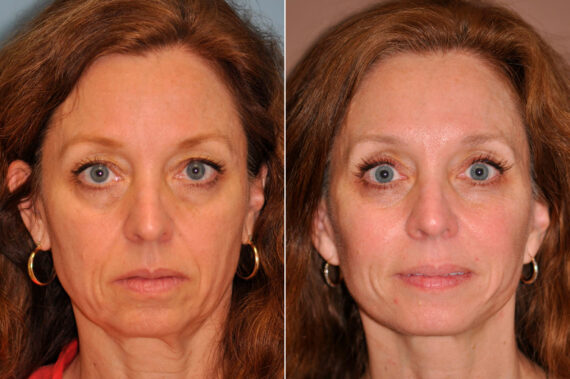
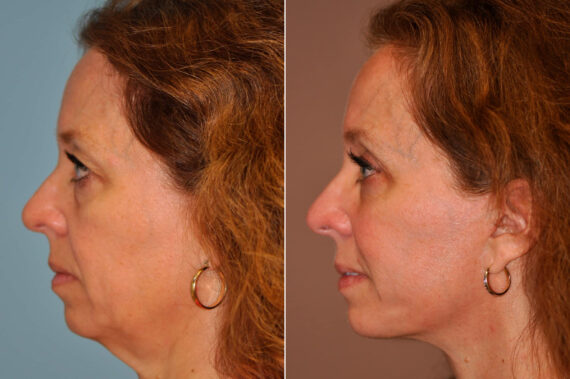
*Results vary from patient to patient
Book a Consultation
Thinking about a deep plane facelift? Meet Dr. Shervin Naderi, double board-certified facial plastic surgeon, at our offices in Reston, VA and Chevy Chase, MD.
Book a ConsultationLearn about deep plane facelift
Call Reston (703) 481-0002 or Chevy Chase (301) 222-2020.
Why I May Recommend Younger Patients Wait for a Facelift
There has been increasing interest in facelifts at younger ages. Recent AAFPRS survey data indicate that facial plastic surgeons have seen increasing numbers of younger facelift patients.
I don’t believe that makes an early facelift inherently good or bad.
If a younger patient has legitimate anatomical changes that can be meaningfully corrected surgically, age by itself should not disqualify that patient.
But I don’t believe in performing a facelift simply because someone wants to “get ahead of aging.”
If I cannot identify enough structural aging to justify surgery, I would rather wait.
“Preventative surgery is not a convincing reason for me to operate on a face that doesn’t need surgery. I want an anatomical problem that I can clearly identify and meaningfully improve.” – Dr. Naderi
A facelift does not stop the aging process.
The goal is to intervene when surgery offers meaningful value, not simply to perform it as early as possible.
Unrealistic Expectations Can Make Someone the Wrong Candidate
Good facelift candidates need more than favorable anatomy.
They also need realistic expectations.
Both the American Society of Plastic Surgeons and the American Academy of Facial Plastic and Reconstructive Surgery identify realistic expectations as an important component of facelift candidacy.
A facelift can make someone look more refreshed and restore cleaner, more youthful facial contours. It cannot make a 65-year-old literally become 35. It cannot guarantee perfection. It cannot eliminate normal asymmetry. And it cannot freeze the aging process.
Occasionally, what a patient expects and what I believe surgery can realistically accomplish are too far apart.
In that situation, even excellent surgery can become a disappointing operation.
“If the result I believe I can deliver and the result the patient expects are fundamentally different, the safest operation for both of us may be no operation at all.” – Dr. Naderi
I Want Patients to Still Look Like Themselves
A patient’s goal matters enormously to me.
My objective with facial rejuvenation is not to create a different person. It is to restore facial contours while preserving the characteristics that make the patient’s face recognizable.
That philosophy affects patient selection.
If someone wants an extreme transformation that I believe would look unnatural, I may not be the right surgeon for that request.
A technically successful operation that violates the patient’s natural facial proportions is not what I consider a successful aesthetic result.
“The best facelift shouldn’t introduce you to a new face. It should give you back a fresher version of the face that was already yours.” – Dr. Naderi
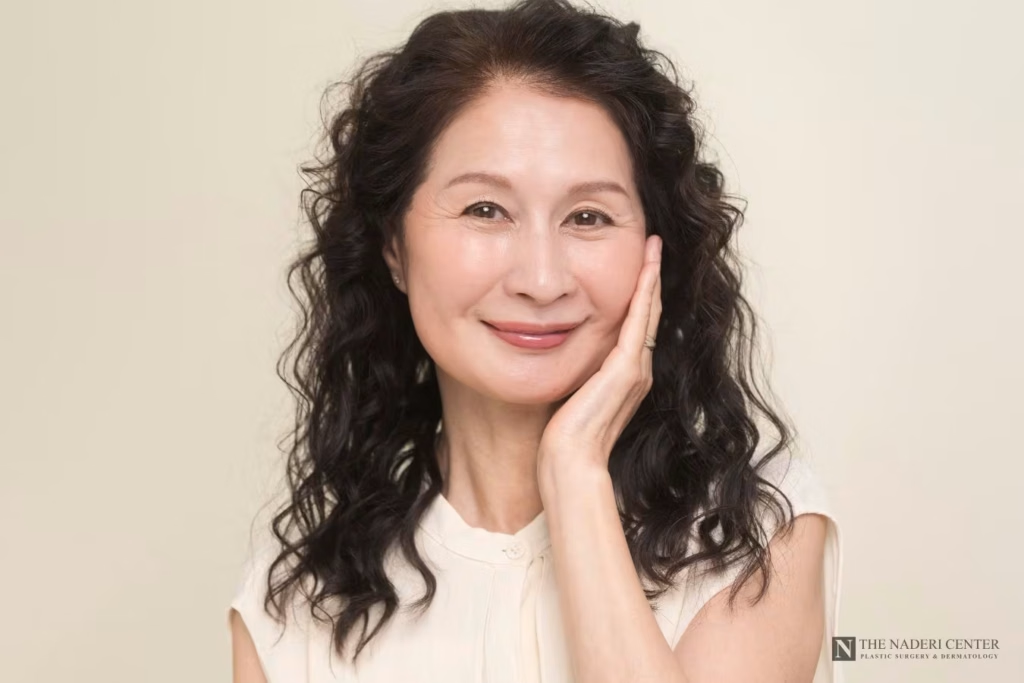

Refresh Your Appearance, Preserve Your Identity
Explore facial rejuvenation designed to enhance your natural features without changing what makes you unique. Consult with Dr. Shervin Naderi.
Health and Healing Matter
Even when someone has excellent facelift anatomy, there are situations in which surgery should be postponed or avoided because of medical risk.
A facelift requires healing; some factors can influence bleeding, wound healing and surgical risk:
- Medical conditions
- Medications
- Nicotine exposure and others
Professional surgical organizations specifically identify good general health and nonsmoking status among the characteristics of appropriate facelift candidates.
That is why a legitimate facelift consultation includes a medical assessment rather than merely a discussion about appearance.
An elective cosmetic operation should have an appropriate risk-benefit relationship.
Smoking and Nicotine Are Particularly Important
Nicotine exposure deserves special mention because facelift surgery involves creating and repositioning skin and soft-tissue flaps whose blood supply and healing are important.
This is not something I treat casually.
Patients need to be candid about cigarette smoking, vaping and other nicotine exposure. A surgeon needs accurate information to make an appropriate safety decision.
This is one reason professional societies consistently identify nonsmokers as better candidates for elective facelift surgery.
Weight Changes Can Affect Timing
Major anticipated weight loss is another reason I may recommend waiting.
Significant changes in weight can alter facial volume, skin laxity and neck contours. If someone is actively losing a substantial amount of weight, it can make sense to allow the face and body to reach a more stable point before making final surgical decisions.
Again, this is individualized.
The question is not whether a particular number appears on the scale. It is whether anticipated changes could meaningfully alter the anatomy we are planning to operate on.
More Surgery Is Not Automatically Better Surgery
Facelift terminology has become increasingly prominent in marketing.
Deep plane. SMAS. Extended deep plane. Vertical lift. Mini lift. Preservation techniques.
These terms can be useful when surgeons communicate with one another, but patients can understandably begin to believe that choosing the “best” named technique is the key to choosing the best operation.
The scientific literature is considerably more nuanced. A review of facelift controversies found no single technique clearly established as universally superior and emphasized the limitations of the comparative evidence.
For me, the more important question is whether the operation matches the patient’s anatomy.
“A sophisticated facelift isn’t defined by how impressive the name of the technique sounds. It is defined by whether the surgeon understands the anatomy, recognizes what needs to be changed, and knows what should be left alone.” – Dr. Naderi
Why Being a Facial Plastic Surgeon Influences How I Evaluate a Facelift
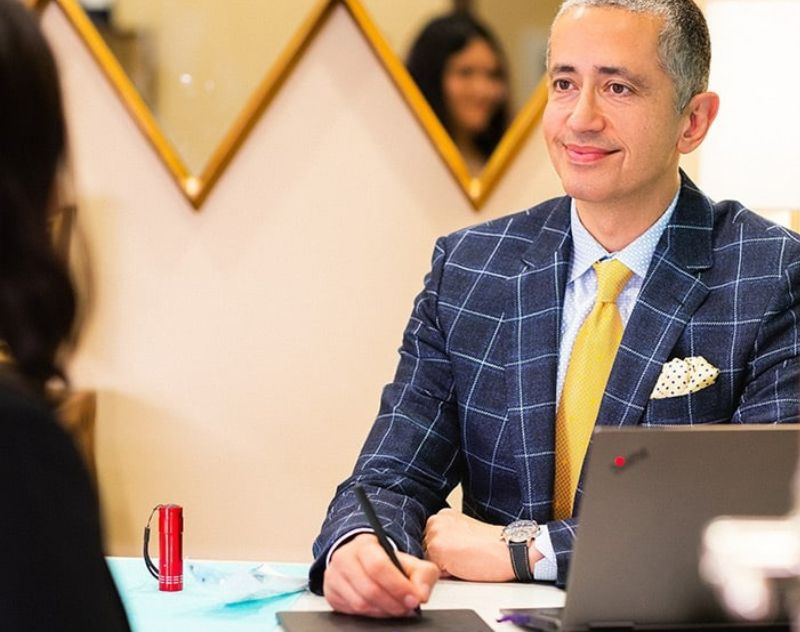
My career has been devoted to the face.
That matters to the way I evaluate facial rejuvenation because the face is not simply loose skin covering a skull.
It is a complex three-dimensional structure consisting of skin, fat compartments, muscles, fascia, the SMAS, retaining ligaments, nerves, blood vessels and bone. Modern facelift literature similarly emphasizes detailed knowledge of these facial layers and their three-dimensional relationships.
Understanding those structures is essential during surgery.
But it is equally important before surgery.
The consultation is where I decide which anatomical changes matter, which do not, which can be corrected, and which should be left alone.
A Good Facelift Consultation Should Sometimes End Without Surgery
I think this is something patients deserve to hear.
If every patient who consults with a facelift surgeon is told that they need a facelift, then the consultation isn’t functioning entirely as a medical evaluation.
There should be patients who are told to wait.
There should be patients who are offered something less invasive.
There should be patients whose expectations need to be adjusted.
And there should occasionally be patients whom a surgeon simply decides not to operate on.
That isn’t a failed consultation.
Sometimes that is exactly what good surgical judgment looks like.
“My reputation isn’t built only on the patients I operate on. It is also built on the patients I have the judgment not to operate on.” – Dr. Shervin Naderi
So, When Is the Right Time for a Facelift?
The right time for a facelift is when the anatomy, the patient’s goals, overall health, expectations and the potential magnitude of improvement align.
For many patients, that means structural changes that cannot be adequately corrected with nonsurgical treatment, such as:
- Noticeable jowling
- Loss of a clean jawline
- Lower-face descent
- Neck laxity
But the decision is highly individualized.
I don’t believe patients should wait until their face reaches some arbitrary level of aging. Nor do I believe they should have surgery simply because they reached a certain birthday.
The goal is to identify the point at which surgery becomes the most appropriate tool for the problem.
See the Doctor
Questions about what you just read? Ask Dr. Naderi in person. Book a consultation in Reston or Chevy Chase, or start with a virtual consultation from home.
Book a ConsultationVirtual consultation
Call Reston (703) 481-0002 or Chevy Chase (301) 222-2020.
My Philosophy on Facelift Timing
After years of treating facial aging, I have become increasingly convinced that good judgment is as important as good technique.
Knowing how to release a ligament, reposition the SMAS or deep plane, treat the platysma, manage the neck and close an incision carefully matters tremendously.
But all of that comes after the most fundamental decision:
Should this patient be having the operation in the first place?
At The Naderi Center, my goal is not to convince every patient who walks through the door to have surgery. My goal is to understand what is aging, what is bothering the patient, what I can realistically improve, and whether the benefit is substantial enough to justify an operation.
Sometimes my recommendation is a facelift.
Sometimes it is another treatment.
And sometimes it is simply:
Not yet.
About Dr. Shervin Naderi
Dr. Shervin Naderi, MD, FACS, is a double board-certified facial plastic surgeon and founder of The Naderi Center, serving patients in Virginia and Maryland. With over 20 years of experience, he specializes in facelift surgery, rhinoplasty, and facial rejuvenation. His background includes advanced fellowship training, teaching medical residents, and serving as an oral board examiner in facial plastic surgery.

Patient Financing
Pay Over Time with Cherry
Monthly payment plans for surgery and treatments, including 0% APR options for qualifying patients. Checking whether you qualify won’t affect your credit score.