What’s new in sun protection this year?
Sunscreen in the United States just got its first new ingredient in more than 20 years. In June 2026, the FDA added bemotrizinol to its list of approved sunscreen filters (FDA). It blocks both UVA and UVB light, and it has been used in Europe and Asia for years.
Why does that matter for dark spots? Brown spots come back whenever skin sees light, even on gray winter days in Reston or Bethesda. A good plan does two things. It fades the spots you have, and it keeps new ones from forming. Here is how ZO products fit into that plan.
Late November is when many of our patients notice what summer left behind. Freckles from tennis in Great Falls or weekends on the Potomac are still there after the tan fades. Soft brown patches on the cheeks or upper lip can look darker in winter light. Here is your guide to the three ZO Skin Health options we use most, and how to choose among them.
What is the short answer: Brightalive, retinol or hydroquinone?
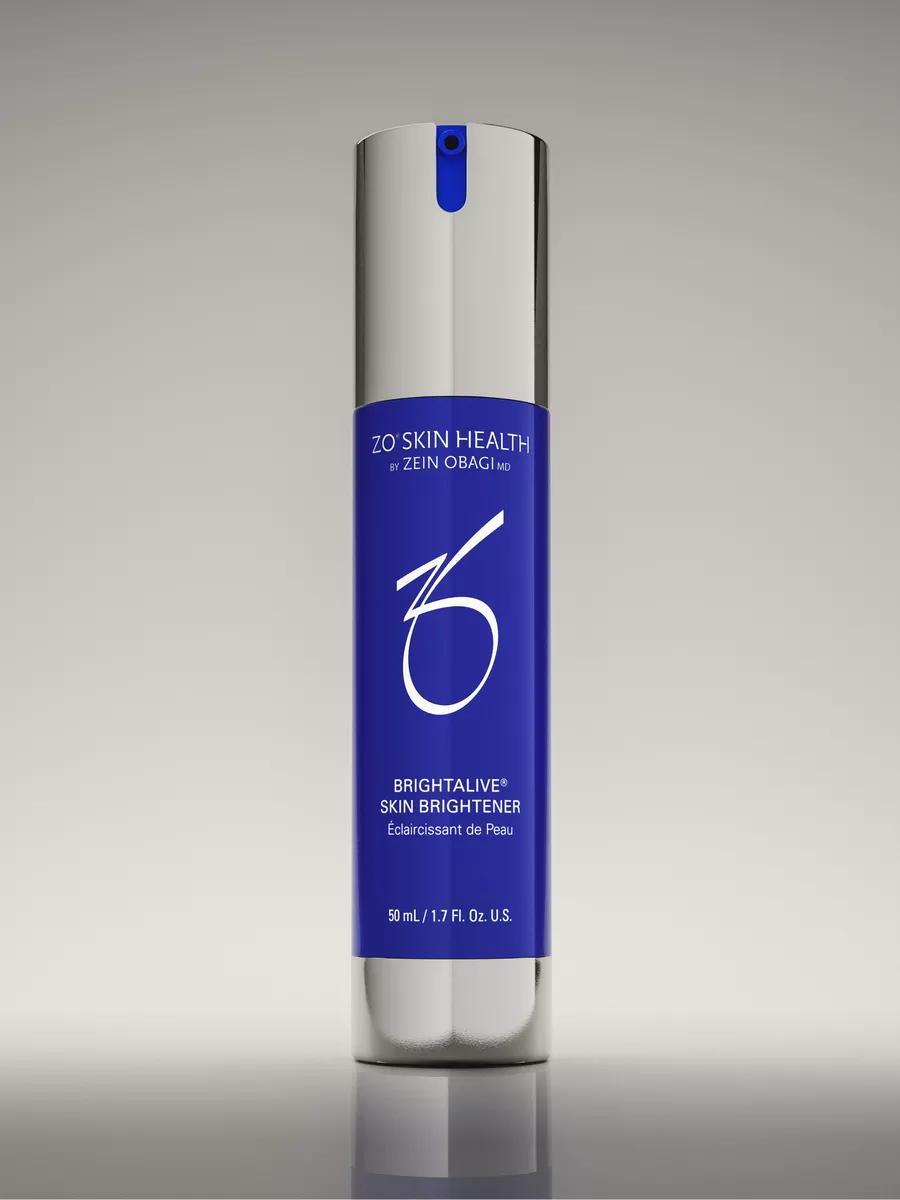
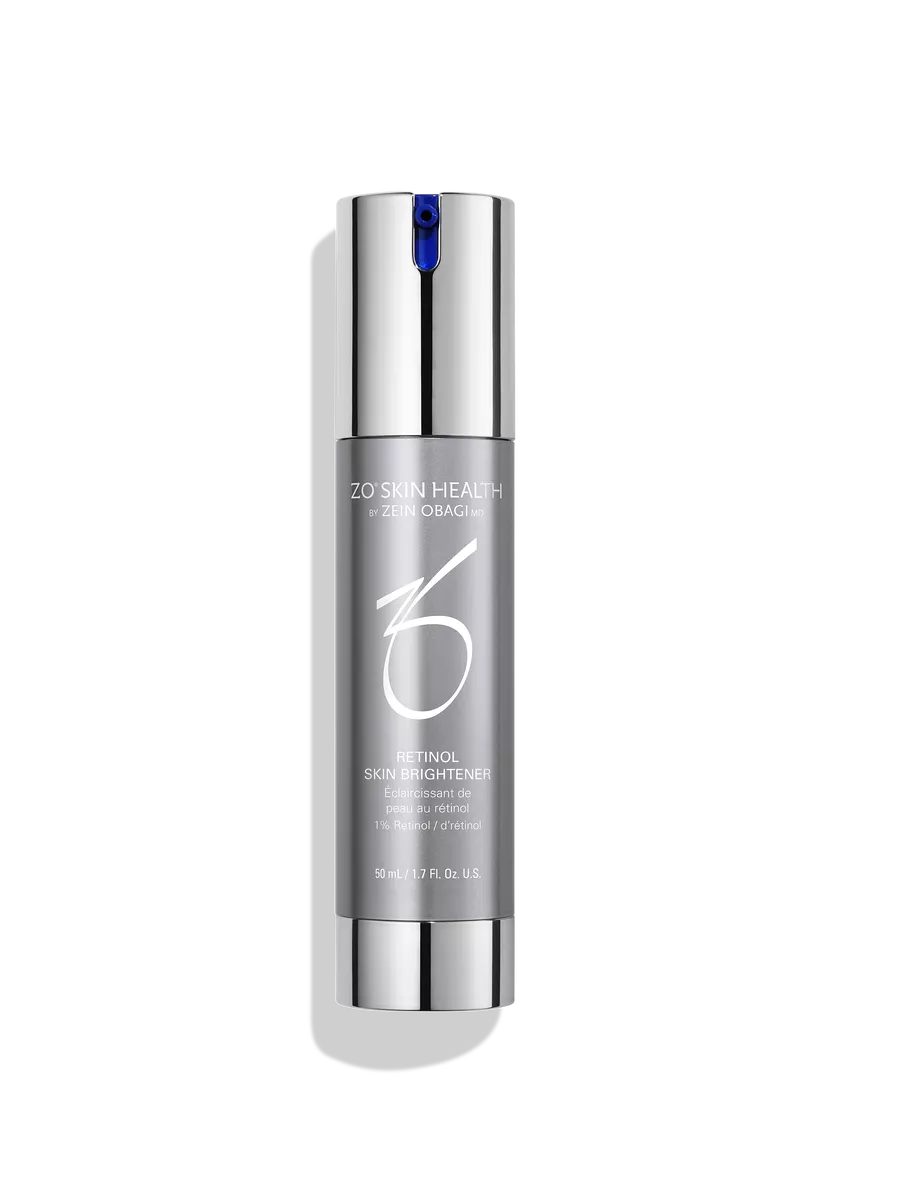
Start with ZO Brightalive Skin Brightener for gentle daily brightening, or when retinol and hydroquinone are not right for you. Choose ZO Retinol Skin Brightener when uneven tone comes with rough texture and your skin already handles retinol. For stubborn sun spots and melasma, a planned course of prescription 4% hydroquinone from our office works best. Each one needs a sunscreen every morning to do its job.
“Most patients ask me for the strongest product,” says Dr. Shervin Naderi. “What helps far more is the right product for your kind of pigment, used faithfully every day.”

Why are dark spots and melasma so hard to fade?
Dark spots and melasma both start in pigment cells near the bottom of the top layer of skin. These cells make melanin, the pigment that gives skin its color. Sun spots and freckles come from years of sun. Melasma is different. Hormones, heat and visible light also set it off, and it often shows up as matching patches on the cheeks, forehead or upper lip. Our article on how to tell melasma from sun spots explains more.
The type of pigment decides the plan. That is why a physician checks it before anything is prescribed. Board-certified dermatologist Dr. Alexandra Snodgrass leads our melasma and hyperpigmentation treatment.

How does each ZO option work on pigment?
Hydroquinone works at the source. It slows down the pigment cell, so it makes less melanin. That is why it is still the standard treatment for melasma and deep brown spots. Since 2020, it can only be sold with a prescription in the United States.
Brightalive takes a gentler route. Its main ingredients are tranexamic acid, which helps fade the look of discoloration, and niacinamide, a form of vitamin B3 that evens tone and supports the skin barrier. Papain, an enzyme from papaya, gently exfoliates. Other ingredients help calm the skin.
Retinol Skin Brightener works from the surface down. Retinol speeds up the skin’s natural renewal, so darker cells shed sooner and skin feels smoother. ZO releases the retinol slowly to keep irritation low.
Book a Consultation
Thinking about ZO for dark spots or melasma? Our physicians see patients at our offices in Reston, VA and Chevy Chase, MD.
Book a ConsultationLearn about ZO Skin Health
Call Reston (703) 481-0002 or Chevy Chase (301) 222-2020.
What is ZO Brightalive, and who is it best for?
Brightalive has no retinol and no hydroquinone, and it suits all skin types. It is our usual first choice for sensitive skin and for anyone who could not use a retinol before. It is also a good fit if you want a brightener for both morning and night. Apply one to two pumps after Getting Skin Ready (cleanse, exfoliate and tone), then finish with sunscreen in the morning.
ZO Skin Health reports a 15-week study of 50 women ages 30 to 70 with moderate to severe discoloration. According to ZO, the look of pigment improved by 47% and overall skin quality by 52%. As with any study, results vary with skin type and with how faithfully the product is used.
“Tranexamic acid is one of the most talked-about brightening ingredients this year, and for good reason,” says Dr. Naderi. “Brightalive pairs it with niacinamide in a formula gentle enough for twice-daily use.”
When is ZO Retinol Skin Brightener the better choice?
Retinol Skin Brightener comes in three strengths. The 0.3% is the gentlest and a good first retinol. The 0.5% is the next step once your skin adjusts. The 1% is for skin that already handles retinol well. Our guide to retinol for beginners compares these with the other medical-grade retinols we carry.
Start slowly with any strength. ZO suggests one pump of the 0.3% once a day for the first week, then twice a day. The 0.5% and 1% start twice a week, move to every other day, then to daily use. Please set it aside on irritated or freshly treated skin.
“I would much rather a patient start at 0.3% and use it happily every night than start at 1% and give up after two weeks of peeling,” says Dr. Naderi. “Patience with a retinol is always rewarded.”
When do you need prescription hydroquinone for dark spots?
ZO makes three prescription creams with 4% hydroquinone, and we carry two of them. Pigment Control Crème pairs hydroquinone with glycolic acid and vitamin C. Pigment Control + Blending Crème is a second version built on the same pairing. ZO’s third cream, Pigment Control + Brightening Crème, is one we do not currently carry. None of them is sold on ZO’s public website. Your physician chooses the one that fits your skin after a consultation at either office.
We usually pair hydroquinone with tretinoin. You apply it to the dark areas as your physician directs, most often twice a day. Most patients see fading in 8 to 12 weeks. A course lasts 4 to 6 months, and then we step you down to a gentler routine. Some dryness or mild peeling is common at first. Please call us if irritation is strong or if you notice any new darkening.
“Hydroquinone is still one of the best tools we have for brown spots and melasma,” says Dr. Naderi. “Because it is a prescription, we confirm the type of pigment first. Then we plan from day one how you will step down to upkeep.”

Can you use Brightalive, retinol and hydroquinone together?
Yes, with a little planning, and ZO’s own kits show how the pieces fit. The Skin Tone Evening + Brightening Program is built around Brightalive for times when hydroquinone and retinol are not a good fit. The Skin Tone Evening + Brightening High Potency Retinol Program pairs brightening with Retinol Skin Brightener 1%, and it is made for upkeep after a hydroquinone course. During a course, your physician will tell you what to use in the morning and what to use at night.
“We add one new product at a time,” says Dr. Naderi. “Irritated skin can darken, so a gentle, steady plan protects the progress you have made.”

What role does sunscreen play in keeping dark spots away?
Sunscreen keeps every other step working. Light reaches your skin all year, whether you commute from Arlington or walk along the water in Alexandria on a bright winter weekend. For pigment, we like ZO Smart Tone SPF 50. It is a tinted, broad-spectrum sunscreen, and its iron oxides add protection against visible light. ZO’s 10% Vitamin C Self-Activating works well underneath it in the morning.
The new FDA filter is good news, but it may take some time for sunscreens made with it to reach store shelves. Until then, the sunscreen you actually wear every morning matters more than any one ingredient.
“Our winter sun is gentler, but it is still there, and pigment remembers every bit of it,” says Dr. Naderi. “A tinted sunscreen every morning, even on gray December days, keeps the results you have worked for.”
Who should wait, or ask us first?
If you are pregnant or breastfeeding, please talk with us before starting any brightener. We do not use hydroquinone during pregnancy or while breastfeeding, and in-office pigment treatment waits until afterward too. If you have a laser treatment or peel coming up, we will ask you to pause retinol, tretinoin, glycolic and salicylic acids and scrubs 3 to 5 days before. We will let you know when to start again.
When should an in-office treatment join your skincare?
When products alone are moving slowly, an in-office treatment can help. For melasma, we use gentle, low-heat Pico Majesty laser toning together with prescription skincare. Sun spots and freckles respond beautifully to the Sciton BBL photofacial. We never use BBL for melasma, because heat can make it darker. VI Peels help fade dark marks left after acne.
Laser and BBL sessions take place at our Reston office, a short drive from Vienna and McLean. Our dark spot treatment page explains each option.
“Skincare does the daily work, and our treatments speed things along,” says Dr. Naderi. “For melasma, gentleness is everything.”
Where can I get help choosing ZO products for dark spots near McLean, Bethesda or Washington DC?
Choosing ZO products for dark spots in Reston or Chevy Chase begins with a skin consultation at either office, or by video from home. Our Reston office at 1850 Town Center Parkway, Pavilion II, Suite 551, welcomes patients from Reston, Vienna, McLean and Great Falls.
Our Chevy Chase office at 5454 Wisconsin Ave, Suite 1655, sits just above Northwest Washington DC and is close to Bethesda and Potomac. We would be delighted to help you build a plan.
Begin with a Conversation
Bring us your questions. We will bring the experience. Book a consultation in Reston or Chevy Chase, or start with a virtual consultation from home.
Book a ConsultationVirtual consultation
Call Reston (703) 481-0002 or Chevy Chase (301) 222-2020.
Frequently Asked Questions
How much do ZO’s dark spot products cost?
On ZO’s store, Brightalive is $158, Retinol Skin Brightener is $140 to $170 depending on strength, the Skin Tone Evening + Brightening Program is $240 and the High Potency Retinol version is $290. Prices are set by ZO and may change. Prescription hydroquinone is discussed at your consultation.
Is Brightalive safe for deeper skin tones?
Yes. ZO’s study of Brightalive included people across all six Fitzpatrick skin types, from very fair to deep. Our pigment care is designed for every skin tone.
Will my dark spots come back after I stop treatment?
They can. Sun spots can return with new sun. Melasma can be controlled but not cured, so it may return with sun, heat or hormone changes. A simple upkeep routine and daily sunscreen keep results steady. Our article on why melasma comes back explains more.
How do I order ZO products through The Naderi Center?
ZO sells only through medical practices and its own website. Order through the links on our ZO Skin Health store page, and ZO ships straight to your door. Your order is connected to our practice, so we can guide your routine.
Can I use vitamin C with Brightalive or retinol?
Yes. ZO’s 10% Vitamin C Self-Activating helps with the look of dark spots and is one of the brighteners we suggest for upkeep. Many patients use it in the morning and keep retinol for the evening.
Sources
- FDA: FDA expands sunscreen options for the first time in more than 20 years
- Dermatology Times: FDA accepts bemotrizinol as first new sunscreen ingredient in 20 years
Medically reviewed by Dr. Shervin Naderi, MD, FACS, double board-certified facial plastic surgeon. Last reviewed November 26, 2026.

Patient Financing
Pay Over Time with Cherry
Monthly payment plans for surgery and treatments, including 0% APR options for qualifying patients. Checking whether you qualify won’t affect your credit score.