Hyperpigmentation can affect anyone, whatever their skin type, but it is often more complicated in ethnic skin. At The Naderi Center for Plastic Surgery and Dermatology, we see every day how sun exposure, acne, hormones and genetics lead to uneven pigmentation. Our goal is to help each patient prevent new dark spots, control the ones they have and fade them over time. For treatment options and prices, see our guide to hyperpigmentation and melasma treatment.

Highlights for Treating Pigmentation in Skin of Color
- Hyperpigmentation is a condition of the skin that leads to the production of an excess amount of melanin that, in turn, causes the appearance of dark spots or an uneven skin tone.
- Skin of ethnic origin is more susceptible to hyperpigmentation because it contains higher levels of melanin.
- The foundation for the prevention of hyperpigmentation is consistent usage of sunscreen and a personalized skincare routine.
- Laser treatment, chemical peels and medical-grade skincare at The Naderi Center can be used safely on all skin tones.
- With consistent treatment and daily sun protection, results can last for years.
What Is Hyperpigmentation?
Hyperpigmentation is one of the most common skin concerns we see at The Naderi Center for Plastic Surgery and Dermatology in Reston Virginia and Chevy Chase, Maryland offices. It is an overproduction of melanin, the natural pigment that gives skin, hair and eyes their color. When melanin is distributed unevenly, dark patches, spots, or discoloration form, leading to a complexion that looks uneven and aged.
Why It Affects Ethnic Skin Differently
The overproduction of melanin can be triggered by many factors. In ethnic skin, which naturally contains more melanin, this process is amplified. People of African, Middle Eastern, South Asian, and Latino descent often experience hyperpigmentation more easily, making prevention and treatment both more complex and more necessary.
Dr. Shervin Naderi explains, “Melanin is both your friend and your challenge. It protects against UV damage, but it also makes skin more reactive. That means hyperpigmentation is more likely to happen in patients with darker skin tones.”
Causes of Hyperpigmentation
Causes of hyperpigmentation include:
- Chronic sun exposure
- Trauma to the skin (such as from surgery or cosmetic procedures)
- Acne scarring
- Natural aging process.
Hormonal changes and genetics can further increase susceptibility.
Book a Consultation
Thinking about treating dark spots? Our physicians see patients at our offices in Reston, VA and Chevy Chase, MD.
Book a ConsultationLearn about treating dark spots
Call Reston (703) 481-0002 or Chevy Chase (301) 222-2020.
Prevention and Skincare Regimen
Prevention comes first. A medical-grade skincare routine is necessary for patients who want to prevent hyperpigmentation from returning. At The Naderi Center, we design routines that lower melanin production and work to keep the skin tone balanced over time.
Key Ingredients in Prevention
- Hydroquinone: It remains one of the most powerful ingredients for blocking melanin production.
- Gentler alternatives: Options like Alastin A-LUMINATE Brightening Serum provide gradual improvement with fewer side effects.
A combination of prescription-strength and maintenance products is often the most effective approach.

Daily Habits That Protect the Skin
When discussing hyperpigmentation management, sun avoidance is non-negotiable. The daily application of sunscreen, particularly during the times of the day when the UV index is highest, is considered to be one of the easiest and most effective ways to stop pigmentation from getting worse.
Equally, it is necessary to prevent any kind of trauma to the skin. Extracting acne lesions, scratching of scars, or excessive rubbing of the skin can all result in post-inflammatory hyperpigmentation, which may last for months or even years before it disappears.
Why Experience Matters
At The Naderi Center, we treat patients of every background. That means we see hyperpigmentation across the full range of skin tones. Our double board-certified facial plastic surgeon and board-certified dermatologist focus on safe, effective treatments for all skin types.
Treatment Options for Hyperpigmentation
We choose among several treatments based on skin type, sensitivity and how much excess pigment there is.
Advanced Laser and Light Therapies
One of our most advanced tools is the erbium cold fiber laser, also known as the UltraClear laser. It is safe on all skin types, which matters because many people with darker skin assume laser resurfacing isn’t for them. UltraClear treatments are done at our Reston office.
For melasma and dark spots in medium and deep skin, we also use the Pico Majesty picosecond laser. Its 1064 nm wavelength breaks up pigment with ultrashort pulses rather than heat, so it can be used gently across the whole face with a low risk of darkening.
Intense pulsed light (IPL) therapy, which we perform with the Sciton BBL, can also help select patients. IPL works best on light to medium skin. We do not use it on very dark or tanned skin, or for melasma.
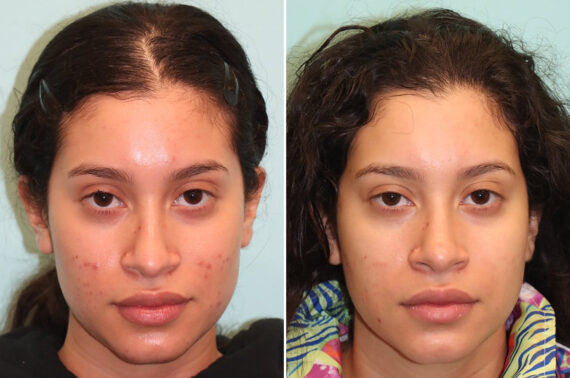
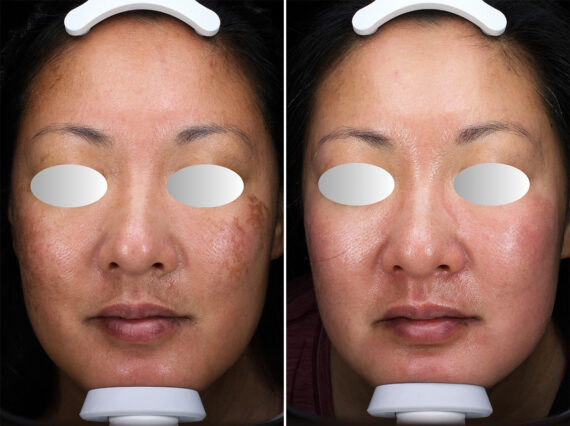
Chemical Peels That Respect Ethnic Skin
Chemical peels are another standard treatment for hyperpigmentation. Chosen and performed by someone who understands ethnic skin, a peel can gradually lift pigmentation while keeping the risk of scarring or post-peel darkening low.
Medical-Grade Skincare for Ongoing Results
Medical-grade skincare remains the foundation of professional treatment. Products with active ingredients like tretinoin, hydroquinone, vitamin C, and niacinamide support ongoing correction and reduce the risk of pigmentation returning after procedures.
For patients with very sensitive skin, we also offer less aggressive therapies that deliver results more slowly but with minimal irritation. These approaches are ideal for patients who want steady, controlled improvement over time.

Discover the most effective treatment for your skin type
From gentle peels to advanced laser therapy at The Naderi Center in Reston and Chevy Chase.
Tracking Pigment with Visia Skin Analysis
During the consultation process, we use the Visia Skin Analysis system. This imaging system can show sun damage and pigmentation that is not yet visible on the surface, and it lets us track your progress over time.
Dr. Naderi often tells patients, “What you see in the mirror is only part of the story. Our technology allows us to see beneath the surface and treat pigmentation before it becomes visible.”
Repeat Visia scans help us treat the discoloration you can see and keep watch on deeper pigment that could surface later.
Downtime, Recovery, and Long-Term Maintenance
Downtime depends on the treatment. After UltraClear, expect about 5 to 7 days for a light treatment and 7 to 10 days for a deeper one. A skincare plan needs no downtime, and peels need little or none, depending on their strength.
Patients often ask whether dark spots will come back. If people protect their skin every day, have a skin care routine, and keep maintenance sessions, the results last for years. If sunscreen stops or care stops, the pigmentation usually returns.
Hyperpigmentation affects how people feel about themselves, especially when foundation no longer hides the marks. Clearing the pigment often helps with that as well.
Restoring Confidence Through Clearer Skin
Dr. Naderi summarizes it best: “Treating hyperpigmentation is never just about beauty. It’s about restoring confidence and helping patients see their best selves again.”
Special Considerations for Acne and Hormonal Pigmentation
Patients who often have acne need to treat the breakouts and the dark marks at the same time, because each new pimple can leave a new dark spot and undo earlier progress. For acne, the practice mostly uses the ZO Skin Health acne line, SkinBetter Science and Alastin.
Hormonal pigmentation like melasma needs gentle care. Strong treatments can make it darker, so we plan melasma treatment case by case.

Setting Realistic Expectations for Lasting Results
Dark spots do not disappear overnight. Fading them takes time, consistent care and professional treatment.
Hyperpigmentation in ethnic skin needs an experienced, cautious approach. At The Naderi Center in Reston and Chevy Chase, with patients from McLean, Arlington, Alexandria and Washington DC, we treat it in every skin tone. If pigmentation bothers you, book a consultation to talk about your options.
See the Doctor
Questions about what you just read? Ask our doctors in person. Book a consultation in Reston or Chevy Chase, or start with a virtual consultation from home.
Book a ConsultationVirtual consultation
Call Reston (703) 481-0002 or Chevy Chase (301) 222-2020.
FAQs about Treating Hyperpigmentation on Dark Skin

Patient Financing
Pay Over Time with Cherry
Monthly payment plans for surgery and treatments, including 0% APR options for qualifying patients. Checking whether you qualify won’t affect your credit score.