How Is EZ Gel PRF Injected Under the Eyes?
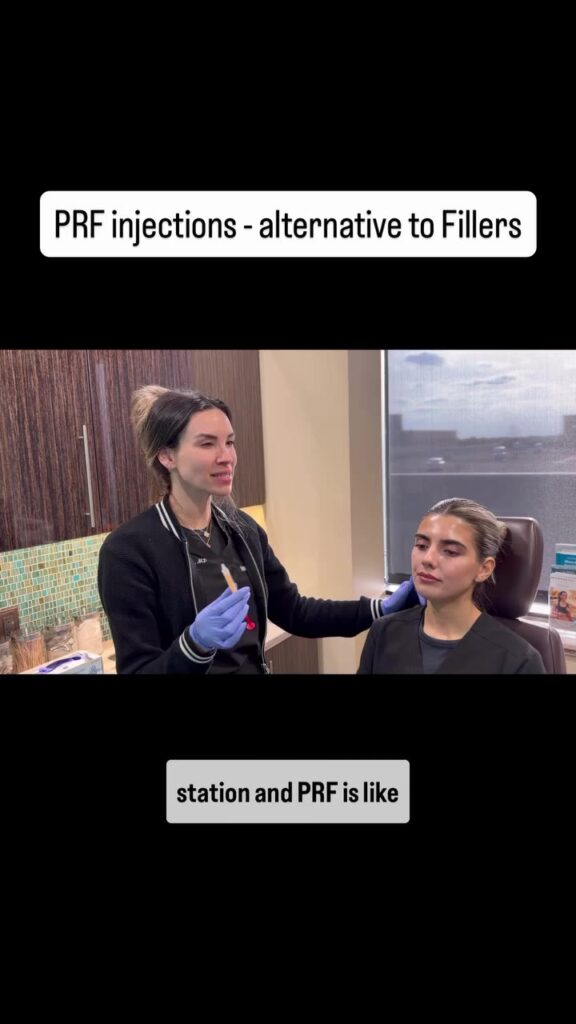
In this treatment, Dr. Alexandra Snodgrass injects EZ Gel PRF under the eyes and in the smile lines. She explains that EZ Gel PRF has a volume aspect that PRP does not: the PRF stimulates collagen, and the albumin from the patient's own blood adds volume that lasts weeks to months, which is why it is called the body's natural filler. She overfills on purpose, because that is the goal with PRF.
Key Points from the Video
- EZ Gel PRF has two parts, both from your own blood: PRF, which stimulates collagen, and albumin, which adds volume for weeks to months. That is why it is called the body's natural filler.
- Unlike filler, PRF is placed about 50 percent past the goal on purpose. It looks puffy at first, and without overfilling you won't get the effect.
- Tear trough filler is falling out of favor. In thin skin it can show the Tyndall effect, swelling and lumps over time, so filler is now reserved for people with a deep soft tissue pad under the eyes.
- For the smile lines, Dr. Snodgrass feathers the PRF in with a blunt cannula, which feels like pressure rather than a sharp poke, and keeps a fine needle nearby for precise spots.
Transcript
Lightly edited: brief exchanges with the patient and staff and a few off-topic remarks are left out, and the patient is not named. Dr. Shervin Naderi joins in partway through.
Dr. Snodgrass: It's a perfect consistency. It looks really good. I think that I changed up my ratios a little bit.
So we're going to get some PRF. That looks good. It's like filler. So with PRF, as opposed to filler, you want to fill to 50% overfilled. So we just completely treated the tear trough, and it looks perfect, but now I want to go a little bit further so they get the continued volumizing effect.
PRF EZ Gel, as compared to PRP, has that volume aspect to it, so you get a little bit of thickening. That's why we call it the body's natural filler. You have the collagen stimulating effect from the PRF, or platelet rich fibrin. Then you have the albumin, also derived from the patient's blood, that helps actually add volume. And that will stay for a little bit longer, usually weeks to months, unfortunately. But then when it's gone, you have the collagen stimulating effect. So thicker skin smooths over a little bit better, and then just looks smoother, brighter, fewer fine lines and wrinkles.
Okay, I'm almost happy with that. Got a ton of product; we're going to be treating two areas today. We're doing great from a bleeding perspective, just so you know.
A little noise is normal. Sometimes the PRF is a little frothy or can have air bubbles. It isn't dangerous at all, just something to make patients aware of, because otherwise it's like, whoa. We have patients that actually jump during injections, so I'm always very well stabilized. This side had a little less hollowness.
Dr. Naderi: So I'm going to chime in a little bit with the voiceover. So 20 years ago, 15 years ago, 10 years ago, we would do a lot of fillers to that area, right? And I've done the filler for this exact patient, but we just don't do that as much, because we've noticed that in people with thin skin, and you can see how the skin is in that area, the filler may look good for a little bit, and then it gets the Tyndall effect, the swelling, the lumpy bumpiness. So we basically are reserving fillers for people with a really deep soft tissue pad, where you can put the filler in deep on top of the bone. Everybody else, I think it's PRF like this by Dr. Snodgrass, or micro fat and nanofat by the videographer right here.
Dr. Snodgrass: I have to agree. I think that there is a perfect tear trough filler patient, but it's largely falling out of favor, because this technically can last forever, versus tear trough filler, which changes with time. We know that it doesn't necessarily all go away in eight to twelve months like the package inserts tell us, and patients change over time, more importantly. So someone who just had hollowness may a year later have some fat pad herniation and crepiness, some other concerns. They're no longer independently addressed with the filler. So PRF, collagen stimulating techniques, procedures that thicken the skin, are in a way able to fix it a little bit more thoroughly.
I'm going to do cannula for the nasolabial folds. So first I'm going to do a little hook right here. Big, big pinch. This is a thick, thick product. Thicker than Voluma, thicker than RHA 4. That depends on who makes it and how it's prepared. But it's great. It's your body's natural filler. A little bit of pressure.
So a cannula is a blunt tip, so I'm just kind of feathering it under. The patient feels a little bit of pressure, but nothing sharp. When I want to treat a whole area for collagen stimulation, it's much easier to feather with a cannula than it is to poke, poke, poke everywhere with a needle. I'm using this finger to kind of figure out where my cannula is. And then, aside from that little dot, it's beautiful.
Patient: I'm going to fall asleep.
Dr. Snodgrass: That's the best compliment I've gotten all day. And it's the end of a Friday, so that's saying a lot.
I'm a fine needle girl. I can't give it up completely. I love a cannula for some areas, but I like the precision. And if you know your anatomy and you're gentle, you can still mitigate a lot of bruising. So even when I use a cannula, I have a fine needle nearby, like a 27 gauge for this. It's big, but it gets the job done.
I'm just ferning, making like a little fern shape with my PRF, and it just fills so beautifully. Again, we're overfilling. That's the goal with PRF. If you don't, you won't get the effect.
Dr. Naderi: Since we have everybody's attention and there's no music voiceover, I think it's a good time for us all to talk about what's the magic sauce to aging gracefully and great skin. And I think everybody in this office would agree the magic sauce is everything. There's no one thing. You're going to do everything at different points in time, whether it's microneedling, Morpheus, UltraClear erbium laser, PRF, Botox and filler.
Dr. Snodgrass: Botox and filler get like a bad rap, but they're still our most popular procedures. I mean, I love my toxins.
Dr. Naderi: Whether you're doing a facelift on a 39-year-old or a 54-year-old, that person still needs to have done all these things and needs to do it afterwards. Otherwise, the results are just not going to be great, long lasting.
Dr. Snodgrass: This looks awesome. You're puffy, but it looks really good.
More Answers from Dr. Naderi
 10:47Eyes and Brows
What Are PRF Injections Under the Eyes?
 1:00Eyes and Brows
Should You Get Tear Trough Filler?
 2:34Eyes and Brows
How Are Under-Eye Bags, Dark Circles and Tear Troughs Treated?