Your nose sits at the center of your face, so the surgeon you choose matters. For African American rhinoplasty it matters even more. Thicker skin and a softer tip call for a different plan than the one many surgeons use every day. Here’s your guide to choosing well.
The short answer: Choose a board-certified facial plastic surgeon who shows many results on African American patients, builds support with cartilage instead of implants, and wants your nose to look like you. At The Naderi Center, African American rhinoplasty is performed by double board-certified facial plastic surgeon Dr. Shervin Naderi in Reston, VA and Chevy Chase, MD.
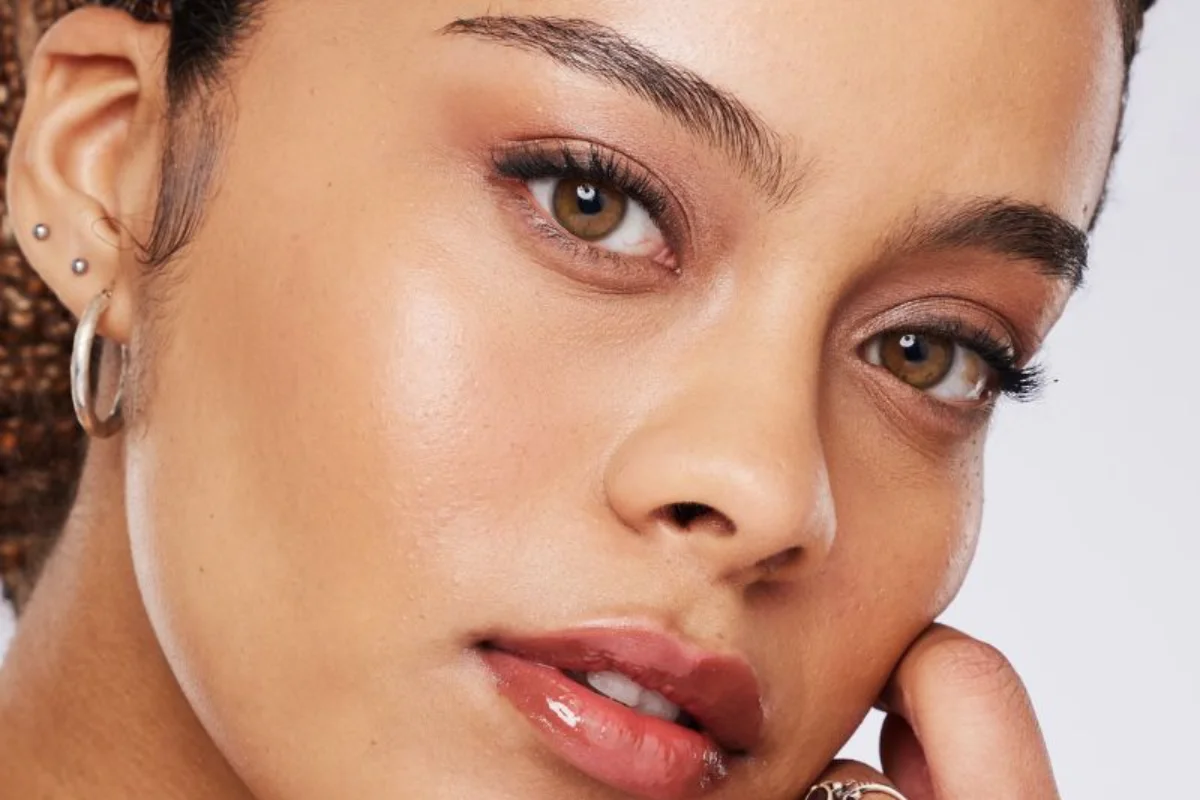
Why does African American rhinoplasty need a specialist?
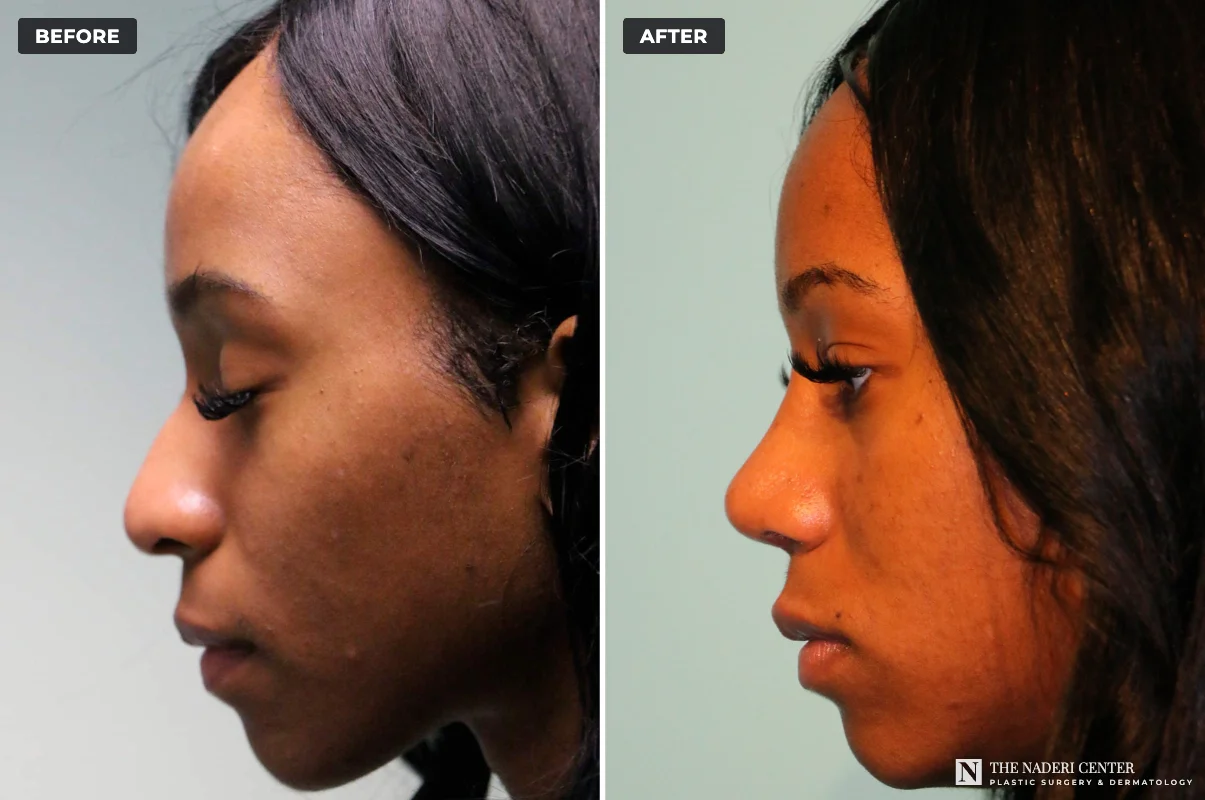
Many African American noses share a few features: thicker skin, a softer tip, a lower or wider bridge and a wider nostril base. None of these is a flaw. They simply change how surgery works.
Thick skin acts like a heavy blanket. Small changes underneath do not show through it. If a surgeon only removes cartilage, the tip can end up rounder, not finer. Definition comes from building support under the skin.
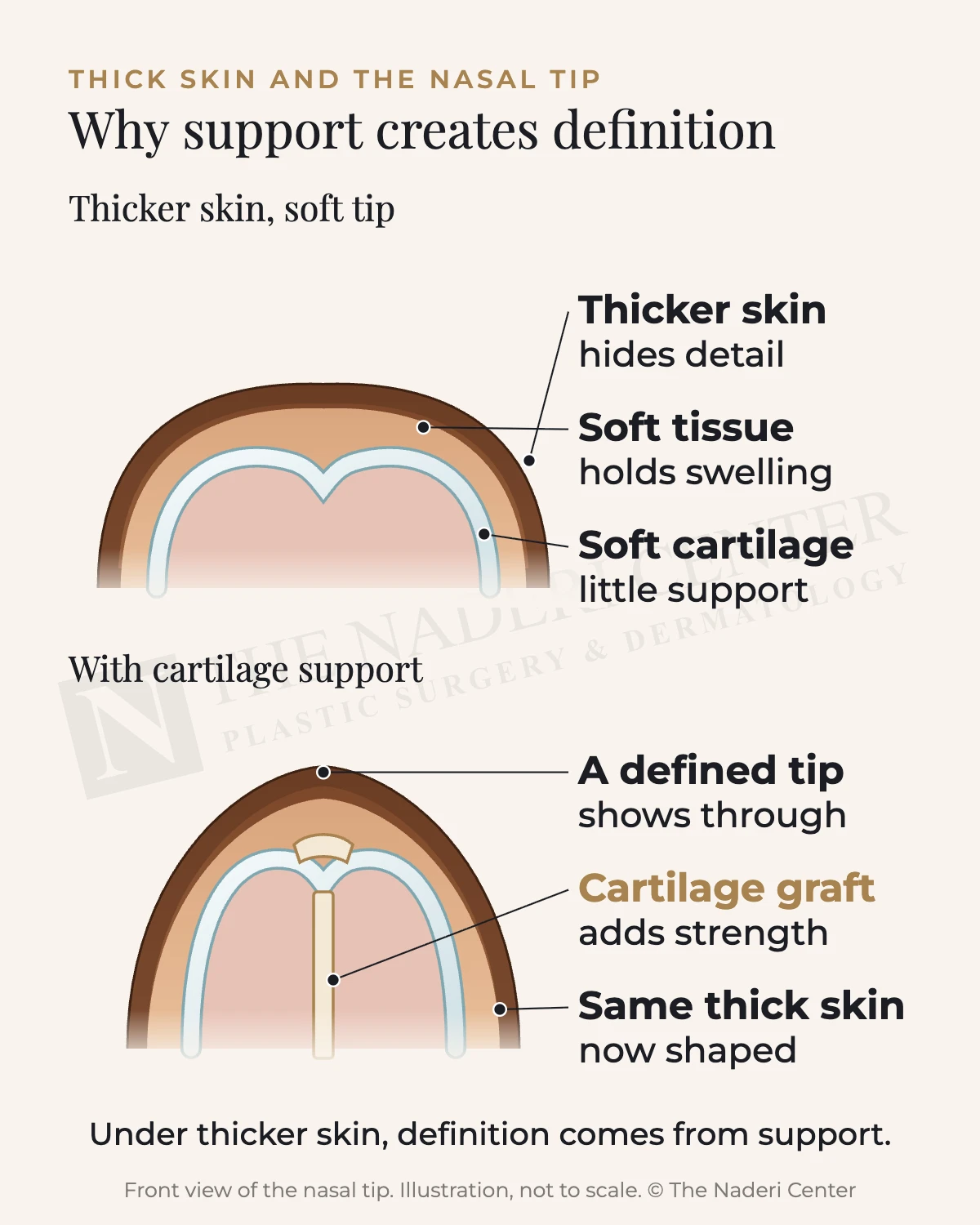
That support comes from cartilage. Dr. Naderi uses your own septal cartilage first and donor rib cartilage when more is needed, with your own rib only as a last resort. “I don’t like using ear cartilage,” he says. “It’s weak and curved, and it doesn’t provide the strength necessary for thick-skinned noses.”
What should you look for in an African American rhinoplasty surgeon?
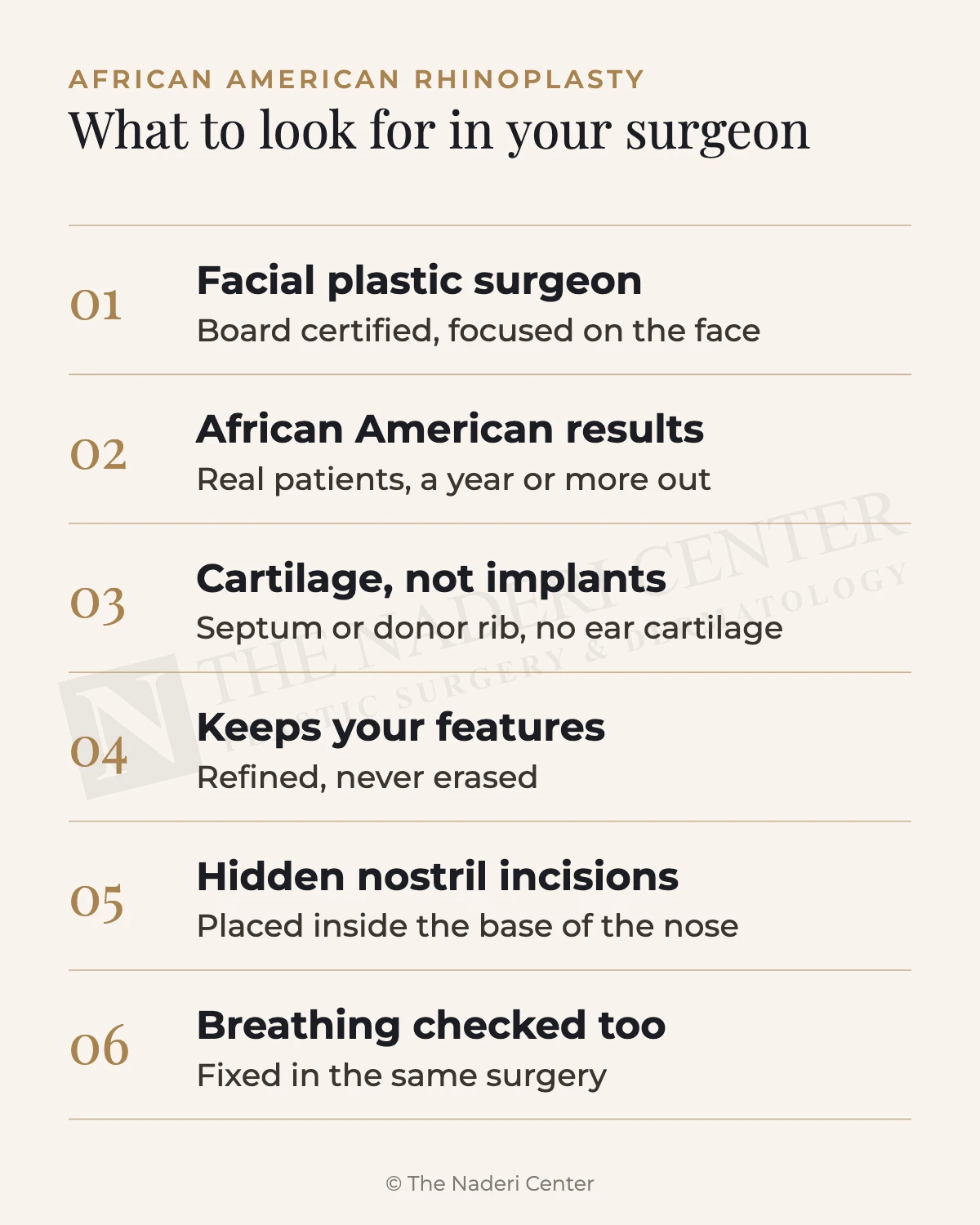
- Board certification in facial plastic surgery. Training focused on the face means deep experience with the nose. Dr. Naderi is double board-certified.
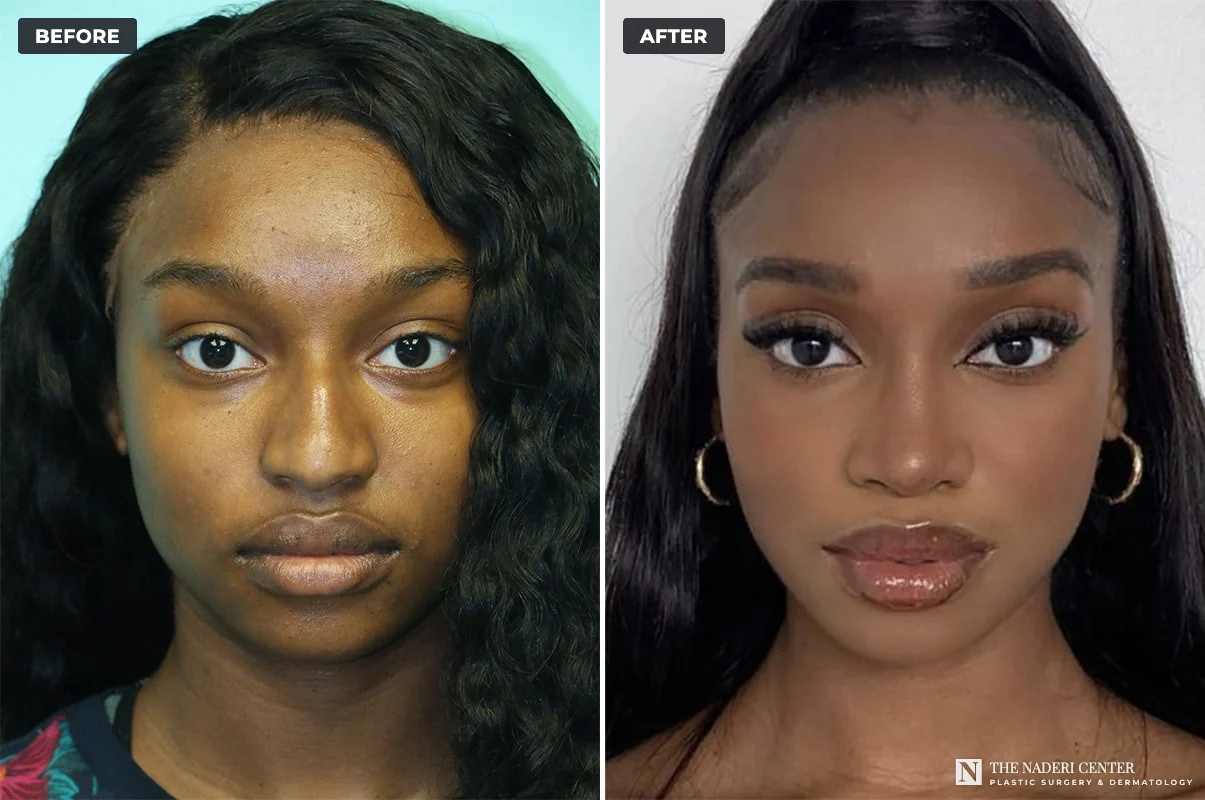
- Real results on patients like you. Ask to see many African American before-and-after photos, ideally a year or more after surgery.
- Cartilage, not implants. Dr. Naderi does not use man-made implants because of the risk of infection and extrusion. Cartilage becomes part of your nose.
- A plan that keeps your features. A good surgeon refines your nose. You should never leave with someone else’s.
- Hidden nostril incisions. For nostril narrowing, Dr. Naderi places the small incisions inside the base of the nose rather than on the outside of the nostrils, where scars are harder to hide.
- Breathing, too. A deviated septum can be corrected in the same surgery.
Questions to ask at your consultation
- How many African American rhinoplasties have you performed?
- Can I see results a year or more after surgery?
- Where will my cartilage come from?
- Will you narrow my nostrils, and where will the incisions be?
- Can I see my new nose with computer imaging before surgery?
- Will you check my breathing, too?
At The Naderi Center, Dr. Naderi does your computer imaging himself, so you see the plan on your own face and can ask for changes before surgery.
Red flags to watch for
- A promise to make your nose much smaller
- Ear cartilage or silicone implants for a thick-skinned nose
- Few or no photos of African American patients
- Pressure to book surgery quickly
Dr. Naderi is never quick to operate. He takes time to understand why you want surgery, and he will tell you honestly when something else, such as a liquid rhinoplasty for a low bridge, may be the better first step.
How long until I see my final result?
The first week is the same for everyone: a small cast for 5 to 10 days and about one week off work or school. Thicker skin holds swelling longer, so the tip keeps refining after it looks good to everyone else.
Dr. Naderi encourages taping after the cast comes off, and for very thick or oily skin he may start low-dose isotretinoin (Accutane) before surgery. Read more about thin and thick-skinned rhinoplasty.
Begin with a Conversation
Thinking about African American rhinoplasty? Bring us your questions. We will bring the experience. Dr. Naderi sees patients in Reston, VA and Chevy Chase, MD.
Why patients choose Dr. Naderi
Dr. Naderi is a double board-certified facial plastic surgeon who has performed thousands of rhinoplasties, and he has been named to Newsweek’s America’s Best Plastic Surgeons for rhinoplasty from 2023 to 2026. Plastic surgeons and ENT physicians in the Washington DC area refer their most difficult noses to him for revision rhinoplasty.
A significant majority of the patients who fly in to see him from other states and from abroad are African American rhinoplasty patients. Our team plans the trip with you, so you make as few visits as possible.
“My patients are thoughtful and very clear about what they don’t want. They want improvement, not erasure. My job is to refine what makes you, you.”
Dr. Shervin Naderi
Where can I get African American rhinoplasty near Washington DC?
Dr. Naderi sees patients at two offices. Our Reston, VA office is close to Herndon, Great Falls, McLean, Vienna, Tysons and Arlington. Our Chevy Chase, MD office, one block from the Metro, serves Bethesda, Silver Spring, Potomac and Washington DC. Patients from Alexandria and across Northern Virginia visit both, and you can begin with a virtual consultation.
Frequently Asked Questions
How much does African American rhinoplasty cost in the Washington DC area?
At The Naderi Center, Dr. Naderi’s surgeon’s fee is $18,000 to $27,000, with anesthesia and facility fees billed separately. Your exact price comes from a personal plan at your consultation.
Will I still look like myself after rhinoplasty?
Yes. Dr. Naderi refines your nose so it fits your face. Family and friends still see you, just more in balance.
How long is the recovery from African American rhinoplasty?
Plan on about one week off work or school. The cast comes off at 5 to 10 days, exercise waits one month, and thicker skin keeps refining for 12 to 18 months.
Does Dr. Naderi use ear cartilage or implants?
No. He uses your own septal cartilage first and donor rib cartilage when more is needed, with your own rib only as a last resort. He does not use ear cartilage or man-made implants.
Can my breathing be fixed at the same time?
Yes. A deviated septum, enlarged turbinates or a weak nasal valve can be corrected in the same surgery, and insurance may cover that part.
Where can I see African American rhinoplasty results?
The African American rhinoplasty page shows 20 of Dr. Naderi’s African American patients, and you can see more in our before-and-after gallery.
Medically reviewed by Dr. Shervin Naderi, MD, FACS, double board-certified facial plastic surgeon. Last reviewed November 25, 2026.
Patient Financing
Pay Over Time with Cherry
Monthly payment plans for surgery and treatments, including 0% APR options for qualifying patients. Checking whether you qualify won’t affect your credit score.